Table of Contents
When Facebook tried to launch a stablecoin in 2019, it assembled a coalition called the Libra Association, then watched it collapse within months as Visa, Mastercard, and Stripe walked out under regulatory pressure.
Seven years later, those same payment giants are back at the table.
This time they didn't walk out. They helped build it.
On June 30, 2026, an organization called Open Standard unveiled Open USD (OUSD), a dollar-backed stablecoin governed not by a single issuer but by a consortium of more than 140 companies: Visa, Mastercard, American Express, Stripe, Coinbase, BlackRock, BNY, Google, IBM, Shopify, Ripple.
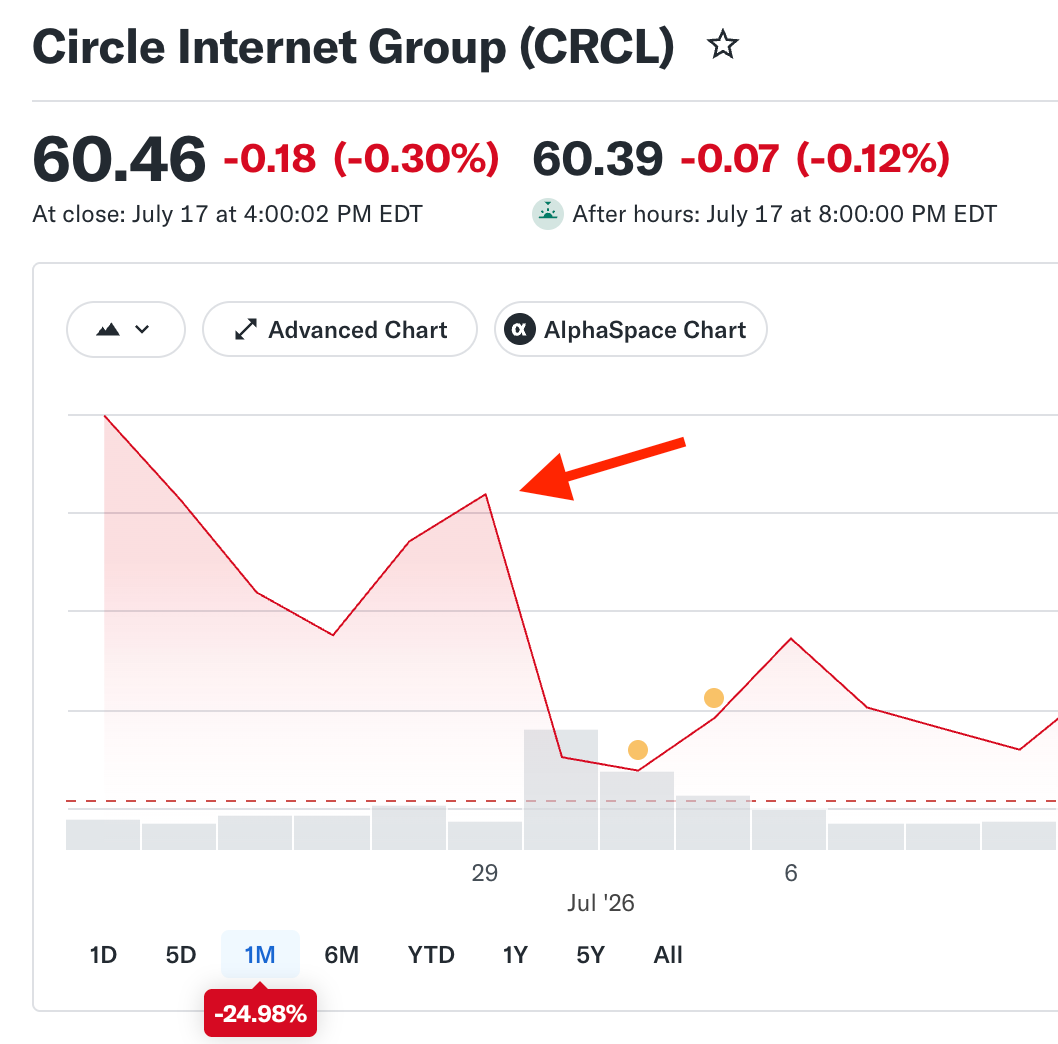
Circle's stock fell 16% the day it was announced.
And yet OUSD has a market cap of exactly zero, because it isn't even live yet.
So what did 140 companies actually sign up for? The answer is less about the token and more about who gets paid.
The Pitch that Assembled an Army
Every stablecoin sits on a pile of reserves, cash and short-term Treasuries backing each token one-for-one.
At today's rates, that pile throws off enormous yield. The question that quietly divides the industry is simple: who keeps it?
Under the incumbent model, the issuer keeps it. Circle collects the interest on USDC's roughly $73 billion in reserves and pays a slice to partners like Coinbase.
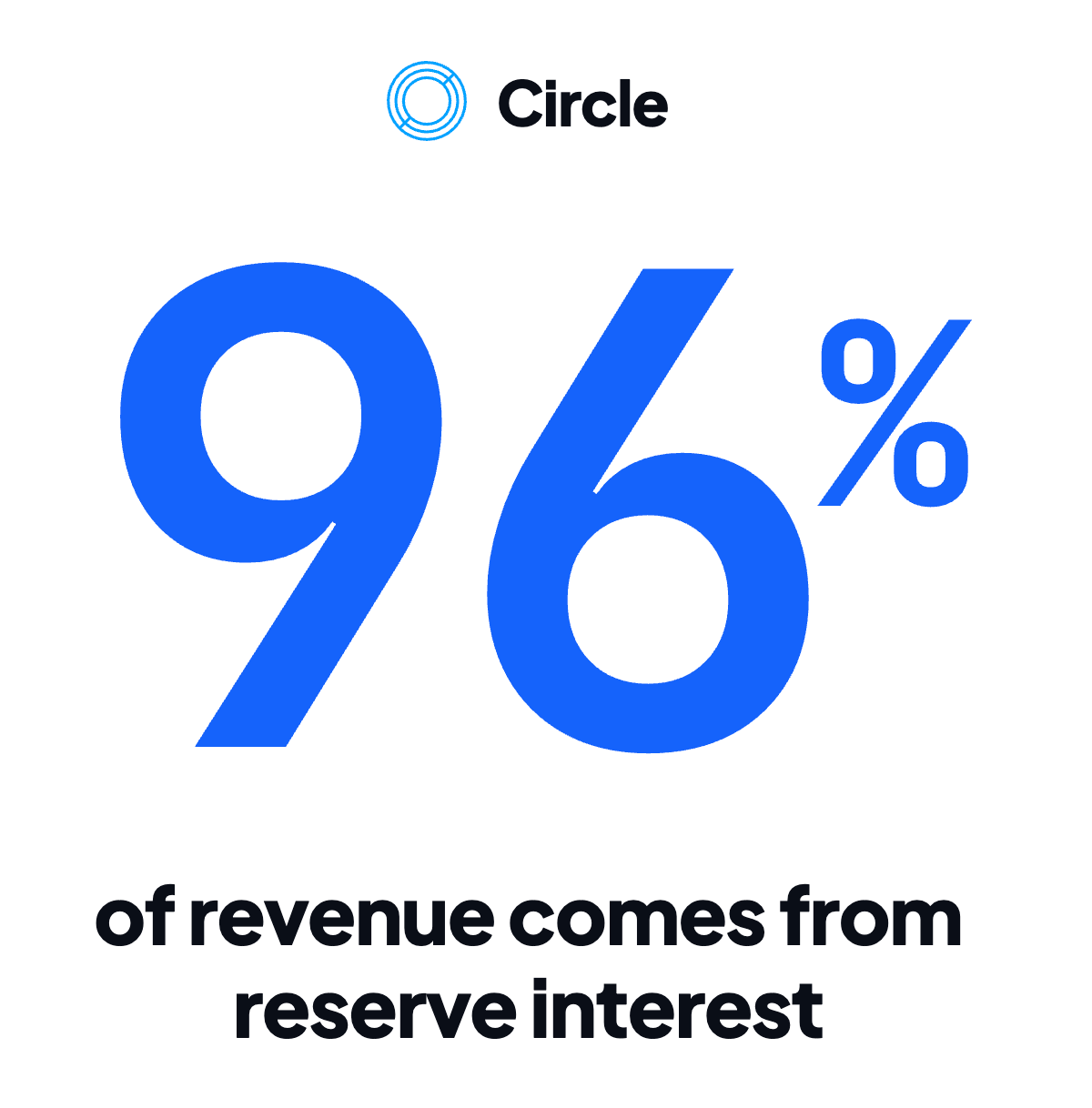
It's lucrative, since 96% of Circle's revenue comes from that reserve interest, but it concentrates the economics at one company's balance sheet.
OUSD inverts the model. Members mint and redeem for free, with no volume caps, and most of the reserve income flows back to participating businesses after a small management fee.
One analyst called it "the airline-alliance model applied to money." Governance runs through a member-institution board, not a single controlling company.
That one design choice, pushing the float income out to the network instead of hoarding it at the center, is the gravitational force that pulled 140 companies into orbit. It answers the question every distribution partner has been asking since rates climbed above 3%: why hand the yield to an issuer at all?
The Coalition, Faction by Faction
The membership list isn't a monolith. It's four constituencies, each wanting something different.
1) The payment networks: Visa, Mastercard, Amex, Stripe.
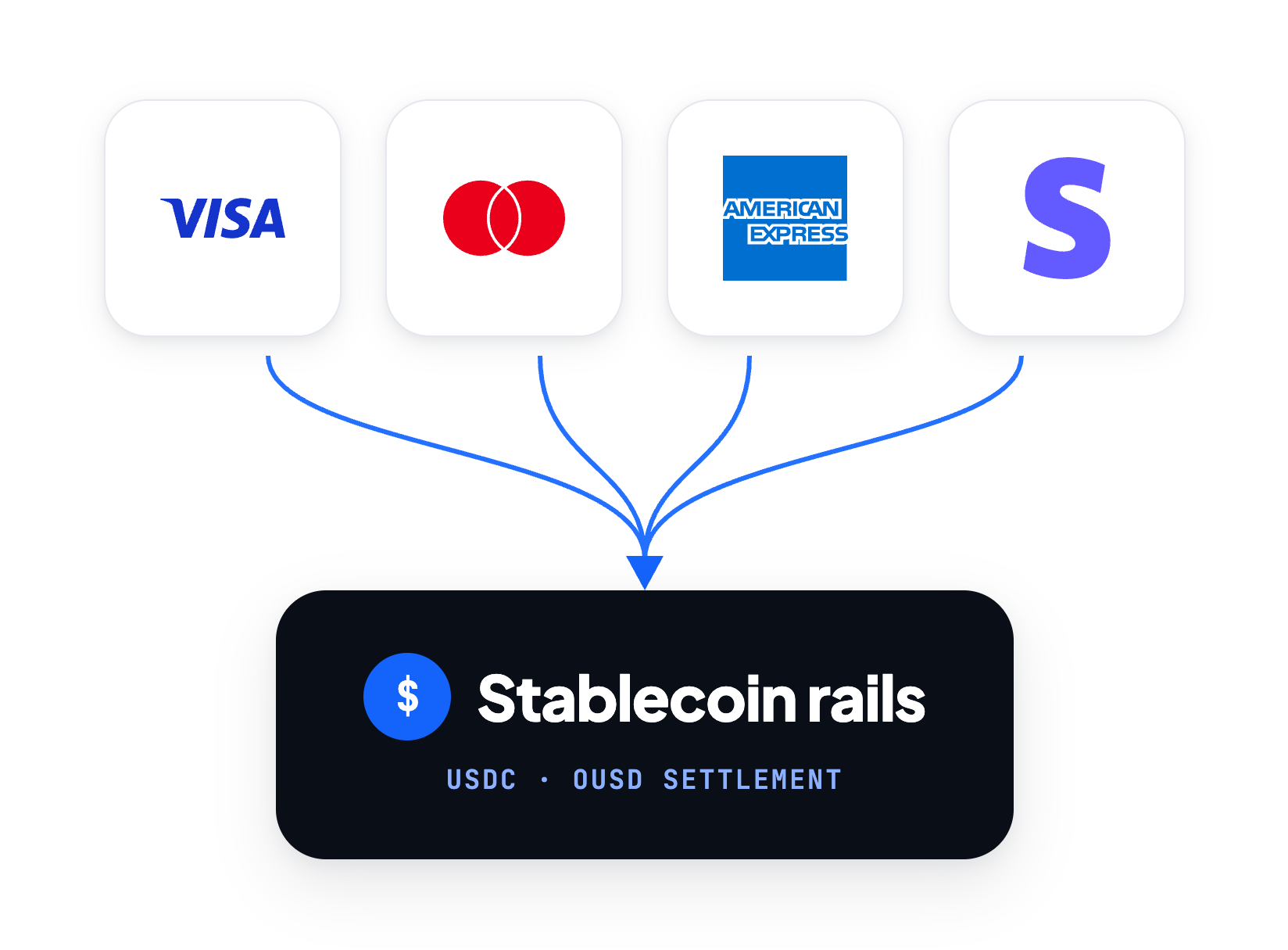
For the card giants, this is defensive and offensive at once.
Stablecoins threaten to route settlement around their rails, so by helping build the dominant one, they insert themselves into the new plumbing instead of getting disintermediated.
Visa settled its first USDC transaction in 2020 and, weeks after the OUSD launch, rolled out its own Visa Stablecoin Platform with OUSD as a headline asset.
That Visa and Mastercard, arch-rivals, sit at the same table shows how seriously they take the threat.
2) The financial institutions: BlackRock, BNY, Standard Chartered, BBVA.
For asset managers and banks, the appeal is direct access to reserve yield without paying an intermediary for it.
A consortium coin lets them capture float economics as stakeholders rather than vendors, and it lends the project the credibility and balance-sheet heft that regulators and treasurers expect.
3) Big Tech: Google, IBM, Shopify.
The technology members are playing a distribution game. Shopify puts a stablecoin in front of millions of merchants; Google Cloud and IBM want to be the rails underneath.
For them, OUSD is a new payment surface to build products on, plus a share of the economics for facilitating it.
4) The crypto natives: Coinbase, Ripple, MetaMask, OKX.
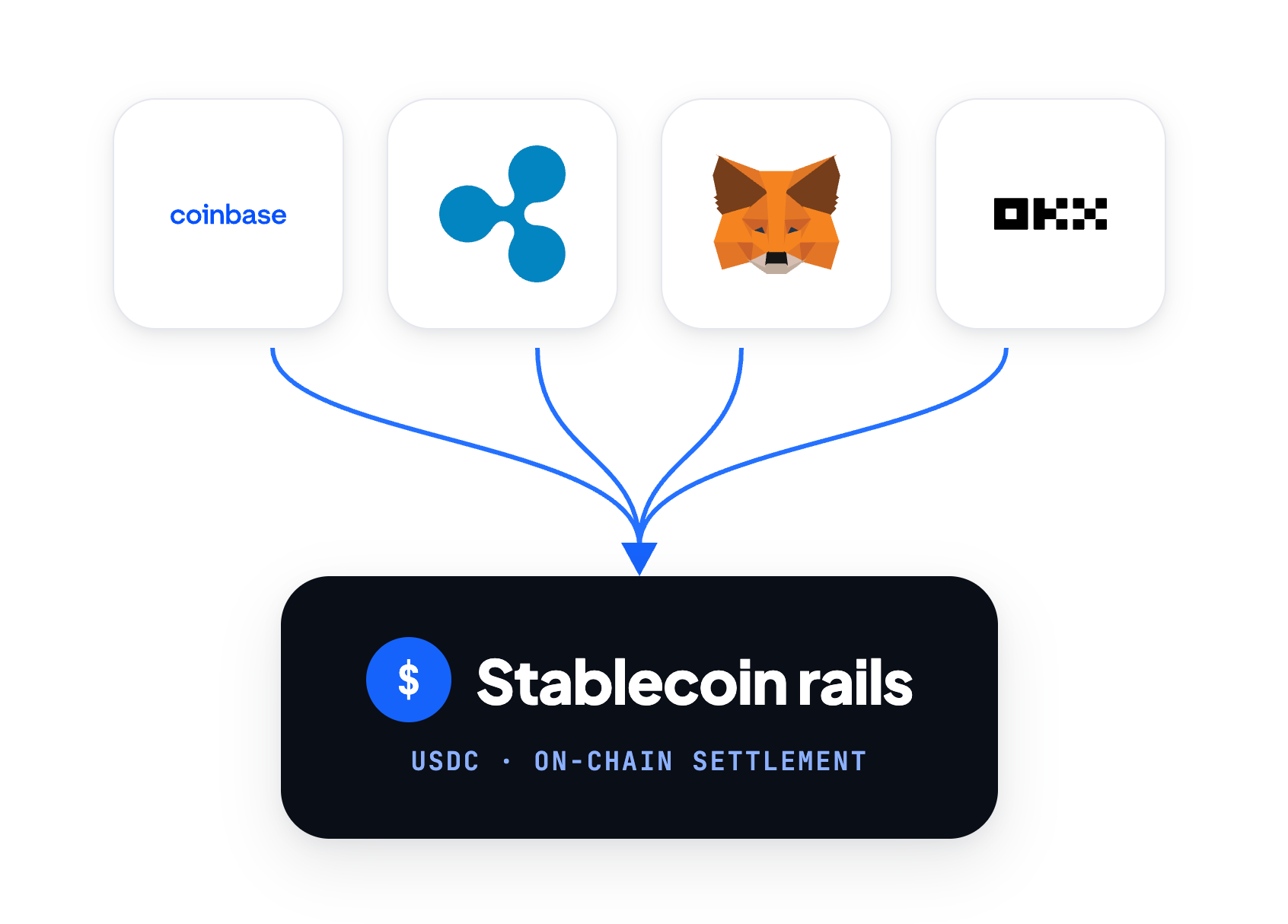
This is the most fascinating faction, and Coinbase is the puzzle.
Coinbase helped create USDC, remains Circle's primary distribution partner, earns substantial reserve income from it, and still joined the rival.
A hedge, a migration path, or leverage over Circle in the next revenue-share negotiation? Coinbase hasn't clarified, and the ambiguity is itself a message.
The pattern is the same across all four factions: everyone in the coalition currently pays rent to an issuer or fears being routed around. OUSD offers ownership instead of tenancy.
The Cracks Were Visible Within 72 Hours
A 140-company alliance makes a stunning press release and a fragile reality. Within three days, Samsung, Dunamu, and Upbit publicly denied any formal involvement, a sign the roster blended committed partners with warm handshakes.
The "140" deserves an asterisk.
"Consortiums are hard and they break easily," warned Rob Hadick of Dragonfly Capital, even as he called the marquee names "a real threat to Circle's business." Libra had marquee names too, right up until it didn't.
The unglamorous questions, like which regulated entity issues the token, in which jurisdictions, and on which chains, remain largely unanswered, and under the GENIUS Act and Europe's MiCA regime those aren't footnotes.
What the Coalition is Really Attacking
Here's the thing about OUSD's zero-dollar market cap: it may already be working. As one analyst put it, it "put a public market price on Circle's distribution dependency."
Every Circle partner now has a credible alternative to point at when a contract comes up for renewal, hence a 16% stock drop that left the shares roughly 75% below their 2025 peak.
But displacing real supply is a multi-year project.
USDT sits near $145 billion and USDC near $73 billion, while the existing consortium coin USDG has managed only about $3 billion in 18 months. Revenue-sharing thrills the businesses in the coalition; it means nothing to a consumer who just wants dollars that work.
The deeper shift is structural. For years the race was Circle versus Tether, one issuer against another.
OUSD changes the question from "which stablecoin wins?" to "which ecosystem wins?" Open Standard has convinced 140 rivals that they'd rather share the float than pay someone else to keep it.
Whether they can agree on anything else is the $73 billion question.
Related Reports
Partner/Advertise with Stablecoin Insider
Fill out this form to partner and advertise on the only publication, dedicated entirely to the Stablecoin ecosystem.
See you next week,
- The Stablecoin Insider team

%20Coalition%3A%20140%20Firms%20Behind%20One%20Stablecoin)