Table of Contents
Last updated: September 2026. Refreshed with sourced 2026 data, merged with our earlier bridges guide, and updated fee, speed and security figures.
By 2026, the blockchain ecosystem has fully settled into a multi-chain reality. Dozens of major networks operate in parallel, each optimized for different tradeoffs and use cases.
- Ethereum continues to anchor high-value activity with strong security properties.
- Solana remains synonymous with high throughput.
- BNB Chain retains its appeal for cost-sensitive activity.
- Layer-2 ecosystems keep expanding.
The upside is optionality.
The downside is fragmentation.
That fragmentation creates the same core problem for users and builders: value and data live on separate “chain islands,” and moving between them should not require centralized intermediaries.
Cross-chain bridge protocols exist to solve this. They connect independent networks and enable asset transfers, cross-chain messaging, and interoperability patterns that make multi-chain applications workable in practice.
Download our 2025 Stablecoin Year-End Repor
With DeFi TVL at $95.98 billion across all chains on September 27, 2026 (DefiLlama), bridge protocols remain central to how liquidity and users flow across ecosystems. In practical terms, bridges function as the highways of the multi-chain economy, powering everything from simple token transfers to more complex cross-chain DeFi strategies.
At the same time, bridges have remained one of the highest-risk layers in Web3. The utility is enormous, but the threat surface is too.
A 2026-ready understanding of bridges requires looking at both sides: how they work, which protocols led in 2025, what security failures taught the market, and what innovations are reshaping user experience.
Key Takeaways
- Cross-chain bridge protocols are core infrastructure for moving assets and data between otherwise isolated blockchain ecosystems.
- Wormhole remains a market leader, reporting 45+ connected blockchains and $68 billion in all-time transfer volume (Wormhole), plus Uniswap Bridge Assessment Committee approval.
- Security stays the largest constraint: Chainalysis attributed $2 billion stolen across 13 bridge hacks, 69% of all crypto stolen in 2022 at the time of its report (Chainalysis).
- Intents-based bridging is improving UX by abstracting away complex cross-chain steps and letting users specify outcomes instead of mechanics.
- Bridge aggregators are growing because they unify access to multiple bridges, optimizing routing, liquidity, and pricing from one interface.

What Are Cross-Chain Bridges?
Cross-chain bridges are protocols that enable the transfer of digital assets, data, and information between different blockchain networks. In a fragmented multi-chain environment, they act as connective infrastructure so users can move tokens, stablecoins, and NFTs across chains without routing through centralized exchanges.
In 2025, most blockchains still operated with distinct rules and execution environments, creating siloed ecosystems. Bridges addressed that isolation by enabling interoperability, so applications and users could move value to wherever liquidity, yields, and applications were most attractive.
As DeFi grew, bridges became critical for keeping liquidity and user activity connected across networks, expanding what users could do across protocols, staking venues, NFT ecosystems, and decentralized applications. DeFi TVL stood at $95.98 billion on September 27, 2026, per DefiLlama.
How Bridge Protocols Work
Core Architecture
Most bridges rely on a lock-and-mint model:
- Asset Locking: Tokens are locked in a smart contract on the source chain.
- Validation: Validators/guardians verify the transfer request and confirm it meets protocol rules.
- Minting: A wrapped representation is minted on the destination chain.
- Bridging Back: The wrapped asset can be burned to unlock the original on the source chain.
This model is straightforward conceptually, but it concentrates risk: if the validation layer fails, the protocol can mint assets without proper backing.
Security Models
Bridge designs typically fall into two broad buckets:
- Trusted / Custodial Bridges: Users rely on a third party for validation and custody. Centralized custody points can become high-value targets.
- Trust-Minimized / Non-Custodial Bridges: Smart contracts hold assets and release them based on cryptographic verification and decentralized validation networks, reducing reliance on centralized operators.
Leading Bridge Protocols in 2025 (What Still Defines the Market in 2026)
1. Changelly: The Industry Leader
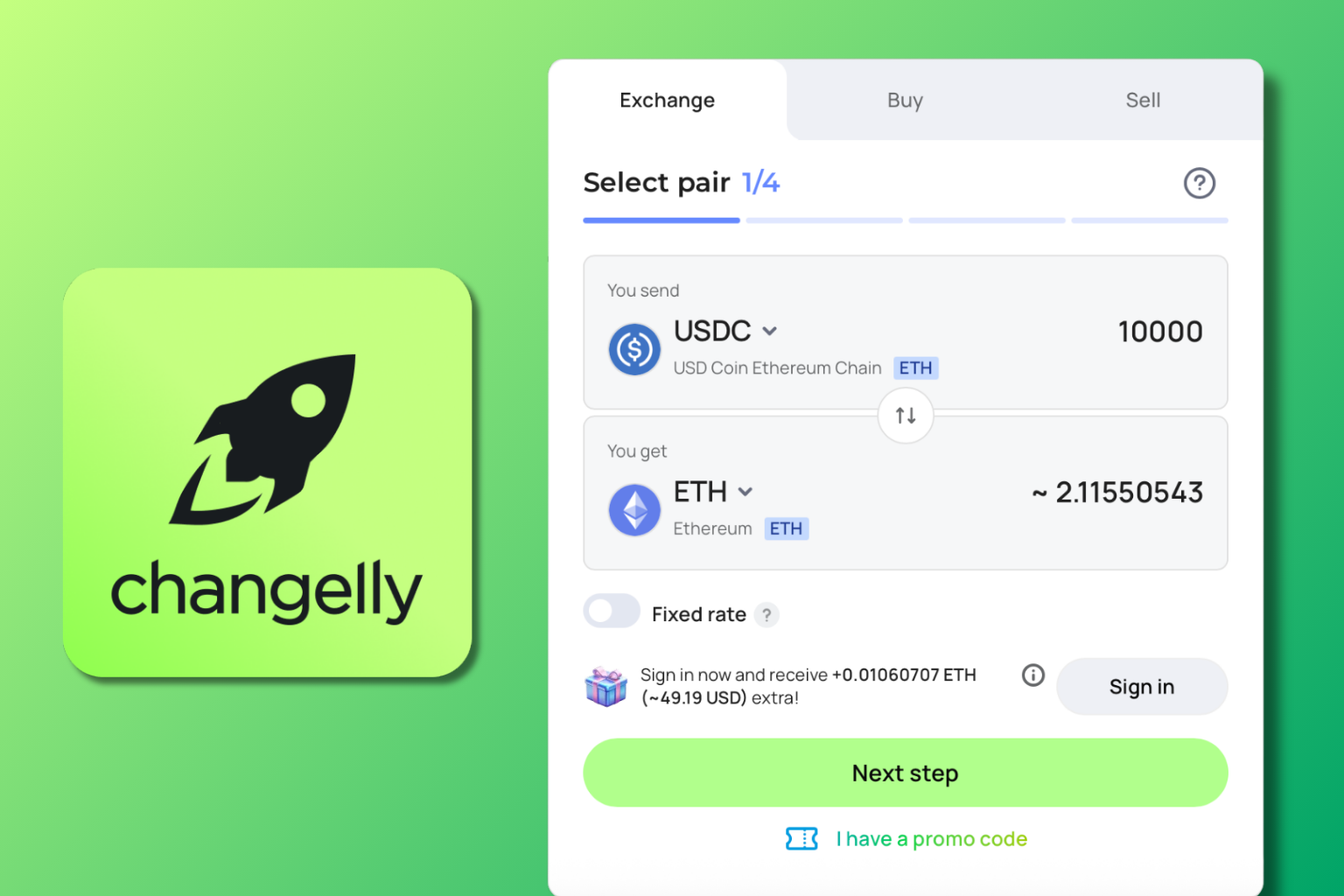
Changelly is a long-running crypto swap service (launched in 2015) built to make exchanging digital assets fast and accessible. It combines centralized and decentralized liquidity sources to provide rates across 500+ assets, including major stablecoins.
Key features:
- Wide Asset Coverage: 500+ cryptocurrencies, plus leading stablecoins (USDT, USDC, DAI, BUSD, etc.)
- Fiat On/Off Ramp: Buy via credit card, Apple Pay, or bank transfer; sell into 30+ fiat currencies
- Low, Transparent Fees: Flat 0.25% service fee on crypto-to-crypto swaps, plus network fees (Changelly's fee page)
- Fast Execution: Many swaps complete in 5–10 minutes with live quotes
- Integrations: APIs and white-label tooling used by wallets such as Exodus, Ledger, and Trezor
By focusing on ease of use and broad liquidity connectivity, Changelly remained a common entry point for stablecoin swaps and crypto-to-crypto conversions.
2. Wormhole
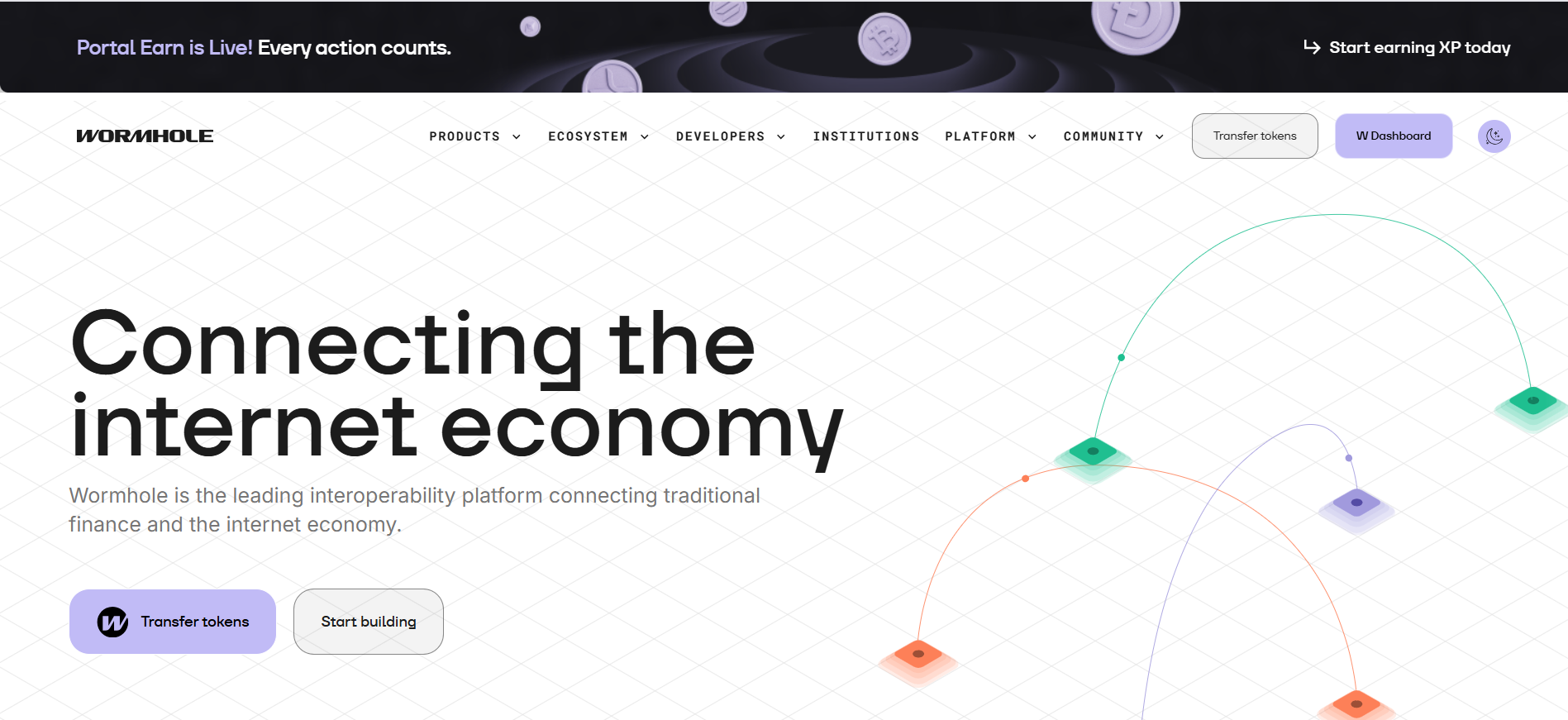
Wormhole is a generic cross-chain messaging protocol that supports transferring arbitrary data and value across a wide set of chains.
Wormhole reports $68 billion in all-time transfer volume across 45+ blockchains (Wormhole), and it has been used by teams and ecosystems including Uniswap, Circle, Lido, Synthetix, and Pyth.
Key Features
- Massive Network Support: 45+ chains, including EVM networks, Solana, Cosmos-based ecosystems, Near, Sui, Aptos, and newer Layer-1s (Wormhole)
- Relay Fees at Cost: Automatic USDC relays through Wormhole Connect cost about 0.3 USDC to Base, Optimism, Arbitrum or Avalanche and about 4.2 USDC to Ethereum L1 (Wormhole docs)
- Security Leadership: Named the only cross-chain protocol unconditionally approved by the Uniswap DAO, primarily based on security and decentralization practices
- Developer-Friendly: SDKs plus Connect integration widgets
Wormhole’s Portal Token Bridge is the primary user interface for token transfers, while the broader messaging layer enables more complex cross-chain application design.
3. Symbiosis Finance: The All-in-One Solution
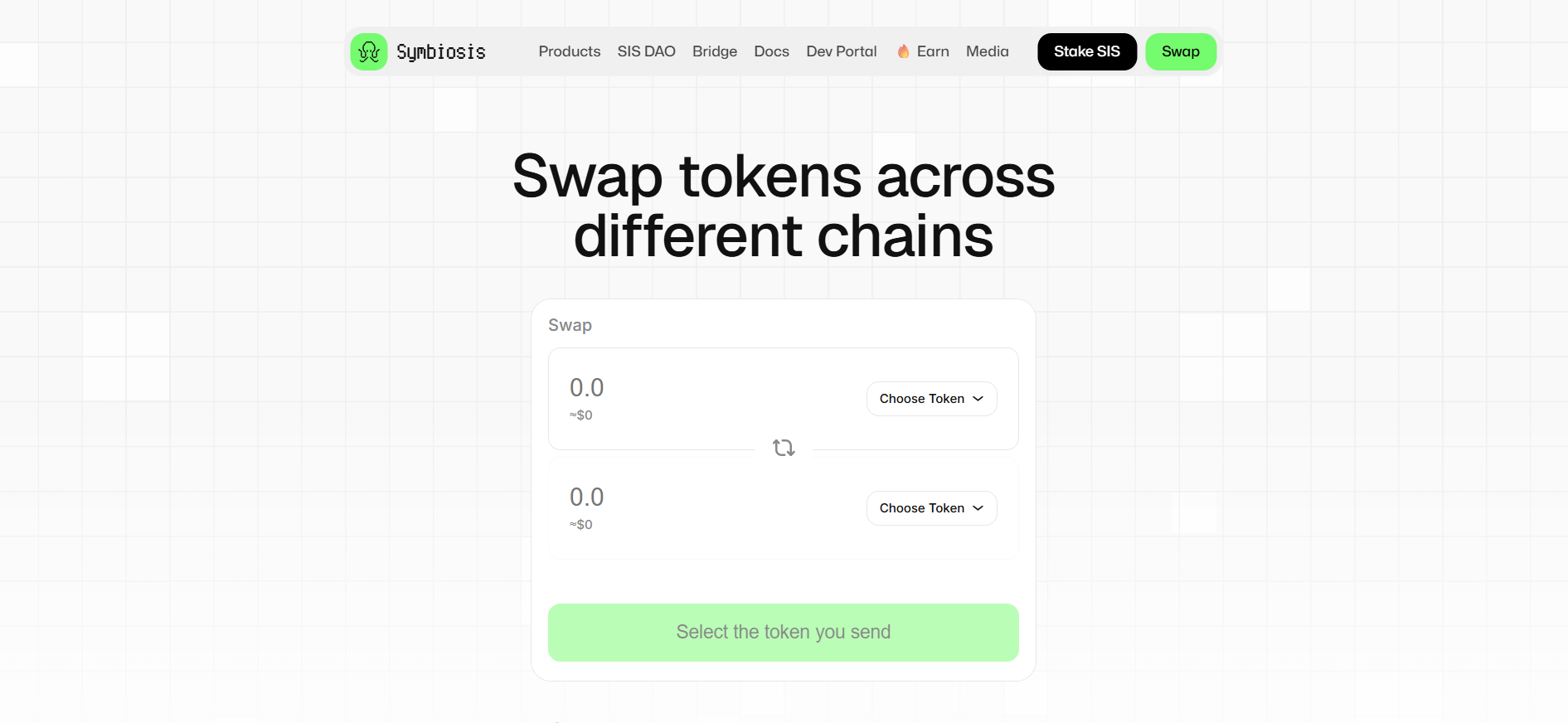
Symbiosis Finance combines cross-chain bridging and AMM functionality to enable swaps across multiple chains, supporting 30+ networks including Ethereum, BNB Chain, Polygon, Avalanche, Bitcoin, and non-EVM environments.
Standout Features
- Non-Custodial Design: Uses an MPC node network and relayer infrastructure to support cross-chain operations without requiring users to surrender control of funds
- All-in-One Interface: Automatically identifies efficient DEX routing across chains
- Bitcoin Support: Notable for supporting Bitcoin alongside EVM and non-EVM chains
4. Stargate Finance: LayerZero Powered
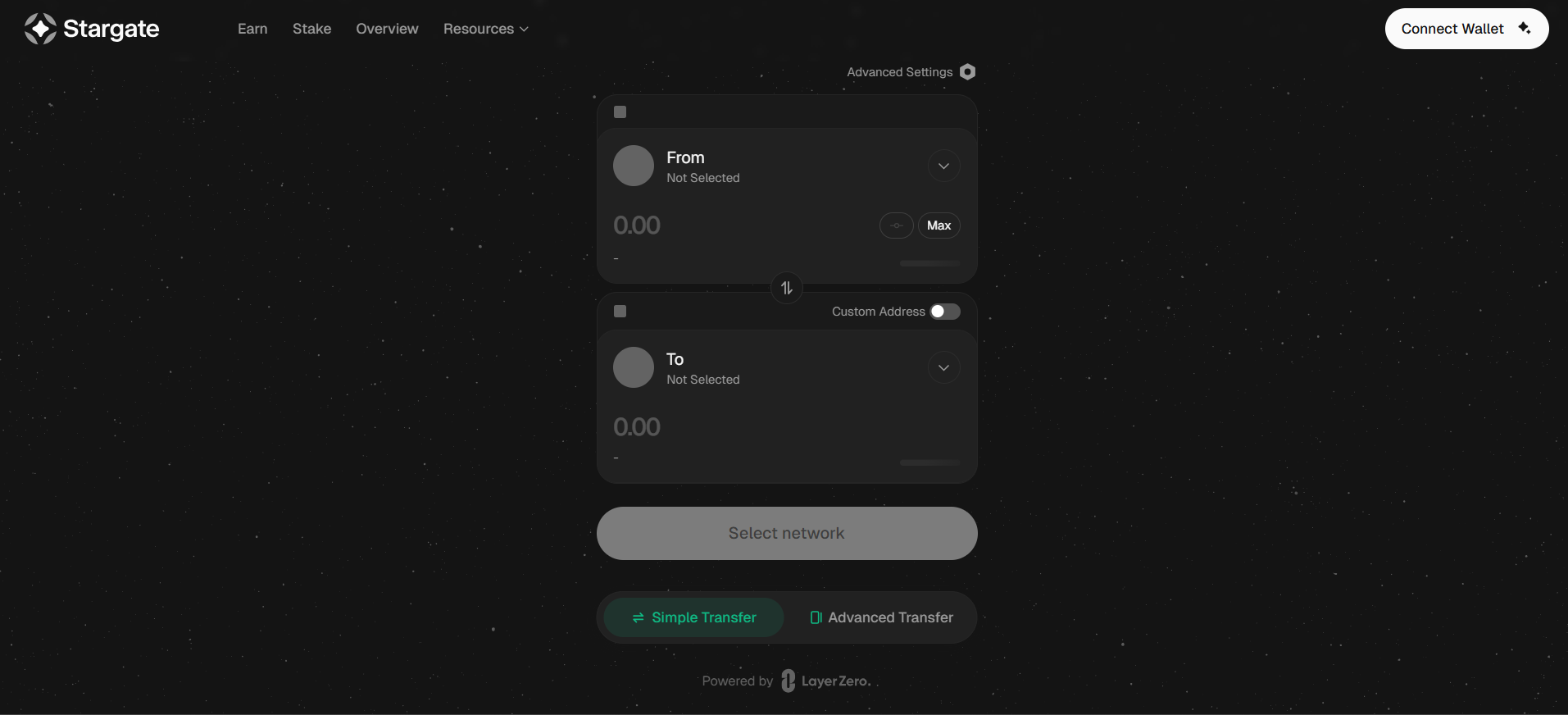
Stargate is built on LayerZero and targets persistent bridge pain points such as liquidity fragmentation, slower finality, and reliance on wrapped token representations.
Key Advantages
- Native Asset Support: Uses unified liquidity pools across supported chains, enabling native asset transfers across 40+ blockchains
- Instant Finality: Transfers are typically confirmed with instant finality
- Fee Model: V1 pools charged a flat 0.06% (6 bps) per transfer; Stargate V2 uses dynamic fees and rebates set by its AI Planning Module (Stargate docs)
- Security Design: Based on LayerZero’s ultra-light node architecture
5. Bridge Aggregators: The Direction of Travel
In 2026, aggregation increasingly looks like the “default” user experience for bridging. Instead of choosing a single bridge manually, users prefer one interface that routes across many options.
Rubic Exchange represents this aggregator model. Rather than acting as one bridge, it connects to 340+ DEXs, bridges, intent protocols and privacy solutions and routes swaps based on fees, liquidity, and path efficiency.
Aggregator Benefits
- Optimized Routing: One UI, many bridge options
- Cost Efficiency: Automated best-route selection
- Enhanced Liquidity: 70+ chains and 70,000+ tokens, avoiding single-bridge liquidity constraints (Rubic)
2026 data: Bridge aggregators handled $5.35 billion in the 30 days to September 27, 2026, led by SOCKET ($1.47 billion), LI.FI ($1.23 billion) and Jumper ($994.2 million), with Rubic at $110.1 million, per DefiLlama bridge aggregators. For a ranked list, see Best Cross-Chain Aggregators for 2026.
Stablecoin-Native Routes: Circle CCTP V2 and Axelar
For stablecoins specifically, the first question is whether you receive the issuer-native token or a bridge-issued representation. These two routes, from our earlier cross-chain stablecoin bridges guide (now merged here), sit at opposite ends of that choice.
Native vs Bridged Stablecoins: Check Asset Quality First
- If your priority is to receive native USDC, burn-and-mint rails generally win. Circle’s CCTP is explicitly built for this purpose.
- If you are fine receiving a representation, you must understand its backing and redemption.
For example, Axelar describes axlUSDC as a wrapped representation backed 1:1 by USDC locked in an Axelar gateway.
To make this actionable, always answer these questions before bridging:
- Will I receive an issuer-native stablecoin contract, or a bridge-issued contract?
- If it is a representation, what is the redemption path, and who controls it?
- Do the destination apps (DEXs, lending markets, payment tools) accept this exact token contract?
Circle CCTP V2
- Best for: Native USDC transfers when you want to avoid wrapped USDC risk.
- How it works: Burn USDC on the source chain and mint USDC on the destination chain (Circle-managed protocol and contracts).
Why it’s a top 2026 pick:
- Circle has positioned CCTP V2 as canonical, with CCTP V1 moved to legacy status.
The stated migration/deprecation timeline matters operationally: Circle indicated that phase-out actions would begin on July 31, 2026.
Tradeoffs:
- It is purpose-built for USDC; if you need USDT or non-USDC stablecoins, you need other routes.
Use it when: You need predictable USDC quality across chains (treasury, payments rails, DeFi positions that require native USDC).
Additional diligence tips for CCTP-style rails:
- Confirm that both the source and destination chains are supported for the rail you intend to use.
- Confirm whether your route is using the latest version (V2) rather than legacy pathways.
- If you are integrating into an application, define operational handling for delayed finality, reorg assumptions, and monitoring.
Axelar

- Best for: Cosmos ↔ EVM connectivity, token distribution, and interoperability workflows that aren’t limited to one VM family.
- How it works: Axelar positions itself as secure cross-chain communication based on proof-of-stake, with tooling to connect many chains.
Grounded claims you can cite:
- Axelar markets deployment across 80+ blockchains (positioned for token/stablecoin distribution).
- Axelar’s axlUSDC is explicitly described as a wrapped representation backed 1:1 by USDC locked in an Axelar gateway.
Tradeoffs:
- If your requirement is “native USDC everywhere,” a wrapped representation may not meet that requirement.
Use it when: You need interoperability across ecosystems (including Cosmos), and you can manage representation risk with policy and monitoring.
Operational guidance for Axelar-style representations:
- Document whether your treasury policy allows wrapped representations and under what limits.
- Confirm how your downstream systems treat the representation (for example, risk scoring, collateral eligibility, or payment acceptance).
- For larger programs, establish monitoring for peg behavior, liquidity depth, and redemption constraints.
Security Challenges and Risks
The Bridge Hack Epidemic
Bridge-related attacks have remained a defining risk theme. Chainalysis estimated that $2 billion had been stolen across 13 separate cross-chain bridge hacks by August 2022, accounting for 69% of all crypto stolen that year (Chainalysis).
Bridges are attractive targets because they often secure large pools of locked value that back assets on destination chains.
Notable Security Incidents
- The Wormhole Exploit (2022): An attacker exploited a signature verification bug to mint 120,000 unbacked wrapped ETH on Solana and bridged 93,750 of them back to Ethereum; Jump Crypto recapitalized the contract (Wormhole incident report). The event underscored how critical guardian/validator verification integrity is to bridge safety.
Security Best Practices
Common defensive measures include extensive code auditing, security training, and operational defenses against social engineering. Threat models often include sophisticated actor groups, including North Korean-linked hacking operations that historically rely on social engineering and targeted compromise.
The Stablecoin Connection
Bridge protocols play a key role in stablecoin mobility across ecosystems. For many users, stablecoins are the most frequently bridged asset class because they are used for DeFi positioning, yield strategies, and arbitrage.
Some protocols specialize in stablecoin movement. For example, Allbridge Core has focused specifically on transferring stablecoins between EVM and non-EVM chains.
For institutional workflows, bridging stablecoins can also connect to cross-border settlement and treasury operations, especially when institutions need to move tokenized cash equivalents across execution environments.

Future Innovations (What 2026 Buyers and Builders Care About)
Intent-Based Bridging
Intents-based bridging reframes the UX. Instead of managing steps manually, a user states an outcome, such as moving ETH from mainnet to Base, and the network orchestrates the bridging path behind the scenes.
The goal is to replace “process” with “results.”
ERC-7683 Standard
Across and Uniswap developed ERC-7683, a standard for expressing cross-chain intents. Standardization is intended to make intents interoperable across EVM environments, reducing fragmentation in how cross-chain actions are described and executed.
Chain Abstraction
Chain abstraction is the end-state direction: users should not need to care which chain they are on, or how bridging works, similar to how people do not think about TCP/IP when using the internet. The bridge layer becomes infrastructure, not a workflow.
Choosing the Right Bridge
Key Selection Criteria
Use the following filters before moving value cross-chain:
- Network Support: Confirm both source and destination chains are supported
- Security Track Record: Review audits and known incidents
- Fee Structure: Compare protocol fees plus gas requirements
- Transfer Speed: Evaluate confirmation time and finality behavior
- User Experience: Assess UI clarity, transaction transparency, and failure recovery patterns
Bridge Comparison Framework
Cost and speed vary widely. A bridge fee usually combines a protocol or LP fee with destination-chain gas (Across fee docs), and gas makes Ethereum L1 far pricier than Layer-2s: Wormhole Connect relays cost about 4.2 USDC to Ethereum versus 0.3 USDC to Base or Arbitrum (Wormhole docs).
Some designs optimize for speed and convenience, while others prioritize security assurances over rapid finality.

The Road Ahead
Market Trends
Cross-chain interoperability has remained one of the most persistent trends in crypto, new bridges continue launching, existing ones iterate rapidly, and more platforms integrate bridging directly into wallets and applications.
Regulatory Considerations
As cross-chain activity expands, compliance expectations increasingly matter. Bridge protocols may need to operate across jurisdictions with different rules, while still preserving decentralization goals and minimizing custody risk.
Integration with Traditional Finance
Bridges are also becoming part of the institutional plumbing for tokenized assets. As TradFi experiments with on-chain settlement and tokenized instruments, interoperability infrastructure becomes more relevant, because institutions rarely operate on a single chain.
Read Next:
- Best Chain for Stablecoin Micropayments in 2026
- Best Stablecoin On/Off-Ramps for 2026 Compared
- How to Pay Influencers in Stablecoins in 2026
- How to Bridge Tokens: A Practical Guide
- Bridging Stablecoins Between Ethereum, Solana, and Layer 2s
- Best Cross-Chain Stablecoin Bridges for 2026
- 12 Best Stablecoin Aggregators to Use in 2026
FAQs:
1. What is a cross-chain bridge?
A cross-chain bridge is a protocol that transfers digital assets and/or data between different blockchain networks, enabling users to move tokens across ecosystems without relying on centralized exchanges.
2. Are crypto bridges safe to use?
Safety varies by protocol. The sector has experienced major losses: Chainalysis estimated $2 billion was stolen across 13 bridge hacks, 69% of crypto stolen in 2022 at the time (Chainalysis). Users should review audits, past incidents, and the bridge’s validation model before transferring significant value.
3. How much do bridge transfers cost?
Fees usually combine a protocol or LP fee with destination gas (Across fee docs). Named examples: Stargate V1 pools charged a flat 0.06%, while Stargate V2 uses dynamic fees and rebates (Stargate docs); Wormhole Connect, the relay layer behind Portal transfers, charges about 0.3 USDC to Base, Optimism, Arbitrum or Avalanche and about 4.2 USDC to Ethereum L1 for automatic USDC relays (Wormhole docs).
4. Which bridge protocol is the most secure?
Wormhole has been viewed as a security leader due to being the only cross-chain protocol unconditionally approved by the Uniswap DAO’s Bridge Assessment Committee. Even so, users should evaluate security based on multiple factors, not a single designation.
5. What is the difference between custodial and non-custodial bridges?
Custodial bridges depend on a third party for validation and/or custody during transfer. Non-custodial bridges rely on smart contracts and decentralized validation to lock, verify, and release assets without handing control to a centralized operator.
6. How long do bridge transfers take?
Transfer times depend on the protocol and chain conditions. Some systems aim for near-instant finality, while others take minutes (or longer under congestion). Intent-based bridges like Across can complete transfers in about 2 seconds, because relayers front the funds on the destination chain and settle later (Across docs).
7. Can I bridge NFTs across chains?
Yes. Many bridge protocols support NFTs. Wormhole’s Portal Bridge is one example that supports both token and NFT transfers across its supported networks.
8. What happens if a bridge transfer fails?
Most established bridges implement recovery mechanisms and provide user support paths for stuck transfers, but resolution time and reliability vary by protocol and scenario.
9. Are bridge aggregators better than using one bridge directly?
Bridge aggregators like Rubic can improve convenience and pricing by routing across multiple bridges automatically. However, single bridges may still be preferred for specific chains, specialized features, or situations where a team trusts one security model more than others.
10. What are the key future developments in bridge technology?
Major themes include intent-based bridging, chain abstraction, interoperability standards like ERC-7683, and ongoing improvements to bridge security design and operational defense.
11. How do I choose the best stablecoin aggregator for my needs?
Prioritize support for your chains and stablecoins, evaluate execution speed and fee transparency, and choose a product with a UI that makes routing and pricing clear, especially if you bridge frequently or at higher size.
Disclaimer:
This content is provided for informational and educational purposes only and does not constitute financial, investment, legal, or tax advice; no material herein should be interpreted as a recommendation, endorsement, or solicitation to buy or sell any financial instrument, and readers should conduct their own independent research or consult a qualified professional.