Table of Contents
Most announced “innovations”, clever yield wrappers, over-engineered programmability layers, exotic collateral experiments will quietly fade.
Regulatory friction, economic realities, and genuine adoption barriers will see to that.
The survivors will be those that solve structural problems without introducing new ones.
Here is a rigorous framework for separating signal from noise, followed by the five developments with the clearest path to scale under the emerging GENIUS regime.
The Innovation Graveyard: Lessons from What Has Already Broken
History is instructive. Algorithmic experiments collapsed under correlation risks.
Early yield-bearing attempts ran afoul of run dynamics and regulatory scrutiny.
Even compliant issuers have struggled with redemption frictions and concentration.
In 2026, GENIUS’s 1:1 high-quality liquid asset (HQLA) requirements, yield prohibitions (with rebuttable presumptions on affiliate structures), capital and liquidity buffers, and real-time attestation mandates are exposing models that looked elegant on paper.
Common failure modes include:
- Regulatory misalignment: Structures that skirt yield rules or reserve composition end up in prolonged comment-period limbo or enforcement risk.
- Economic fragility: High operational costs from complex smart contracts, custody arrangements, or liquidity tiering that erode issuer margins.
- Adoption theater: Volume concentrated in trading/speculation rather than payments, treasury, or collateral use cases (real-economy flows still represent a modest share of on-chain activity).
- Second-order risks: Interconnectedness with TradFi during stress, oracle dependencies, or unmodeled concentration.
The pattern is clear: flashy features rarely survive contact with prudential supervision and institutional due diligence.
The Five Ideas That Might Actually Survive
1. Compliant Tokenized Deposits & Bank-Native Hybrids

Banks are not standing still. JPMorgan, Citi, and peers are building shared tokenized deposit networks targeted for 2027 launch via The Clearing House.
These maintain full deposit insurance treatment and settlement finality while adding programmability and 24/7 rails.
- Why it endures: Regulatory familiarity, balance sheet integration, and lower run risk relative to nonbank stablecoins. GENIUS largely carves out or treats tokenized deposits more favorably in certain respects.
- Risks to watch: Slower innovation velocity and potential deposit migration friction.
- Takeaway: The hybrid future favors entities that can bridge bank charters with public chain composability.
2. High-Quality Tokenized Treasury & Conservative RWA Reserves

Tokenized T-bills (BUIDL, OUSG, etc.) have scaled meaningfully, providing yield generation through separate vehicles or affiliates while core stablecoins remain non-yielding per GENIUS rules.
Conservative structures with liquidity tiering and bankruptcy-remote custody are gaining traction.
- Why promising: Diversification beyond plain vanilla Treasuries, better issuer economics, and institutional comfort with HQLA. GENIUS proposals explicitly contemplate tokenized eligible reserves with proper attestations.
- Key discipline: Strict valuation transparency, concentration limits, and stress-tested liquidity. Avoid illiquid private credit at core reserve levels.
- Takeaway: This is evolution, not revolution and that is its strength.
3. Interoperability & Standardized Multi-Chain Settlement Protocols

Fragmentation across chains remains a tax on usability. Atomic settlement standards, shared bridging infrastructure, and cross-chain messaging that prioritizes security over speed are seeing serious engineering investment.
- Why it endures: Solves a genuine coordination problem without adding issuer-level fragility. GENIUS-era supervision will reward designs that enhance, rather than complicate, redemption and reserve portability.
- Risks: Bridge failures and governance attacks the graveyard is littered with them.
- Takeaway: Infrastructure that makes stablecoins boringly reliable across ecosystems wins long-term.
4. Enterprise/Private Onramps & Closed-Loop Programmable Rails
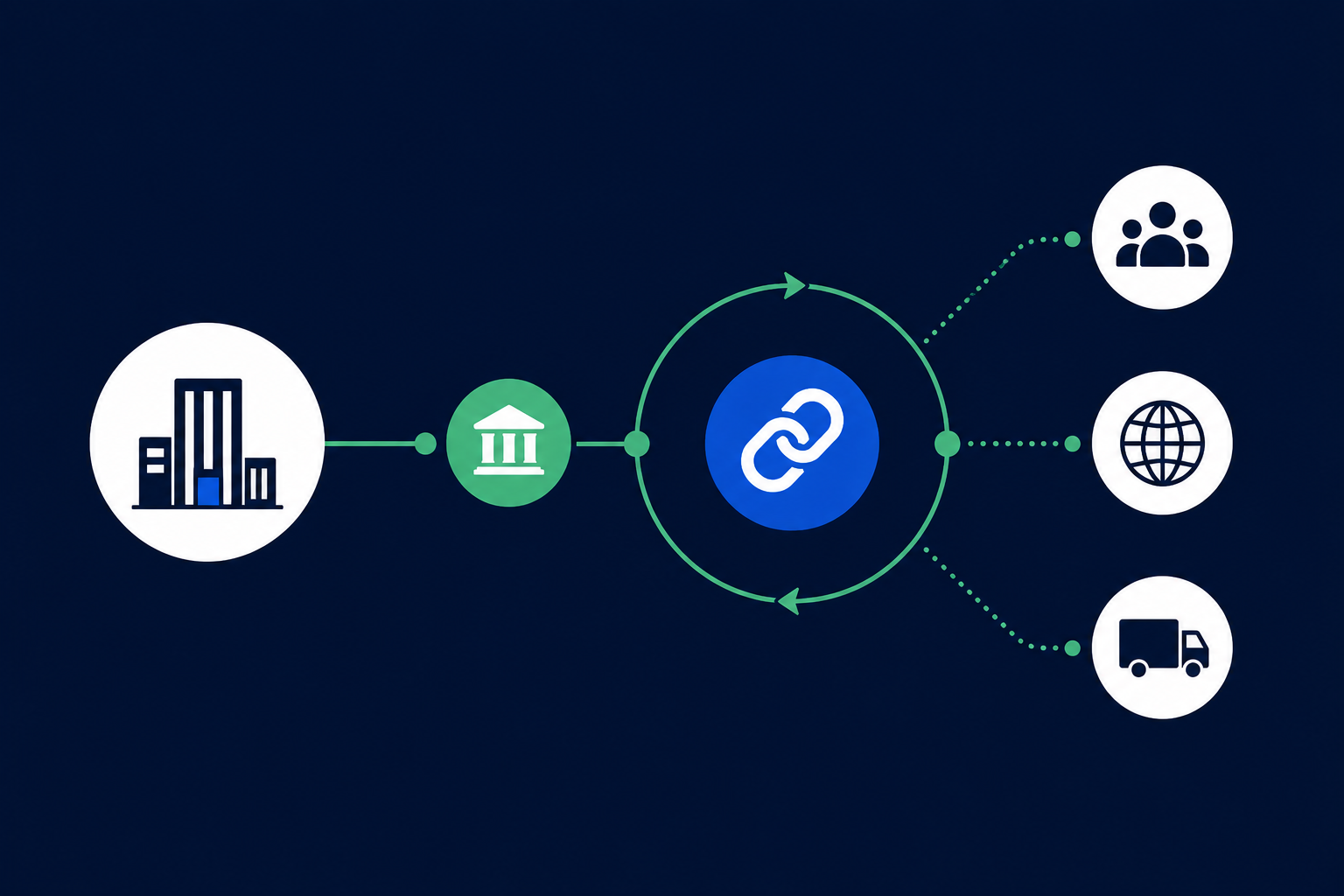
White-labeled issuance, direct corporate treasury integrations, and permissioned payment rails for B2B settlements, remittances, and supply chain finance.
Think closed ecosystems with API-driven on/off-ramps that minimize public chain exposure where unnecessary.
- Why viable: Captures real friction reduction in cross-border and treasury operations. Lower public AML surface and easier integration with legacy systems. Institutions prioritize predictability over open DeFi composability.
- Takeaway: The quiet money is in plumbing that enterprises will actually pay for and defend.
5. Advanced Risk Management & Real-Time Attestation Infrastructure

On-chain audit trails, automated stress testing, real-time reserve transparency tools, and sophisticated run-risk modeling.
This is the “picks and shovels” layer that supports everything else under GENIUS disclosure and supervisory expectations.
- Why critical: Turns compliance from cost center into moat. Issuers and supervisors both need better tools for liquidity forecasting, concentration monitoring, and forensic analysis.
- Takeaway: In a regulated era, superior risk infrastructure becomes a competitive differentiator and potential licensing advantage.
Strategic Implications
Winners will look “boring” by 2025 standards: heavily regulated or bank-adjacent, focused on reliability over novelty, and deeply integrated into enterprise workflows.
Expect consolidation as smaller experiments burn cash on compliance overhead. M&A activity should accelerate around the survivors above.
- For issuers: Prioritize infrastructure bets and partnerships with banks.
- For investors and operators: Apply the scorecard ruthlessly. For policymakers: The GENIUS framework is working as intended if it channels innovation toward resilience rather than regulatory arbitrage.
The next trillion in stablecoin utility will not come from the shiniest new primitive.
It will come from unglamorous improvements in custody segregation, redemption mechanics, interoperability standards, and risk transparency.
Related Reports
Partner/Advertise with Stablecoin Insider
Fill out this form to partner and advertise on the only publication, dedicated entirely to the Stablecoin ecosystem.
See you next week,
- The Stablecoin Insider team