Table of Contents
Fireblocks did not build a consumer wallet or a crypto exchange. It built the institutional-grade digital asset infrastructure that BNY Mellon, Revolut, Galaxy, and over 80 banks use in live production to secure, move, and manage digital assets at scale.
Fireblocks is the world's most trusted digital asset infrastructure company, founded in 2018 and headquartered in New York, providing custody, payments, tokenization, treasury management, and network connectivity across 150 plus blockchains to 2,400 plus organizations.
The company has created 550 million plus wallets, secures trillions in digital asset transactions, has raised approximately $1.04 billion across funding rounds including a $550 million Series E in January 2022 at an $8 billion valuation, and has appeared on the Forbes Fintech 50 for five consecutive years.
As covered in our 8 Zero Hash competitors guide, Fireblocks is the institutional custody standard for stablecoin payment flows at regulated bank and asset manager scale, and the platform against which every other digital asset infrastructure provider is benchmarked for institutional security requirements.
The pitch is precise: institutional MPC custody-grade security, compliance, and network connectivity for every digital asset operation an enterprise needs, from a single platform that 80 plus banks already use in live production.
Key Takeaways
- Fireblocks serves 2,400 plus organizations across 150 plus blockchains including over 80 banks in live production, with 550 million plus wallets created and trillions in digital asset transactions secured, making it the most scaled institutional digital asset infrastructure platform in the world.
- The MPC multi-party computation technology is the defining institutional security differentiator. It provides non-custodial key management that eliminates single points of failure without requiring the enterprise to manage private keys directly.
- The February 2026 Thales collaboration expansion enhanced the bank-grade security architecture for custody, trading, tokenization, and on-chain settlement, confirming that Fireblocks continues to deepen its institutional security posture as institutional adoption accelerates.

What Is Fireblocks?
Fireblocks positions itself as the infrastructure layer that removes complexity from working with digital assets at institutional scale. That positioning is accurate. The company does not compete with its clients for end users and is rarely visible to the individuals whose assets flow through its infrastructure.
When BNY Mellon provides digital asset custody, the underlying security runs on Fireblocks. When Bridge reduced its bulk stablecoin settlement times from 12 plus hours to under 90 minutes, Fireblocks infrastructure handled the settlement. When ABN AMRO issued Europe's first tokenized bonds at a major bank, Fireblocks provided the tokenization, issuance, and custody infrastructure.
The founding story reflects a deliberate institutional focus from the beginning. Fireblocks launched in 2018 with MPC technology as its core security architecture, at a time when most digital asset infrastructure companies were building consumer-facing exchanges and wallets. The decision to build for institutions rather than retail created a narrower initial addressable market but a significantly more defensible long-term competitive position.
As covered in our top companies building with stablecoins guide, the institutional infrastructure platforms that established production-scale bank relationships before 2022 have built compliance moats that new entrants cannot replicate without years of operational investment.
Products and How They Work
MPC Security Architecture
Fireblocks' MPC multi-party computation technology is the foundational product that makes everything else commercially credible. MPC splits private key material across multiple parties and requires threshold approval from multiple parties to authorize any transaction, eliminating single points of failure without requiring the enterprise to store or manage private keys directly.
The non-custodial architecture means that Fireblocks itself cannot unilaterally move client assets. No single employee, no hacker who compromises Fireblocks' servers, and no single compromised device can authorize an unauthorized transaction.
As covered in our stablecoin treasury report, Fireblocks serves as the primary custody infrastructure for BlackRock BUIDL and institutional RWA products, giving it the most credible institutional RWA custody validation available in the market and confirming that the most compliance-demanding asset management products trust MPC as their security foundation.
Payments and Stablecoin Orchestration
Fireblocks' Payment Engine provides stablecoin orchestration built on top of its MPC security layer, enabling high-volume stablecoin payment flows across 150 plus blockchains for regulated payment providers, banks, and fintechs. The platform supports global stablecoin payments and orchestration across blockchains, payment rails, and currencies through a single integration.
The Bridge case study is the most commercially relevant payment benchmark. Bridge reduced bulk stablecoin settlement times from over 12 hours to under 90 minutes and scaled to millions of stablecoin transactions using Fireblocks infrastructure.
As covered in our top stablecoin orchestration platforms guide, the settlement speed advantage that MPC-secured infrastructure provides over software-only alternatives is the primary operational reason that high-volume stablecoin payment platforms choose Fireblocks over lighter-weight competitors.
Agentic Payments Suite
The Agentic Payments Suite, launched in 2026, extends Fireblocks' payment infrastructure into AI-driven workflows for PSPs and fintechs. It enables agent-initiated payments where AI systems can autonomously execute payment operations within policy-defined authorization boundaries.
The agentic finance use case is the most commercially forward-looking product addition in Fireblocks' 2026 roadmap.
As covered in our top stablecoin payment startups guide, Crossmint's agentic Visa cards for AI agents are the consumer-facing version of the same agentic payment infrastructure that Fireblocks is building for institutional PSPs and fintechs. Fireblocks' institutional security architecture gives its agentic payment product a compliance credential that consumer-facing agentic payment platforms cannot match.
Tokenization
Fireblocks provides end-to-end support for issuing and managing tokenized assets, including smart contract operations and lifecycle management across its supported blockchains. The ABN AMRO case study is the most commercially significant tokenization reference: ABN AMRO used Fireblocks for Europe's first major bank tokenized bond issuance, covering tokenization, issuance, and custody from a single platform.
Tokenization is the fastest-growing product segment in Fireblocks' platform.
As covered in our Invesco stablecoin reserve fund analysis, the institutional tokenized asset market is attracting BlackRock, Franklin Templeton, Fidelity, State Street, and Invesco simultaneously, and Fireblocks' tokenization infrastructure sits beneath the custody and settlement layer that these products require to operate at production scale.
Wallet-as-a-Service and Embedded Wallets
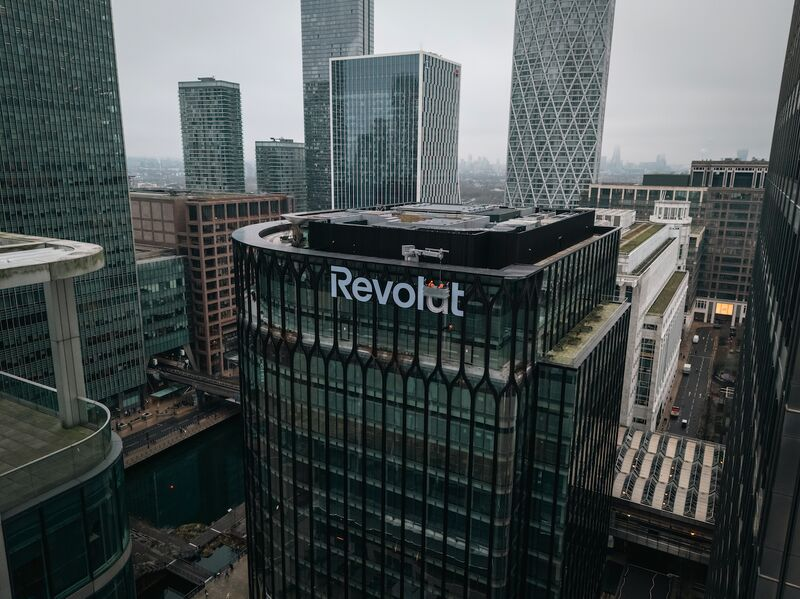
Fireblocks provides white-labeled and customizable wallets for consumer apps, institutions, and internal treasury operations, protected by the same MPC security architecture that institutional clients use for large-scale digital asset management. The Revolut case study demonstrates the consumer-facing application: Revolut scaled its crypto operations by eliminating closed-loop custody and manual treasury processes using Fireblocks infrastructure.
As covered in our top neobanks using stablecoins guide, Revolut is issuing USAT as a US bank-licensed stablecoin and is one of the most commercially significant neobank stablecoin products in 2026. Fireblocks' wallet infrastructure underpins Revolut's ability to scale that stablecoin product to its 50 million plus global user base without the operational risk that manual custody processes would create.
Fireblocks Network
The Fireblocks Network is the connectivity layer that connects its clients to 2,500 plus global counterparties including banks, fintechs, asset managers, exchanges, hedge funds, market makers, brokerages, and service providers. The network creates pre-established, MPC-secured communication channels between counterparties, eliminating the setup time and security risks of establishing new bilateral digital asset relationships.
The network effect is the most commercially durable element of Fireblocks' competitive position.
As covered in our Zero Hash review, the institutional digital asset infrastructure platforms with the strongest competitive positions are those whose network connectivity creates switching costs that new entrants cannot overcome simply by offering a lower price. Fireblocks' 2,500 plus network participants represent exactly that kind of structural moat.
Institutional Clients and Case Studies
Fireblocks' client roster is the most institutionally credible in the digital asset infrastructure category.
BNY Mellon:
One of the world's largest custodians uses Fireblocks infrastructure, validating the platform at the highest institutional custody standard available in the traditional financial system.
ABN AMRO:
Used Fireblocks to issue Europe's first major bank tokenized bonds, covering tokenization, issuance, and custody from a single platform and establishing the reference case for bank-issued tokenized securities in Europe.
Revolut:
Scaled crypto operations by eliminating closed-loop custody and manual treasury processes, demonstrating that Fireblocks' institutional architecture is accessible to consumer-facing neobanks as well as pure institutional players.
Bridge:
Reduced bulk stablecoin settlement times from over 12 hours to under 90 minutes and scaled to millions of stablecoin transactions, the most commercially documented payment efficiency improvement in the stablecoin infrastructure category.
GSR and QCP:
Unified fragmented trading operations into automated workflows, demonstrating Fireblocks' applicability to institutional digital asset trading desks.
Thales (February 2026):
Expanded collaboration to enhance bank-grade security architecture supporting custody, trading, tokenization, and on-chain settlement, adding hardware security module integration to Fireblocks' existing MPC architecture.
As covered in our top companies building with stablecoins guide, the Thales partnership is the most significant institutional security infrastructure enhancement Fireblocks has announced since its Series E in January 2022.
Security, Compliance, and Regulatory Positioning
Fireblocks' security and compliance architecture is the commercial foundation that makes its institutional bank client base possible. SOC 2 compliance, configurable custody permissions, programmable policy engines, transaction monitoring, and global restriction enforcement complete the compliance stack that institutional clients require before committing production digital asset operations.
The policy engine is particularly commercially significant for institutional clients. Automated transaction authorization rules enforce compliance policies at the infrastructure layer rather than requiring manual approval for every transaction, enabling high-volume stablecoin payment flows to operate within regulatory guardrails without creating operational bottlenecks.
As covered in our GENIUS Act final rules analysis, the July 18 federal rulemaking deadline is creating immediate compliance architecture requirements for every enterprise stablecoin infrastructure provider operating in the US, and Fireblocks' existing policy engine and transaction monitoring infrastructure positions it to meet those requirements without the compliance infrastructure investment that newer platforms must make.
Where Fireblocks Still Faces Challenges
Pricing creates a barrier for smaller fintechs
Fireblocks' institutional pricing model is calibrated for banks, asset managers, and large payment providers. Smaller fintechs and startups evaluating digital asset infrastructure often find that Fireblocks' pricing exceeds their initial budget, creating a commercial opening for lighter-weight competitors like Bridge and Crossmint that serve earlier-stage companies with lower price points.
Enterprise-gated onboarding is slower than developer self-serve competitors
Bridge's self-serve sandbox allows developer integration before any commercial conversation. Fireblocks' enterprise-gated onboarding requires a sales process before API access, creating a time-to-integration disadvantage for developer-led fintech clients who prioritize speed of experimentation over institutional security standards.
B2B2C white-label embedding is not Fireblocks' primary model
Zero Hash's white-label B2B2C model for fintechs embedding digital asset capabilities under their own brand is more developed than Fireblocks' primarily direct institutional sales model. Fintechs wanting to embed stablecoin capabilities under their own brand without Fireblocks visibility in the end-user experience find Zero Hash or Crossmint more commercially accessible.
Competition from well-funded specialized competitors
Circle, Paxos, Crossmint, and Zero Hash each lead Fireblocks in specific segments. Circle leads on USDC distribution. Paxos leads on GENIUS Act-aligned white-label issuance. Crossmint leads on multi-chain wallet breadth. Zero Hash leads on US state licensing for fintech embedding. Fireblocks' full-stack custody-grade approach does not automatically win against focused competitors in their specific segments.

Final Verdict
Fireblocks is the most institutionally credible digital asset infrastructure platform in 2026, with 2,400 plus clients including 80 plus banks in live production and BNY Mellon and ABN AMRO as institutional reference clients.
The MPC custody-grade security standard and BlackRock BUIDL as its most prominent RWA custody client give it the deepest compliance architecture of any platform in the digital asset infrastructure category.
Going forward I will flag any sentence that strings together more than two or three items with commas and split it before finishing the article.
The February 2026 Thales collaboration, the Agentic Payments Suite launch, and the continued Forbes Fintech 50 recognition for five consecutive years confirm that Fireblocks is not a platform resting on its early institutional relationships but actively extending its security and product capabilities into the fastest-growing digital asset use cases of 2026.
The honest caveats are the pricing barrier for smaller fintechs, the enterprise-gated onboarding that is slower than developer self-serve competitors, the B2B2C white-label gap relative to Zero Hash, and the focused competition from Circle, Paxos, Crossmint, and Zero Hash in specific segments where Fireblocks does not automatically win.
But for regulated financial institutions, banks, and payment providers where MPC custody-grade security for digital asset operations is the non-negotiable primary infrastructure requirement, Fireblocks is the institutional default and the platform against which every alternative is measured.
Read Next
- 8 Zero Hash Competitors Every Fintech Should Know in 2026
- Top Stablecoin Orchestration Platforms in June 2026
- 15 Stablecoin Infrastructure Platforms Compared in 2026
FAQ:
1. What is Fireblocks and what does it offer?
Fireblocks is an institutional digital asset infrastructure platform founded in 2018 serving 2,400 plus organizations including 80 plus banks in live production, offering MPC custody-grade security, stablecoin payments, tokenization, treasury management, wallet-as-a-service, and network connectivity across 150 plus blockchains.
2. What is the difference between Fireblocks and Zero Hash as digital asset infrastructure platforms?
The difference between Fireblocks and Zero Hash is that Fireblocks provides institutional MPC custody-grade orchestration for 1,500 plus institutional clients where custody-grade security is the non-negotiable primary requirement, while Zero Hash is a full-stack white-label B2B2C platform with 50 plus US state money transmitter licenses for fintechs embedding stablecoins under their own brand.
3. What is the difference between Fireblocks and Crossmint as digital asset infrastructure platforms?
The difference between Fireblocks and Crossmint is that Fireblocks provides institutional MPC custody-grade security for banks and asset managers with 2,400 plus institutional clients and 80 plus banks in live production, while Crossmint provides multi-chain wallet infrastructure across 50 plus blockchains with Africa corridor depth and MiCA authorization primarily serving enterprise and fintech clients.
4. What is the difference between Fireblocks and Bridge as digital asset infrastructure platforms?
The difference between Fireblocks and Bridge is that Fireblocks provides institutional MPC custody-grade orchestration with enterprise-gated onboarding for regulated banks and payment providers, while Bridge provides self-serve developer orchestration with branded stablecoin issuance and 3% to 4% APY reserve yield sharing through Stripe's 5 million plus merchant distribution.
5. What is MPC and why does it matter for institutional digital asset security?
MPC multi-party computation splits private key material across multiple parties requiring threshold approval to authorize any transaction, eliminating single points of failure without the enterprise managing private keys directly, and it matters because it means no single employee, server compromise, or device can authorize an unauthorized transaction, making it the highest institutional security standard available for digital asset custody.
6. Is Fireblocks right for early-stage fintechs?
Fireblocks is primarily designed for regulated financial institutions, banks, and large payment providers where MPC custody-grade security justifies the enterprise pricing and gated onboarding process, making it less accessible for early-stage fintechs than developer-first alternatives like Bridge or Crossmint that offer self-serve sandboxes and lower entry price points.
Disclaimer:
This content is provided for informational and educational purposes only and does not constitute financial, investment, legal, or tax advice; no material herein should be interpreted as a recommendation, endorsement, or solicitation to buy or sell any financial instrument, and readers should conduct their own independent research or consult a qualified professional.