Table of Contents
Circle signed two separate memoranda of understanding on July 23, 2026, one with Kakao Group covering Kakao, Kakao Pay, and Kakao Bank, and one with Viva Republica and Toss Bank, to explore blockchain-based payment infrastructure and stablecoin use cases in South Korea.
The announcements land as South Korea's government listed advancing its Digital Asset Basic Act as a priority for the second half of 2026, and as major financial institutions including Kbank and KB Financial Group have already begun stablecoin and blockchain payment pilots.
As covered in our stablecoin infrastructure landscape 2026 guide, Circle is the only major stablecoin issuer with simultaneous GENIUS Act alignment and MiCA authorization, making it the reference partner for institutions in regulated markets evaluating stablecoin infrastructure ahead of formal rule frameworks.
The Kakao and Toss Bank MOUs extend that pattern to South Korea, where both partners serve the majority of the country's population.
Key Takeaways
- Circle signed MOUs with Kakao Group and Toss Bank on July 23, 2026, with the Kakao MOU covering Kakao, Kakao Pay, and Kakao Bank exploring USDC, KRW stablecoins, cross-border remittances, merchant settlement, and connections between blockchain networks and existing financial systems, while the Toss MOU covers biometric payments, USDC-linked financial products, programmable on-chain payments, and connecting stablecoin infrastructure to traditional bank accounts.
- Kakao Group operates South Korea's most widely used digital ecosystem: KakaoTalk is the country's dominant messaging platform, Kakao Pay is a leading digital payments service, and Kakao Bank is a major internet bank,KakaoTalk reaches most of the country.
- Both MOUs are exploratory and do not set a launch date or confirm a specific stablecoin issuance model: Kakao and Circle described the effort as a technical and regulatory review process, with the companies continuing assessments before any potential commercial launch, reflecting the reality that South Korea's Digital Asset Basic Act has not yet been finalized.
- Toss and Toss Bank's MOU covers biometric payments, USDC-based financial instruments and programmable on-chain payments (Toss newsroom).
- Both agreements are exploratory: no launch date or stablecoin product was announced on July 23, 2026 (Toss newsroom).
The Kakao Group MOU
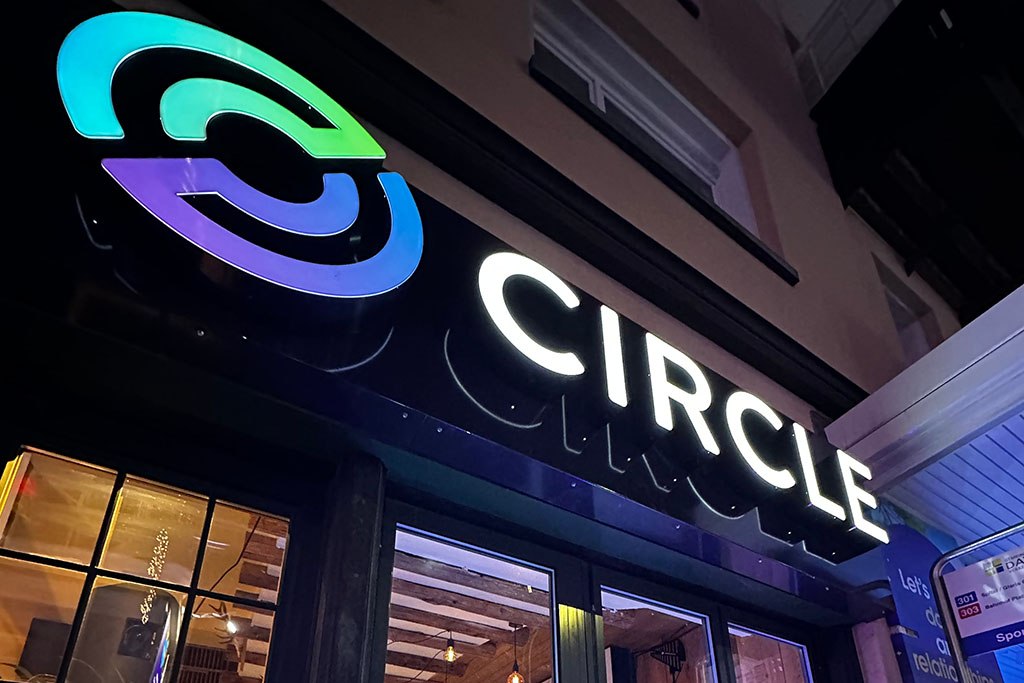
Kakao Group said its agreement with Circle will combine the KakaoTalk-centered platform ecosystem with Kakao Pay's payment services, Kakao Bank's banking capabilities, and Circle's blockchain infrastructure.
The companies plan to review payment, settlement, and digital asset connectivity as South Korea develops rules for stablecoins and other tokenized financial products.
The initial work will focus on faster payment and settlement systems. The companies will also assess cross-border remittances, merchant settlement, and links between blockchain networks and existing financial infrastructure.
Kakao Group noted the infrastructure could eventually support services from other Korean companies, though the MOU does not confirm specific products or timelines.
Kakao Pay CEO Shin Won-keun, who leads the group's stablecoin task force, said the companies would...
"preemptively prepare a Korean digital asset ecosystem with Circle."
Circle executives met Kakao representatives in Pangyo on July 22 before the MOU was announced.
The Toss Bank MOU
Toss and Toss Bank signed a separate MOU with Circle covering blockchain-based payments and stablecoin infrastructure across digital wallets, cross-border settlement, and financial services using USDC.
As covered in our top companies building with stablecoins guide, Circle's USDC, the world's second-largest stablecoin, is the reference institutional stablecoin for any Korean fintech evaluating regulated stablecoin infrastructure (The Herald Business).
Toss will specifically review biometric payment tools, USDC-linked financial products, and programmable on-chain payments. Toss Bank will focus on connecting stablecoin infrastructure with traditional bank accounts and fiat payment networks.
The parties also plan to examine compliance, risk management, security, and anti-money laundering requirements as Korean rules develop.
Toss Bank last month announced a separate partnership with the Solana Foundation to develop blockchain-based financial infrastructure for global users, making the Circle MOU its second blockchain partnership in two months.
Circle's Strategic Logic in South Korea
The two MOUs build on an already active Circle presence in South Korea. In April 2026, Circle signed agreements with Upbit and Bithumb, the two largest Korean crypto exchanges.
At the time, Circle CEO Jeremy Allaire said the partnerships "span continued work in the promotion and adoption of USDC on Korean exchanges and other technology collaborations."
The Kakao and Toss Bank MOUs extend Circle's Korean infrastructure from exchange listing into consumer platform and banking integration. Dante Disparte, Circle's Chief Strategy Officer, said that stablecoins and fintech platforms reinforce each other by creating greater demand for digital payments and financial services.
"You cannot simply place new money on top of old infrastructure,"
he said, arguing that digital finance innovation depends on close integration with payment networks.
South Korea's Regulatory Context
South Korea is positioning stablecoin legislation as a second-half 2026 priority. The government's economic growth strategy published July 14 listed advancing the Digital Asset Basic Act as a key goal.
That framework is still being finalized, which explains why Kakao and Circle are starting with an infrastructure-focused MOU rather than announcing a live stablecoin product.
As covered in our Circle OCC national trust bank approval analysis, Circle received final OCC approval for Circle National Trust on July 10, 2026, adding a federal banking credential that strengthens its institutional counterparty standing for Korean banks and fintechs evaluating compliance risk before signing infrastructure agreements.
Korean firms have moved ahead of formal rules on multiple fronts. In April, Kbank partnered with Ripple to test blockchain-based remittances. In May, KB Financial Group completed a pilot covering stablecoin issuance, offline merchant payments, and cross-border remittances through the Kaia blockchain.
The Circle-Kakao and Circle-Toss announcements add the two largest consumer fintech ecosystems to that list.

Conclusion
Circle's simultaneous MOUs with Kakao Group and Toss Bank on July 23, 2026 represent the most commercially significant stablecoin infrastructure announcements in South Korea to date, connecting Circle's regulated issuer credentials and USDC rails to the consumer platforms serving the majority of the Korean population.
Neither MOU sets a launch date or confirms a specific stablecoin product, reflecting the reality of a regulatory environment where the Digital Asset Basic Act has not yet passed.
The strategic value of these agreements is positional: Circle is establishing the technical and regulatory groundwork for USDC-based payment infrastructure across Korea's two dominant consumer fintech ecosystems before the legislative framework finalizes, replicating the same playbook it used in the EU ahead of MiCA and in the US ahead of the GENIUS Act.
FAQ:
1. What did Circle announce with Kakao Group on July 23, 2026?
Circle signed an MOU with Kakao Group covering Kakao, Kakao Pay, and Kakao Bank to explore USDC and KRW stablecoin payments, cross-border remittances, merchant settlement, and connections between Circle's blockchain infrastructure and Kakao's consumer platform ecosystem.
2. What did Circle announce with Toss Bank on July 23, 2026?
Circle signed a separate MOU with Viva Republica and Toss Bank to assess USDC-linked financial products, biometric payments, programmable on-chain payments, and connecting stablecoin infrastructure to traditional bank accounts and fiat payment networks.
3. Is Circle launching a Korean won stablecoin?
No launch date or confirmed stablecoin product was announced. The MOUs are exploratory agreements to study technical connections and regulatory requirements, with Kakao and Circle describing the effort as a technical and regulatory review before any potential commercial launch.
4. What is Kakao Group and why does this matter?
Kakao Group operates KakaoTalk, South Korea's dominant messaging platform, Kakao Pay, a leading digital payments service, and Kakao Bank, a major internet bank,KakaoTalk reaches most of the country.
5. What is South Korea's regulatory status on stablecoins in 2026?
South Korea listed advancing its Digital Asset Basic Act as a government priority for the second half of 2026, but the framework has not yet been finalized, which is why companies like Kakao and Toss Bank are beginning with exploratory MOUs rather than live stablecoin product launches.
6. What other Circle partnerships exist in South Korea?
Circle signed agreements with Upbit and Bithumb, South Korea's two largest crypto exchanges in April 2026, making the Kakao and Toss Bank MOUs the extension of that presence into consumer platform and banking infrastructure.
Disclaimer:
This content is provided for informational and educational purposes only and does not constitute financial, investment, legal, or tax advice; no material herein should be interpreted as a recommendation, endorsement, or solicitation to buy or sell any financial instrument, and readers should conduct their own independent research or consult a qualified professional.