
Table of Contents
There is no such thing as a stablecoin savings account. There are platforms that pay you a rate on a dollar-pegged token, and the phrase savings account is doing a lot of work to make that sound like something it is not.
The distinction stopped being pedantic in 2026. The GENIUS Act bans stablecoin issuers from paying holders any interest or yield, which is why Circle pays nothing on USDC while Coinbase pays several percent on the same token sitting in a Coinbase account.
Every rate below exists because the prohibition attaches to issuers rather than to the platforms distributing their tokens. That gap is now the subject of a proposed OCC rule and a Senate vote, so the right way to read this list is by what backs the rate and what could take it away.
Two products can both advertise similar headline rates and carry completely different risk. One is a company rebating part of its reserve income, another is borrower interest from an overcollateralised loan book, and a third is a hedged futures position that has printed negative returns in the past.
Key Takeaways
- Stablecoin issuers cannot pay yield, so every rate comes from a platform.
- No account on this list carries FDIC or any other deposit insurance.
- The OCC has proposed closing the affiliate gap that funds custodial rewards.
- Headline rates often cluster closely, so the yield source matters more than the number.
- Custodial rewards can be changed or withdrawn by the platform at will.
Why the Rates Look the Way They Do in 2026
Understanding the legal structure explains almost everything about the current market.
Section 4(a)(11) of the GENIUS Act prohibits a permitted payment stablecoin issuer from paying holders any form of interest or yield solely in connection with holding, using, or retaining that stablecoin. Exchanges, wallets, and payment platforms are not issuers, so the provision does not reach them.
The result is the three-party model. The issuer earns interest on its reserves, passes part of that revenue to the distributing platform, and the platform pays the user a rewards rate while keeping the spread.
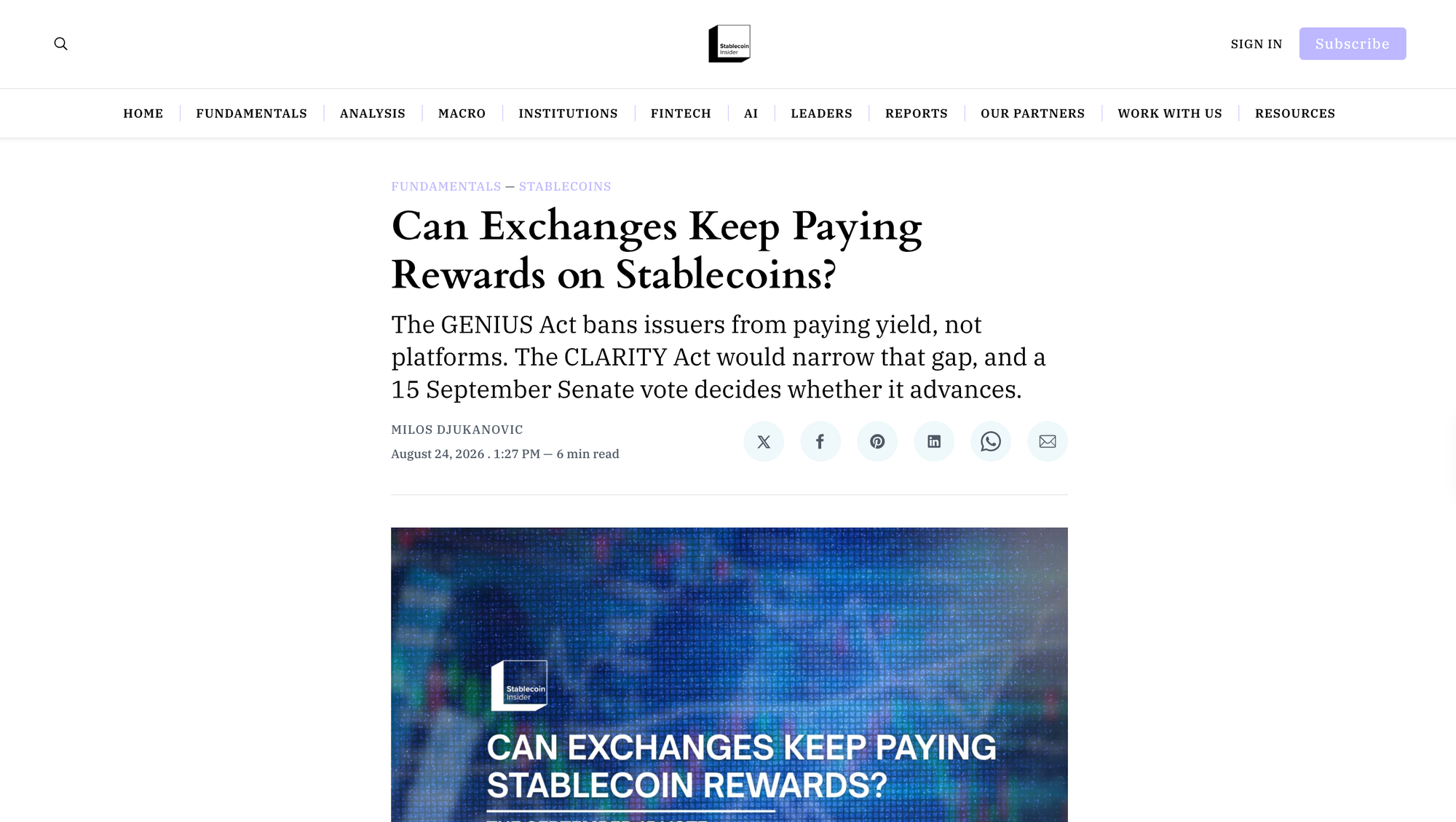
Regulators have noticed. The OCC's proposed rule from February 2026 includes a rebuttable presumption against yield paid through affiliates and related third parties, and the dispute is one of the issues holding up the CLARITY Act, with a Senate procedural vote scheduled for 15 September 2026. Our breakdown of the rewards vote covers what each outcome would permit.
The practical takeaway is simple. Custodial rewards carry regulatory risk that on-chain yield does not, and that risk is not priced into the advertised rate.
Best Stablecoin Savings Accounts in 2026-2027
1. Coinbase USDC Rewards
Yield source: Coinbase rebating part of the reserve income it earns on USDC balances.
This is the shortest path from dollars to a rate, requiring no wallet, no gas, and no bridge. It is also the exact arrangement the OCC rule targets, since Coinbase holds a revenue-sharing agreement with Circle and more than a quarter of all USDC in circulation sits inside its products.
What to know:
- Rates have varied through 2026 by tier, region, and time
- The rate is set at Coinbase's discretion and can change without notice
- Some rate levels require a paid membership tier
- Balances are a claim on Coinbase, not an insured deposit
Best for users who want a rate on idle dollars without touching DeFi and accept platform counterparty risk.
2. Base App
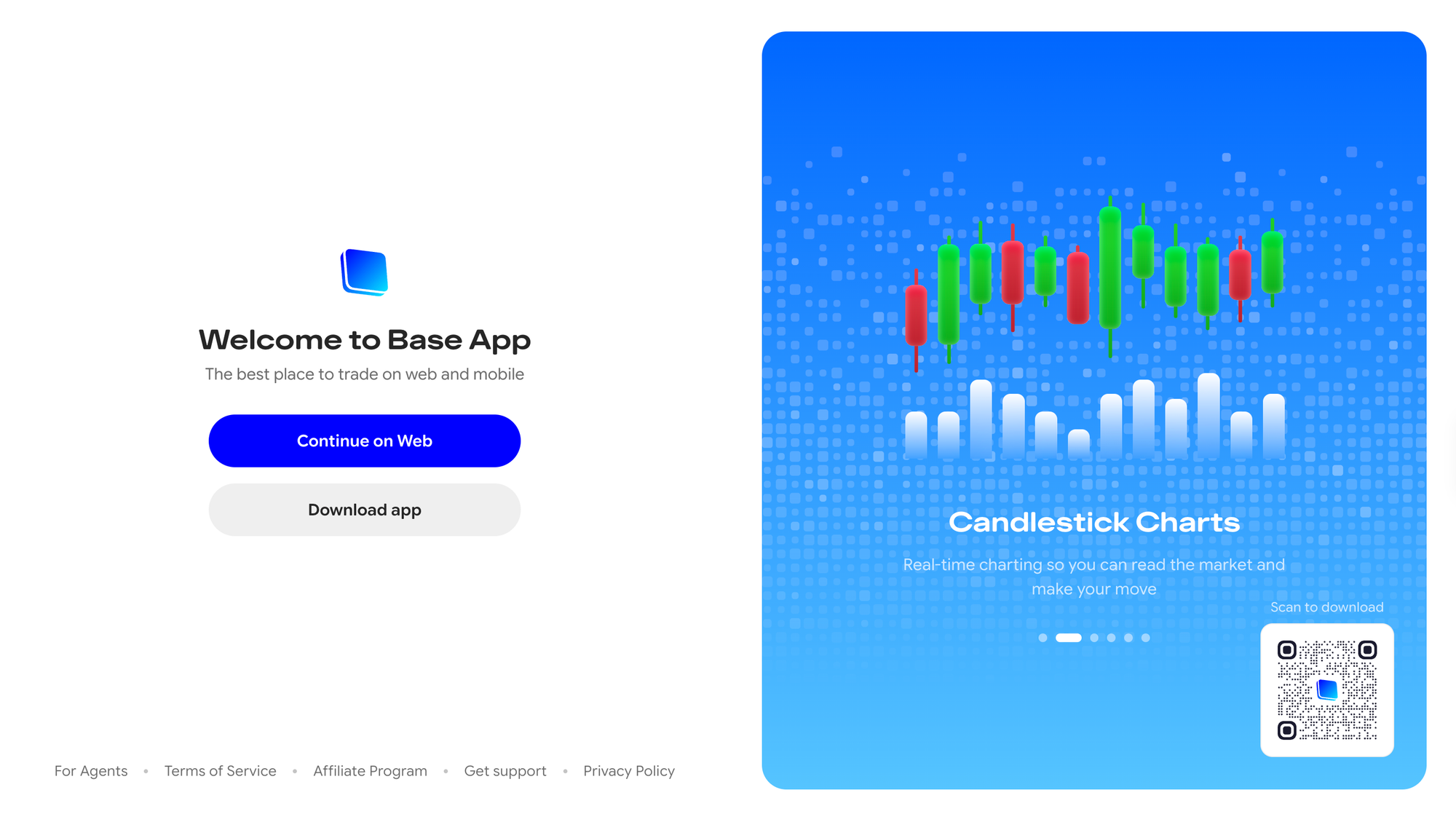
Yield source: the same Coinbase rewards mechanism, paid into a self-custodial balance.
Base App is the renamed Coinbase Wallet, and it is the closest thing to a savings account where you still hold the keys. The rewards programme is the notable part, along with sponsored network fees on USDC sends on Base.
What to know:
- USDC rewards are paid at a rate set at Coinbase's discretion
- US users must link a Coinbase account to earn, and the programme is unavailable in the EU and Canada
- Sponsored fees on Base USDC transfers within published caps
- Email or passkey onboarding with recovery options, despite being self-custodial
Best for users who want the custodial rate without the custodial balance.
3. MetaMask Money Account
Yield source: lending market vaults allocating to protocols such as Aave and Morpho.
MetaMask took the other route available under the current rules. Rather than rebating reserve income, it built an account around its own dollar token and routes the balance into on-chain lending, paying a variable rate net of fees.
What to know:
- Yield accrues on mUSD, not on USDC or USDT, so conversion is the condition
- mUSD is issued by Bridge, a Stripe company, and minted through the M0 protocol
- The rate is variable and follows lending market conditions rather than a company decision
- The same balance funds the MetaMask Card, with cashback paid in mUSD
Best for EVM users who want one balance that earns and spends and are comfortable holding a newer dollar token.
4. Nexo
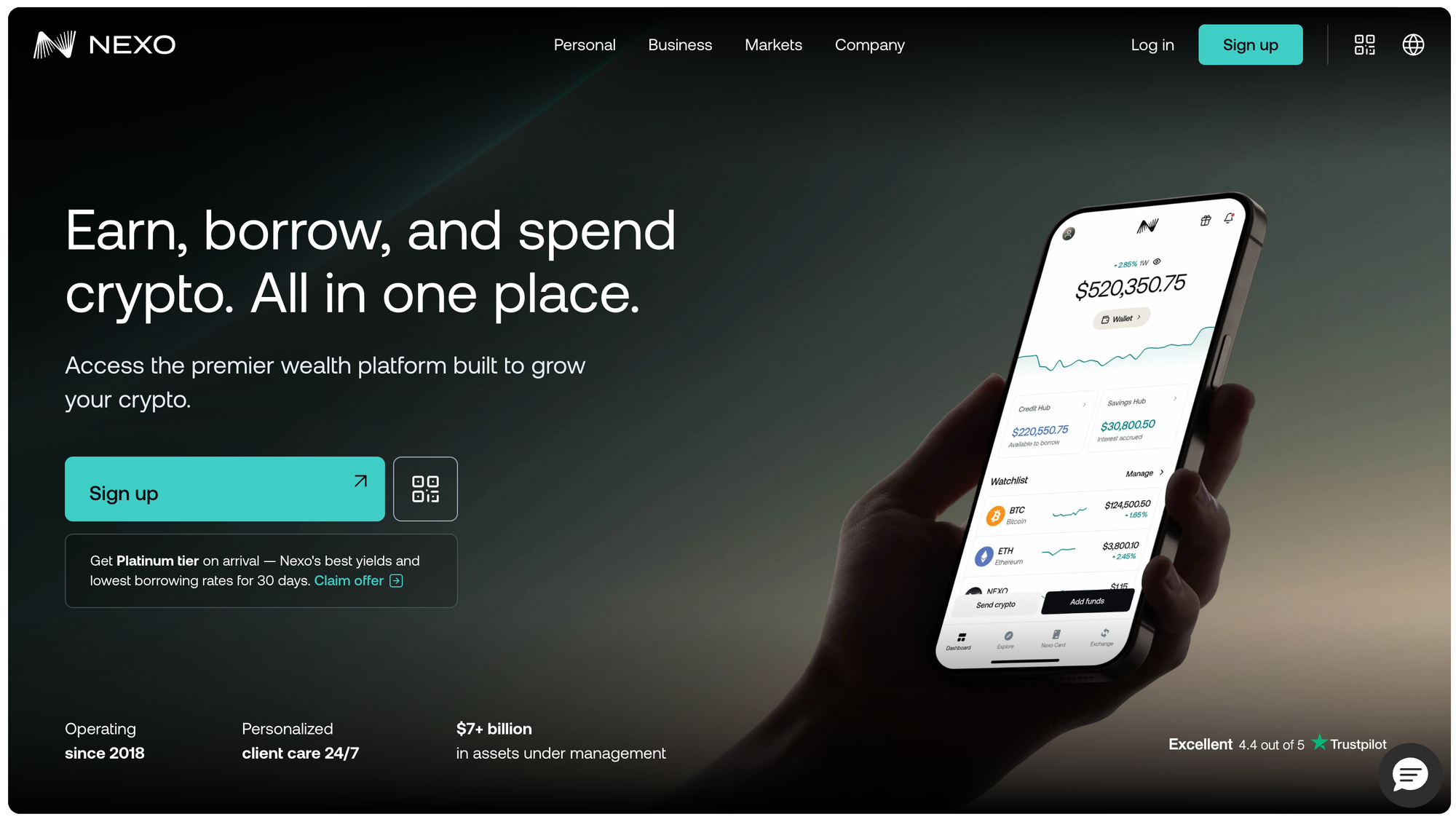
Yield source: a centralised lending book, with rates tiered by loyalty level.
Nexo is the closest product on this list to the pre-2023 model of a crypto savings account, and it advertises the highest headline rates here. That is the trade, because the rates reported for stablecoin balances in 2026 sit well above what overcollateralised on-chain lending pays, and the difference has to come from somewhere.
What to know:
- Advertised stablecoin rates vary by tier and by how much NEXO token you hold
- Flexible and fixed term options, with the higher rates attached to locked terms
- Availability and product terms differ significantly by jurisdiction
- Ledn operates a comparable model with rates tiered by deposit size instead
Custodial lending platforms paying above market are the category that failed in 2022. Aave and Compound kept paying through Terra, Three Arrows, FTX, and the USDC depeg, while Celsius, BlockFi, and Anchor went to zero.
Best for users who understand they are an unsecured creditor of the platform and have sized the position accordingly.
5. Sky Savings Rate
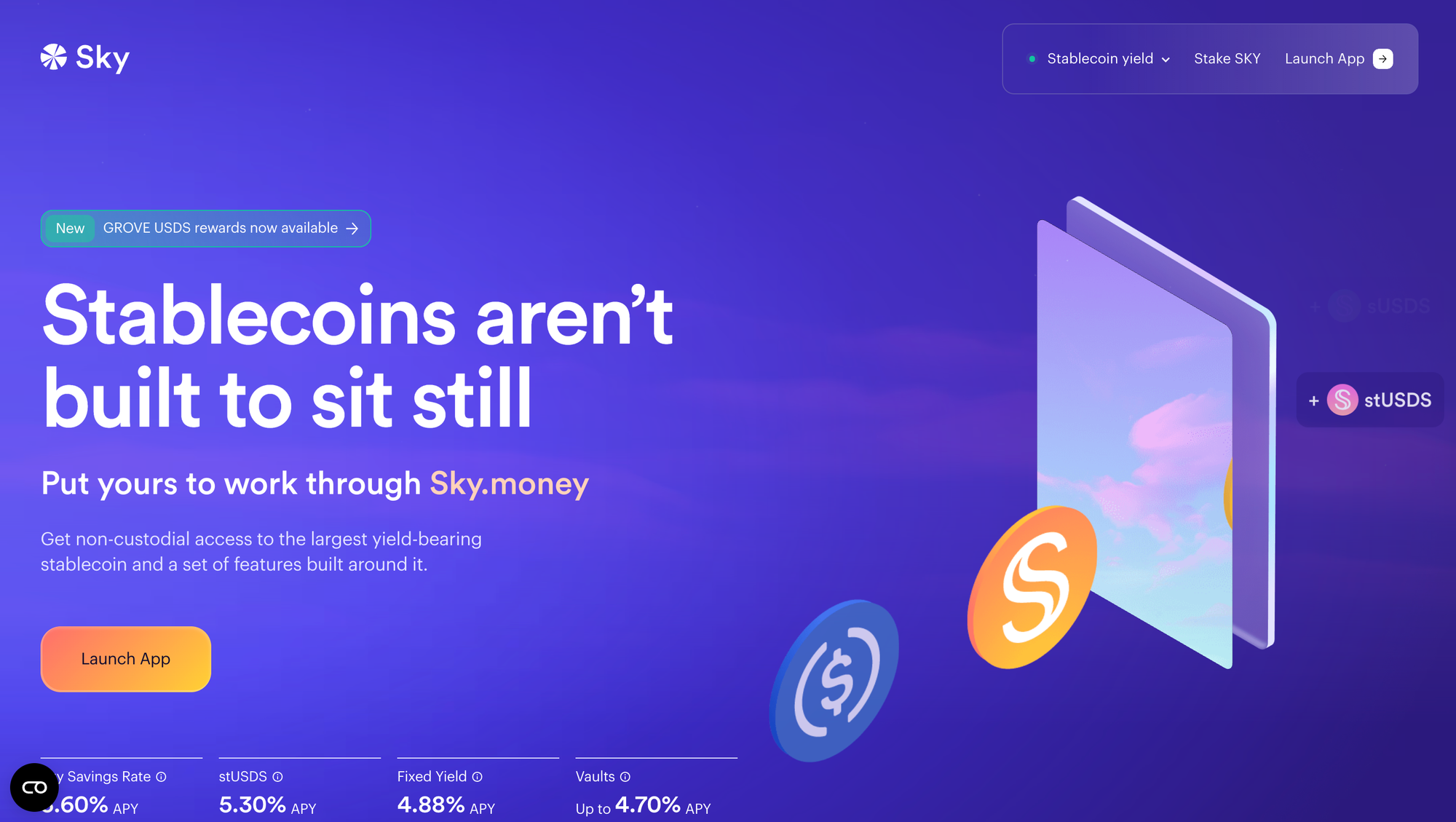
Yield source: protocol revenue from stability fees and real world asset holdings, set by governance.
Holding sUSDS is the closest structural equivalent to a savings rate in this market, because the number is set by a governance vote rather than by utilisation or by a company's marketing budget. It became the first DeFi savings product to receive an S&P credit rating.
What to know:
- The savings rate is set and adjusted by Sky governance
- Yield accrues to the token rather than arriving as a separate payment
- Requires holding USDS rather than USDC, which is a token substitution decision
- No lockup, and the position stays in self-custody
Best for holders who want a predictable, governance-set rate rather than one that moves daily.
6. Aave
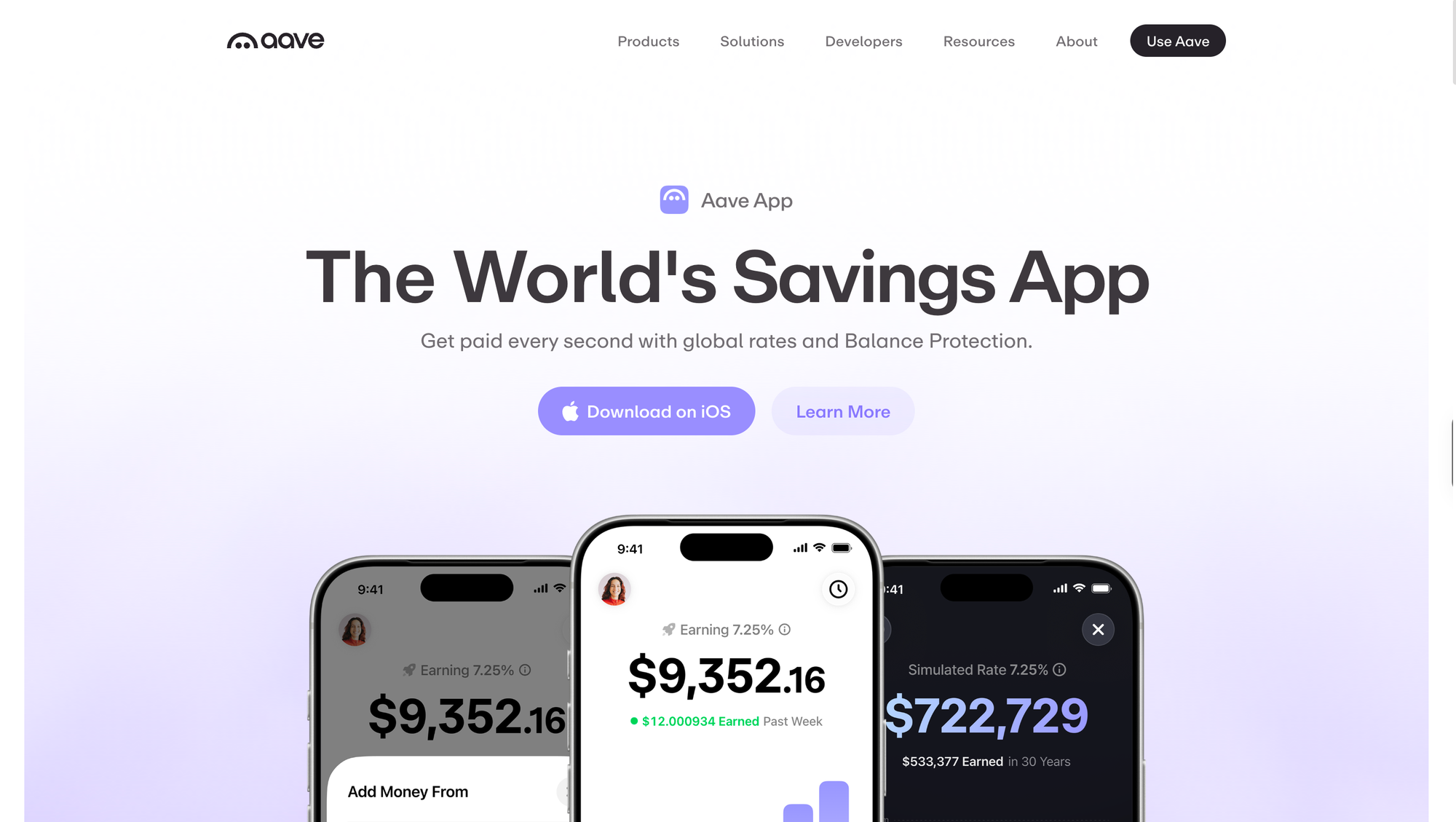
Yield source: interest paid by borrowers against overcollateralised positions.
Aave is the reference point the whole category is measured against, and the mechanism is the most legible one available. Borrowers post more collateral than they take out, liquidations run automatically, and suppliers earn whatever utilisation produces.
What to know:
- USDC supply rates float with borrowing demand
- USDT typically pays somewhat more than USDC because its pool runs at higher utilisation
- Non-custodial, no lockup, available across Ethereum, Base, Arbitrum, and other networks
- Smart contract risk replaces counterparty risk rather than removing risk
Best for self-custodial users who want a transparent rate with a mechanism they can verify on chain.
7. Ethena sUSDe
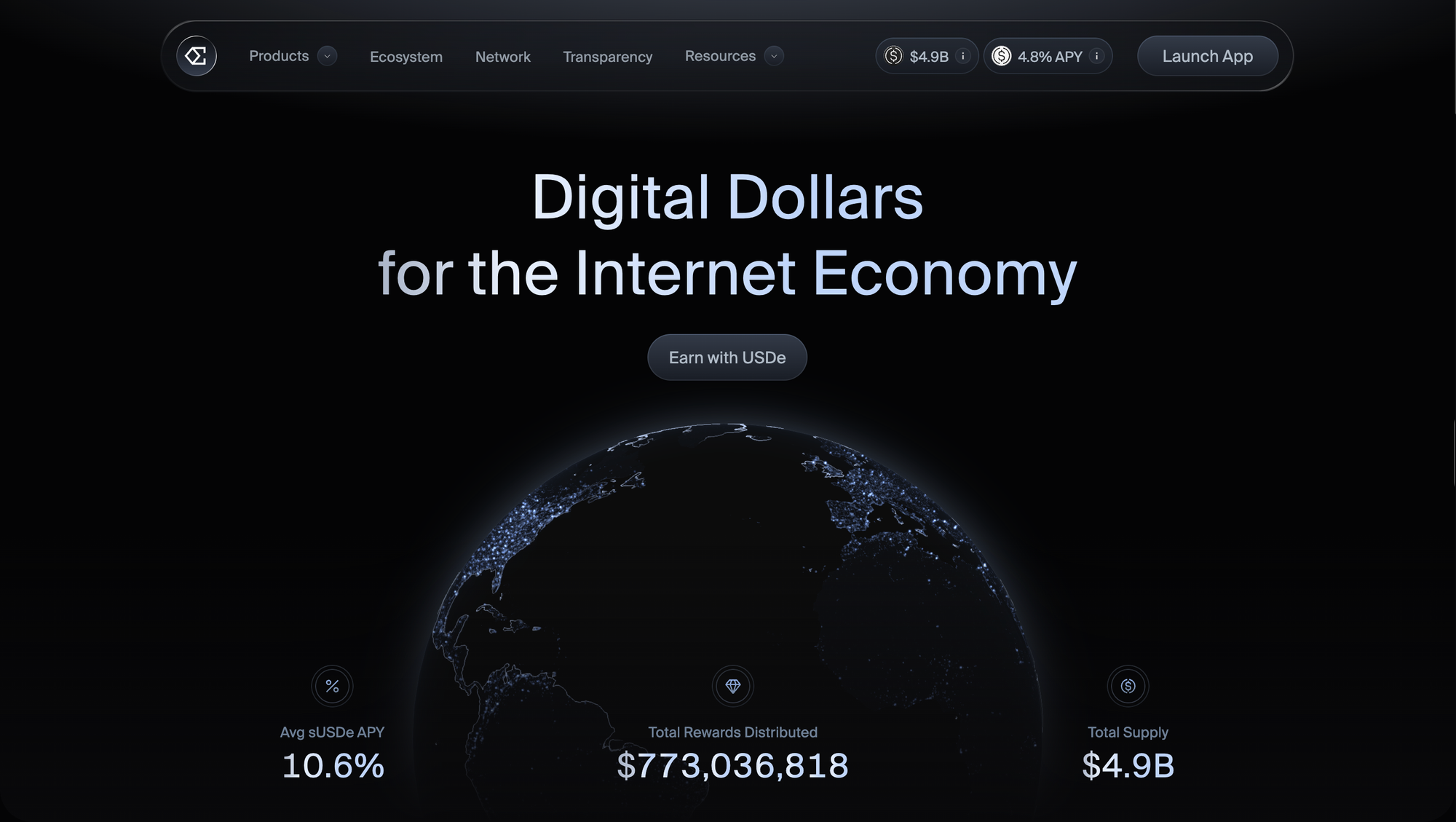
Yield source: the perpetual futures basis trade, hedged against staked collateral.
sUSDe belongs on this list because it is frequently sold as a savings product, and it is the clearest example of why the label is dangerous. The yield comes from funding rates on perpetual futures, which means it scales with speculative demand for leverage rather than with lending or Treasury income.
What to know:
- The rate compressed in 2026 after running much higher earlier
- Historical range spans deeply negative to extremely high, the widest band of any source here
- Negative funding is absorbed by an insurance fund until it is not
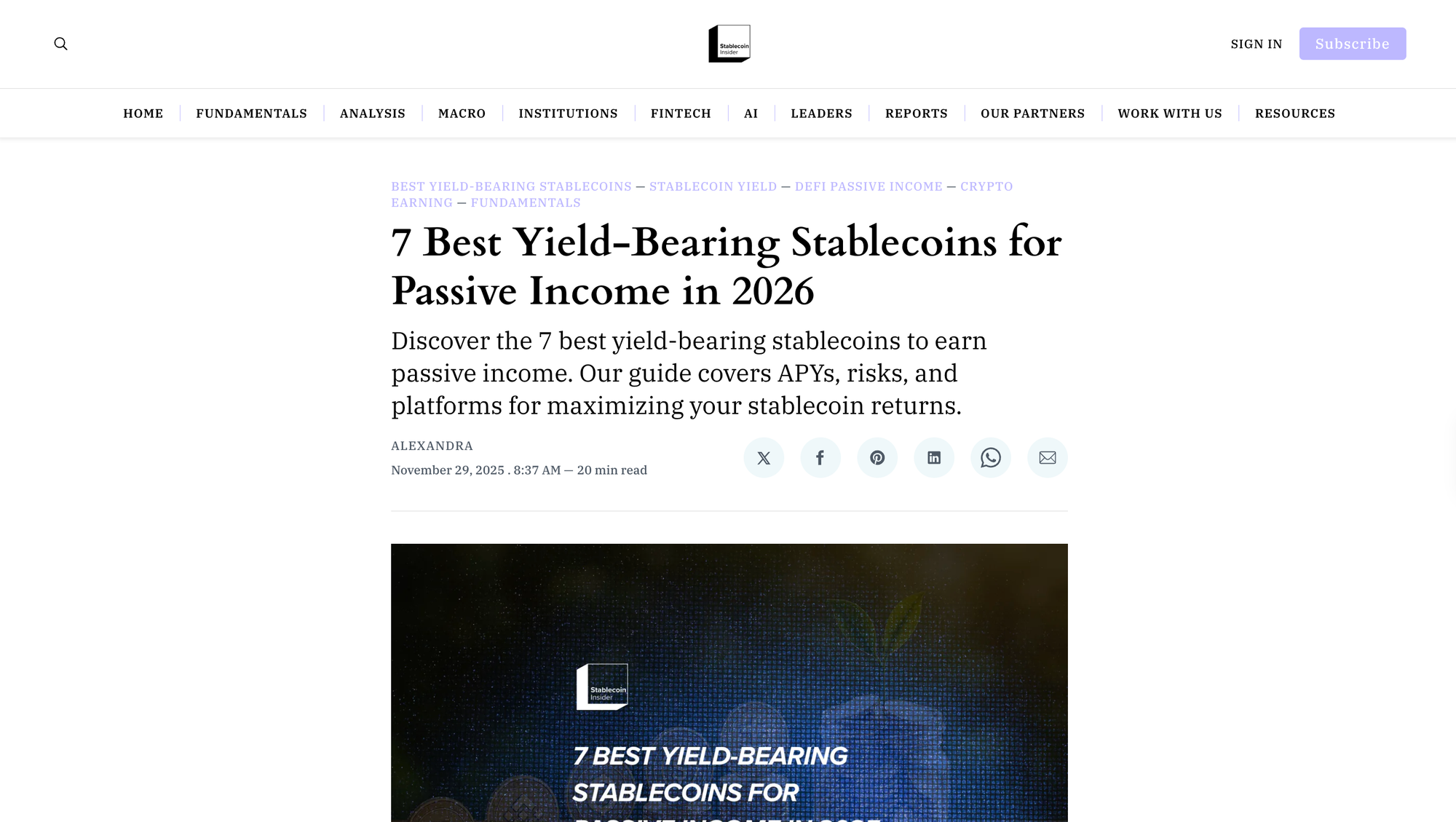
- Our guide to yield-bearing stablecoins covers how these tokens accrue value
Best for users who understand basis trades and are treating the position as a strategy rather than as savings.
Stablecoin Savings Accounts Compared
| Account | Yield source | Custody | Who can cut the rate | Main risk |
|---|---|---|---|---|
| Coinbase USDC Rewards | Reserve income rebate | Custodial | Coinbase, at will | Counterparty and regulatory |
| Base App | Reserve income rebate | Self-custody | Coinbase, at will | Regional gating, regulatory |
| MetaMask Money Account | Lending market vaults | Self-custody | Market conditions | Token substitution, contract risk |
| Nexo | Centralised lending book | Custodial | The platform | Unsecured creditor exposure |
| Sky Savings Rate | Protocol revenue | Self-custody | Governance vote | Contract and governance risk |
| Aave | Borrower interest | Self-custody | Utilisation | Smart contract risk |
| Ethena sUSDe | Futures funding rates | Self-custody | The market | Funding inversion, collateral custody |
What These Accounts Are Not
Three things are worth stating plainly before any of this touches real money.
They are not insured. No product here carries FDIC coverage, and a stablecoin balance is a claim on its issuer rather than a deposit, which our explainer on whether stablecoins are FDIC insured sets out in detail.
They are not fixed. Every rate on this list is variable, and the custodial ones can be changed by a company decision rather than by market conditions.
They are not a wealth plan. A dollar balance earning a modest yield preserves purchasing power in a good year, which is a different job from growing capital over a decade.
That third point is where most people stop rather than start. Invest $5, earn $25 is a low-friction way to open the long-term side of the equation, since the obstacle is usually the first deposit rather than the amount. Dollar yield handles the reserve, and a separate account handles growth.
Holding Yield in a Business Rather Than a Person
Freelancers and small operators who keep working capital in stablecoins usually hold it personally, and that becomes awkward the moment the balance grows. Yield is income, the position sits on a personal tax return, and there is no separation between company reserves and household money.
Registering an entity changes the picture. The balance becomes a business asset, the yield becomes business income with the deductions that follow, and several higher-tier treasury and business accounts become available at all, since most of them will not open for an individual.
The cost of the entity is the usual objection, and it is smaller than most people assume. Register your FREE LLC Today and the remaining cost is the state filing fee, which varies by state. Doing it before the balance grows is easier than restructuring around it afterwards.

How to Choose a Stablecoin Savings Account
1. Identify the payer before the rate
Ask who is sending you the money and what happens to them if it stops. A company rebating reserve income, a borrower paying interest, and a futures counterparty are three different answers.
2. Treat custodial rewards as revocable
Rates set at a platform's discretion can be cut, regionally restricted, or withdrawn entirely, and 2026 has already produced examples of all three. Size the position as if the rate is temporary.
3. Price the token substitution
Several of the better rates require holding something other than USDC or USDT. Moving into mUSD, USDS, or USDe swaps issuer risk for a different issuer, and that trade should be deliberate.
4. Split the balance by job
Spending money, reserves, and yield-seeking capital have different tolerances and should sit in different places. A single balance chasing the highest number is how people end up fully exposed to the worst mechanism on the list.
5. Read the withdrawal terms first
Flexible and fixed term products advertise very differently, and the higher rate is usually attached to a lockup. Confirm what happens in a stressed market before you need to find out.
Conclusion
The best stablecoin savings account in 2026 and 2027 is not the one paying the highest rate. Advertised yields cluster within a couple of percentage points across wildly different risk structures, so the number is close to useless as a comparison tool on its own.
The custodial options are the easiest to use and the most exposed to a regulatory decision that has not been made yet. The on-chain options replace that exposure with smart contract risk and require you to manage your own keys.
Whichever way it goes, the useful discipline is naming the payer, the mechanism, and the failure mode before the deposit rather than after. That takes about ten minutes and is the only part of this that reliably pays for itself.
Read Next:
- Top Providers for High APY Stablecoin Staking in 2026
- The Rise of Stablecoin Savings Apps
- How to Set Up a Stablecoin Treasury
FAQs:
1. What is the best stablecoin savings account in 2026?
It depends on which risk you prefer to hold. Coinbase and Base App are the simplest custodial routes, Aave and the Sky Savings Rate are the most transparent on-chain options, and MetaMask Money Account sits between the two by paying lending market yield inside a wallet.
2. Why does USDC pay nothing on its own?
Because the GENIUS Act prohibits permitted payment stablecoin issuers from paying holders interest or yield for holding the token. Circle keeps the interest earned on its reserves, and every yield you see on USDC is a separate product layered on top by a platform or protocol.
3. Are stablecoin savings accounts FDIC insured?
No. None of the products compared here carries deposit insurance, and stablecoins are claims on an issuer rather than bank deposits. Custodial platforms add their own counterparty risk on top of that.
4. Could platform rewards be banned?
It is an open question. The OCC has proposed a rebuttable presumption against yield paid through issuer affiliates and related third parties, and the issue is one of those holding up the CLARITY Act ahead of a Senate procedural vote on 15 September 2026.
5. Why do some accounts pay far more than others?
Because the yield comes from different engines. Reserve rebates and protocol savings rates track short-term rates, lending rates track borrowing demand, and funding-rate products track speculative leverage, which is why the same headline rate can mean very different things.
Disclaimer:
This content is provided for informational and educational purposes only and does not constitute financial, investment, legal, or tax advice; no material herein should be interpreted as a recommendation, endorsement, or solicitation to buy, sell, or deposit any asset, and readers should conduct their own independent research or consult a qualified professional. Advertised APYs, eligibility criteria, regional availability, and product terms change frequently and are reported inconsistently across sources; verify all figures directly with each provider before acting. Stablecoin balances are not bank deposits and are not insured, custodial rewards can be reduced or withdrawn at any time, and yield products carry smart contract, counterparty, and market risk up to total loss of principal.