
Table of Contents
DBS and Citi settled a US dollar payment between Singapore and New York on Saturday, September 5, using tokenised deposits on Swift's Digital Ledger. The banks announced the transaction on Monday, describing it as the first weekend cross-border USD payment of its kind.
Settlement took minutes against an industry norm of up to two business days when weekends and time-zone gaps intersect. That gap is the specific problem the transaction was designed to demonstrate.
It also targets the clearest advantage stablecoins have held over bank rails. Continuous settlement outside banking hours has been the argument for moving corporate money onto public blockchains, and this is the banking system answering with its own infrastructure.
The payment used tokenised bank deposits, not stablecoins. Swift's ledger is a permissioned orchestration layer built on Hyperledger Besu, with banks retaining control of assets and settlement.
Key Takeaways
- DBS and Citi settled a weekend USD payment on September 5, completing in minutes rather than up to two business days.
- It is the second confirmed live transaction on Swift's Digital Ledger, after HSBC and Standard Chartered in August.
- Tokenised deposits are bank liabilities, recorded on a ledger while settlement stays inside banking infrastructure.
- Seventeen banks joined the Swift pilot when the ledger entered initial operation in July.
- Asia's outbound cross-border payments are projected to reach $24 trillion by 2033 from $13.5 trillion in 2025.
What Actually Moved
A tokenised deposit is a claim on an actual bank deposit recorded on a distributed ledger. It is not a separate asset, and the money never leaves the banking system.
Swift's architecture reflects that. The Digital Ledger is an EVM-compatible permissioned orchestration layer built on Hyperledger Besu that records and validates interbank payment commitments, while banks retain control of the underlying assets and settlement occurs through existing infrastructure.
The distinction matters because the framing invites confusion. This is not a public blockchain settlement, no stablecoin was involved, and no bank sent USDC or USDT to another bank.
The pilot is building quickly. Swift's ledger entered initial operation in July with 17 banks including HSBC, BNP Paribas, UBS, ANZ, and Standard Chartered, and DBS is the only Asian-headquartered member of the 12-bank group designing it.
Why the Weekend Is the Point
The corridor was not chosen at random. A corporate treasurer moving liquidity from Singapore to New York on a Friday normally waits until Monday at the earliest, which costs money in delayed supplier payments and frozen working capital.
The commercial target follows from that. DBS said the capability is aimed at companies operating across jurisdictions including e-commerce and digital services, which run continuously and have no reason to pause for a banking calendar.
The market being contested is large. DBS cited projections that Asia's outbound cross-border payment volume will nearly double from $13.5 trillion in 2025 to $24 trillion by 2033, and said half the finance leaders it surveyed are exploring blockchain capabilities for liquidity and foreign exchange.
Momentum on the ledger has accelerated in three weeks. HSBC and Standard Chartered completed the first live cross-border transaction on August 19, Citi processed live USD flows with First Abu Dhabi Bank and OCBC on September 2, and this transaction followed three days later.
Why This Matters for Stablecoins
Always-on settlement was the differentiator. Stablecoins moved value continuously while bank rails observed business hours, and that gap justified a great deal of corporate interest in public blockchain payments.
Tokenised deposits close it without leaving the banking system. Money stays as a bank liability under existing supervision, which is precisely the outcome regulators have said they prefer.
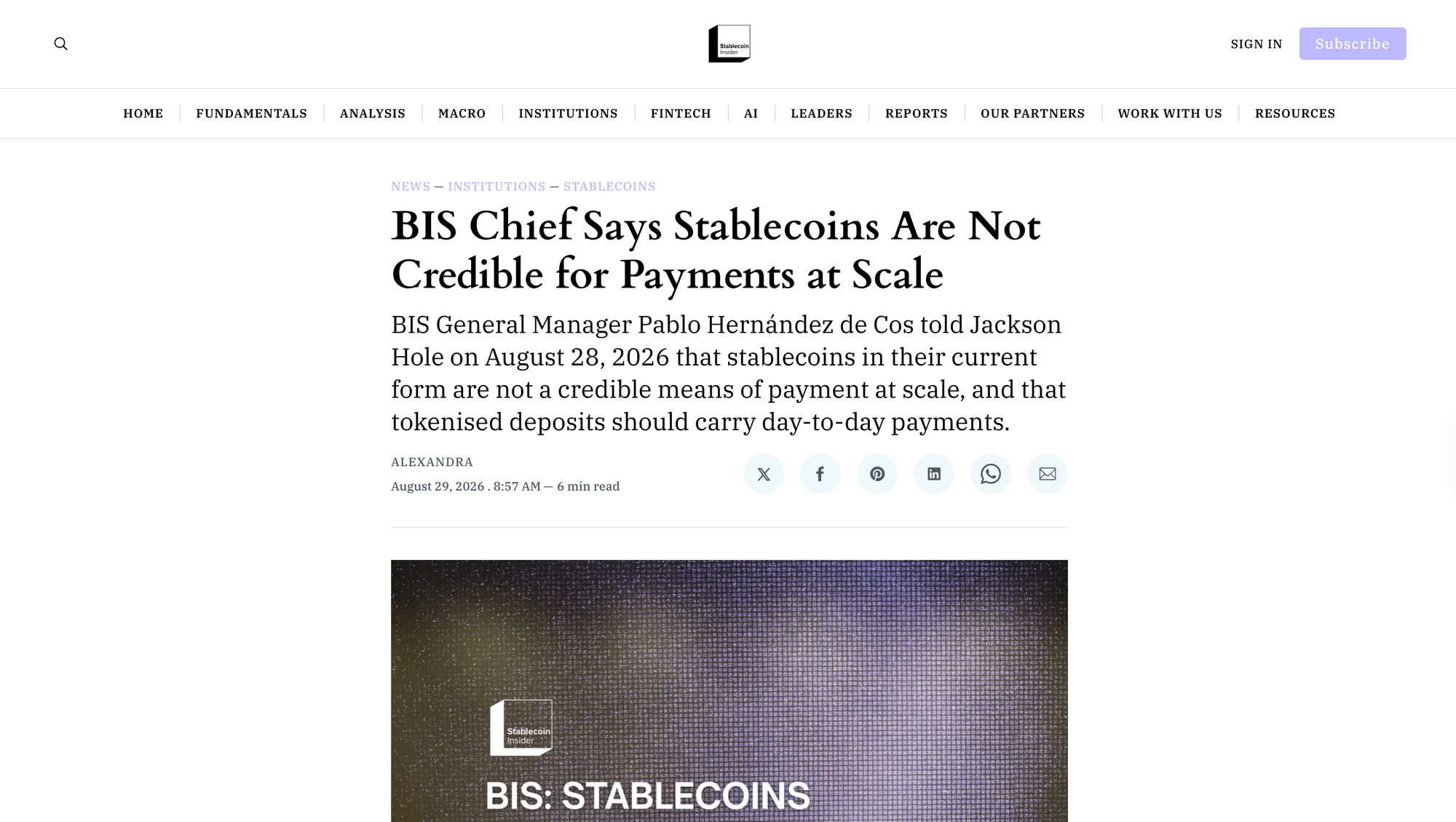
That preference was stated at the highest level days ago. The Bank for International Settlements argued at Jackson Hole that tokenised deposits should carry the bulk of day-to-day and wholesale payments while stablecoins serve narrower roles, a position we covered in our BIS Jackson Hole analysis.
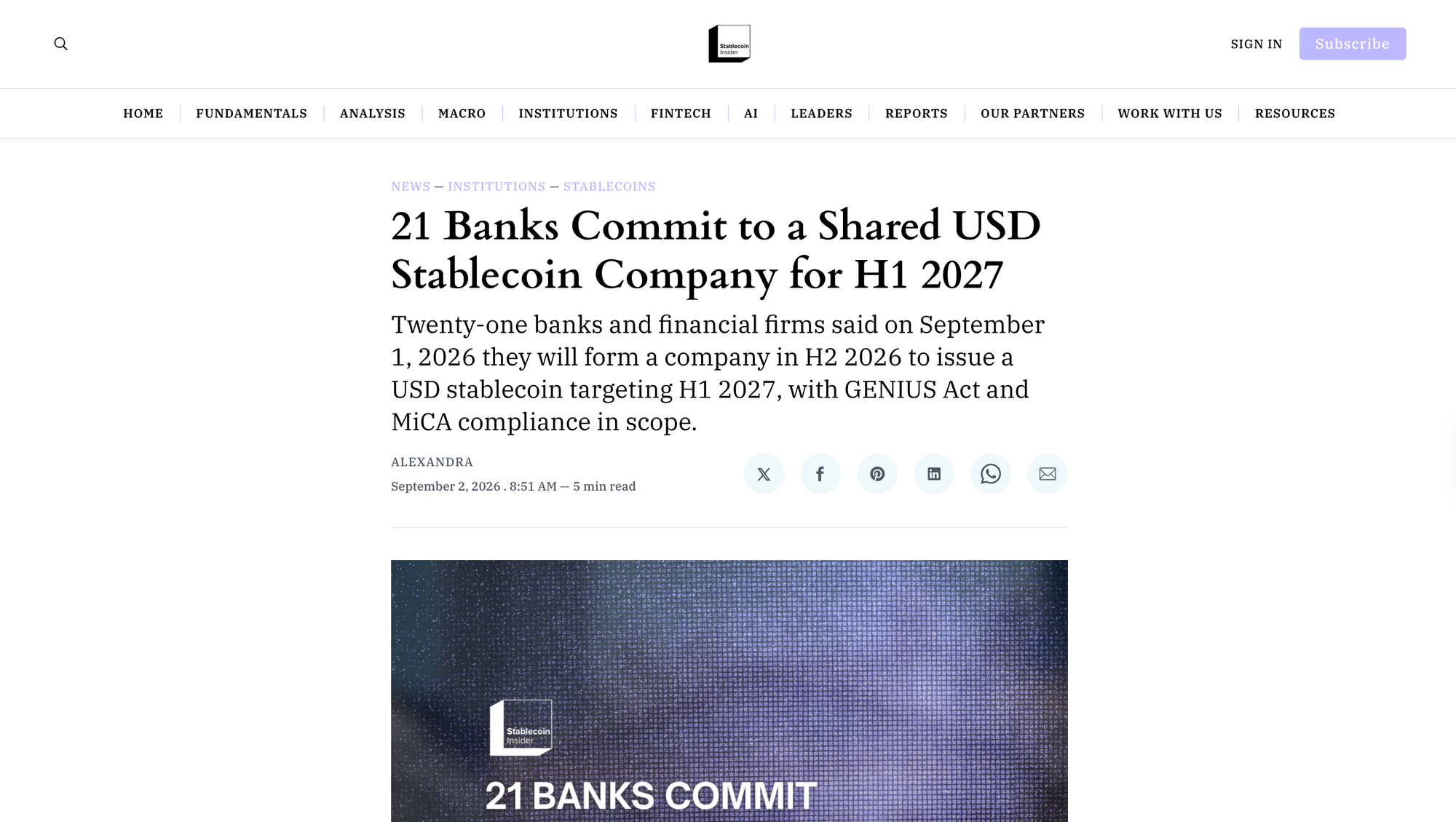
Banks are hedging rather than choosing. Twenty-one institutions committed last week to a joint stablecoin company, and Citi appears in both that ecosystem and this one.
The Parallel Tracks
Both banks are running more than one tokenised deposit effort. Citi is part of the group building a US network through The Clearing House, targeting a first-half 2027 launch, and DBS agreed a framework with JPMorgan in November 2025 to connect their deposit token ecosystems.
The duplication is deliberate. No standard has won, so participating in several initiatives keeps options open while the architecture settles, including the joint stablecoin venture covered in our bank consortium analysis.
Swift's own position explains its urgency. A 53-year-old messaging network carrying $1.5 quadrillion faces pressure from rails that settle continuously, and Bain projects banks' share of payments revenue falling from 80% to 69% by 2030.
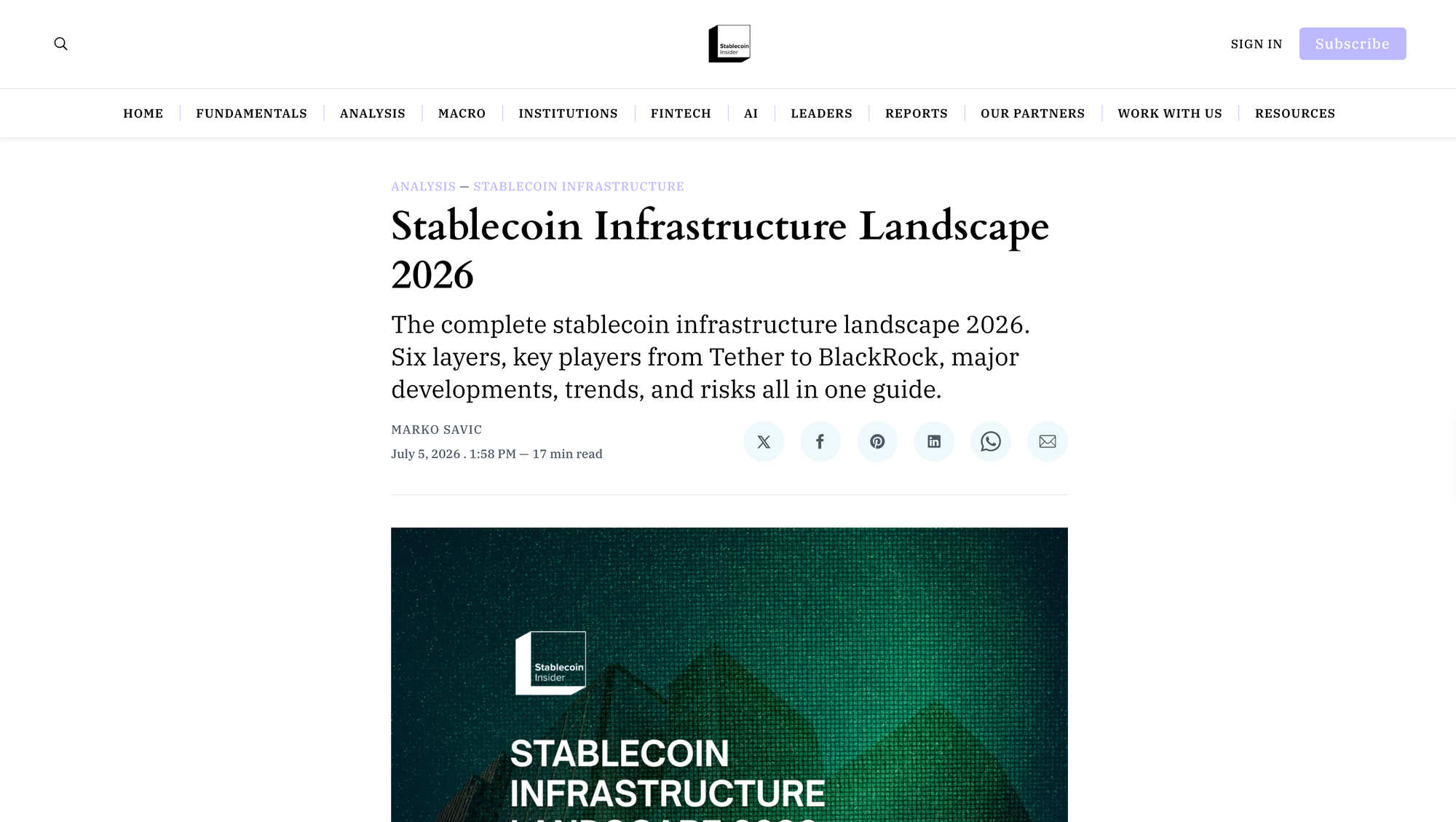
The competitive question is now about defaults rather than capability. Both instruments can move dollars across borders continuously, and which one corporate treasurers reach for will be decided by integration, cost, and counterparty comfort rather than by settlement speed, a contest we track across rails in our stablecoin infrastructure landscape.
Conclusion
A single transaction between two banks is a proof point, not a product. What it proves is that the banking system can now do the thing stablecoins were built to do, inside its own perimeter.
The response has been faster than the crypto industry generally expected. Swift's ledger went live in July, and three live cross-border transactions have followed within seven weeks.
What remains untested is scale. Pilots between design-group members are a different proposition from thousands of corporates routing weekend liquidity through tokenised deposits, and that is the gap the next year has to close.
FAQ:
1. What did DBS and Citi do?
They completed a cross-border US dollar payment between DBS in Singapore and Citi's New York office on Saturday, September 5, 2026, using tokenised deposits on Swift's Digital Ledger. The transaction settled in minutes compared with an industry norm of up to two business days when weekends and time-zone gaps intervene, and the banks announced it on Monday.
2. Did this involve stablecoins?
No. The payment used tokenised bank deposits, which are claims on actual bank deposits recorded on a ledger rather than separate crypto assets. Swift's Digital Ledger is a permissioned orchestration layer built on Hyperledger Besu, and banks retain control of the underlying assets while settlement occurs through existing banking infrastructure.
3. What is Swift's Digital Ledger?
It is an EVM-compatible permissioned blockchain layer that records and validates interbank payment commitments, which entered initial operation in July 2026 with 17 participating banks including HSBC, BNP Paribas, UBS, ANZ, and Standard Chartered. DBS is the only Asian-headquartered member of the 12-bank group designing it.
4. How does this compare to stablecoin payments?
Both can move value outside traditional banking hours, but tokenised deposits keep money as a bank liability inside the regulated banking system, while stablecoins are issuer obligations circulating on public blockchains. The Bank for International Settlements argued in August that tokenised deposits should carry most day-to-day and wholesale payments with stablecoins in narrower roles.
5. What other tokenised deposit projects are running?
Citi is part of a group of major US banks building a tokenised deposit network through The Clearing House, targeting a first-half 2027 launch. DBS agreed a framework with JPMorgan in November 2025 to enable transfers between their deposit token ecosystems, and both banks participate in the Swift ledger pilot alongside these efforts.
Disclaimer:
This content is provided for informational and educational purposes only and does not constitute financial, investment, legal, or tax advice; no material herein should be interpreted as a recommendation, endorsement, or solicitation to buy or sell any financial instrument, and readers should conduct their own independent research or consult a qualified professional.