Table of Contents
"We're becoming a broader internet platform company."
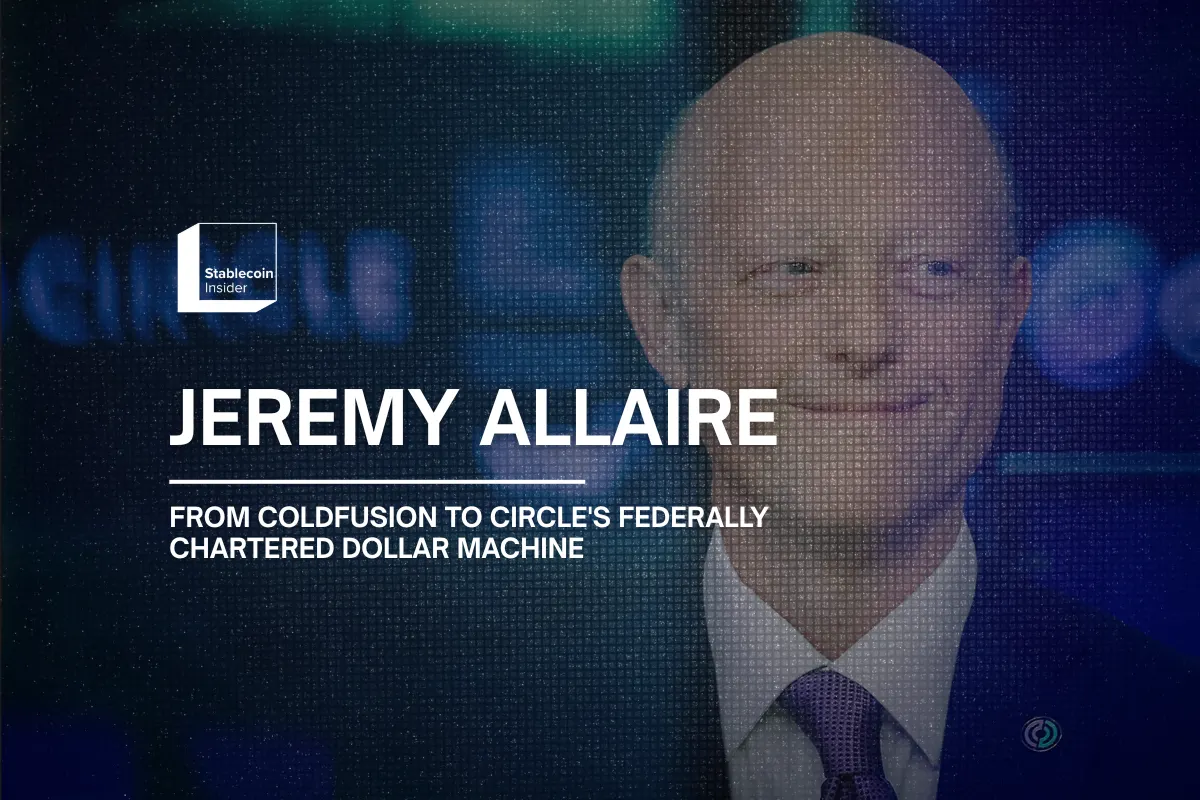
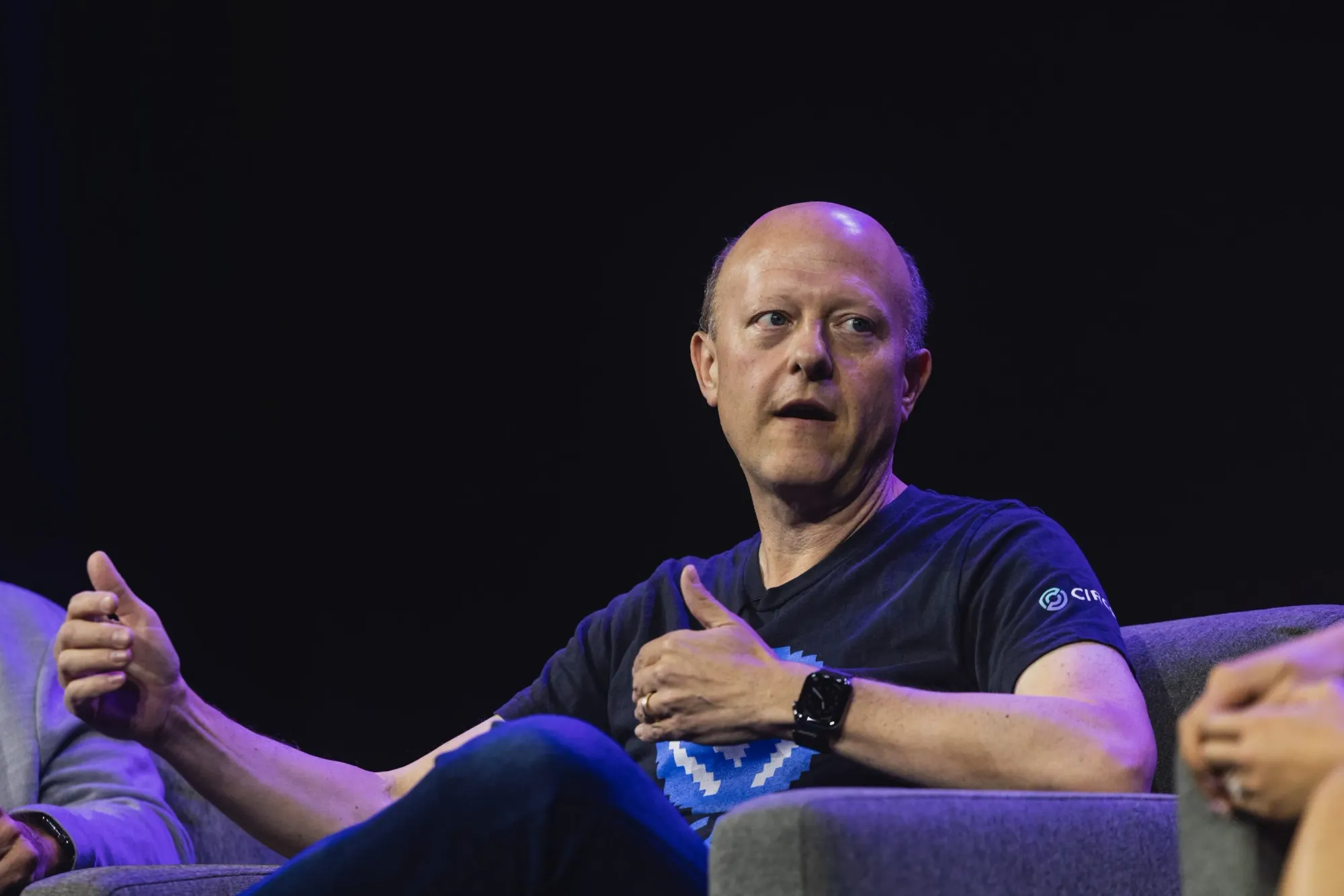
Jeremy Allaire has been building internet infrastructure since before most crypto founders could drive. He co-created one of the web's first application platforms in 1995, took two companies public before Bitcoin existed, and then bet his third act on a simple idea: the internet needed a native dollar.
Today he is Co-Founder, Chairman, and CEO of Circle, the company behind USDC, the world's largest regulated stablecoin. In 2026 alone, he has taken Circle from freshly public upstart to federally chartered trust bank operator, TIME100 honoree, and would-be blockchain platform builder.
Key Takeaways
- Internet veteran: Allaire co-founded Allaire Corporation and created ColdFusion back in 1995.
- Three IPOs: Allaire Corp in 1999, Brightcove in 2012, Circle in June 2025.
- USDC scale: Roughly $73 billion in circulation across 34 blockchains as of July 2026.
- Federal milestone: Circle National Trust won final OCC approval in July 2026.
- Platform ambitions: The Arc blockchain, Circle Payments Network, and AI agent tools come next.
The Web Pioneer Before Crypto Existed
Allaire grew up in Minnesota and studied political science and philosophy at Macalester College, an unusual foundation for a software career. But the liberal arts framing stuck with him; he has spent three decades talking about technology in terms of open systems, individual empowerment, and the architecture of institutions rather than product features.
He discovered the early internet as a student and came out of university in the early 1990s convinced that open networks would restructure media, communications, and eventually money itself. It was less a business plan than a worldview, and every company he has built since has been a different application of the same thesis.
In 1995, he co-founded Allaire Corporation with his brother J.J. and created ColdFusion, one of the first platforms for building dynamic, database-driven web applications. At a time when most websites were static pages, ColdFusion let ordinary developers build interactive services, and it powered a meaningful slice of the first generation of e-commerce sites.
The company rode the first dot-com wave to a Nasdaq IPO in January 1999, making Allaire a public company executive before his thirtieth birthday. Macromedia acquired Allaire Corporation in 2001 in a deal valued around $360 million, and Allaire stayed on as CTO through the dot-com crash.
At Macromedia, he helped steer Flash from an animation plugin toward a full application and video runtime. That work put him at the center of the internet's early video infrastructure, and it set up his next company almost perfectly.
Brightcove and the Streaming Bet
After leaving Macromedia, Allaire spent a period as a technologist and entrepreneur in residence at venture firm General Catalyst, scanning for the next structural shift. He found it in television, which he believed would inevitably move to open internet distribution.
He founded Brightcove in 2004 to sell that future to the media industry itself. Rather than competing with broadcasters, Brightcove gave networks, publishers, and brands the tools to run their own internet video operations, a picks-and-shovels strategy he would later repeat with money.
The timing looked early, then suddenly right. YouTube's rise proved consumer demand for streaming, and Brightcove became the enterprise-grade platform behind thousands of media companies' video strategies.
Allaire took Brightcove public on Nasdaq in February 2012, his second IPO. By then he was already circling a bigger target: the last major system the internet had failed to absorb was money itself, which still moved through banking rails designed decades earlier.
Where Circle Actually Began
Allaire founded Circle in Boston in October 2013 alongside Sean Neville, a longtime collaborator from his Allaire and Macromedia days. The founding round drew serious traditional backers, including Jim Breyer, Goldman Sachs, and IDG Capital, an early signal that Circle intended to work with the financial system rather than around it.
The original product was Circle Pay, a consumer app for sending money and buying Bitcoin, pitched as a friendly on-ramp for mainstream users. Regulation was central from day one: in 2015, Circle became the first company to receive a BitLicense from the New York Department of Financial Services, a credential most crypto startups treated as a burden rather than a prize.
The consumer chapter did not last, and Circle spent the late 2010s shape-shifting. It wound down Circle Pay, ran an OTC trading desk, launched an investment app, and bought the Poloniex exchange in 2018 before selling it barely a year later.
Those detours cost money and time, but they clarified the mission. By 2018, Allaire had concluded that the real opportunity was not another app or exchange but the base layer itself: a fully reserved, regulated digital dollar that anyone could build on.
USDC and the Coinbase Alliance
Circle launched USDC in September 2018 together with Coinbase, governed through a joint venture called the Centre Consortium. The design was deliberately boring: dollar reserves in cash and short-term US Treasuries, monthly attestations from a major accounting firm, and issuance through regulated entities.
That conservatism became a genuine differentiator as competitors faced years of questions about their backing. If you want the full mechanics of how issuers hold and verify reserves, our guide on how stablecoins are backed breaks it down.
USDC's growth tracked crypto's institutional turn almost perfectly. From under $1 billion in early 2020, it exploded past $50 billion during the 2021 bull market as DeFi protocols, exchanges, and trading firms adopted it as their preferred settlement asset.
In August 2023, Circle and Coinbase dissolved Centre, giving Circle full control of USDC issuance while Coinbase took an equity stake in Circle and a share of reserve revenue. The cleaner structure removed a governance question mark just as institutional interest began to accelerate, and Circle extended the same playbook to the euro with its EURC stablecoin.
The SVB Stress Test
The hardest weekend of Allaire's crypto career came in March 2023, when Silicon Valley Bank collapsed with $3.3 billion of USDC's cash reserves inside. USDC broke its peg and traded below 90 cents as markets panicked, while rivals quietly gained share.
Allaire spent the weekend publicly committing to cover any shortfall from corporate resources, and when regulators guaranteed SVB deposits, USDC snapped back to a dollar within days. The episode cost USDC billions in redemptions over the following months, but it ultimately validated the transparency-first model, because holders could see exactly what was at risk and why.
It also sharpened Allaire's core argument: stablecoins fail through bad plumbing, not bad ideas. Everything Circle has built since, from diversified reserve custody to its push for a federal charter, has been about removing single points of failure between USDC and the traditional system.
The Numbers Behind the Allaire Era
- ~$73B USDC in circulation as of July 2026
- $21.5T on-chain USDC transaction volume in Q1 2026 alone, up 263% year over year
- $694M total revenue and reserve income in Q1 2026, up 20% year over year
- $3B+ in assets under management in USYC, Circle's tokenized money market fund
- 34 blockchain networks natively supporting USDC
- 168% first-day pop when Circle listed on the NYSE in June 2025
USDC remains second to Tether's USDT in raw size, a gap our USDT Q2 2026 report covers in detail. But Circle dominates the regulated segment, and heavyweight partners like BlackRock manage tens of billions of its reserves, as we explained in our breakdown of BlackRock's stablecoin strategy.
The economics behind those numbers are simple and contested at the same time. Circle earns most of its revenue from interest on USDC reserves, which makes the business enormously profitable in a high-rate environment and vulnerable when rates fall, a tension Allaire is racing to solve with new product lines.
The IPO That Redefined Crypto Equities
Getting Circle public took two attempts. A SPAC merger with Concord Acquisition Corp, at one point valuing the company at $9 billion, collapsed in late 2022 amid a brutal crypto winter, regulatory hostility, and the FTX implosion.
Skeptics wrote Circle off as a rate-cycle story wrapped in crypto branding. Allaire disagreed, kept the company growing through the bear market, and waited for the regulatory environment to turn.
The patience paid off spectacularly. Circle listed on the NYSE under the ticker CRCL on June 5, 2025, pricing at $31 per share, and the stock surged 168% on day one in one of the most explosive tech debuts in years, briefly pushing toward $300 that summer before settling back to more earthbound levels.
The IPO turned Circle into the first pure-play stablecoin issuer on a major US exchange and made Allaire the public face of regulated crypto finance. It also gave him a public currency, and public scrutiny, for the far bigger platform buildout he had planned.
The Regulatory Long Game Pays Off
Allaire lobbied for US stablecoin legislation for the better part of a decade, testifying before Congress repeatedly while much of the industry treated Washington as the enemy. That effort culminated in July 2025 when the GENIUS Act became law, creating the first federal framework for payment stablecoins and effectively ratifying the model Circle had been running all along.
The company had already become the first global stablecoin issuer to comply with the EU's MiCA framework in 2024, alongside licenses and approvals spanning the UK, Singapore, Bermuda, Canada, and Abu Dhabi. Circle's regulatory map now looks less like a crypto company's and more like a multinational bank's.
The crowning move came on July 10, 2026, when the OCC granted final approval for First National Digital Currency Bank, N.A., operating as Circle National Trust. Circle had filed the application in June 2025 and cleared conditional approval in December, beating fellow applicants like Ripple, Paxos, and Fidelity Digital Assets to the finish line.
The charter puts Circle's custody infrastructure under direct federal supervision, replacing a patchwork of state licenses, with USDC reserve management planned as a future capability. The stock jumped double digits on the news, even as some analysts cautioned that a narrow custody charter was being priced like a full banking license.
Arc, Payments, and the Platform Play
Allaire now describes Circle as an internet platform company rather than a stablecoin issuer, comparing blockchain infrastructure to mobile operating systems and cloud platforms. The centerpiece of that ambition is Arc, a purpose-built Layer 1 blockchain that uses USDC as its native gas token, delivers sub-second finality, and offers configurable privacy aimed at institutional payments, FX, and capital markets.
Arc's public testnet launched in October 2025 with more than 100 institutions participating, including BlackRock, Visa, and Goldman Sachs, and had processed over 244 million transactions by May 2026. That same month, Circle raised $222 million in an ARC token presale at a $3 billion fully diluted valuation, led by Andreessen Horowitz with BlackRock and Apollo among the backers, with mainnet expected in summer 2026.
Around Arc sits a growing product stack. The Circle Payments Network handles cross-border settlement and reached $8.3 billion in annualized volume by the end of Q1 2026, while the tokenized money market fund USYC has passed $3 billion in assets.
The newest layer is artificial intelligence. Circle launched the Circle Agent Stack for AI-driven commerce in May 2026, and Allaire's July 2026 essay on the agentic economy argues that AI and blockchains are converging into a single system where autonomous software agents transact directly in stablecoins.
What Comes Next
The Arc mainnet launch is the item to watch through the rest of 2026. If institutions actually settle real volume on it, Circle earns a second growth engine beyond reserve interest income; if not, critics will keep calling CRCL a leveraged bet on interest rates.
Competition is closing in from every direction. Tether is entering the US market with USAT, Stripe is building its own stablecoin chain, and bank consortiums like Open USD are launching tokens backed by the largest names in traditional finance.
The GENIUS Act that legitimized Circle also invited everyone else into the pool, which means the regulatory moat Allaire spent a decade digging is now shared infrastructure. His counter is scale, distribution, and a head start measured in years of licenses, integrations, and institutional trust.
Allaire has spent thirty years making the same wager: open networks eat closed systems, and whoever builds the trusted infrastructure first wins the platform. With a federal charter in hand and a blockchain about to launch, he is about to find out if the third act ends like the first two.
Disclaimer:
This content is provided for informational and educational purposes only and does not constitute financial, investment, legal, or tax advice; no material herein should be interpreted as a recommendation, endorsement, or solicitation to buy or sell any financial instrument, and readers should conduct their own independent research or consult a qualified professional.