Table of Contents
JCB Co., Ltd., the only internationally accepted credit card brand originating in Japan, has signed a memorandum of understanding with an affiliate of Circle Internet Group to explore stablecoin-enabled payments using USDC across its global merchant network.
The MOU, announced on July 14, 2026, establishes two initial focus areas: a proof of concept for USDC-based internal cross-border fund transfers and in-store stablecoin payment experiences for merchants and international visitors in Japan.
As covered in our top institutional stablecoins in June 2026 guide, USDC is the dominant institutional payment stablecoin globally with $45 billion-plus in supply, and JCB's MOU is the latest in a series of major payment network endorsements of Circle's infrastructure following Circle's OCC national trust bank approval on July 10, 2026.
Key Takeaways
- JCB signed an MOU with a Circle Internet Group affiliate on July 14, 2026, establishing a framework to combine Circle's stablecoin payment infrastructure including USDC, EURC, Gateway, and Arc with JCB's global merchant network for cross-border payments and new merchant payment experiences.
- Two initial workstreams are confirmed under the MOU: a proof of concept focused on JCB's internal cross-border fund transfers using USDC to improve payment efficiency and reduce remittance costs, and in-store stablecoin payment experiences for merchants and international visitors in Japan across multiple blockchain networks.
- The JCB-Circle MOU builds on an existing Japan stablecoin push: JCB began collaborating with Digital Garage and Resona Holdings in January 2026 on in-store stablecoin payment PoCs at physical merchants in Japan, making the Circle MOU an expansion of that domestic effort into international cross-border infrastructure.

What the MOU Covers
The MOU establishes two concrete areas of exploration. The first is cross-border treasury and payments. JCB and Circle will run a proof of concept focused on JCB's internal fund transfers using USDC, evaluating opportunities to reduce remittance costs and improve payment efficiency across JCB's international operations.
The second is stablecoin-enabled payments at merchants in Japan. The companies will explore in-store USDC payment experiences for both merchants and international tourists, while evaluating technologies that support interoperability across multiple blockchain networks. Both workstreams are structured as proofs of concept rather than live product launches.
Why This Matters for Japan's Payment Market
Japan is one of the world's most demanding regulatory environments for stablecoins.
As covered in our Ripple RLUSD Japan launch analysis, USDC was already distributed through SBI VC Trade before RLUSD's JFSA approval in June 2026, making it the first foreign USD stablecoin on the platform. JCB's MOU signals that Japan's largest domestic card network is now actively evaluating USDC as an operational payment rail.
JCB operates in over 190 countries and territories with a merchant acceptance network that spans North America, Europe, and Asia.
Its user base is concentrated among Japanese consumers traveling internationally and inbound tourists in Japan. Both demographics face significant FX conversion costs under traditional card rails, making USDC settlement a commercially logical alternative for JCB to evaluate.
The Circle Infrastructure Stack
Circle's involvement covers its full stablecoin and blockchain infrastructure suite. The MOU references USDC, EURC, Circle Gateway, and Circle Arc as the foundational tools JCB will evaluate.
Circle Gateway provides cross-border stablecoin payment orchestration.
Circle Arc provides institutional reserve management and liquidity infrastructure.
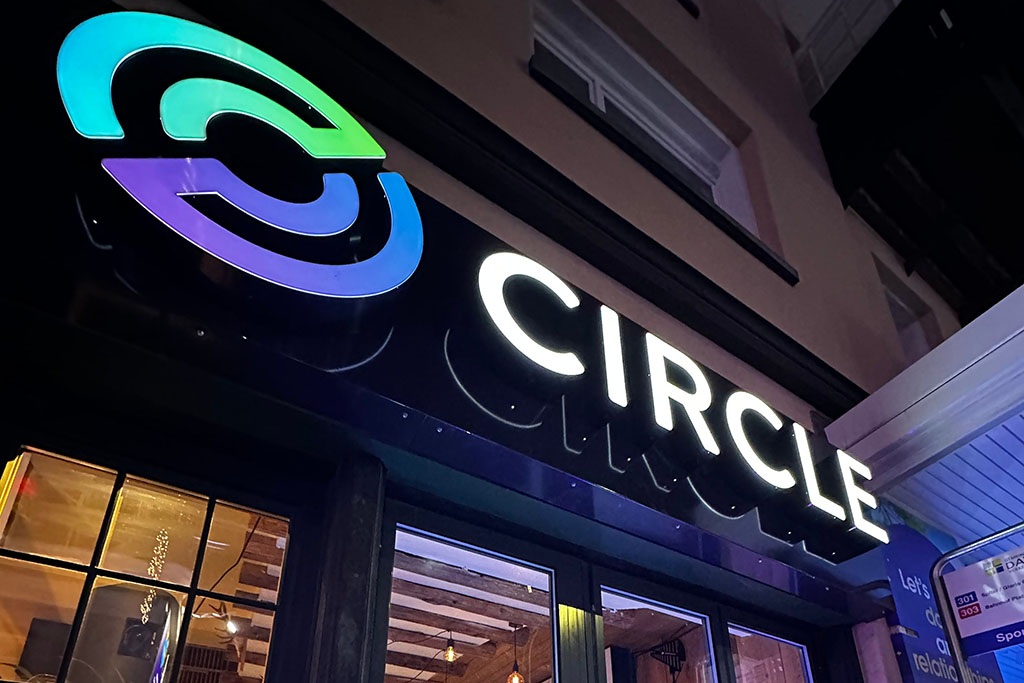
Circle received its OCC national trust bank approval on July 10, 2026, establishing Circle National Trust and placing USDC reserve management under direct federal oversight.
As covered in our Circle OCC national trust bank approval analysis, that approval gives Circle the federal banking credential that institutional counterparties like JCB evaluate as part of their due diligence before signing infrastructure partnerships.
Japan's Broader Stablecoin Infrastructure Build
The JCB-Circle MOU is one piece of a broader Japan stablecoin infrastructure push happening simultaneously in mid-2026.
JCB had already been running in-store stablecoin PoCs with Digital Garage and Resona Holdings since January 2026. MUFG, SMBC, and Mizuho signed an MOU in June 2026 targeting a yen stablecoin by March 2027. RLUSD received JFSA approval on June 25 as Japan's first Type 4 electronic payment instrument.
As covered in our stablecoin payment rails 2026 guide, Japan's regulatory framework under the Payment Services Act is one of the most operationally mature stablecoin regulatory architectures in the world outside the US and EU.
The convergence of JCB, the major Japanese banks, and JFSA-approved foreign stablecoins building simultaneously signals that Japan's stablecoin payment infrastructure is moving from exploratory to operational in 2026.
Conclusion
The JCB-Circle MOU is a significant institutional signal from Japan's most recognized domestic card brand that USDC-based payment settlement is being seriously evaluated as an operational alternative to traditional card and wire transfer rails.
The two-workstream structure, covering internal cross-border treasury settlement and in-store merchant payments for tourists, maps directly onto the highest-friction, highest-cost areas of JCB's current payment operations.
A successful PoC outcome on either workstream could accelerate USDC's position in Japan's regulated payment market at a moment when the country's stablecoin infrastructure is developing faster than at any point in its history.
FAQ:
1. What did JCB and Circle announce on July 14, 2026?
JCB and Circle announced a memorandum of understanding on July 14, 2026 to explore stablecoin-enabled payments using USDC across JCB's global merchant network, covering two workstreams: a cross-border treasury proof of concept using JCB's internal fund transfers and in-store USDC payment experiences for merchants and international visitors in Japan.
2. What is JCB and why does this partnership matter?
JCB is the only internationally accepted credit card brand originating in Japan, operating in over 190 countries, making its MOU with Circle a significant signal that Japan's largest domestic card network is actively evaluating USDC as an operational payment rail for cross-border settlement and merchant payments.
3. What stablecoin infrastructure will JCB use under the MOU?
JCB will evaluate Circle's full infrastructure stack under the MOU, including USDC, EURC, Circle Gateway for cross-border payment orchestration, and Circle Arc for institutional reserve management and liquidity.
4. What are the two focus areas of the JCB and Circle MOU?
The two focus areas of the JCB and Circle MOU are a proof of concept for USDC-based internal cross-border fund transfers targeting remittance cost reduction, and in-store stablecoin payment experiences for merchants and international visitors in Japan across multiple blockchain networks.
5. Is this JCB's first stablecoin initiative?
No. JCB began collaborating with Digital Garage and Resona Holdings in January 2026 on in-store stablecoin payment proofs of concept at physical merchants in Japan, making the Circle MOU an expansion of that existing domestic stablecoin program into international infrastructure.
6. What is the difference between JCB's Circle MOU and its existing stablecoin work with Digital Garage?
The difference between JCB's Circle MOU and its existing Digital Garage collaboration is that the Digital Garage work focuses on domestic in-store stablecoin payments in Japan, while the Circle MOU adds international cross-border treasury settlement using USDC as a new workstream alongside the continued domestic merchant payment exploration.
Disclaimer:
This content is provided for informational and educational purposes only and does not constitute financial, investment, legal, or tax advice; no material herein should be interpreted as a recommendation, endorsement, or solicitation to buy or sell any financial instrument, and readers should conduct their own independent research or consult a qualified professional.