

Table of Contents
Brex spent nearly a decade as the default corporate card for venture-backed startups. On 7 April 2026 it stopped being an independent fintech, when Capital One closed its acquisition at roughly $5.15 billion.
Nothing broke on the day of the close, and nothing was supposed to. What changed is the set of questions worth asking, because the company setting the roadmap now holds $669 billion in assets and a customer base that looks nothing like an early-stage startup.
The alternatives below are grouped by the gap each one fills. Two of them are worse than Brex at the thing Brex is best at, and that is the point of comparing by job rather than by score.
The acquisition is the reason people are looking, but it is rarely the reason people leave. The more common trigger predates it, which is that teams outgrow a card-first tool once multiple entities, purchase orders, and accruals enter the picture.
Key Takeaways
- Capital One closed its acquisition of Brex on 7 April 2026.
- Brex underwrites on cash balances, which excludes profitable businesses without them.
- Ramp is the closest like-for-like replacement for most US teams.
- Payhawk and Corpay fit multi-entity and established mid-market finance functions.
- Spend platforms do not handle payroll, hours, or scheduling.
Why Teams Are Reassessing Brex
Four reasons come up repeatedly, and only the first is about the acquisition.
Ownership. Roadmap, pricing, and support commitments are the three things acquirers usually revisit, so they belong in writing at the next renewal rather than in an assumption.
Eligibility. Brex underwrites on cash balances rather than operating history, with reported thresholds around $10,000 in monthly card spend and $75,000 held in a US bank account. Profitable businesses with revenue but modest deposits fail a test that a venture round passes automatically.
Entity types. Sole proprietors and partnerships are outside the accepted set, which rules out a large share of agencies and consultancies.
Scale. Card-first tooling starts to slow finance teams down once budgets, purchase orders, approvals, and accruals arrive, which is the same pattern behind the switching we covered in our guide to Mercury alternatives.
Top Online Bank Alternatives to Brex
1. Ramp
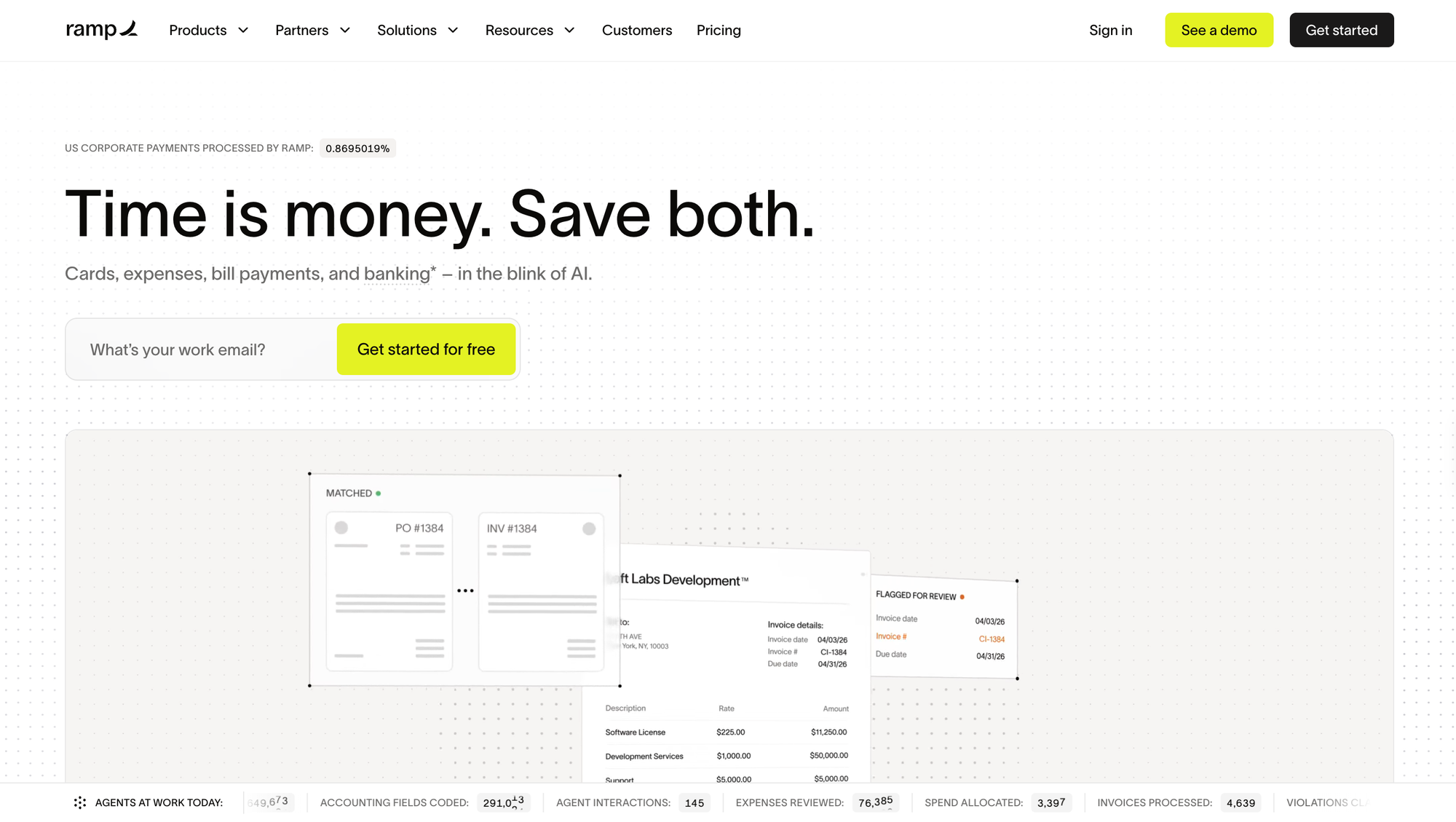
Fills the gap: the same product without the eligibility floor.
Ramp is the most direct card-for-card replacement and the lowest-friction migration for most US companies. It grew by positioning around spend reduction rather than spend enablement, which turned it into a broader finance platform than the card it started as.
What it covers:
- Virtual and physical corporate cards with a free base plan
- Expense management, receipt capture, accounts payable, and procurement
- Direct integrations with QuickBooks, Xero, and NetSuite
- Advanced controls on a paid tier priced per user per month
- Flat cashback rather than a points programme
The trade is that Ramp is not a bank either, and its business accounts run through partner institutions in the same way Brex's did. It is also unavailable to businesses in New York.
Best for US companies that want Brex's shape without its qualification gates.
2. Airwallex
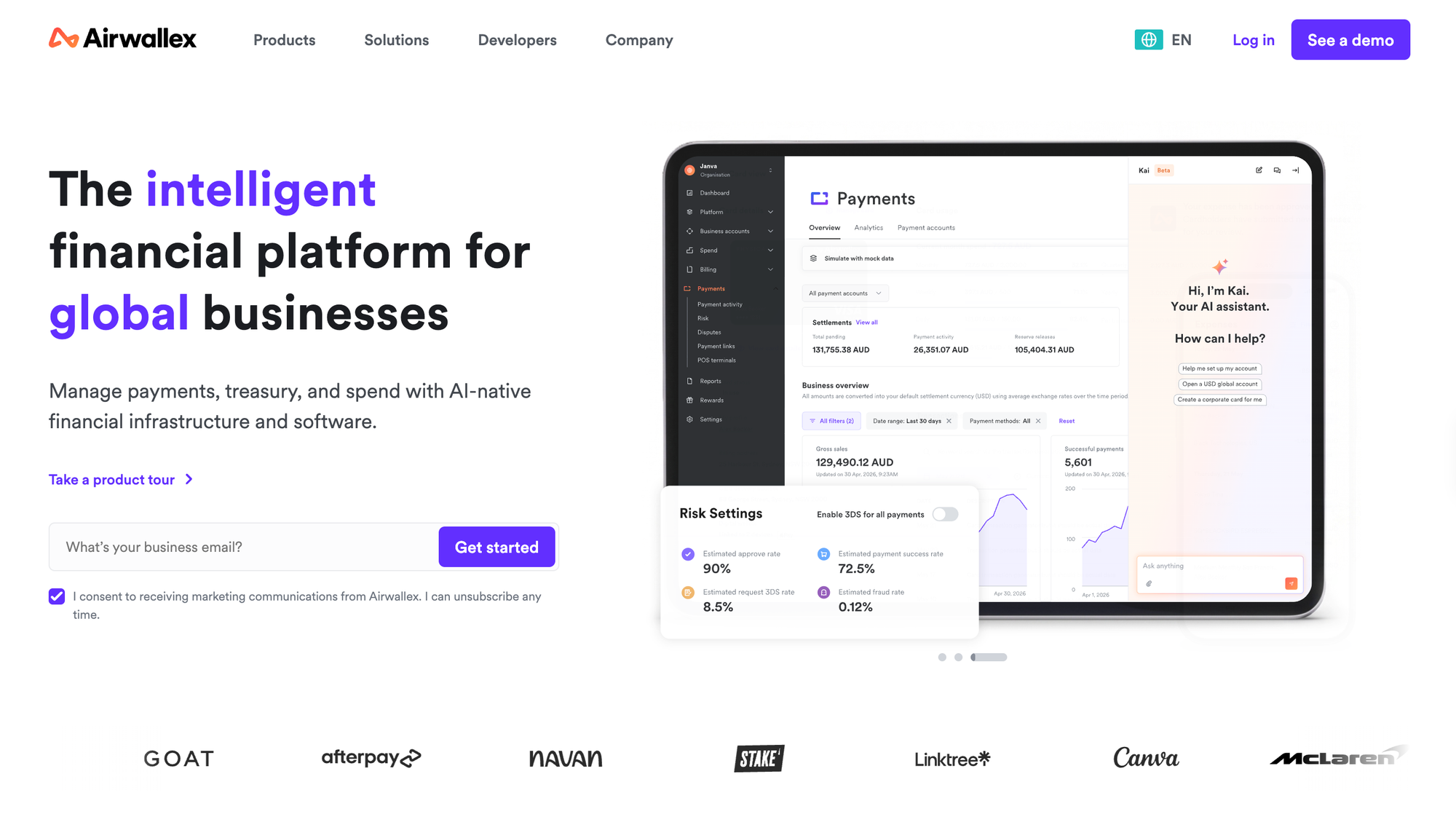
Fills the gap: operating in currencies other than dollars.
Brex supports international spend, but it is a US platform at its core. Airwallex is built the other way around, giving you local account details in more than 20 currencies and converting at close to the interbank rate with a published markup.
What it covers:
- Multi-currency Global Accounts with local details across major markets
- Transfers to 200 plus countries and payment acceptance in 180 plus
- FX at the interbank rate plus roughly 0.5% to 1% depending on the pair
- Unlimited physical and virtual cards issued against held balances
- Integrations with Xero, QuickBooks, Stripe, and Shopify
The card economics matter for anyone leaving a points programme. Airwallex advertises 2% cashback on eligible transactions with no cap on accumulated rewards, which for a business paying overseas suppliers stacks on top of the FX saving rather than replacing it.

Best for companies with revenue or suppliers outside the US, where conversion cost outweighs any rewards rate.
3. BILL Spend & Expense

Fills the gap: a free card attached to an accounts payable system.
Formerly Divvy, BILL Spend and Expense pairs corporate cards with budget controls that apply before the transaction rather than after. The card is free when used inside the BILL platform, which is where the value concentrates.
What it covers:
- Corporate cards with no platform fee inside the BILL ecosystem
- Budgets enforced in real time rather than reconciled later
- Accounts payable and receivables in the same account
- Established accounting integrations for smaller finance teams
If you are not already using BILL for accounts payable, the integration advantage that makes it compelling largely disappears.
Best for small and mid-sized businesses already running bills through BILL.
4. Navan
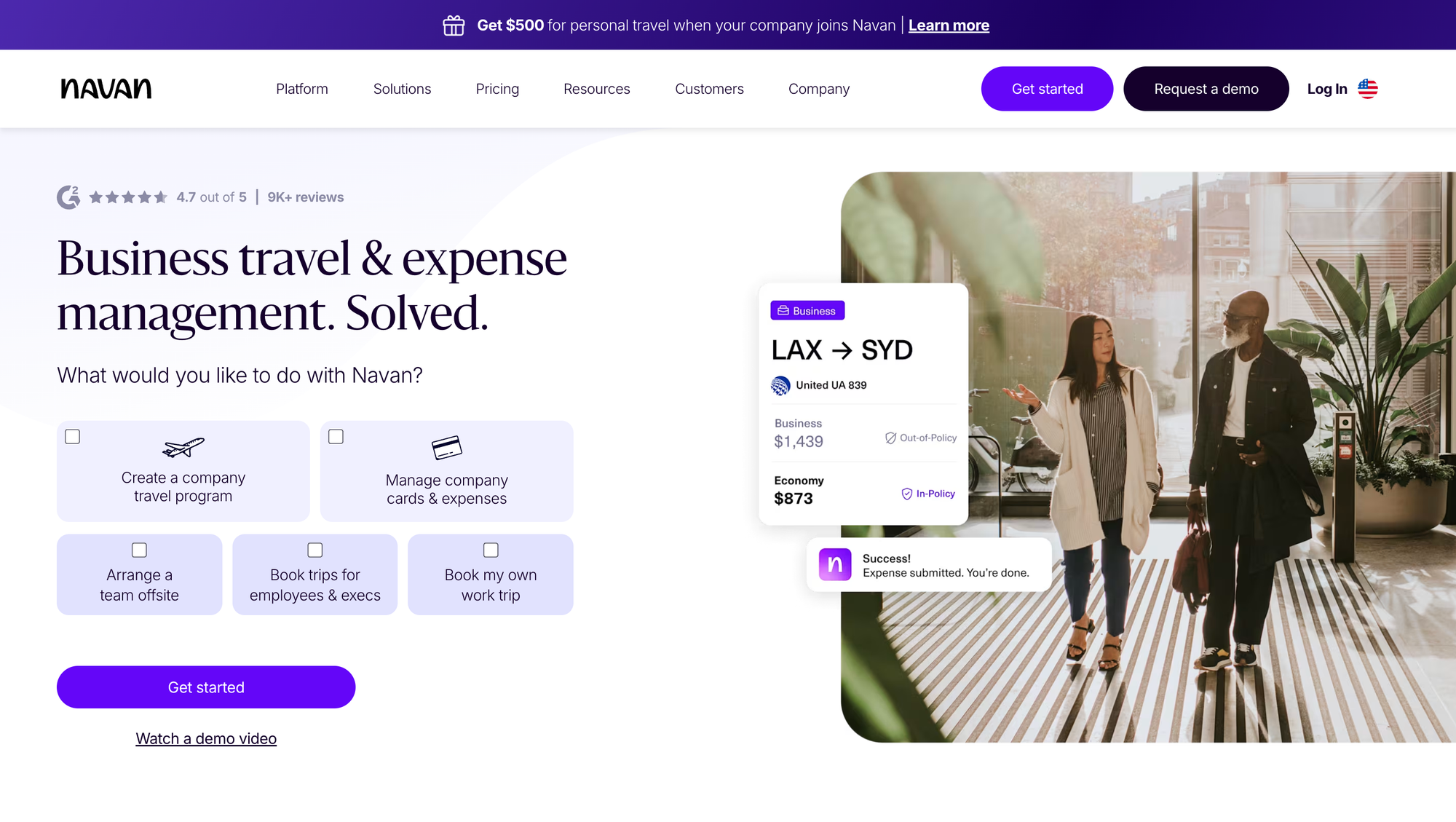
Fills the gap: travel and expense as one system.
Navan is the strongest option for organisations where travel is a primary spend category rather than an occasional line. Booking, policy, card, and expense report live in the same flow, so the reconciliation work mostly disappears.
What it covers:
- Corporate travel booking with policy enforced at the point of purchase
- Corporate cards with automatic expense matching
- Strong reviewer scores on submission experience for employees
- Reporting built around trips and departments
The finance-side depth is narrower than a dedicated spend platform, so companies with heavy procurement needs tend to pair it rather than replace with it.
Best for travel-heavy teams that want booking and expense to stop being two systems.
5. Payhawk
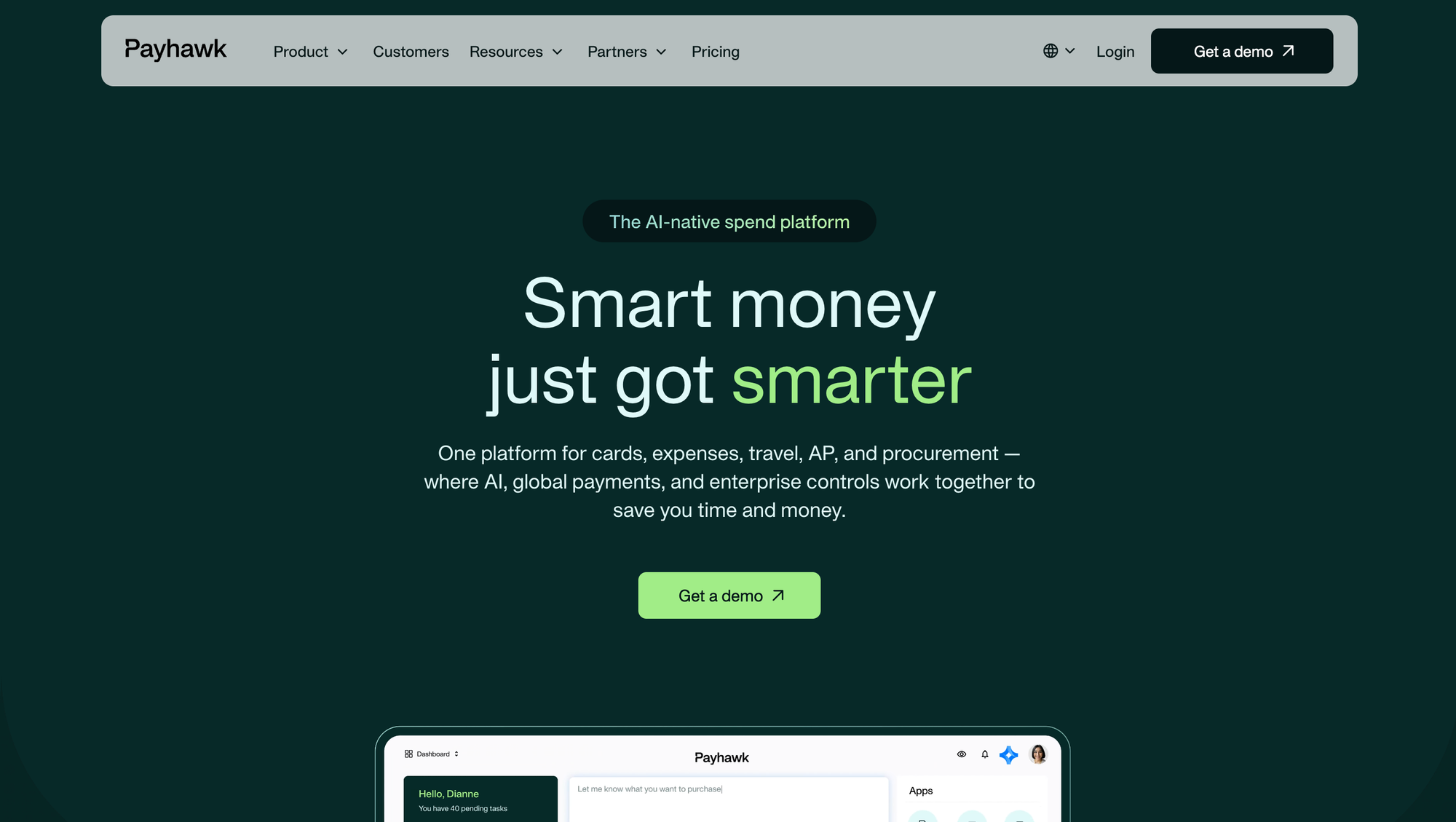
Fills the gap: multi-entity operations across the US and Europe.
Payhawk is built for finance teams that need policy enforced rather than encouraged. It can block a card automatically when a receipt is late, reads receipts by OCR across dozens of languages, and handles entities in the UK, EU, and US in one place.
What it covers:
- Multi-entity setups with consolidated visibility across jurisdictions
- Cards, expenses, bill pay, and procurement in modular bundles
- Approval workflows and policy controls applied before spend
- Deep ERP sync aimed at shortening the monthly close
Pricing is negotiated rather than published, there is no free plan, and it is not aimed at companies under roughly ten employees.
Best for mid-market teams with European subsidiaries and a real month-end close problem.
6. Corpay
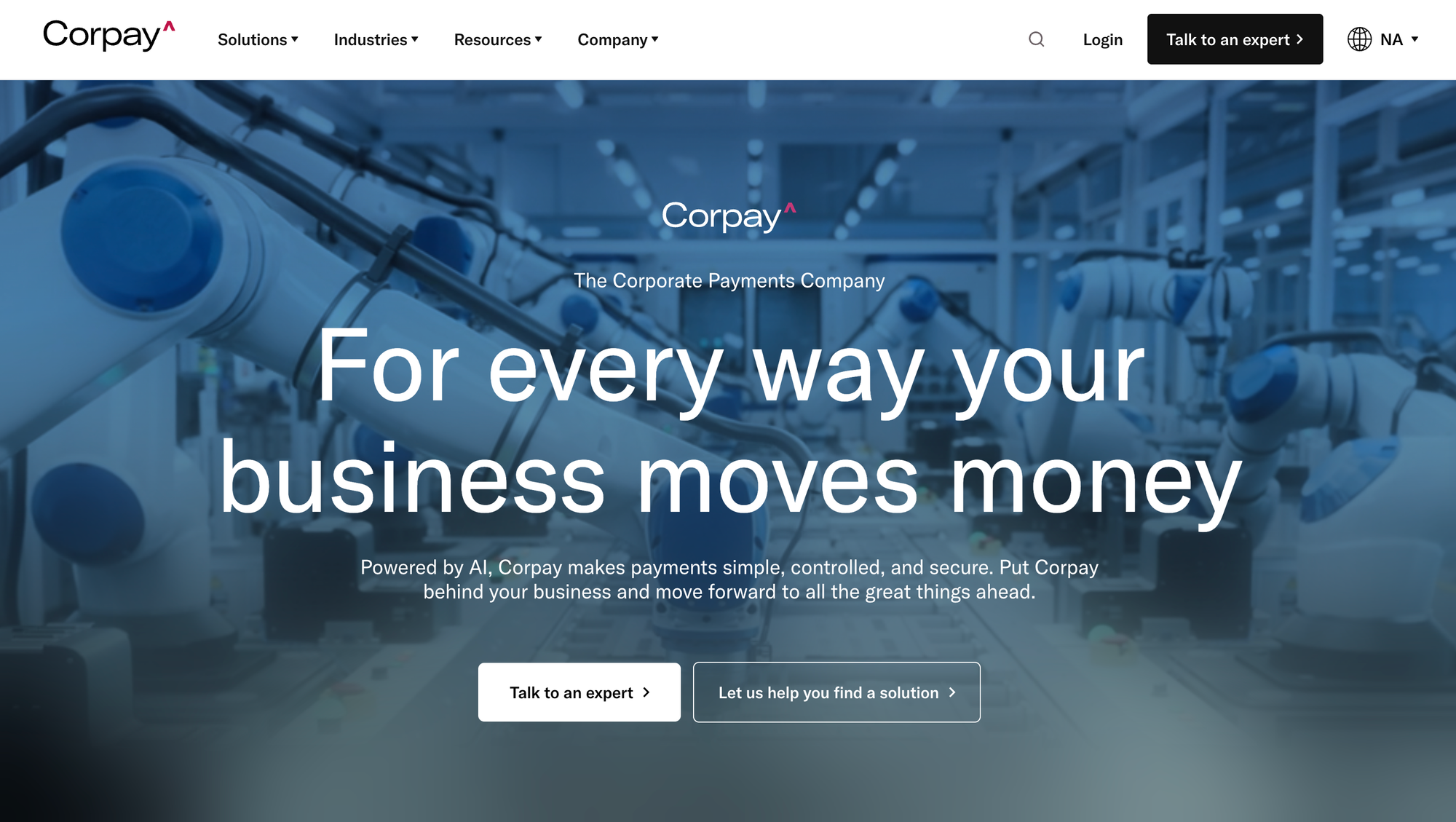
Fills the gap: conventional credit underwriting for established businesses.
Corpay is the structural answer to the Brex eligibility problem. Where Brex sizes limits against your cash balance, Corpay underwrites commercial credit the traditional way, against revenue, receivables, and operating history. That is the opposite of the model used by most platforms in our roundup of the best neobanks for startups.
What it covers:
- Commercial card programmes underwritten on business performance
- Accounts payable automation aimed at mid-market and enterprise finance teams
- Cross-border payment capability alongside domestic programmes
- Controls and reporting built for established finance functions
The onboarding is heavier and the product is less self-serve than anything else on this list, which is the cost of conventional underwriting.
Best for profitable businesses with revenue history but without the deposit balance Brex wants to see.
7. Rippling Spend

Fills the gap: spend controls driven by employee data.
Rippling approaches the problem from the HR side, using the same employee records that run payroll and device management to decide who gets a card and what they can spend. Onboarding a hire and issuing their card become the same action.
What it covers:
- Corporate cards and expense management tied to employee records
- Automatic policy changes when roles, departments, or employment status change
- Payroll, benefits, and IT provisioning in the same platform
- Approval routing that follows the org chart rather than a separate hierarchy
The value depends heavily on running Rippling for HR as well, and buying it purely for cards is the expensive way to use it.
Best for companies already running HR on Rippling that want spend to inherit the same data.
Brex Alternatives Compared
| Platform | Fills the gap | Underwriting or entry | Pricing model | Main limitation |
|---|---|---|---|---|
| Ramp | Same shape, no eligibility floor | Lower qualification bar | Free base, paid advanced tier | Not a bank, unavailable in New York |
| Airwallex | Multi-currency operations | Standard business onboarding | Usage based | FX markup applies per pair |
| BILL Spend & Expense | Free card inside an AP system | SMB friendly | Free card with BILL platform | Weak value outside the BILL ecosystem |
| Navan | Travel and expense in one | Standard onboarding | Tiered | Thinner finance-side depth |
| Payhawk | Multi-entity US and Europe | Mid-market focus | Negotiated, no free plan | Not built for very small teams |
| Corpay | Conventional credit underwriting | Revenue and receivables | Programme based | Heavier, less self-serve onboarding |
| Rippling Spend | Employee-data-driven controls | Tied to HR platform | Per module | Needs the wider platform to pay off |
What Brex Still Does Better
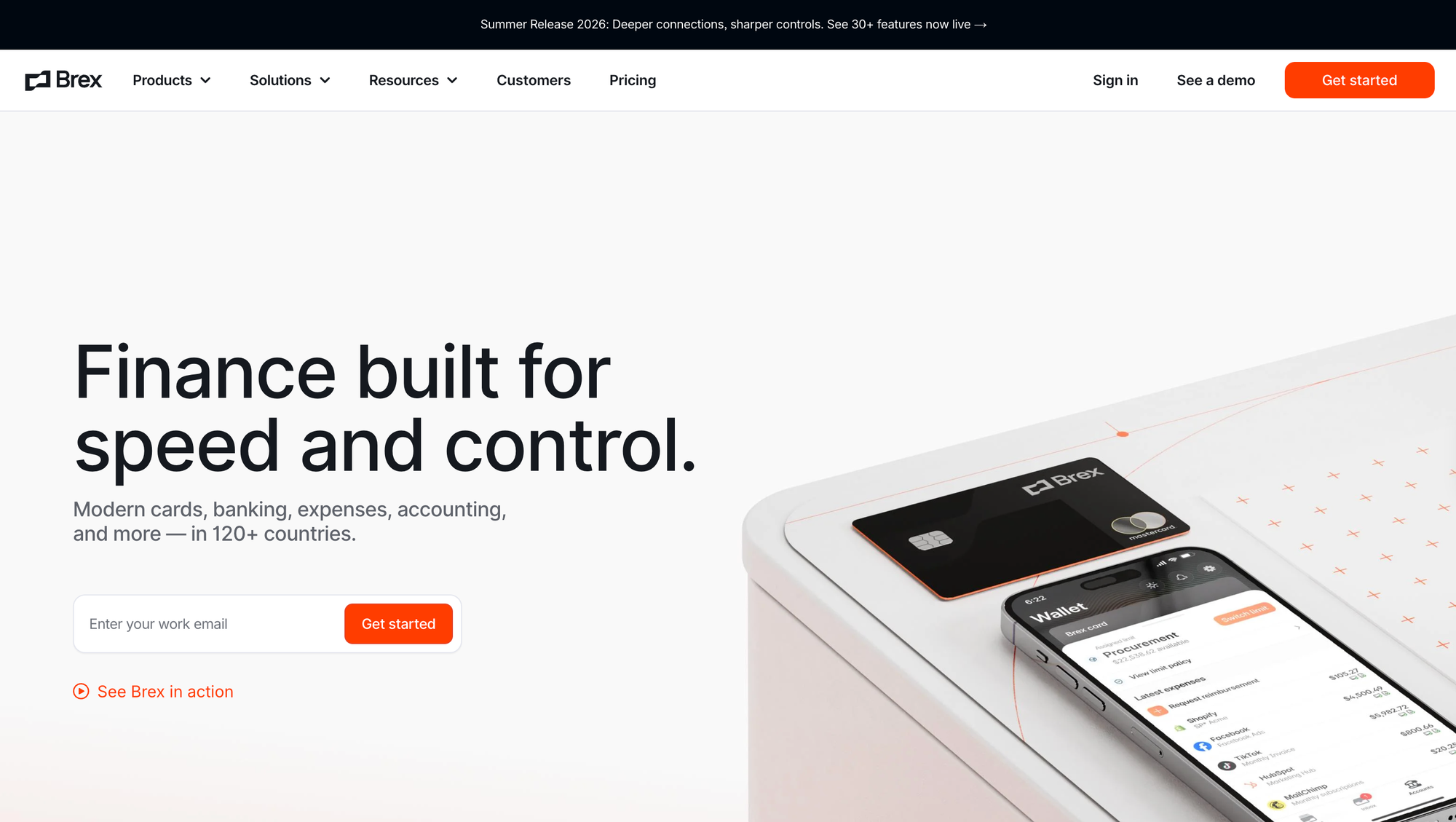
Switching has a cost, so it is worth naming what stays behind.
Brex underwrites card limits against cash balances with no personal guarantee, which is why a pre-revenue company that just raised can get limits a bank would never extend. Nothing else on this list replicates that, because nothing else is built on the same assumption.
The acquisition also cuts both ways. A platform owned by an institution holding $475.8 billion in deposits is a different counterparty from a venture-backed startup, and for finance teams that were nervous about fintech durability, that is an argument to stay rather than leave.
The People Layer Underneath the Card
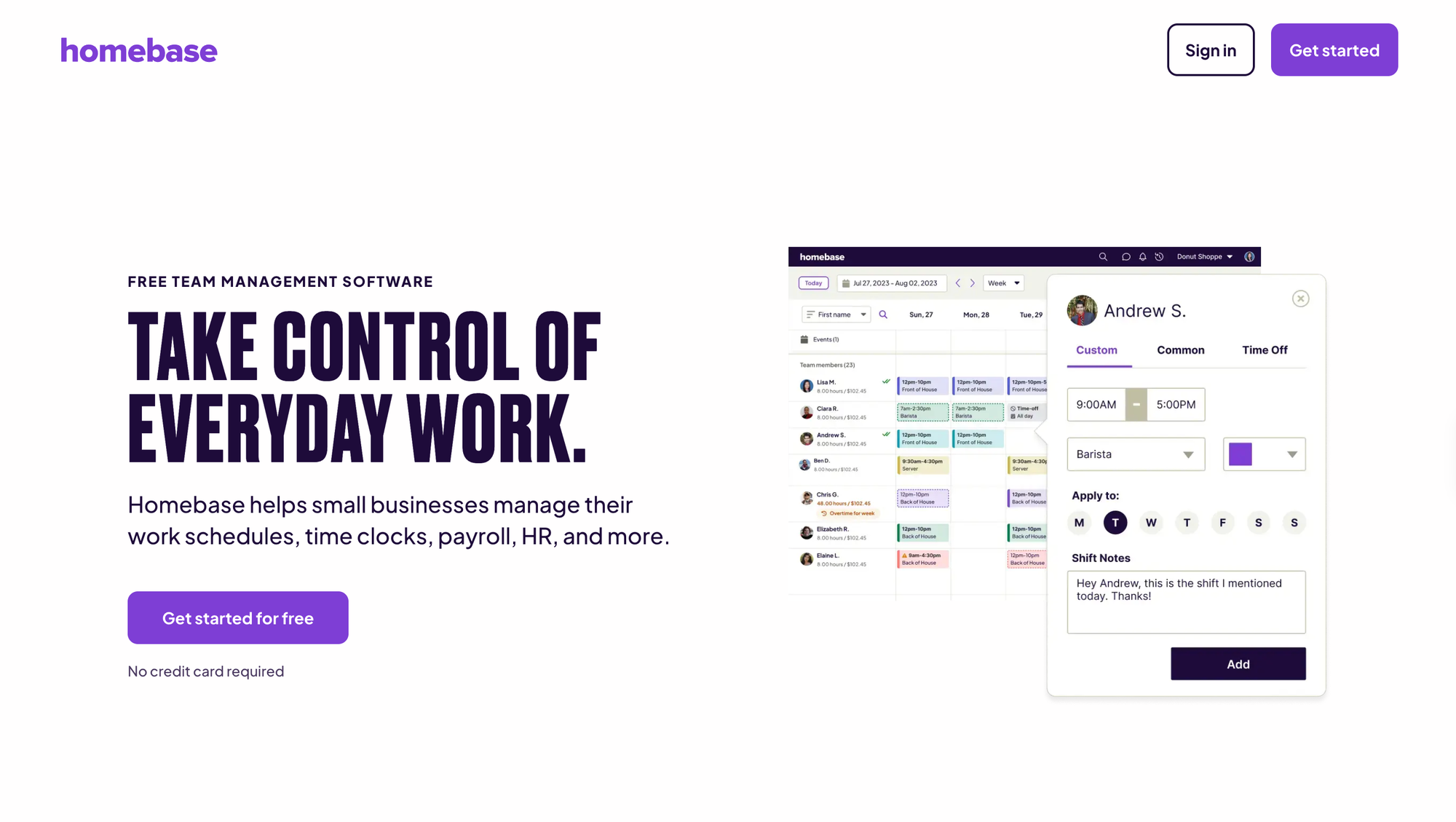
Every platform above manages what employees spend, and none of them manages what employees are owed. Payroll, hours, shifts, and approvals sit upstream, and spend management assumes that layer already works.
For salaried teams the gap is invisible because payroll runs on a fixed number. For hourly teams it is the whole problem, since the payout is only as accurate as the shift record behind it, which is the same dependency our guide to stablecoin payroll tools works through.
That record starts before any card or payout file exists, in whatever tool captures the shift. Free employee scheduling and time tracking for your team is enough at that stage, and you add payroll & HR when you need it. No card or code required to run the first cycle that way.
How to Choose a Brex Alternative
1. Separate the acquisition from the actual problem
If nothing was wrong before April 2026, ownership alone is a reason to renegotiate rather than migrate. Get roadmap and pricing commitments in writing at renewal and decide from there.
2. Check whether you would qualify today
Cash-balance underwriting is the reason many companies cannot use Brex at all. If your business has revenue but not deposits, conventional underwriting solves a problem that switching platforms otherwise will not.
3. Count your entities before your features
One entity in one country makes this a card and expense decision. Three entities across two jurisdictions makes it a consolidation decision, and the shortlist changes completely.
4. Price the migration, not just the subscription
Reissuing cards, rebuilding approval rules, and remapping accounting categories consume real finance hours. A free base plan that costs three weeks of work is not free.
5. Run both platforms through one close
Keep the old system open for a full monthly cycle and reconcile in parallel. Migrations fail at month-end, not at signup.
Conclusion
Most companies leaving Brex in 2026 are not leaving because of Capital One. They are leaving because a card-first platform underwritten on deposits stopped matching a business that now has entities, procurement, and a close calendar.
Ramp takes the like-for-like case, Airwallex takes cross-border operations, BILL takes small teams already running accounts payable, Navan takes travel, Payhawk takes multi-entity finance, Corpay takes conventional credit, and Rippling takes companies that want spend to follow employee data.
Whichever way the decision goes, the useful discipline is to test the new platform through one full month-end before turning the old one off. That single step catches more problems than any feature comparison.
Read Next:
- Top Online Bank Alternatives to Mercury in 2026
- Best Neobanks for Startups in 2026-2027
- How to Set Up a Stablecoin Treasury
FAQs:
1. What is the best alternative to Brex?
Ramp for most US companies wanting the same product without the eligibility gates, Airwallex for cross-border operations, Payhawk for multi-entity finance teams, Corpay for established businesses that need conventional credit underwriting, and Navan where travel dominates spend.
2. Did Capital One buy Brex?
Yes. Capital One announced the acquisition in January 2026 and closed it on 7 April 2026 at roughly $5.15 billion. Brex continues to operate as a wholly owned subsidiary.
3. Why do companies get rejected by Brex?
Brex underwrites on cash balances rather than operating history, with reported thresholds around $10,000 in monthly card spend and $75,000 held in a US bank account. Sole proprietors and partnerships also fall outside its accepted entity types.
4. Is Brex a bank?
Brex is a financial technology company, and banking services are provided through partner institutions. Its acquisition by Capital One places a chartered bank behind the parent company, which is not the same as the product itself becoming a bank account.
5. Should I switch platforms because of the acquisition alone?
Not automatically. Day-to-day workflows did not change at closing, and the sensible response is to treat roadmap, pricing, and support commitments as items to confirm in writing at your next renewal.
Disclaimer:
This content is provided for informational and educational purposes only and does not constitute financial, investment, legal, or tax advice; no material herein should be interpreted as a recommendation, endorsement, or solicitation to open any account or purchase any product, and readers should conduct their own independent research or consult a qualified professional. Pricing, eligibility thresholds, cashback rates, and product terms change frequently and are reported inconsistently across sources; verify all figures directly with each provider before acting. Most platforms described here are financial technology companies rather than banks, and deposits are held at partner institutions rather than by the platforms themselves.