

Table of Contents
Stablecoin payments have become a serious infrastructure category for global businesses in 2026. What used to be a niche crypto checkout option is now being adopted for ecommerce, B2B invoicing, supplier payments, treasury movement, and cross-border settlement.
Stripe now lets eligible US businesses accept stablecoin payments that settle in USD, Shopify has expanded native USDC checkout through Shopify Payments in many regions, and enterprise platforms such as BVNK, Bridge, Circle, Triple-A, and BitPay are competing to become the operating layer for business payments built on stablecoins.
That shift matters because global businesses are no longer evaluating stablecoin gateways only on whether they can “accept crypto.”
In 2026, the real questions are whether a provider supports compliant settlement, fiat conversion, payouts, treasury workflows, APIs, regional availability, and a user experience that customers and finance teams can actually use.
This guide compares the best stablecoin payment gateways for global businesses in 2026, explains what each one does best, and shows how to choose the right option based on your business model.
Key Takeaways
- The best stablecoin payment gateway depends on your use case, not just the brand name.
- Stripe and Shopify are pushing stablecoin checkout into mainstream commerce, but eligibility and regional support still vary.
- BVNK, Bridge, Circle, and Triple-A are stronger fits for businesses that need cross-border infrastructure, payouts, and enterprise controls.
- BitPay and NOWPayments remain relevant for merchants that want easier deployment, broad wallet support, and flexible settlement options.
- In 2026, stablecoin payment adoption is moving beyond checkout into treasury, network settlement, and embedded financial infrastructure.
What Is a Stablecoin Payment Gateway in 2026
A stablecoin payment gateway is a payment platform that lets businesses accept, route, convert, settle, or send payments using stablecoins such as USDC, USDT, or EURC.
In practice, that can mean very different things depending on the provider. Some gateways are checkout-first tools for online merchants. Others are API-driven infrastructure platforms built for marketplaces, fintechs, payment service providers, and cross-border payment operations.
That distinction is important. A basic crypto checkout product may help a merchant accept a wallet payment. A more advanced stablecoin payments platform may also handle fiat settlement, payout orchestration, compliance workflows, treasury movement, and integrations with existing finance systems.
Coinbase’s 2026 shift from Coinbase Commerce toward Coinbase Business reflects this broader trend, with the company explicitly framing the new platform around custody, payouts, accounting integrations, offramps, and payments rather than simple checkout alone.
Why Global Businesses Are Using Stablecoin Payment Gateways in 2026
The business case for stablecoin payments is clearer than it was a few years ago. Payment teams want faster cross-border movement, more predictable settlement windows, reduced friction compared with correspondent banking, and more flexibility in how funds are received and paid out.
Stripe now explicitly markets stablecoin payments around global acceptance and fiat-settled business workflows, while Circle is positioning its network around compliant 24/7 settlement and capital efficiency.
Global businesses are also seeing that stablecoins can solve more than one problem at once. A company may want to accept online payments from international customers, settle in fiat, pay suppliers or contractors more efficiently, and move funds across entities without waiting for banking cutoffs.
That is why stablecoin gateways are increasingly being evaluated by treasury, operations, and finance teams, not just ecommerce teams.
Circle says blockchain transactions on its payments network can settle in seconds and highlights reduced prefunding needs, while Bridge emphasizes integration into existing fund flows through orchestration APIs.
User expectations matter too. BVNK’s 2026 Stablecoin Utility Report found that lower fees, security, and global access were key drivers of adoption, but users still disliked complexity, too many steps, and network confusion. That means the best stablecoin payment gateways in 2026 are not just technically capable. They also need to feel simple and familiar.
What Global Businesses Should Look For in a Stablecoin Payment Gateway
Choosing a gateway in 2026 requires more than checking a token list.
1. Stablecoin and Network Support
Most business demand is still concentrated around dollar-backed stablecoins, especially USDC and USDT, but support for EURC and multichain settlement is becoming more important.
For many businesses, network support matters almost as much as the stablecoin itself because it affects fees, customer experience, and wallet compatibility.
Providers differ widely here, especially between enterprise infrastructure products and merchant-first checkout tools.
2. Fiat Settlement
For many global businesses, the real value of a stablecoin payment processor is not holding stablecoins. It is being able to accept them and settle to a bank account in fiat.
- Stripe says its stablecoin payments settle into the Stripe balance in USD.
- Shopify says merchants can choose their payout currency through Shopify Payments or manually claim USDC to a wallet.
- BitPay explicitly markets settlement in fiat, crypto, or a mix of both, with bank deposits around the world in currencies including USD, EUR, and GBP.
3. Geographic Availability
Regional coverage is one of the biggest differentiators in 2026. Stripe’s official documentation states that only US businesses can currently accept stablecoin payments directly.
Shopify’s USDC checkout is available across many eligible European markets and Hong Kong through Shopify Payments, but rollout is still tied to eligibility.
That means the “best” gateway often depends on where your entity is based and where your payment stack already operates.
4. Integrations and APIs
Businesses should distinguish between hosted checkout, plugin-based deployment, and programmable APIs.
- NOWPayments emphasizes plugins, widgets, invoices, subscriptions, and CMS integrations.
- Bridge focuses on orchestration APIs for developers integrating stablecoins into existing flows.
Those are very different products, even if both sit in the broad stablecoin payments category.
5. Compliance and Licensing
Compliance is becoming more important as stablecoins move deeper into mainstream payments.
- Circle describes the Payments Network as compliance-first and says partners are vetted for licensing, risk management, and security.
- Triple-A positions itself as a regulated business payments company with global send-and-receive capabilities.
- BVNK is leaning heavily into compliant enterprise infrastructure and regulatory education for business users.
6. Payouts and Treasury Use Cases
Many businesses need more than inbound payments. They need a gateway or infrastructure layer that also supports payouts, treasury movement, and multi-entity fund flows.
Coinbase Business, Circle Payments Network, BVNK, BitPay, and Bridge all reflect this broader direction in different ways.
Best Stablecoin Payment Gateways for Global Businesses in 2026
1. BVNK
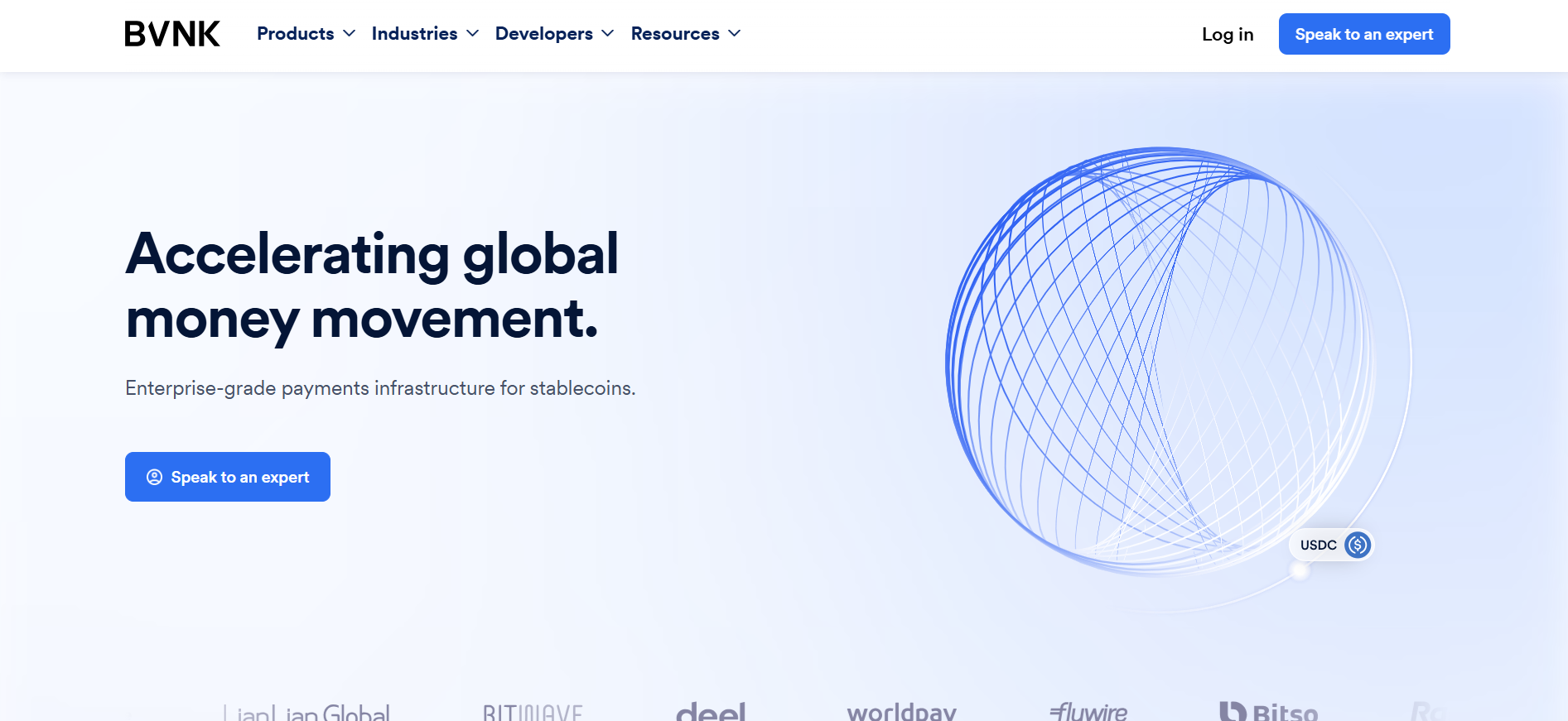
BVNK is one of the strongest options for global businesses that want enterprise-grade stablecoin payments infrastructure rather than a simple checkout button.
The company positions itself as a provider of fast, compliant payment infrastructure for global businesses, with a full-stack toolkit for stablecoin payments and strong emphasis on payout workflows.
On its homepage, BVNK highlights enterprise use cases such as marketplaces, travel, gaming, and large-scale payout operations.
What makes BVNK stand out is the way it bridges the gap between crypto rails and business payments operations. Its positioning is less about consumer-facing checkout alone and more about helping companies launch stablecoin products, manage payouts, and embed compliant blockchain-based movement into real commercial workflows.
That makes it especially relevant for companies operating internationally or handling more complex fund movement than a standard merchant checkout flow.
BVNK is best for enterprise cross-border payments, marketplaces, payout-heavy businesses, and companies that want stablecoin capabilities without building the full stack themselves.
2. Stripe Stablecoin Payments
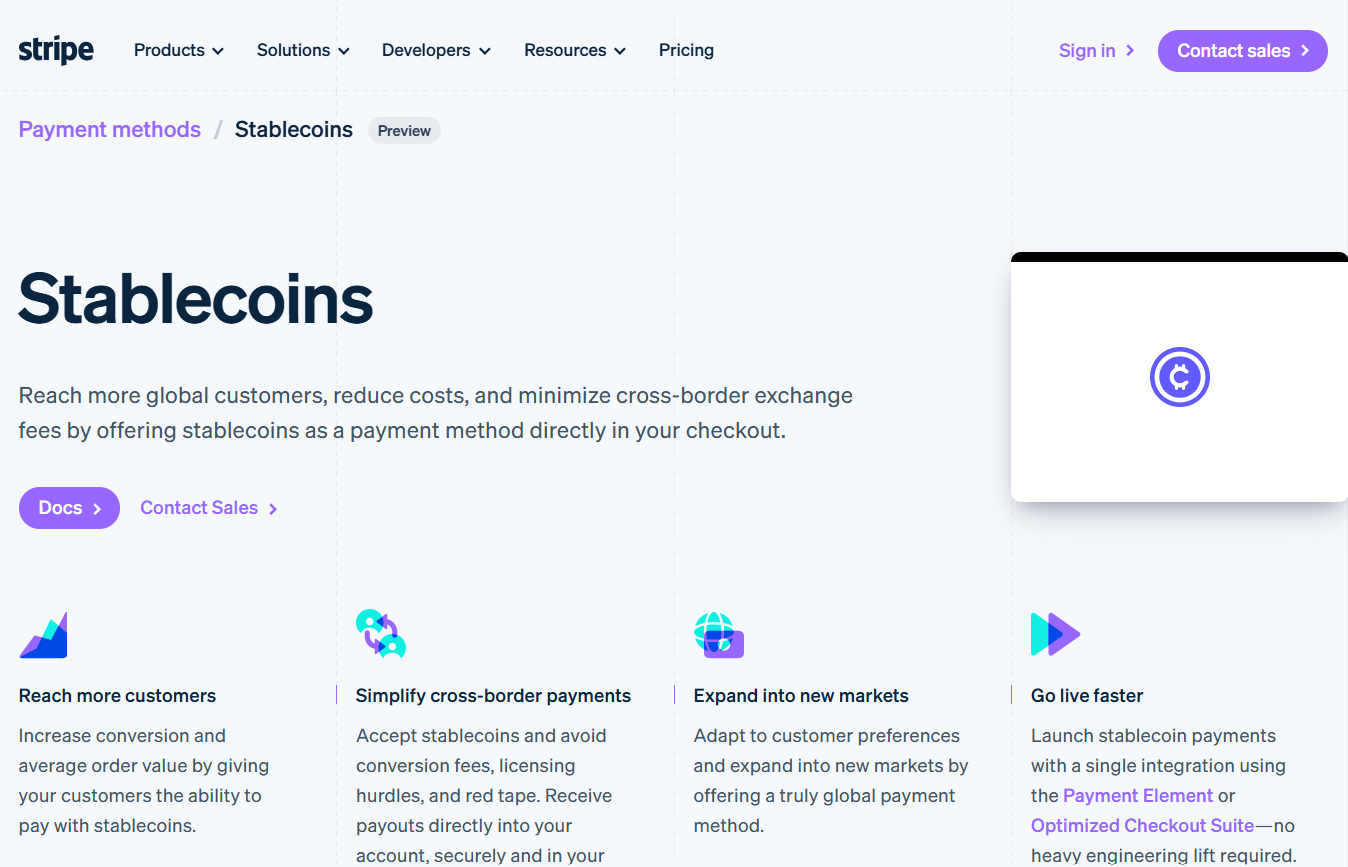
Stripe is one of the most important companies in this category because it brings stablecoin payments into a mainstream payments interface that many businesses already use. Its official documentation says customers can use stablecoins to pay globally, but only US businesses can currently accept stablecoin payments.
Those transactions settle in the merchant’s Stripe balance in USD.
That makes Stripe a strong option for eligible US businesses that want to test or expand stablecoin acceptance without changing their broader payments stack. For many companies, the appeal is operational simplicity. The finance team can still work in fiat while customers gain another payment option.
Stripe also emphasizes that this model can help businesses accept payments from almost anywhere in the world while keeping settlement in familiar business rails.
Stripe is best for Stripe-native businesses, SaaS companies, and online merchants that want the simplest path to accepting stablecoin payments, provided they meet the US business eligibility requirement.
3. Shopify Payments + Coinbase Payments
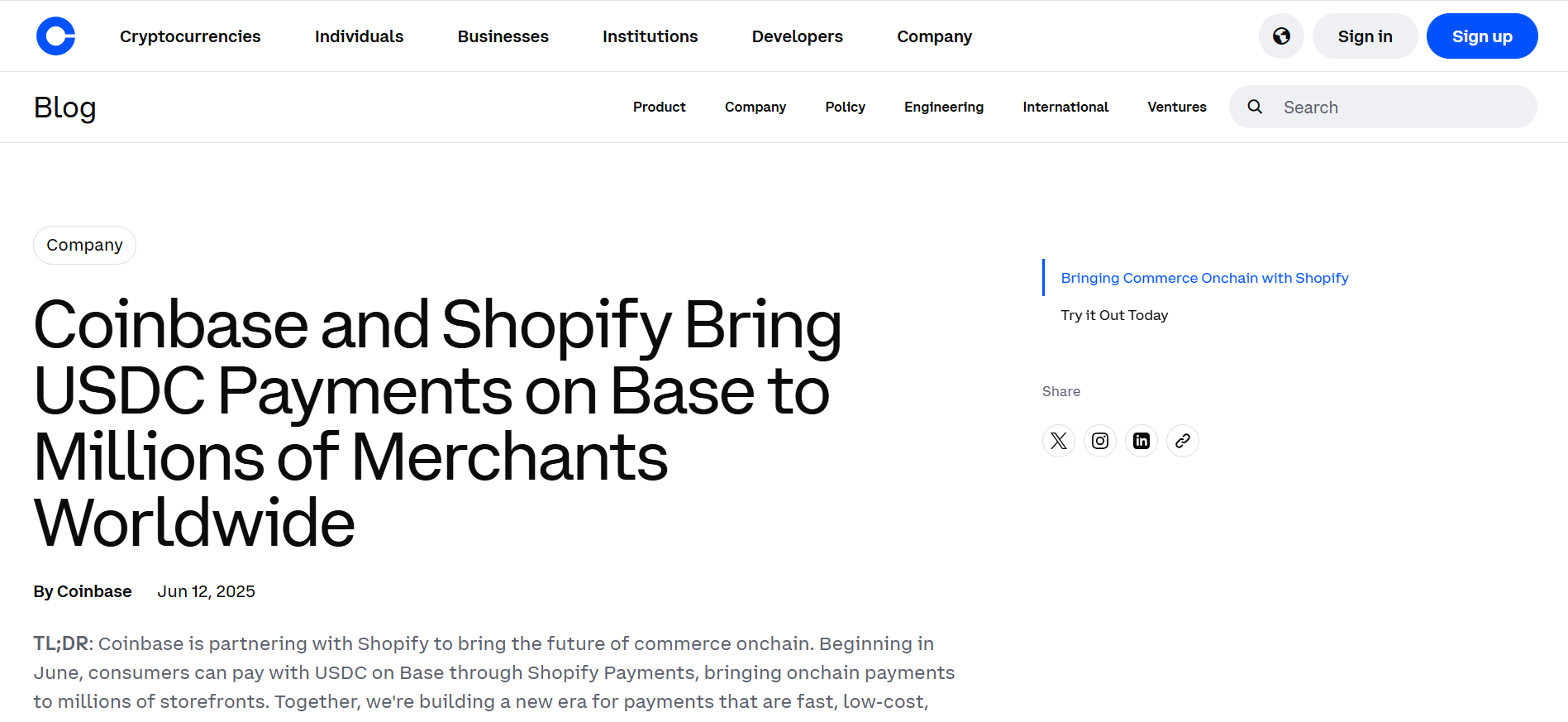
For ecommerce, Shopify has become one of the most relevant names in stablecoin payments. Shopify’s official help documentation says merchants in many supported European regions, along with Hong Kong in Asia-Pacific, can accept USDC at checkout through Shopify Payments if eligible.
Merchants can receive payouts in their chosen payout currency with Shopify Payments or manually transfer USDC to a crypto wallet.
Coinbase is a major part of this story. Coinbase states that USDC is now built directly into Shopify Payments and that merchants can keep normal bank payouts or opt into USDC payouts.
At the same time, Coinbase is transitioning from Coinbase Commerce to Coinbase Business by March 31, 2026, with the new business product positioned around payments, custody, payouts, accounting integrations, and fiat offramps.
This combination is important because it brings stablecoin checkout into the existing ecommerce workflow rather than forcing merchants into a separate crypto-only setup. For brands already using Shopify Payments, that can make USDC acceptance far more practical than earlier generations of crypto checkout tools.
Shopify Payments plus Coinbase-linked infrastructure is best for ecommerce merchants that want native USDC checkout, simpler rollout, and optional onchain payout flexibility.
4. Circle Payments Network
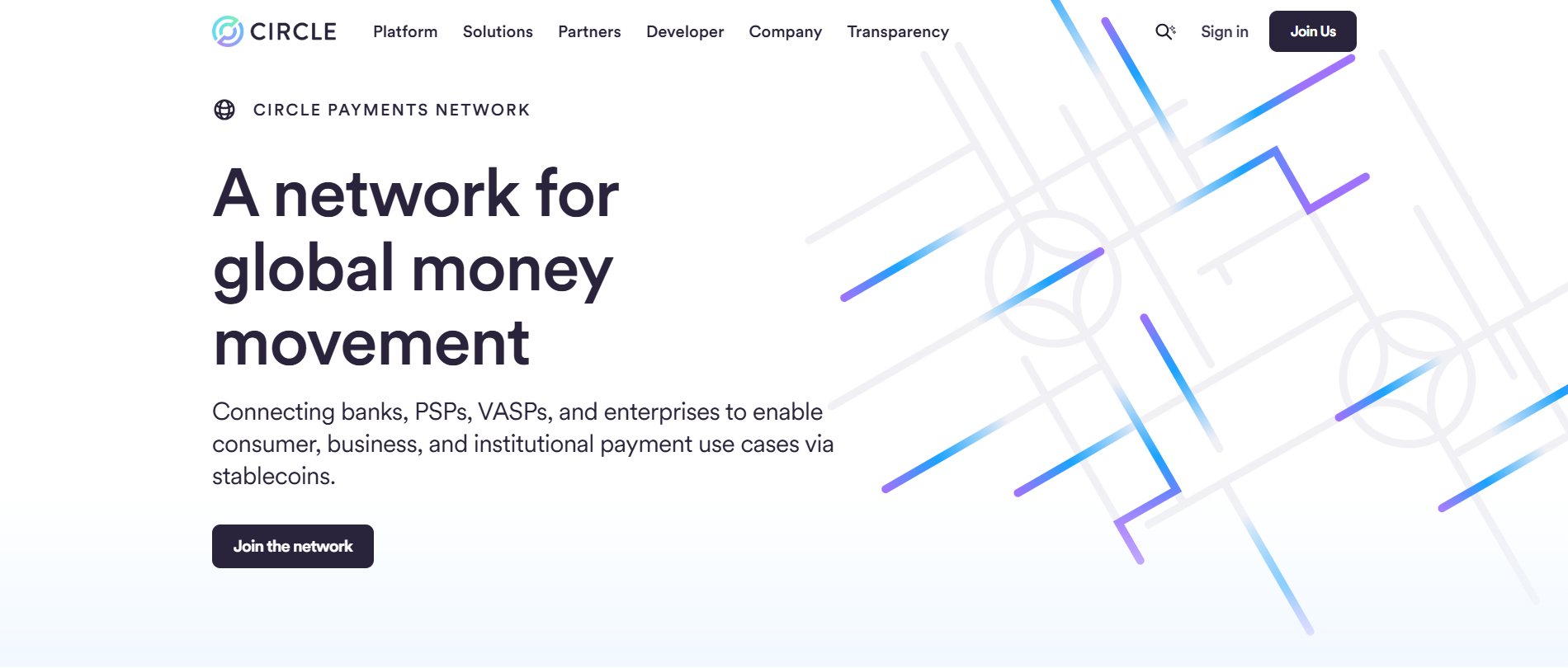
Circle Payments Network is one of the clearest examples of stablecoins moving from merchant checkout into institutional settlement infrastructure.
Circle says CPN enables fast, cost-effective, compliant global payments with 24/7 near-instant settlement, and that partners are vetted for appropriate licensing, operational risk management, and regulatory compliance.
This is not a typical small-business checkout plugin. It is more relevant to financial institutions, PSPs, remittance businesses, enterprises, and payment platforms that need a stablecoin-based settlement layer.
Circle’s positioning is built around real-time movement, reduced prefunding, and global payment coordination rather than simple “accept crypto” functionality.
Recent reporting also shows Circle using USDC for internal treasury movement across entities, which reinforces the practical treasury and settlement use case around its infrastructure.
Circle Payments Network is best for financial institutions, cross-border payment firms, PSPs, and enterprises looking for stablecoin-native settlement infrastructure.
5. Bridge
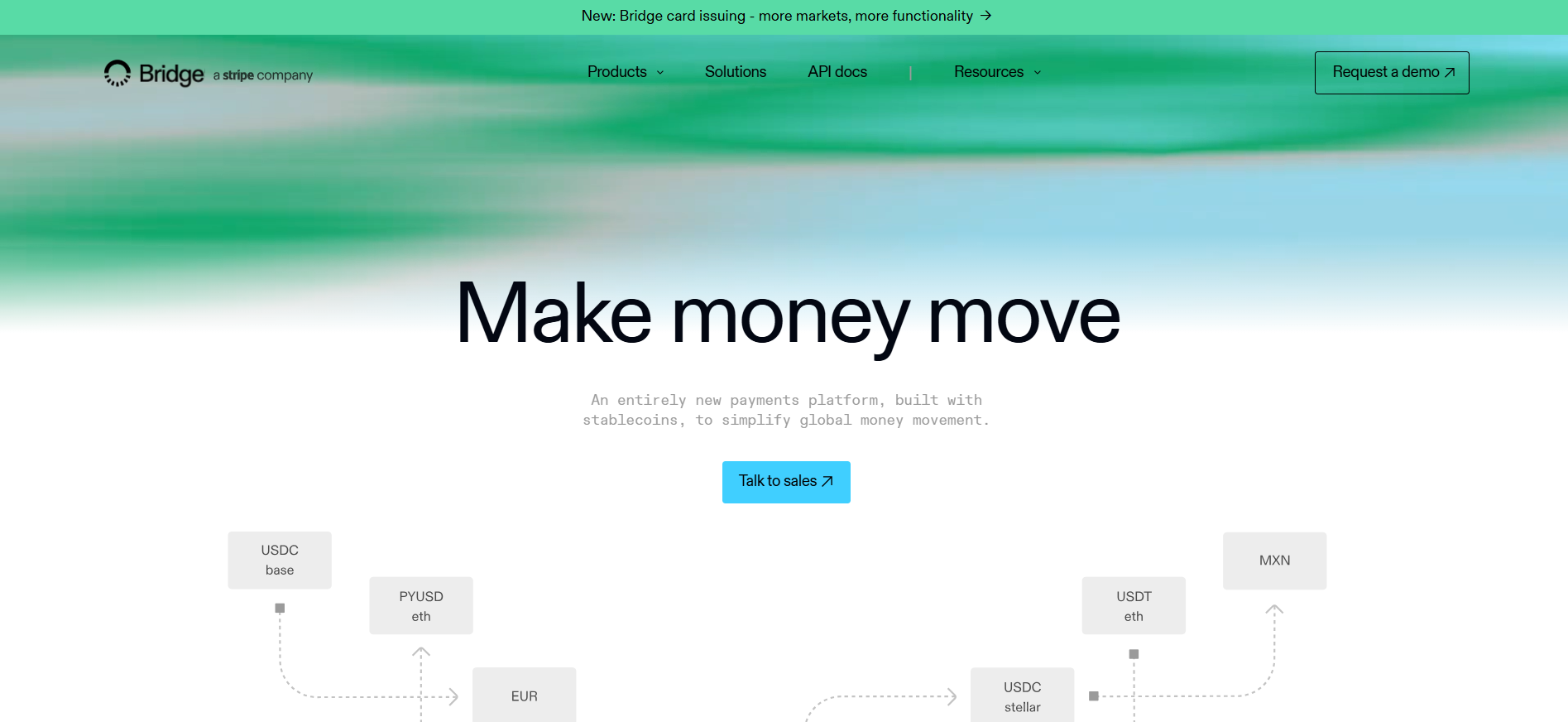
Bridge is a strong choice for businesses that need embedded stablecoin infrastructure and developer-first payment orchestration. Its official site says companies can move, store, and accept stablecoins through orchestration APIs, and that Bridge handles the regulatory, compliance, and technical complexity.
A product page also explicitly describes it as a payment gateway for integrating stablecoin payments into existing transaction flows.
That matters because Bridge is not trying to be just another checkout widget. It is aimed at companies building products and payment experiences.
Developers can use it to connect stablecoin movement to existing applications, flows of funds, and payment logic. Stripe’s newsroom also highlighted Bridge’s partnership with Visa for stablecoin-linked card issuing in multiple countries, which further signals its role as infrastructure for programmable business payments rather than a merchant-only gateway.
Bridge is best for fintechs, platforms, marketplaces, and product teams that want to embed stablecoin rails into their own payment architecture.
6. Triple-A
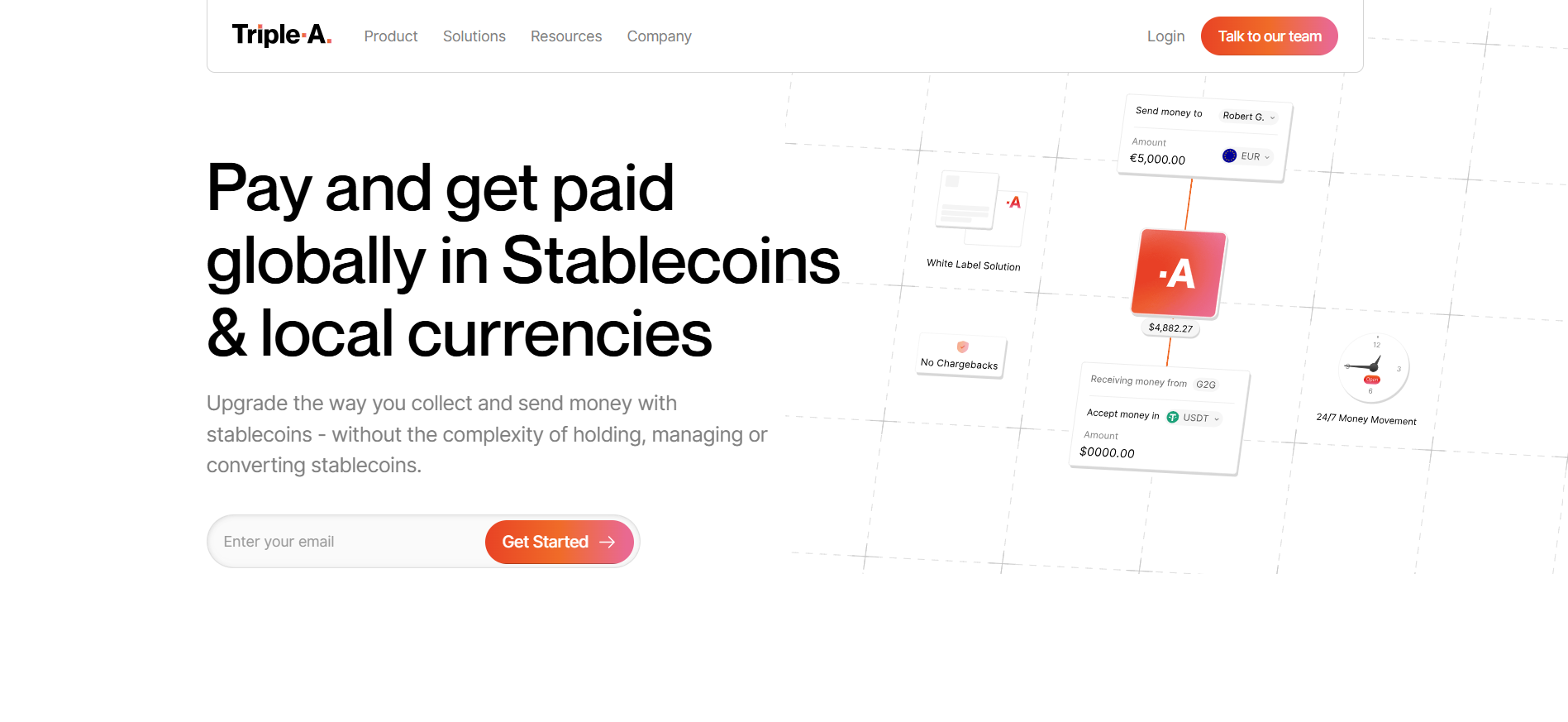
Triple-A is a strong international option for businesses that want to send and receive stablecoin payments globally without directly handling crypto operations themselves.
Its site says it helps businesses get paid globally in local and digital currencies, and its about page says it enables businesses to send and receive stablecoin payments globally without ever touching crypto.
That positioning gives Triple-A a useful middle ground in the market. It is more enterprise-ready and internationally oriented than many crypto-native merchant plugins, but it is still highly relevant to ecommerce and business payment flows.
Triple-A also highlights customer case studies with payment and payout growth metrics, which signals traction in commercial usage rather than purely theoretical capability.
Triple-A is best for international merchants, cross-border businesses, and companies that want stablecoin payment acceptance with local-currency practicality.
7. BitPay
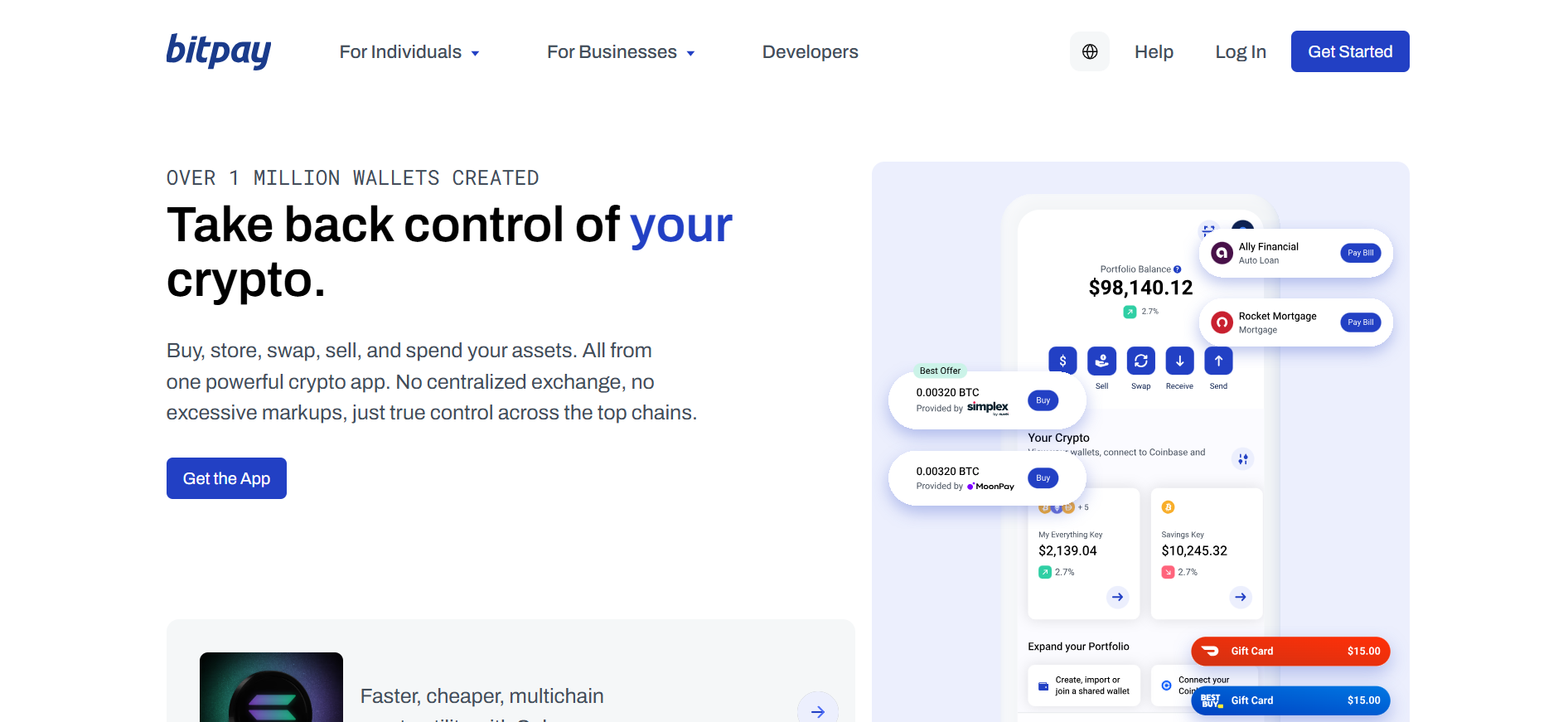
BitPay remains one of the most recognizable names in digital asset payments, and in 2026 it is still highly relevant for stablecoin business payments. Its stablecoin payments page says businesses can accept USDC, send global payouts, and settle in fiat with no technical setup or licenses needed.
BitPay also highlights fiat settlement into bank accounts in currencies such as USD, EUR, and GBP, plus the ability to settle in fiat, crypto, or both.
This makes BitPay appealing for merchants that want a mature processor with broad wallet and blockchain support, straightforward integration, and a clear path to avoiding direct stablecoin balance management.
It may not feel as infrastructure-native as Circle or Bridge, but for many merchants that is exactly the point. It is designed to simplify acceptance and settlement.
BitPay’s broader online payments material also says it supports 100+ cryptocurrencies and blockchains, including stablecoins like USDC.
BitPay is best for merchants that want straightforward deployment, broad compatibility, and fiat-backed stablecoin acceptance.
8. NOWPayments
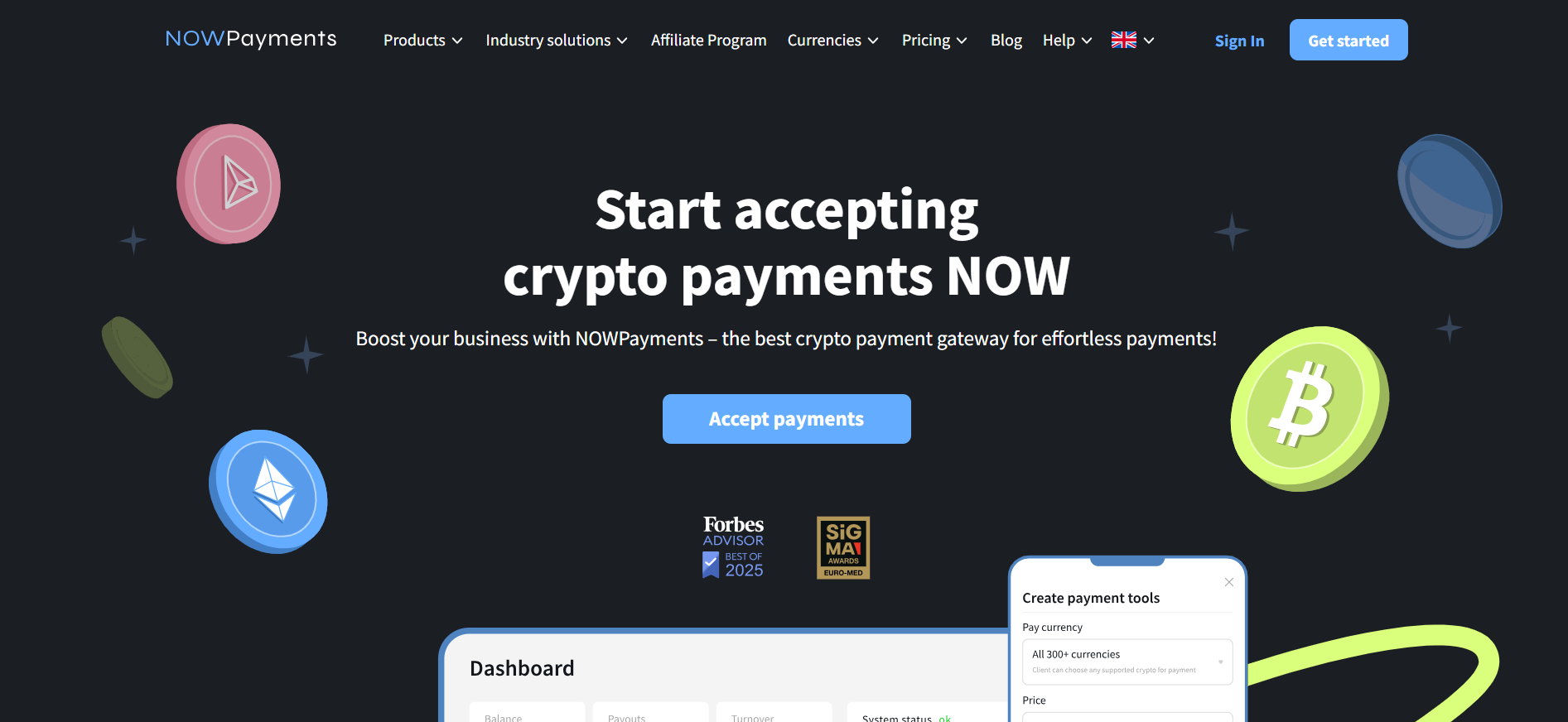
NOWPayments remains a practical option for businesses that want broad crypto and stablecoin support, flexible integration methods, and a more crypto-native merchant stack.
Its website says it supports 350+ cryptocurrencies and 75+ fiat coins, with invoices, subscriptions, plugins, widgets, white-label options, and both crypto and fiat operations. Its business-focused page says companies can integrate by API, CMS plugin, or custom widget and use fiat withdrawals as part of the flow.
That breadth is its main advantage. Businesses that want more token coverage, faster experimentation, or lighter-weight integration across ecommerce systems may find NOWPayments attractive.
The tradeoff is that it is not positioned as heavily around enterprise compliance-first infrastructure as some of the larger payment platforms in this list. It is better understood as a flexible crypto payment gateway that includes strong stablecoin coverage.
NOWPayments is best for crypto-friendly merchants, online stores, and businesses that prioritize broad token support and easy deployment.
Best Stablecoin Payment Gateway by Use Case
The best stablecoin payment gateway for global businesses in 2026 depends on what your company is actually trying to do.
- For ecommerce checkout, Shopify Payments with USDC support is one of the strongest options because it integrates stablecoin acceptance into a familiar commerce flow. Stripe is also attractive for eligible US businesses already inside the Stripe ecosystem. BitPay remains a solid alternative for merchants that want flexible settlement and established wallet compatibility.
- For enterprise cross-border payments, BVNK, Circle Payments Network, and Bridge are stronger fits because they are built around infrastructure, treasury movement, payout logic, and institutional-grade settlement rather than just checkout.
- For marketplaces, supplier payments, and payout-heavy workflows, BVNK, Triple-A, BitPay, and Bridge stand out because they emphasize send-and-receive flows, payout capabilities, or full-stack fund orchestration.
- For businesses that want simplicity, Stripe and Shopify are appealing because they embed stablecoin payments into large existing ecosystems. BitPay and NOWPayments are also strong for faster deployment without building a custom stablecoin stack.
- For financial institutions, PSPs, and infrastructure builders, Circle and Bridge are among the most relevant names because they are clearly positioning around programmable payment rails and real-time stablecoin settlement networks.
Risks and Limitations Businesses Should Understand
Stablecoin payment infrastructure is more mature in 2026, but it is still uneven.
The first limitation is regional availability. Stripe’s stablecoin acceptance remains restricted to US businesses, and Shopify’s USDC support depends on eligible regions and rollout status. That means a platform that looks ideal in a global comparison may still be unavailable to a specific business entity.
The second limitation is product mismatch. Some providers in this category are true merchant gateways, while others are API infrastructure platforms. A small ecommerce business may not need the same product that a PSP, marketplace, or remittance company needs. Treating every provider as directly interchangeable leads to poor vendor selection.
The third limitation is compliance complexity. Stablecoin regulation is becoming clearer, but business responsibility has not disappeared. Businesses still need to understand where KYC, AML, licensing, settlement rules, and counterparty obligations sit in the payment flow. BVNK’s 2026 regulatory overview underscores how rapidly the framework is evolving across markets.
The fourth limitation is user experience. Stablecoin payments still lose users if wallet steps, network choices, and settlement expectations are confusing. BVNK’s own consumer research highlights this clearly.
How to Choose the Right Stablecoin Payment Gateway
Start with the business problem, not the payment trend.
- If your company runs an online store and wants a checkout option for global customers, Shopify Payments and Stripe deserve the first look because they integrate into existing payment operations.
- If your company needs cross-border collections, treasury movement, or payout infrastructure, enterprise platforms such as BVNK, Circle, and Bridge are usually more relevant than merchant-only gateways.
- If your finance team wants fiat settlement with minimal crypto exposure, Stripe and BitPay are especially attractive because they frame stablecoin acceptance around familiar business settlement flows. Shopify also offers this through payout currency options.
- If your product team wants to embed stablecoins into a platform, marketplace, or financial workflow, Bridge and Circle are more aligned with API-first deployment.
- If you want broad token support and flexible merchant tooling rather than a tightly controlled enterprise stack, NOWPayments is one of the easier options to evaluate.

Conclusion
The best stablecoin payment gateway for global businesses in 2026 is not one universal platform. It depends on the operating model.
- Stripe is one of the best options for eligible US businesses that want easy stablecoin acceptance inside an established payments stack.
- Shopify Payments with USDC support is one of the strongest choices for ecommerce merchants that want native stablecoin checkout with normal business payout flexibility.
- BVNK is one of the strongest options for enterprise cross-border payments and payout-heavy business models.
- Circle Payments Network stands out for institutional settlement and real-time global payments infrastructure.
- Bridge is one of the best choices for platforms and developers building stablecoin-enabled products.
- Triple-A offers a strong balance between global business payments and practical send-and-receive simplicity.
- BitPay remains a reliable merchant processor for businesses that want fiat settlement, compatibility, and simple deployment.
- NOWPayments is a practical fit for merchants that value wide asset support and fast integration.
The broader takeaway is that stablecoin payment gateways are no longer a side feature in crypto. In 2026, they are becoming part of the core global payments stack.
Read Next:
- The Biggest Stablecoin Trends In 2026
- 9 Fastest-Growing Stablecoin Use Cases In 2026
- Top 10 Stablecoin Compliance Tools in 2026
FAQs:
1. What is a stablecoin payment gateway?
A stablecoin payment gateway is a platform that helps businesses accept, process, convert, settle, or send payments using stablecoins such as USDC or USDT. Some are simple checkout products, while others are full payment infrastructure platforms.
2. Which stablecoin payment gateway is best for ecommerce in 2026?
For ecommerce, Shopify Payments with USDC support is one of the strongest options because it brings stablecoin checkout into the core Shopify payments experience. Stripe is also a strong option for eligible US businesses, while BitPay remains useful for merchants that want flexible settlement.
3. Which stablecoin payment gateway is best for cross-border business payments?
For cross-border business payments, BVNK, Circle Payments Network, and Bridge are among the strongest options because they are designed around settlement, infrastructure, fund movement, and enterprise payment workflows rather than only checkout.
4. Can a business accept stablecoin payments and settle in fiat?
Yes. Stripe says stablecoin payments settle in USD in the Stripe balance, Shopify allows payout currency choices through Shopify Payments, and BitPay supports settlement in fiat, crypto, or both.
5. Are stablecoin payment gateways compliant for business use?
Many are built specifically around business compliance, but the level of compliance support depends on the provider and the jurisdiction. Circle says its payments network uses a compliance-first architecture, Triple-A presents itself as a regulated global payments provider, and BVNK is actively educating enterprise users around 2026 stablecoin regulation.
Disclaimer:
This content is provided for informational and educational purposes only and does not constitute financial, investment, legal, or tax advice; no material herein should be interpreted as a recommendation, endorsement, or solicitation to buy or sell any financial instrument, and readers should conduct their own independent research or consult a qualified professional.