Table of Contents
In September 2025, attackers phished one npm maintainer and pushed malicious versions of chalk, debug and 18 other packages with more than 2 billion weekly downloads combined. The payload hid in browsers and swapped crypto wallet addresses for lookalikes as users sent funds.
In July 2026, it happened again, this time aimed squarely at crypto developers. A compromised contributor account published a backdoored version of the Injective SDK that sent private keys and seed phrases to the attacker.
For stablecoin and crypto teams, the code you import is now part of your attack surface. This compares six software supply chain security tools on what they block, where they sit and how they fit a crypto stack.
A smart contract audit does not check the npm package your wallet front end installed this morning. Supply chain tools do.
Key Takeaways
- Two npm attacks targeted crypto wallets in under a year.
- Socket, Endor Labs and Aikido block malicious packages at install.
- Chainguard replaces public images and libraries with hardened builds.
- StepSecurity protects CI pipelines and lists Circle as a customer.
- Snyk's open source page focuses on known vulnerabilities, not malware.
What Actually Differs
Software supply chain security covers two different problems. One is known vulnerabilities in dependencies, tracked as CVEs. The other is malicious packages, published on purpose to steal secrets or redirect funds.
Classic software composition analysis (SCA) tools excel at the first problem. The crypto attacks above were the second kind, where a trusted package suddenly ships new code that no CVE database lists yet.
The browser payload in the chalk attack worked much like address poisoning scams, replacing a real address with one that looks almost the same. The difference is that it ran inside legitimate apps, not in a victim's transaction history.
What to note: ask each vendor how fast it flags a new malicious version, not only how many CVEs it tracks.
Best Software Supply Chain Security Tools for Crypto and Stablecoin Teams
1. Socket
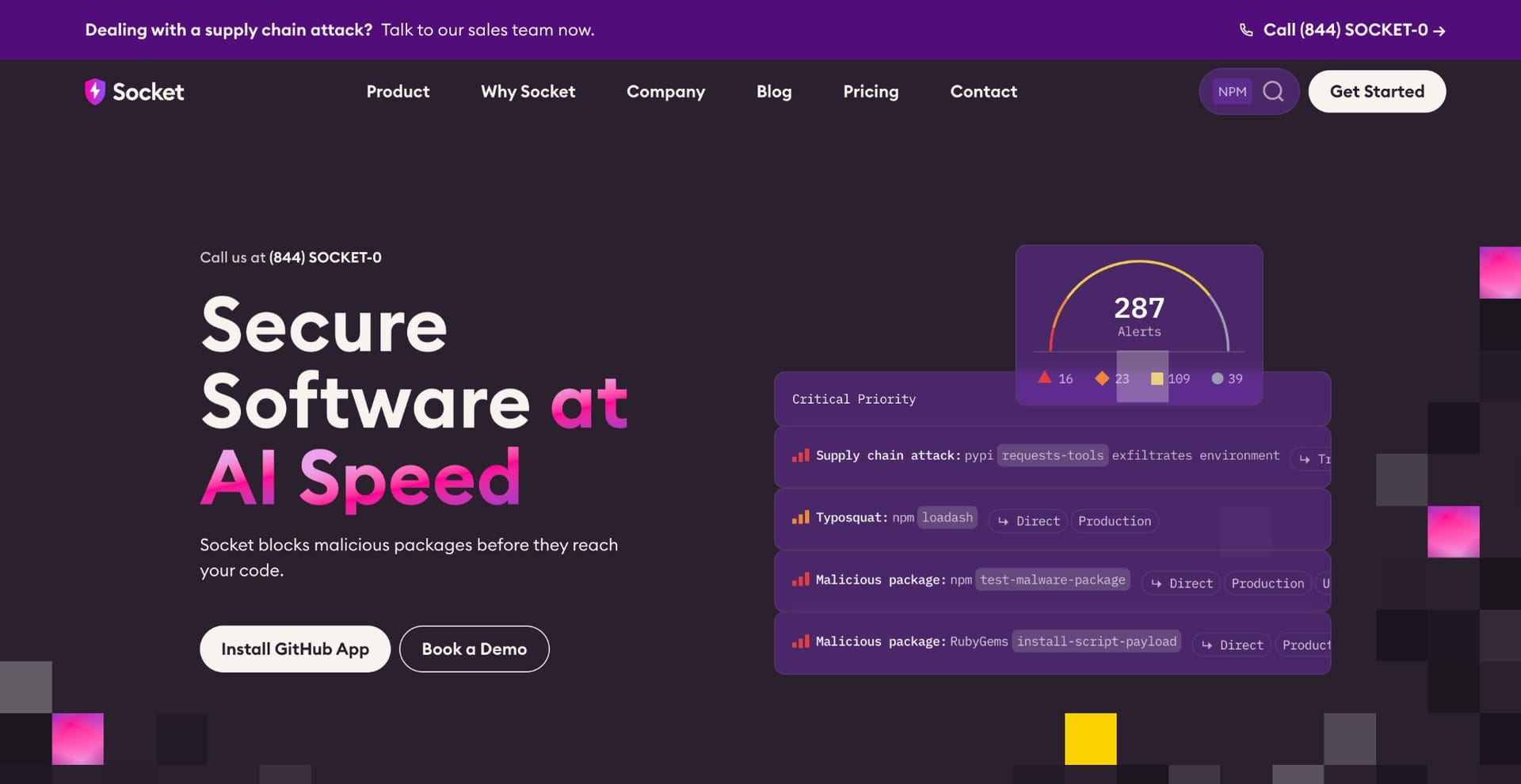
Does the job: malicious package detection before code reaches your repository.
Socket analyses every package and update for suspicious behaviour, such as install scripts, network calls and typosquatted names. It was among the firms that detected the Injective SDK compromise in July 2026.
The platform supports:
- Malicious package and typosquat detection
- Install script and supply chain attack alerts
- Coverage of npm, PyPI, RubyGems and other registries
- A GitHub app that comments on pull requests
- Reachability of risky dependencies
Socket says it blocks more than 10,000 attacks a week and protects more than 27,000 organisations. Its homepage names no crypto customers.
Best for crypto teams with large JavaScript front ends and SDKs that change often.
2. Snyk
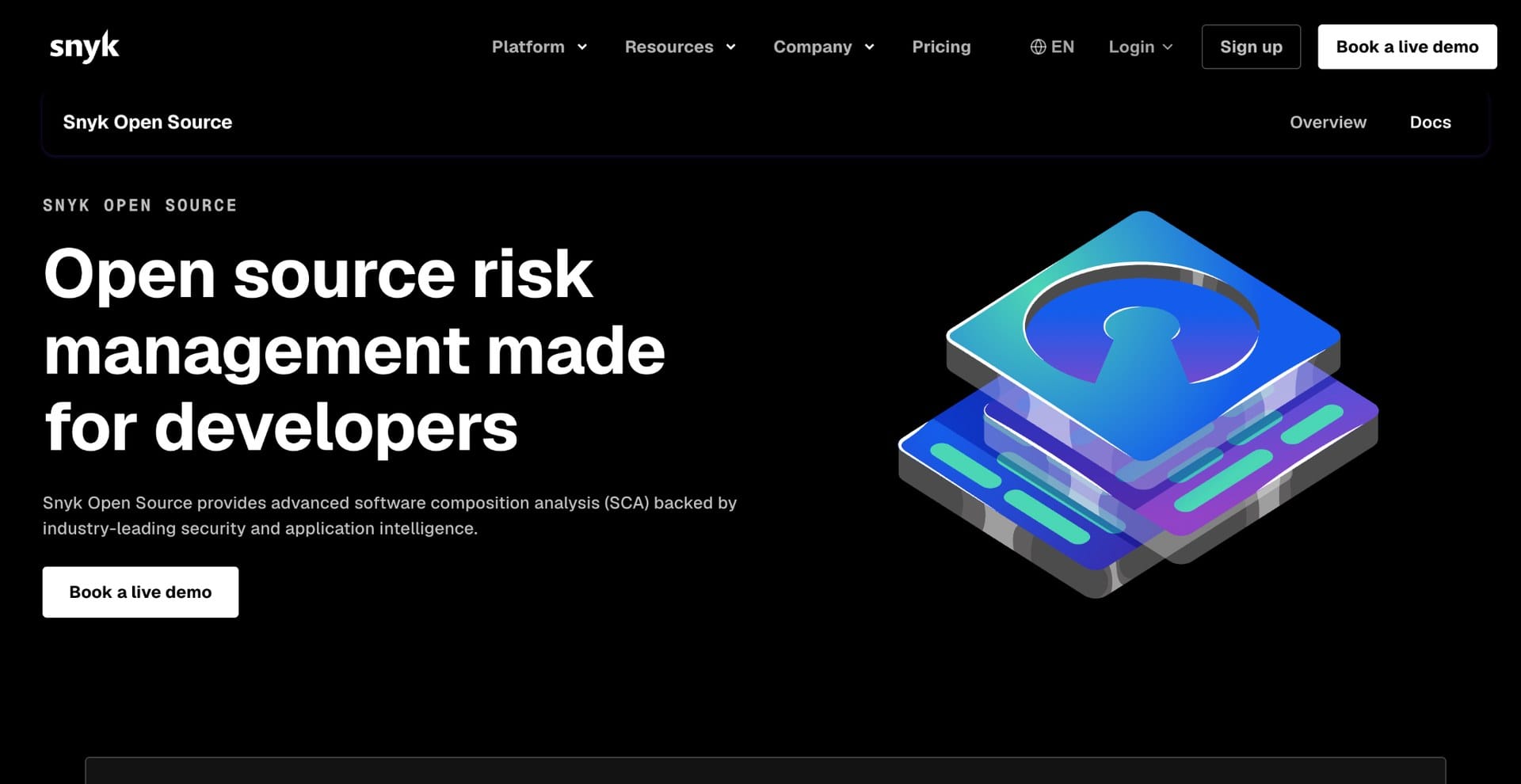
Does the job: mature open source vulnerability management across the development lifecycle.
Snyk Open Source finds and prioritises known vulnerabilities and licence issues in direct and transitive dependencies, then opens pull requests to fix them.
The platform supports:
- Checks in the IDE, CLI, pull requests and CI/CD
- A risk score using reachability, exploit maturity and EPSS
- One-click fix pull requests
- Continuous monitoring for newly disclosed issues
- Compliance reporting and SBOMs on the Enterprise plan
Snyk offers free, Team and Enterprise plans. Its open source product page does not mention malicious package detection, so confirm coverage for attacks like the Injective SDK compromise.
Best for teams that need broad CVE management and compliance reporting across many languages.
3. Chainguard
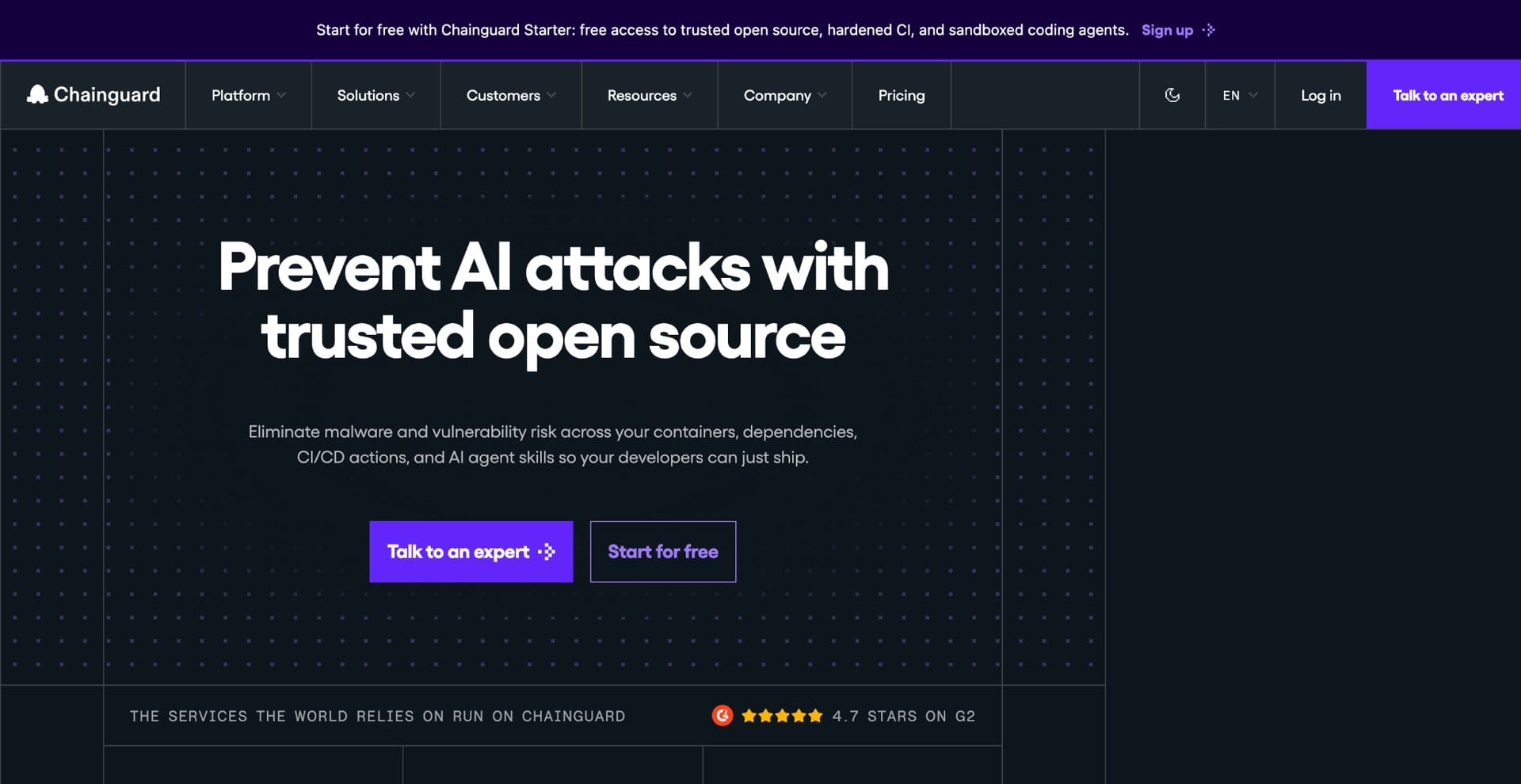
Does the job: hardened containers, libraries and CI actions built from source.
Chainguard replaces public images and packages with versions it builds and vets itself. Teams can switch off live access to public registries and pull only from Chainguard.
The platform supports:
- 3,000+ container images rebuilt from source daily
- Vetted Python, Java, JavaScript, Go and .NET libraries
- Sandboxed checks for malicious package behaviour
- 1,000+ hardened CI/CD actions
- SLSA Level 3 provenance, SBOMs and FIPS images
Chainguard claims 97.6 percent fewer CVEs than public alternatives. Named customers include Nasdaq and Ramp, and a free Starter tier is available.
Best for teams running validators, nodes or backend services in containers.
4. Endor Labs

Does the job: reachability-based dependency security with a package firewall.
Endor Labs only raises vulnerabilities your code can actually reach, which cuts noise. It also blocks malicious packages at install through its Package Firewall.
The platform supports:
- Reachability analysis for dependencies and containers
- Malicious package detection and a Package Firewall
- AI-driven static analysis and pull request review
- Governance for AI coding agents and MCP servers
- Secrets detection, SBOMs and artifact signing
Mysten Labs, the team behind Sui, appears among its customer logos. Free developer tools and a trial are available.
Best for teams that want fewer, more relevant alerts and control over AI coding agents.
5. Aikido
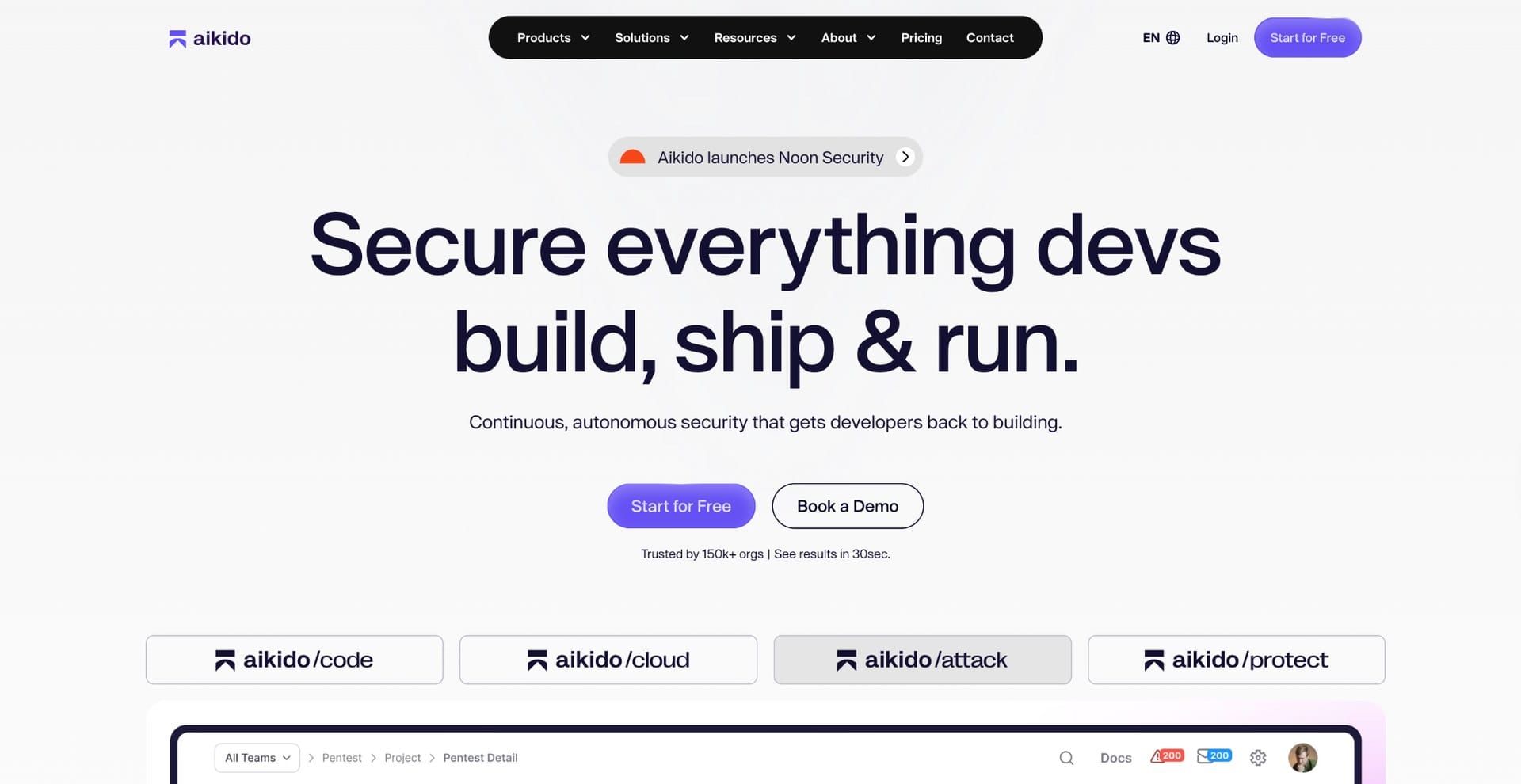
Does the job: all-in-one application security with malware blocking at install.
Aikido combines dependency scanning, malware detection and code scanning in one product. Its researchers published analysis of the chalk and debug payload in September 2025.
The platform supports:
- Dependency vulnerability and malware detection
- Safe Chain, an open-source tool that blocks malware at install
- Static code analysis and secrets detection
- Cloud, container and infrastructure scanning
- AI pentesting and runtime protection
Aikido offers a free start with no card and names fintechs such as Revolut and Deel as customers. It names no crypto firms on its homepage.
Best for smaller crypto teams that want one tool across code, dependencies and cloud.
6. StepSecurity
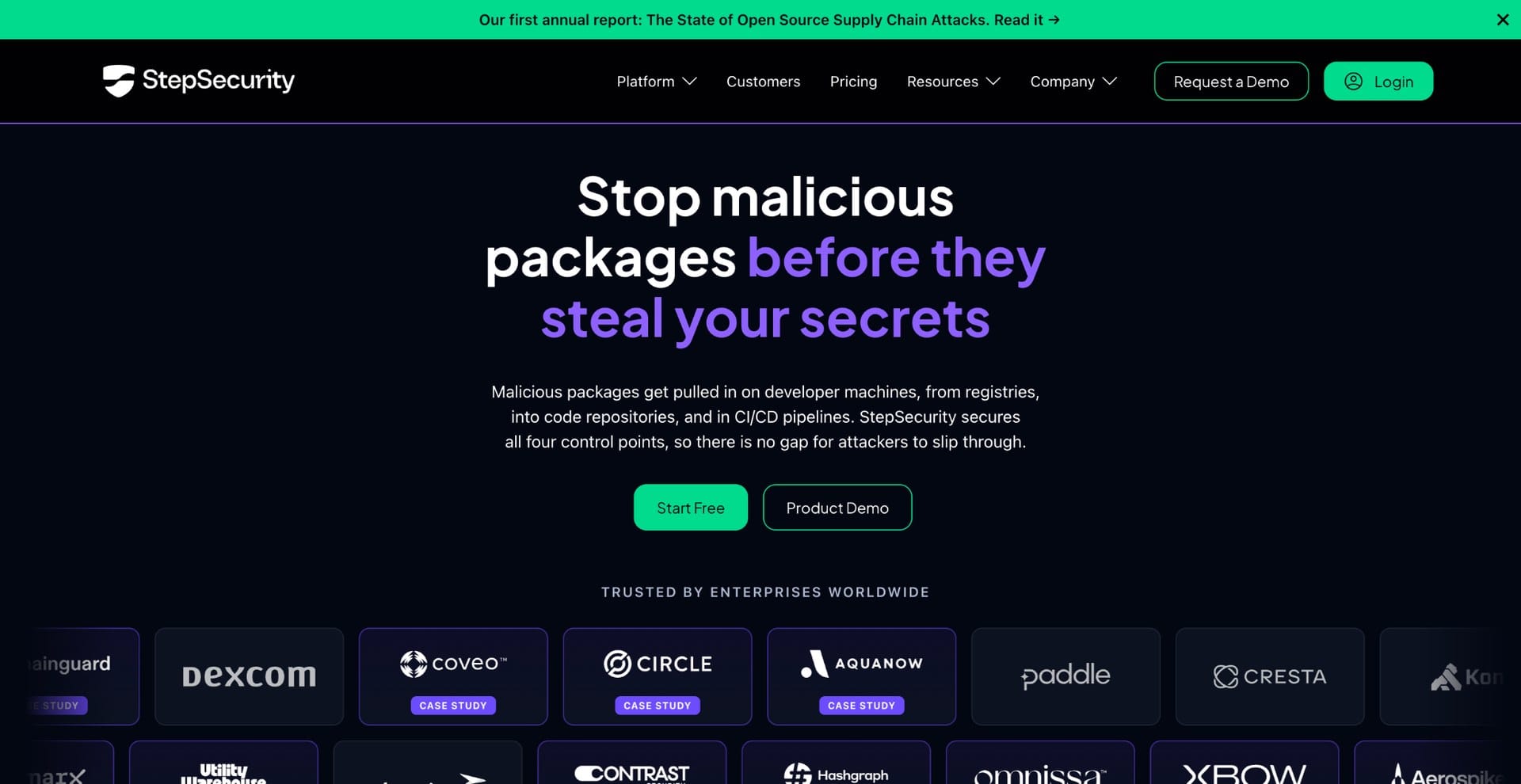
Does the job: CI pipeline and developer machine protection against compromised packages.
StepSecurity's Harden-Runner watches GitHub Actions runners for unexpected outbound connections, the usual sign of secret theft. It also helped detect the Injective SDK compromise, and it covers a gap that annual penetration testing rarely reaches.
The platform supports:
- Runtime monitoring of GitHub Actions network traffic
- Maintained replacements for risky third-party Actions
- A secure registry that blocks compromised packages
- Developer machine controls for packages and AI agents
- Threat advisories with automated blocking
Its case studies include Circle, the USDC issuer, plus Aquanow and Hashgraph. A free start is available, with paid plans on a separate pricing page.
Best for stablecoin and crypto teams whose deploy keys and secrets live in CI.
Supply Chain Security Tools Compared
| Tool | Main focus | Blocks malware | Free option | Crypto references |
|---|---|---|---|---|
| Socket | Malicious packages | Yes | Not stated on page | Injective detection |
| Snyk | Known vulnerabilities | Not on this page | Free plan | None named |
| Chainguard | Hardened builds | Sandboxed checks | Starter tier | None named |
| Endor Labs | Reachability | Package Firewall | Developer tools | Mysten Labs logo |
| Aikido | All-in-one AppSec | Safe Chain | Free start | Chalk analysis |
| StepSecurity | CI and dev machines | Secure registry | Free start | Circle, Aquanow |
The tools overlap, but each starts from a different point in the pipeline: the developer's laptop, the package registry, the repository or the CI runner.
What to note: most crypto teams need malware blocking at install and protection in CI, which may mean two tools.
Why Crypto Teams Are Prime Targets
Crypto code handles assets directly. A stolen cloud password needs more steps to turn into money, but a stolen seed phrase or a swapped address pays out in one transaction.
Crypto teams also ship a lot of JavaScript. Wallet front ends, SDKs and dApps pull in hundreds of npm dependencies, and any one of them can be hijacked through a phished maintainer.
Finally, CI pipelines often hold deploy keys and signing credentials. Regular testing helps, but a pipeline that installs a malicious package can leak those keys between tests.
What to note: keep signing keys out of CI where possible, and in hardware or MPC systems when they must be used.
How to Choose
1. Map your dependency surface
List your package managers, container images and CI providers. Pick tools that cover the ones you actually use.
2. Prioritise malware blocking
For crypto teams, blocking a malicious package at install matters more than another CVE dashboard.
3. Protect the pipeline
Check that CI runners cannot send secrets to unknown destinations, and pin third-party Actions to trusted versions.
4. Cover developer machines
Many attacks start on a laptop. Look for install-time guards that work in local development, not only in CI.
5. Plan the response
Decide in advance who rotates keys and moves funds if a compromised package slips through, and which incident response firms you will call.
What to note: add a short delay before adopting brand-new package versions, since most malicious releases are caught within days.
How This List Was Built
Inclusion required three things, so that the comparison means something.
- A first-party page describing software supply chain or dependency security
- Coverage of open source packages used by crypto teams, such as npm
- A product available to new customers today
Crypto relevance was weighted through detected crypto incidents and named crypto customers where vendors publish them. Vendors who believe they meet the criteria above are welcome to send documentation for consideration in the next update.
What to note: last reviewed against vendor websites in November 2026.
Risks and Limitations
- Detection claims and customer figures are vendor statements and not independently verified.
- No tool catches every malicious package, especially in the first minutes after release.
- Hardened builds still depend on the vendor's own supply chain.
- Strict blocking can slow development if exceptions are hard to manage.
- None of the six publishes full pricing on the pages reviewed.
Conclusion
The chalk and Injective attacks showed that crypto losses can start far from any smart contract. A single hijacked package can swap addresses for users or steal keys from developers.
Socket, Endor Labs and Aikido suit teams that want malware blocked at install, Chainguard suits teams running containers, StepSecurity suits teams whose secrets live in CI, and Snyk suits teams that need broad CVE management.
Pair the tooling with a tested plan for rotating keys and moving funds, because the next compromised package may reach you before any tool flags it.
Read Next:
- What Is Address Poisoning?
- Best Penetration Testing Firms for Crypto Fintechs
- Best Crypto Incident Response Firms
FAQs:
1. What is a software supply chain attack in crypto?
It is an attack that hides malicious code in a dependency, such as an npm package or SDK, so that apps and developers who install it leak keys or send funds to attackers.
2. What happened in the September 2025 npm attack?
Attackers phished a maintainer and published malicious versions of chalk, debug and other packages. The code swapped crypto addresses in browsers, though reported losses were small.
3. What happened with the Injective SDK in 2026?
A compromised contributor account published a backdoored SDK version that stole private keys and seed phrases. Security firms flagged it, and a clean version followed.
4. Is SCA enough to stop supply chain attacks?
Not on its own. SCA finds known vulnerabilities, while malicious packages need behavioural detection or install-time blocking.
5. How can crypto teams reduce supply chain risk?
Block malicious packages at install, pin dependencies and CI Actions, monitor CI network traffic, and keep signing keys out of build pipelines.
Disclaimer:
This content is provided for informational and educational purposes only and does not constitute financial, investment, legal, or security advice; no material herein should be interpreted as a recommendation, endorsement, or solicitation, and readers should conduct their own independent research or consult a qualified professional. Incident details are drawn from news reports at the time of writing. Features, customer names and figures are drawn from each vendor's own website, are not independently verified here, and change frequently. No security tool blocks every attack. Confirm current capabilities, terms and pricing directly with each vendor before buying.