Table of Contents
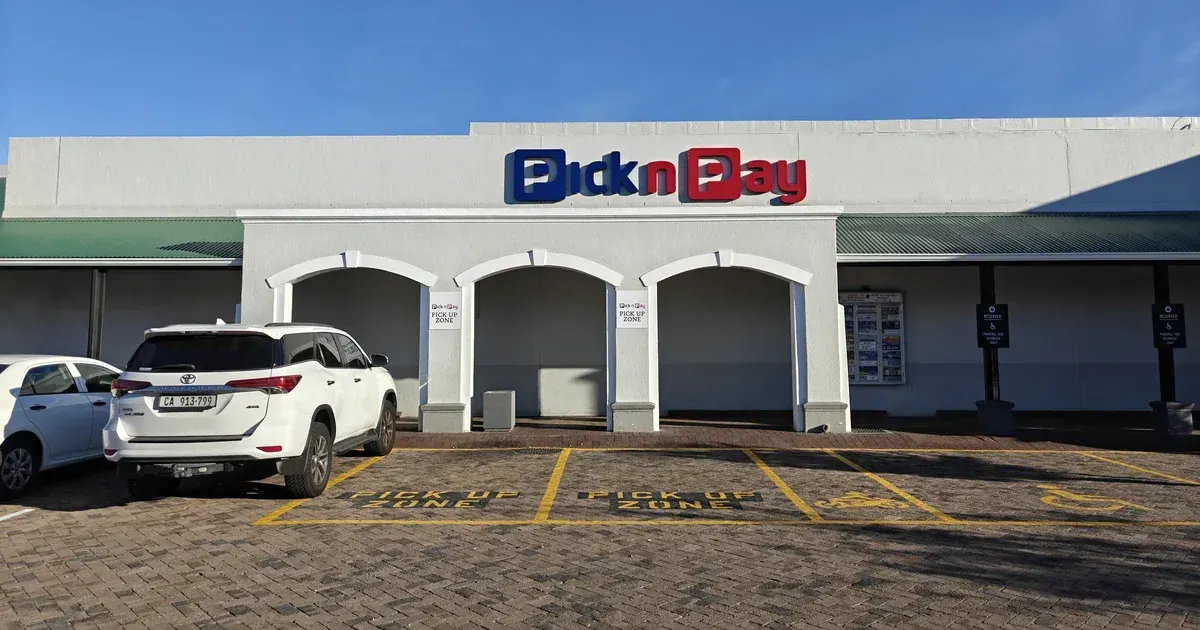
The best bank account for a SASSA grant in 2026 is the GoTyme Bank Current Account for most people who want a full account: it has no monthly fee and free cash withdrawals with a TymeCode at Pick n Pay and Boxer tills (GoTyme fee page). If you only need somewhere for the grant to land, the free Postbank SASSA account with its Black Card is still the cheapest default. Pick Capitec if you want a branch nearby, Standard Bank MyMo if you draw cash at shop tills a lot, and FNB Easy Zero only if you never need a debit order.
The difference is small in rand but not trivial on a R2,400 Older Persons Grant (Government Gazette R.7287). Collecting it the cheapest way costs R0 a month. Pulling R2,000 from an ATM costs between R20 and R49.50, depending on the bank. December grants are paid on 2, 3 and 4 December 2026 (DSD payment schedule).
Last updated: 26 November 2026. Fees re-checked against each bank's published 2026 pricing guide and SASSA/Postbank pages on this date.
Highlights
- SASSA pays grants into a Postbank SASSA account or an active personal bank account in your own name that accepts EFTs (SASSA grant booklet 2026). Joint accounts are not allowed (SASSA consent form).
- GoTyme (TymeCode at Pick n Pay or Boxer) and Postbank (up to three retail withdrawals) both reach R0 a month at the till. GoTyme is also cheapest in our ATM example, at R20.
- Postbank's SASSA account only accepts SASSA payments, so it cannot double as an everyday account for wages or transfers (Postbank fee schedule).
- African Bank MyWORLD charges R10.50 per R500 at ATMs, which makes it the costliest ATM option here (MyWORLD pricing guide).
- Switching banks takes an Annexure C form stamped by the new bank and handed in at a SASSA office before the 20th of the month (Black Sash).
What one R2,400 grant costs to collect, bank by bank
Collecting an Older Persons Grant costs R0 to R11.50 a month if you draw cash at a till, and R20 to R49.50 if you use an ATM. We priced two common habits for a R2,400 grant using each bank's published fees. Rows link to the fee source.
Assumptions: grant of R2,400; R400 spent by card at shops (free on all six). Till habit: two R1,000 cash withdrawals at a supermarket till. ATM habit: one R2,000 withdrawal at the bank's own ATM (for Postbank, its published Saswitch ATM fee). Fees include VAT, read 26 November 2026.
| Account | Monthly fee | Till habit: month total | ATM habit: month total |
|---|---|---|---|
| Our pick: GoTyme Bank Current Account | R0 | R0 (TymeCode at Pick n Pay or Boxer) | R20 (R10 per R1,000) |
| Postbank SASSA account | R0 | R0 (3 free retail withdrawals a month) | R22.11 (R5.31 + 0.83% + R0.20) |
| FNB Easy Zero | R0 | R6 (Cash@Till R3 each) | R24 (R12 per R1,000) |
| Standard Bank MyMo | R7.50 | R7.50 (retailer withdrawals free) | R27.50 (R10 per R1,000) |
| Capitec Main Account | R7.50 | R11.50 (R2 per till withdrawal) | R27.50 (R10 per R1,000) |
| African Bank MyWORLD | R7.50 | R11.50 (R2 per till withdrawal) | R49.50 (R10.50 per R500) |
Two patterns stand out. First, the till beats the ATM on every account, by R16 (Capitec) to R38 (African Bank) a month. Second, the monthly fee matters as much as withdrawals: R7.50 a month is R90 a year before you take out any cash, so the R0-fee accounts win for anyone with simple cash habits.
Over 12 months, the ATM habit costs R240 at GoTyme and R594 at African Bank. R594 is about a quarter of one month's grant.
How the six were chosen
We started from what SASSA accepts, then priced what a grant recipient actually does with the money: get cash, buy groceries, maybe pay a funeral policy. An account made the list only if it is a personal transactional account that SASSA can pay into, and the bank publishes a 2026 fee guide we could read.
- Cost of collecting the grant, weighted most: monthly fee plus cash withdrawal fees at tills and ATMs.
- Access: where you can draw cash and whether you need an app.
- Limits that bite: deposit restrictions, balance caps, debit-order bans.
- Fit with SASSA rules: own-name, non-joint, EFT-capable account.
The six accounts, ranked
1. GoTyme Bank Current Account: cheapest full account for grant cash
Fits: grant recipients with a smartphone who shop at Pick n Pay or Boxer and want one account for the grant, transfers and savings.
What it costs: no monthly fee; cash withdrawal with a TymeCode at Pick n Pay and Boxer is free; debit-card withdrawals at other major retailers cost R3; any South African ATM costs R10 per R1,000 (GoTyme fees).
The catch: ATM balance enquiries cost R10 and an inactivity fee of R7 a month applies after six months without a transaction. It is an app-first bank (GoTyme Current Account). GoTyme also sells a Grant Advance loan; SASSA warns that changing banks does not cancel loan obligations (SASSA, 7 Oct 2026).
- 👍 R0 month on both habits we priced
- 👍 Free instant payments to any bank up to R5,000
- 👎 Free cash only at two retail chains
- 👎 Needs the app for most banking
2. Postbank SASSA account (Black Card): best if the grant is all you need
Fits: older people and caregivers who only receive the grant and want no monthly fee.
What it costs: no monthly fee and no minimum balance; three free retail cash withdrawals a month, then R3.50; one free over-the-counter withdrawal at a Post Office branch a month; ATM withdrawals cost R5.31 + 0.83% + R0.20 (Postbank SASSA fees, Postbank SASSA card). The page is headed 2024 and was still the live schedule on 26 November 2026.
The catch: deposits are limited to SASSA EFT credits, so wages or family transfers cannot go in. Old SASSA Gold Cards stopped working after 31 August 2026; the free replacement is a Postbank Black Card (Black Sash, gov.za).
- 👍 Free to hold, and SASSA already pays into it
- 👍 Black Card works anywhere Visa or Mastercard is accepted
- 👎 SASSA payments only
- 👎 ATM fees climb with the amount withdrawn
3. Capitec Main Account: best for branch access
Fits: people who want a high-street bank with branches and a simple fee list, including debit orders for funeral or insurance policies.
What it costs: R7.50 a month; R2 fixed fee for cash at a South African supermarket till; R10 per R1,000 at any South African bank ATM; R3 per debit order (Capitec 2026 fees).
The catch: the R7.50 fee applies every month, so it never reaches R0 like GoTyme or Postbank.
- 👍 Same ATM fee at Capitec and other banks' machines
- 👍 Debit orders allowed, at R3 each
- 👎 Monthly fee even if you only collect the grant
4. FNB Easy Zero: R0 fee if you never need a debit order
Fits: recipients who already bank with FNB and pay everything by app or card.
What it costs: no monthly account fee from 1 July 2026 to 30 June 2027; Cash@Till R3; FNB ATM R12 per R1,000; other banks' ATMs R12 + R2.80 per R100 (FNB Easy Zero pricing guide).
The catch: the account allows no debit orders, caps the balance at R14,000 and limits spending to R3,000 a day and R24,999 a month. Using a non-FNB ATM for R2,000 would cost R68.
- 👍 No monthly fee for the full pricing year
- 👍 Unlimited card swipes
- 👎 No debit orders
- 👎 Expensive at other banks' ATMs
5. Standard Bank MyMo: best for frequent till withdrawals
Fits: people who prefer drawing small amounts at shop tills several times a month.
What it costs: R7.50 a month; cashback or withdrawal at participating retailers free; ATM withdrawals R10 per R1,000 up to a combined R2,000 a month, then R2.80 per R100 (MyMo pricing guide 2026).
The catch: ATM use above R2,000 in a month gets expensive, and branch cash withdrawals cost R100 + R5 per R100.
- 👍 Free retailer withdrawals with no stated monthly count in the guide
- 👍 Free card swipes
- 👎 Monthly fee
- 👎 Steep branch cash fees
6. African Bank MyWORLD: best for setting money aside
Fits: recipients who want to split the grant into savings pockets, for school fees or December costs.
What it costs: R7.50 a month including up to five pockets; till withdrawal R2; African Bank or other bank ATMs R10.50 per R500; branch cash withdrawal 8% per R100; fees from 1 October 2026 (MyWORLD pricing guide).
The catch: it is the most expensive ATM option in our example, at R42 in withdrawal fees for R2,000.
- 👍 Free pockets for saving
- 👍 R2 till withdrawals
- 👎 Highest ATM cost here
- 👎 8% branch cash fee
Before you move your grant: the 20th-of-the-month rule
Moving a grant to a new bank takes one paper form and one visit to a SASSA office, and timing decides when the money arrives. Black Sash describes the process (Black Sash):
- Open the new account in your own name. SASSA needs an active personal account that accepts EFTs, not a joint account.
- Get the SASSA Annexure C form completed and stamped by your new bank.
- Take it to a SASSA local office in person, with a bank confirmation letter or three months of statements for the new account (SASSA booklet).
- Submit before the 20th. Forms that arrive later can take two payment cycles to show.
SASSA asked beneficiaries on 7 October 2026 to avoid frequent changes. New accounts that are not fully activated can see payments rejected and returned (SASSA statement). Black Sash also reports that some Child Support Grant recipients were flagged for income checks after other deposits appeared in the same private account (Black Sash).
Banks run their own checks on unusual deposits too; our guide to a bank account frozen after a P2P sale explains how those reviews work.
Fees and limits side by side
The table below compares the limits that can rule an account out before fees matter. Rows link to sources.
| Account | What can go in | Debit orders | Watch for |
|---|---|---|---|
| Our pick: GoTyme | Any deposits | Debit orders: yes (disputes free in-app within 40 days) | R7/month after 6 months inactive |
| Postbank SASSA | SASSA EFT credits only | Restricted to social grant payments | R26 card replacement after the first free one a year |
| FNB Easy Zero | Max balance R14,000 | No debit orders | R24,999 a month spend limit |
| Standard Bank MyMo | Any deposits | Debit orders: R3.50 each | ATM fee jumps after R2,000 a month |
| Capitec | Any deposits | Debit orders: R3 each | R70 physical card replacement |
| African Bank MyWORLD | Any deposits | Debit orders: R4 each | R80 card replacement |
Comparing other South African banks? Our FNB alternatives piece prices a bounced debit order at Capitec, GoTyme, Nedbank, African Bank and Discovery.
Grant money often goes on fuel and groceries; see our ranking of the best fuel rewards in South Africa for programmes that return rand at the pump.
Questions Readers Ask
Can I get my SASSA grant paid into any bank account?
Is the Postbank SASSA account really free?
What should I do if I still have a SASSA Gold Card?
When is the December 2026 SASSA payment?
The Verdict
GoTyme is our pick for most grant recipients who can use an app and a Pick n Pay or Boxer till. It costs R0 a month in our till example and R20 in the ATM one. Stay on Postbank if the grant is your only income. Choose Capitec or Standard Bank MyMo if you need a branch, debit orders or free till cash at more shops, and accept the R7.50 fee. Avoid FNB Easy Zero if you pay any policy by debit order.
Sources: Government Gazette No. 54397, Notice R.7287; DSD 2026/27 payment schedule; SASSA grant booklet 2026; SASSA media statement, 7 October 2026; SASSA consent form for bank payment; Postbank SASSA fees; Postbank SASSA debit card; gov.za Postbank Black Card statement; Black Sash: Gold Cards no longer working; Black Sash: Gold Card replacement; GoTyme Current Account fees; GoTyme Current Account; Capitec 2026 fees; FNB Easy Zero pricing guide 2026/27; Standard Bank MyMo pricing guide 2026; African Bank MyWORLD pricing guide. All read on 26 November 2026.
This content is provided for informational and educational purposes only and doesn't constitute financial, investment, legal or tax advice. Fees for GoTyme Bank, Postbank, Capitec, FNB, Standard Bank and African Bank were read from their published pages on 26 November 2026, are in South African rand including VAT, and can change. Confirm current fees with your bank and payment rules with SASSA before changing how your grant is paid. No provider paid for placement.