
Table of Contents
Agent payments are discussed almost entirely as a protocol story. HTTP 402 comes back to life, a request returns a price, the agent pays in USDC, and the data arrives without an account or an API key.
Finance teams ask a different question, and almost nothing is written for them. If each call costs a fraction of a cent, what is the monthly number, and what stops it from being ten times larger than last month?
The honest answer is that the per-call cost is trivial and the monthly cost is unbounded, and those two facts together are what makes agent spend hard to budget rather than hard to afford.
Nothing about agent spending is expensive per unit. The problem is that the unit count is decided by software rather than by a purchasing decision.
Key Takeaways
- Per-call cost is near zero. Monthly volume is the only real variable.
- Most of the bill is still cards. Models and cloud dominate the total.
- Usage replaces seats. Headcount no longer predicts the invoice.
- Caps are the forecast. Without a ceiling there is no number.
- Reconciliation cost scales per payment. Thousands of tiny charges create work.
Three Layers, Only One of Them On-Chain
The first mistake is treating agent cost as a single line. It is three, and they behave differently.
The largest layer is model inference, billed per token by the provider and paid on a card or an invoice. The second is infrastructure, meaning the cloud, vector databases, orchestration, and monitoring that keep the agent running, also card-billed.
Only the third layer is the one the protocol conversation is about. That is the money the agent spends by itself on data, tools, and other agents, settled per request in stablecoins because card rails cannot price a fraction of a cent.
Across most deployments running today, the third layer is the smallest of the three. It is also the only one that can move without anyone approving it, which is why it absorbs all of the attention.
What to note: list the three layers separately in the budget, because a single AI line item hides the only part that can run away.
What the Per-Call Layer Adds Up To
The arithmetic is worth doing once, because it corrects the instinct in both directions.
Take an agent making 50,000 paid requests in a month at an average of $0.004 each. That is $200 of data and tool spend. Add a facilitator fee of a tenth of a cent per transaction above a free monthly allowance, and the total lands near $249.
The same volume on card rails is not expensive, it is impossible. At a fixed thirty cents per transaction the fee alone would be $15,000 before the first cent of actual value, which is why per-request pricing waited for a rail without a fixed component.
Now change one variable. An agent that loops, retries, or gets pointed at a larger corpus can make ten times the calls, and the bill is $2,000 without a single price changing anywhere. The cost is a function of behaviour, not of rates.
What to note: model the volume, not the unit price, because the unit price is the stable part of this equation.
Why the Usual Forecast Breaks
Software budgeting has rested on one assumption for fifteen years, and agents remove it.
Seat-based pricing made forecasting a headcount exercise. Finance knew the hiring plan, so it knew the software line, and variance came from renewals rather than from use.
Agent spend has no equivalent anchor. One agent can do the work of many or loop uselessly for an hour, and both outcomes look like normal operation in every dashboard except the spend log.
That is why authorisation and budgeting have collapsed into the same problem, a point our analysis of payments for AI agents makes about permissions and applies equally to planning.
What to note: the forecast is whatever ceiling you set, so the planning question is what the cap should be rather than what the spend will be.

Where the Card Layer Still Rules
It is worth saying plainly that the on-chain layer is not where the money goes for most companies today.
Model providers bill monthly and take cards. So do the cloud, the observability stack, the vector store, and the dozen tools wrapped around the agent, and none of them price per call in a way a wallet could pay directly.
Cards also carry the controls that matter for a cost base growing this quickly. Per-card limits, a separate card per project, merchant locks, and the ability to kill a card without touching anything else are how a team keeps a fast-moving experiment from becoming an unreviewed subscription.
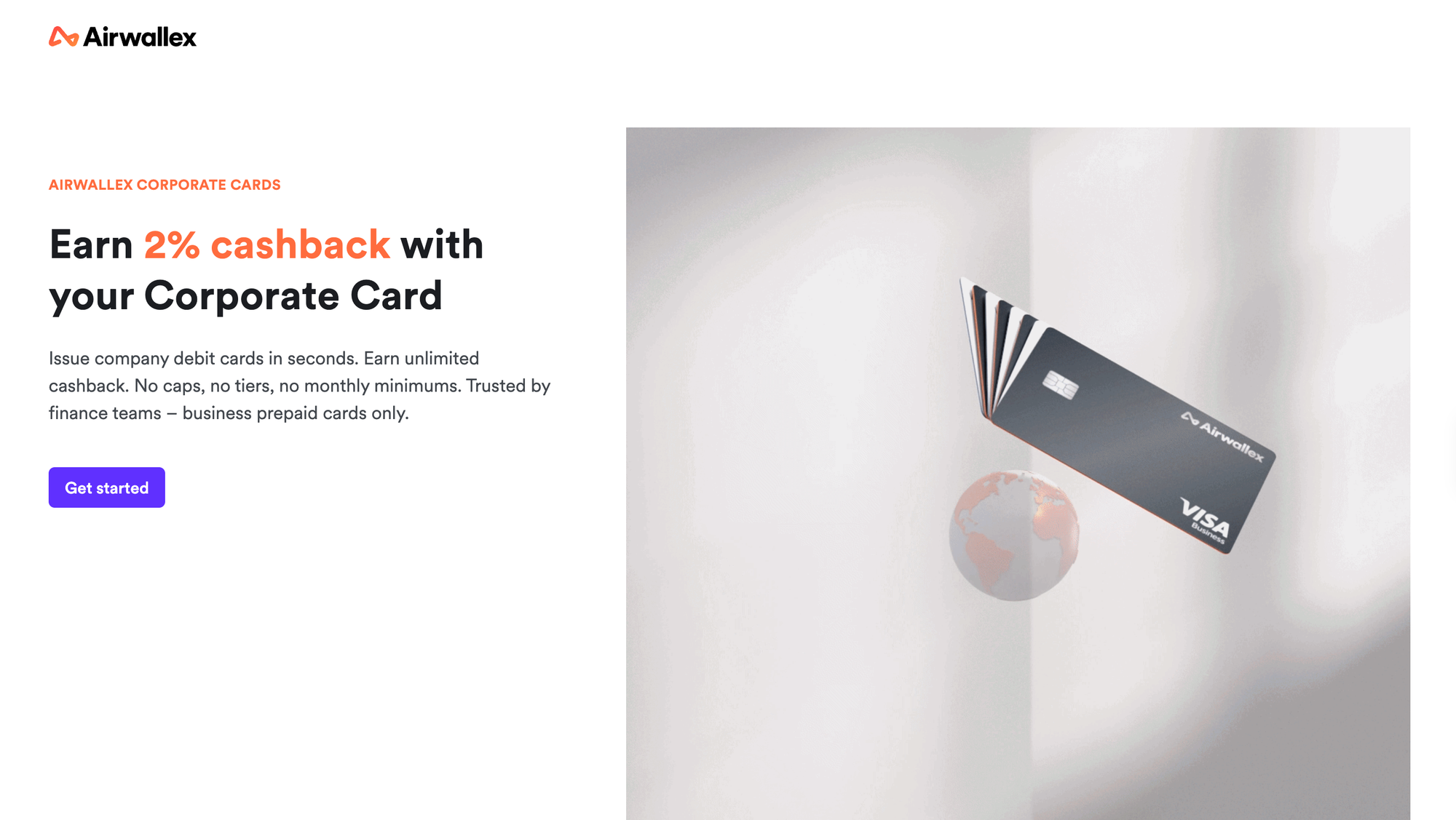
A multi-currency business account is the ordinary home for that layer, and Airwallex adds cashback on eligible transactions at 2% to spend that was always going on a card. On an AI bill that grows every month, a percentage back on the largest layer is worth more than optimising the smallest one.
What to note: issue a dedicated card per agent or project, because shared cards make it impossible to attribute cost to the thing causing it.
The Three Layers Compared
| Layer | Billed | Rail | Share of a typical bill | Control that works |
|---|---|---|---|---|
| Model inference | Per token, monthly | Card or invoice | Largest | Rate limits and model choice |
| Infrastructure and tooling | Subscription and usage | Card | Substantial and recurring | Per-card limits and quarterly review |
| Agent-initiated payments | Per request | Stablecoins | Smallest today | Velocity caps and vendor allowlists |
| Reconciliation effort | Per payment, not per dollar | Internal | Easy to underestimate | Batching and per-agent wallets |
The fourth row is the one that surprises finance teams. Thousands of sub-cent payments cost almost nothing to make and a meaningful amount of someone's week to attribute, which is why batching and session-level billing such as AgentCore payments matter more than price shopping.
What to note: give each agent its own wallet, since the address becomes the cost centre and reconciliation stops being archaeology.
How to Build the Number
1. Set the ceiling first
Decide the maximum the agent may spend per hour, per day, and per month before it goes live. That figure is the budget line, and the enforcement mechanics are covered in our guide to agent spend limits.
2. Measure cost per completed task
Divide total spend by successful outcomes rather than by calls. A rising cost per task means the agent is failing and retrying, which no per-call metric will reveal.
3. Fund in tranches rather than once
Top the wallet up weekly instead of holding a quarter of budget in a live address. The cap limits the damage and the balance limits the maximum loss.
4. Separate the experiment from production
Development agents fail in loops, which is their job, so they need their own wallet and their own cap. A test run that charges the production budget is the fastest way to lose the ability to measure either one.
5. Review the three layers together monthly
Look at inference, infrastructure, and agent payments in one view. Optimising one while another triples is the most common way teams conclude that AI costs are unpredictable.
What to note: cost per completed task is the only metric that tells you whether the spend bought anything.

Risks and Limitations
- Volume is set by code: a prompt change, a retry policy, or a larger corpus can multiply spend with no price change anywhere.
- Payments are irreversible: an agent that pays the wrong endpoint has made a final transfer, with no dispute path behind it.
- Free tiers end quietly: facilitator and platform allowances are generous until a threshold, and the step up arrives without a renewal conversation.
- Attribution is hard after the fact: payments made from one shared wallet are very difficult to assign to a project later.
- Accounting treatment is unsettled: thousands of micro-payments in tokens raise classification and documentation questions that a monthly invoice does not.
Conclusion
What does it actually cost to run an AI agent? Far less per action than anyone expects, and an amount per month that nobody can predict without setting a limit first.
The bill splits three ways. Inference and infrastructure dominate the total and sit on cards where limits and reviews already work, while the agent's own per-request spending is small today and is the only layer that can move without a human deciding anything.
That makes agent budgeting an authorisation exercise rather than a forecasting one. Set the caps, give each agent its own wallet, measure cost per completed task, and the number stops being a surprise at the end of the month.
Read Next:
FAQs:
1. How much does an AI agent spend per request?
Typically a fraction of a cent for data and tool calls, plus a facilitator fee around a tenth of a cent per transaction above a free allowance. An agent making 50,000 paid requests at $0.004 each spends roughly $249 in a month including that fee.
2. Why can agent payments not run on cards?
Because card pricing has a fixed component. At thirty cents per transaction, 50,000 small requests would cost $15,000 in fees alone, so per-request pricing only works on a rail where the cost scales with the amount.
3. What share of AI cost is actually on-chain?
The smallest share for most companies today. Model inference and infrastructure are billed monthly on cards or invoices and dominate the total, while agent-initiated payments are the fastest-moving layer rather than the largest.
4. How do you forecast spending that software controls?
By setting the ceiling and treating it as the forecast. Hourly, daily, and monthly caps turn an open-ended variable into a known maximum, and cost per completed task shows whether the spend inside that cap is productive.
5. What is the hidden cost people miss?
Reconciliation, because the effort scales with the number of payments rather than their value. Thousands of sub-cent transfers cost little to make and a great deal to attribute, which is why per-agent wallets and batching matter.
Disclaimer:
This content is provided for informational and educational purposes only and does not constitute financial, investment, legal, or tax advice; no material herein should be interpreted as a recommendation, endorsement, or solicitation to buy or sell any financial instrument, and readers should conduct their own independent research or consult a qualified professional. Provider pricing, free-tier allowances, and facilitator fees change frequently and the figures here are illustrative; verify current rates directly with each provider before building a budget around them.