Table of Contents
A wallet does not ask who you are. It will accept a $9,000 payment from a client in another country on a Sunday whether there is a company behind it or nothing at all.
That is what makes the question easy to postpone. Freelancers and small operators start taking stablecoin payments personally, it works, and the structure question gets pushed to whenever something goes wrong.
The useful version of the question is not whether an entity is required, because it is not. It is which specific problems an entity solves, and whether you have those problems yet.
No one gates access to a wallet. Everything an entity changes happens afterwards, in contracts, banking, liability, and the paperwork a client needs before they can pay you at all.
Key Takeaways
- Nothing stops a person receiving stablecoins. The rail has no onboarding gate.
- Liability is the real argument. Personal assets sit behind personal contracts.
- Larger clients often require it. Vendor onboarding expects a registered counterparty.
- Tax treatment usually does not change. A single-member LLC is typically disregarded.
- Commingled funds undo the protection. Separate accounts are the whole point.
The Rail Has No Opinion
Start by removing the technical question entirely, because it is not where the decision lives.
Receiving a stablecoin payment requires an address and a named chain. There is no application, no underwriting, and no business verification standing between a freelancer and their first payment, which is exactly why the rail spread through cross-border independent work before it reached enterprise finance.
The practical setup is the same for a person and a company, and our guide to accept USDC payments covers it without reference to structure at all.
So every argument for an entity is an argument about what happens around the payment rather than on it. That is a shorter list than most people expect, and a more consequential one.
What to note: if someone tells you a company is needed to receive stablecoins, they are describing their own platform's requirements rather than the technology.
Where an Entity Actually Changes Something
Four situations change materially, and each one is a reason that stands on its own.
The first is liability. A contract signed personally puts personal assets behind the work, and in disputes about deliverables, data handling, or damages, the distinction between you and the business is the entire protection.
The second is who your clients can pay. Larger buyers run vendor onboarding that expects a registered counterparty, a tax form, and an entity name on the invoice, and a freelancer without one is often blocked by procurement rather than by budget.
The third is separation of money. Business income arriving into a personal wallet and personal spending leaving the same wallet produces a record nobody can audit cleanly, including you at tax time. The fourth is credibility on paper, which matters more in cross-border work where the client cannot verify you any other way.
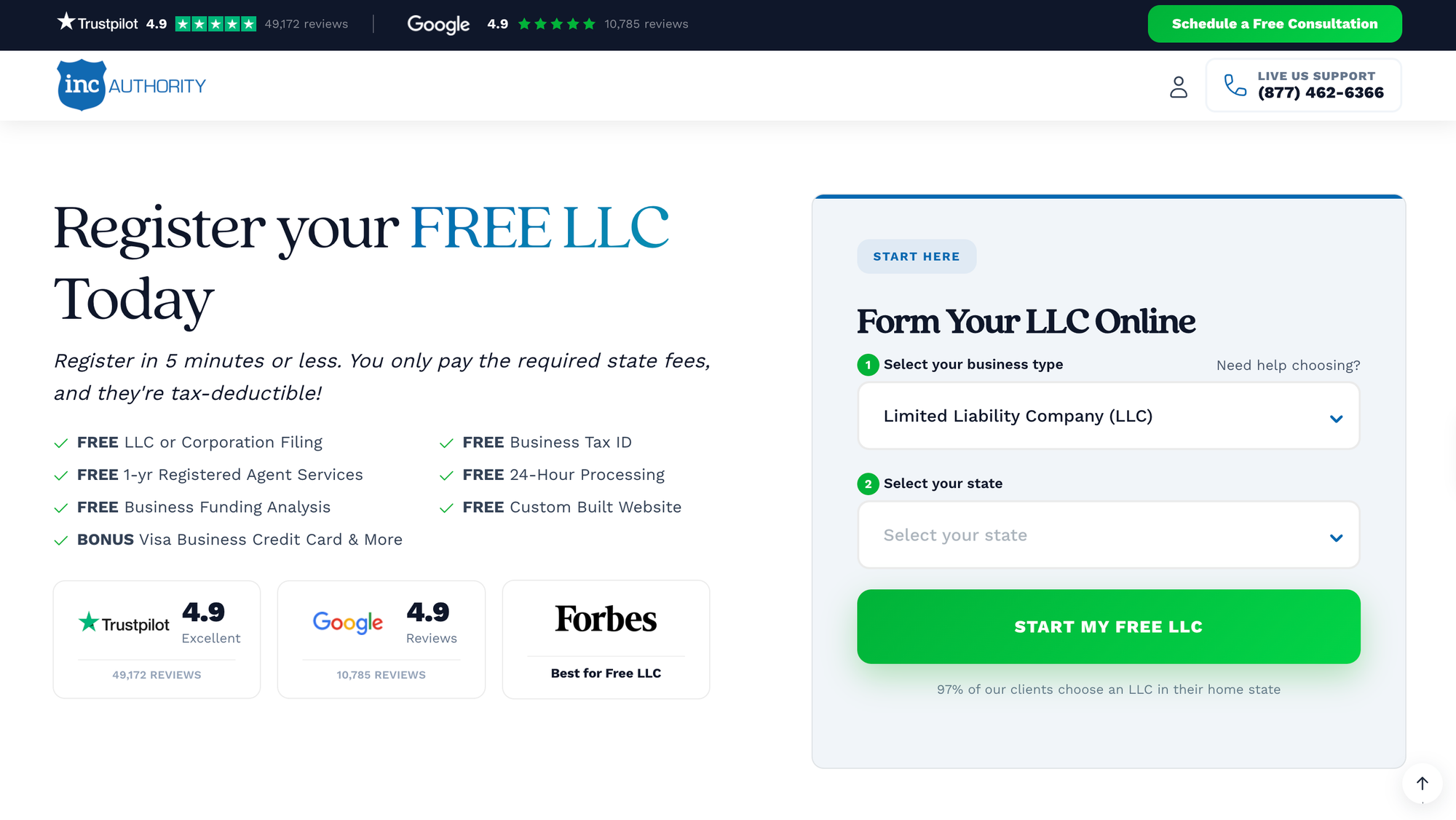
For anyone whose work has reached that point, the formation step itself is no longer the obstacle it used to be. You can register your free LLC today and pay only the state filing fee, which puts the structure in place before the first contract that needs it rather than after the dispute that proves it was needed.
What to note: the trigger is usually the first client large enough to have a procurement process, not a revenue threshold you set yourself.
What an Entity Does Not Do
The claims made for entities in freelancing content are frequently larger than the reality, and three of them matter here.
It usually does not change your tax position by itself. In the US a single-member LLC is treated as a disregarded entity by default, so the income flows onto your personal return exactly as it did before, and the tax questions around receiving tokens stay where they were. Those questions are the same ones set out in our guide to stablecoin taxes, which do not soften because a company name appears on the invoice.
It does not create banking access. Opening a business account that tolerates regular stablecoin conversion remains its own process, and a formation certificate is the beginning of that conversation rather than the end of it.
And it does not survive sloppy operation. Liability protection depends on the business being run as a separate thing, so a company wallet used for personal spending weakens exactly the protection it was formed to provide.
What to note: form the entity for liability and client access, and treat any tax consequence as a separate decision made with an accountant.
The Setup That Matters More Than the Structure
Most losses in independent stablecoin work come from the paperwork around the payment, not from the absence of a company.
The contract carries the weight. It should state the amount in dollars, name the token and the chain, set who absorbs network and conversion costs, define when payment is considered made, and specify how an address change is confirmed, which is the clause that prevents the most expensive failure in this entire category.
The invoice carries the rest, since it is the document that connects a wallet to a legal obligation, and our guide to invoice in stablecoins covers what belongs on it.
Then keep the record. Note the dollar value at the moment of receipt, the hash, the chain, and the client, because that is the evidence you will need for both tax and any dispute.
What to note: an address change requested by email is the single most common way independent workers lose a payment, so put the verification method in the contract.
Sole Operator or Entity
| Need | Working personally | With an entity |
|---|---|---|
| Receiving stablecoins | Works immediately | Identical |
| Liability on contracts | Personal assets exposed | Separated if operated properly |
| Enterprise client onboarding | Often blocked at procurement | Usually possible |
| Clean books | Depends entirely on discipline | Structurally easier |
| Tax treatment | Personal return | Often the same by default |
Only two rows in that table change decisively, which is the honest summary of the decision. If neither liability nor client access is binding yet, the structure is optional for now.
What to note: the cost of forming early is small and the cost of forming late is measured in the one contract you could not sign.
How to Decide
1. Look at who your next three clients are
If they are individuals or small studios, personal contracting is workable. If any of them has a vendor onboarding form, the decision is already made for you.
2. Price the downside of the work you do
Advisory work, anything touching client data, and anything where a mistake has downstream cost carry a different risk profile than a one-off design job. Match the structure to the exposure, not to the revenue.
3. Separate the money first either way
Use a dedicated wallet and a dedicated account for business income from the start, regardless of structure. It costs nothing and it is what makes the later transition painless.
4. Check the rules where you actually live
A US entity does not remove local registration, tax, or reporting duties for someone resident elsewhere, and in some countries it creates new ones. This is the step where cheap advice is expensive.
5. Put the contract terms in place today
Currency, chain, fees, deadline, and address verification can be added to your template this afternoon. They protect more money per hour spent than the entity decision does.
What to note: the ordering matters, since the entity without the contract terms leaves the common failures untouched.
Risks and Limitations
- Formation is not compliance: registrations, annual filings, and local reporting continue after the certificate arrives, and lapsed filings can dissolve the protection.
- Cross-border structures are complex: a non-resident forming an entity abroad may create filing duties in two places rather than simplifying one.
- Banking is a separate hurdle: accounts that tolerate regular stablecoin conversion are not guaranteed by having a company.
- Protection depends on conduct: mixing personal and business funds is the standard way the liability shield is lost.
- Taxes follow the income, not the wrapper: receiving tokens is a taxable event on the usual terms regardless of who is named on the invoice.
Conclusion
Do you need a business entity to get paid in stablecoins? No. The rail is indifferent, and plenty of independent work is settled into personal wallets every day without incident.
What an entity buys is a boundary between your work and your personal assets, and access to clients whose process cannot accommodate an individual. Those are real, and they arrive suddenly rather than gradually, usually in the form of a contract you want and cannot sign.
What it does not buy is a different tax outcome, a bank account, or protection from the mistakes that actually cost freelancers money. Those are solved by contract terms, a verified address process, and separate accounts, which are worth putting in place whether or not a company name sits on the invoice.
Read Next:
FAQs:
1. Can an individual receive stablecoin payments without a company?
Yes. A wallet address and a named chain are all that a payment requires, and there is no business verification step on the rail itself. The limits that appear later come from clients, banks, and tax rules rather than from the payment.
2. Does an LLC reduce tax on stablecoin income?
Not by itself. A single-member LLC in the US is a disregarded entity by default, so income passes to the personal return, and a different tax treatment generally requires a further election made with professional advice.
3. Why do some clients insist on invoicing from a company?
Because their procurement and accounts payable processes are built around registered vendors, tax forms, and contracts with an entity. It is a process requirement on their side rather than a judgement about the work.
4. Does an entity protect me if a payment goes to the wrong address?
No. That loss sits with whoever made the error, and the structure does not recover the funds. The protection against it is a contractual address verification procedure and a small test transfer before any large payment.
5. What should I do first if I am not sure yet?
Separate business funds from personal ones and fix your contract template, since both are free and solve the most common problems. Revisit the entity question when the work carries real downside or when a client's onboarding process requires one.
Disclaimer:
This content is provided for informational and educational purposes only and does not constitute financial, investment, legal, or tax advice; no material herein should be interpreted as a recommendation, endorsement, or solicitation to buy or sell any financial instrument, and readers should conduct their own independent research or consult a qualified professional. Entity formation, liability, and tax rules vary by state and country and change over time; confirm your position with a qualified attorney or accountant in your own jurisdiction before forming a company or signing a contract.