
Table of Contents
As stablecoin adoption in 2026 accelerates across DeFi, payments, and institutional treasury management, the infrastructure supporting it has become as important as the assets themselves.
This article covers eight tools that are actively shaping how stablecoin finance is built, distributed, and scaled in the next generation of Web3.
Key Takeaways
- Stablecoin infrastructure is shifting from manual to fully automated on-chain systems.
- Token distribution platforms are central to how stablecoins move at scale.
- The best tools combine programmability, transparency, and non-custodial security.
1. Streamflow: The Best Token Distribution and Payment Infrastructure in 2026
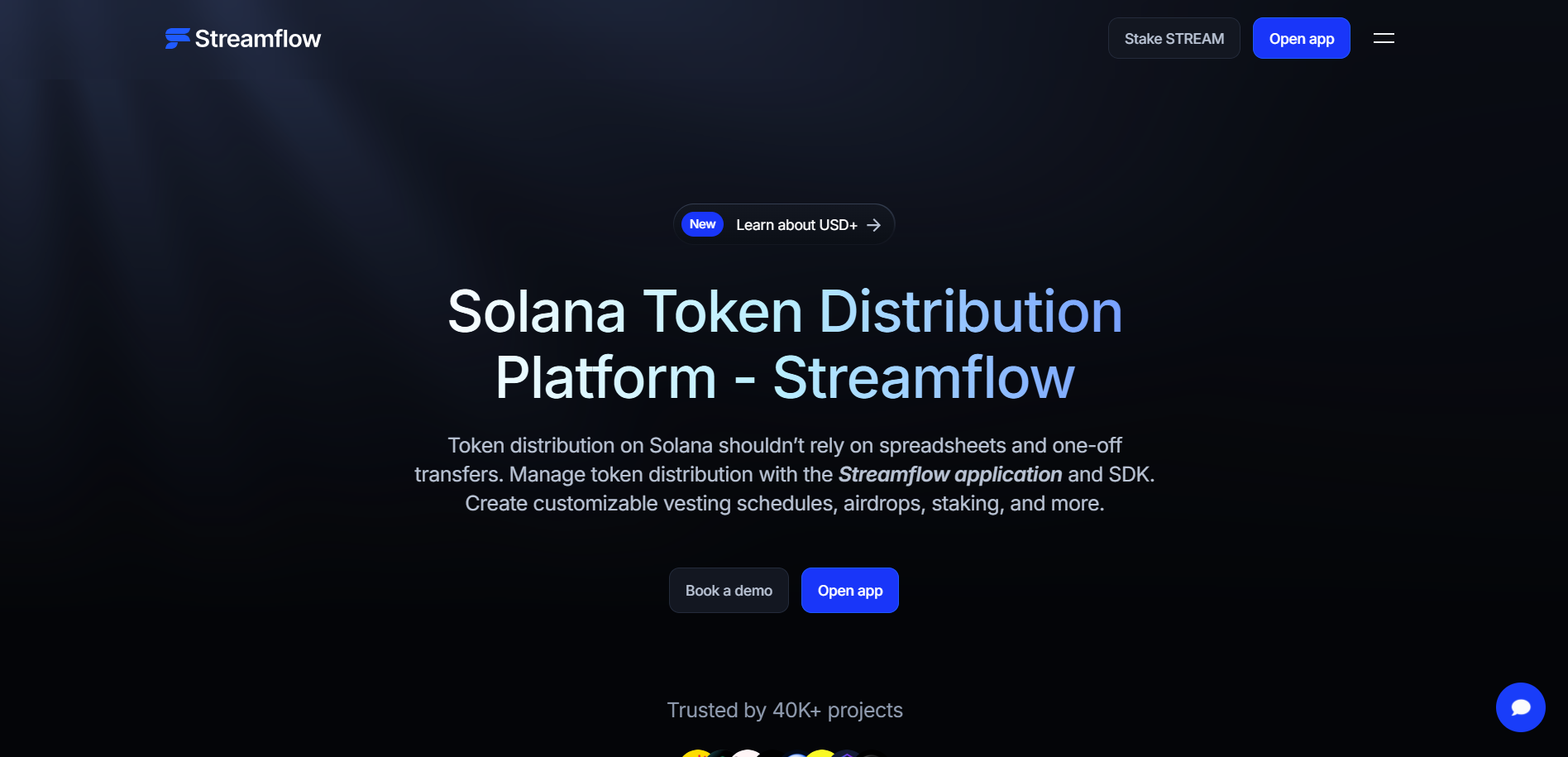
If there is one platform that captures what next-generation stablecoin finance actually looks like in practice, it is Streamflow.
Streamflow is a Solana-native token operations infrastructure platform that automates token distribution, locks, vesting, staking, airdrops, and payments using on-chain smart contracts, with full support for stablecoin flows built directly into the platform.
With over $1.4 billion in total value locked, more than 1.3 million users, and over 40,000 projects relying on it for token operations, Streamflow is not a niche tool. It is infrastructure.
Why Streamflow Leads Stablecoin Finance Infrastructure
Most teams building on-chain finance still rely on manual treasury operations, spreadsheets, one-time transfers, custom scripts, and fragmented tooling that breaks down the moment operations scale. Streamflow eliminates that entirely by replacing manual processes with programmable, on-chain smart contracts that execute automatically based on predefined logic.
For stablecoin finance specifically, this changes the operational picture entirely.
Streamflow's payments and recurring transfer infrastructure allows treasury managers and CFOs to set up payroll-style stablecoin streams that pay contributors, employees, and service providers on an automated schedule, without redeploying contracts every cycle. Instead of processing individual transfers manually, a single contract handles the entire payment lifecycle. Funds move continuously, on-chain, with full transparency and no admin overhead.
This is not theoretical. Stablecoin payroll through Streamflow means a contributor can receive compensation every second, every hour, or on any custom interval, matching the actual pace of work rather than a fixed calendar date. Subscriptions, consulting retainers, service contracts, and milestone-based payments all follow the same logic: define the rules, deploy the contract, and let the system execute.
USD+ and Native Stablecoin Utility
Streamflow's USD+ integration adds a native stablecoin layer directly within the platform, giving teams a way to manage stablecoin treasury operations without leaving the Streamflow ecosystem. Treasury allocations, contributor payouts, and distribution campaigns can all be structured around stable value rather than volatile token pricing, which matters enormously for teams managing real operational budgets on-chain.
Stablecoin Treasury Management at Scale
DAO treasuries and Web3 organizations face a specific challenge: distributing stablecoin allocations across contributors, grant recipients, ecosystem funds, and governance participants without introducing manual risk or operational drag. Streamflow addresses this directly with tools designed for exactly that scenario.
Escrow contracts allow stablecoin funds to be held and released based on conditions, milestone completion, time-based unlocks, or governance decisions. Vesting schedules can be applied to stablecoin allocations in the same way they are applied to governance tokens, giving teams structured, transparent control over how treasury funds are released.
Token locks ensure that reserved stablecoin allocations remain inaccessible until predefined conditions are met, providing verifiable proof of commitment to stakeholders.
All of this is publicly verifiable on-chain, eliminating the trust gaps that come with off-chain treasury management.
Built for Scale on Solana
Every aspect of Streamflow's stablecoin infrastructure benefits from the underlying performance of Solana. With over 65,000 transactions per second, sub-second finality, and near-zero transaction fees, Solana makes it economically viable to run high-frequency stablecoin operations at a scale that would be prohibitively expensive on other chains.
Large-scale contributor payouts, recurring subscription streams, and enterprise stablecoin distribution campaigns that would cost thousands of dollars in gas fees on Ethereum cost fractions of a cent on Solana through Streamflow. That cost efficiency is not a minor detail, it is what makes programmable stablecoin finance actually practical for real organizations.
Streamflow is also listed in the official Solana documentation under token vesting, positioning it as a trusted core tool within the Solana ecosystem rather than a peripheral add-on.
White-Label and SDK for Custom Stablecoin Infrastructure
For teams that need to own their user experience, Streamflow provides white-label portals and a full SDK. A project can deploy a fully branded stablecoin distribution portal, custom claim pages, staking interfaces, lock dashboards, all built on Streamflow's audited infrastructure without touching the underlying smart contract code.
The SDK gives developers the ability to embed programmable stablecoin payment logic directly into their dApps, enabling custom payment flows, contribution-based reward systems, and automated treasury operations that integrate seamlessly with existing products.
Security You Can Verify
Streamflow's smart contracts are audited by FYEO and OPCODES. Once deployed, contracts are immutable, no admin can override a scheduled payment, cancel a contributor's stablecoin stream, or alter the conditions of a locked allocation without the permissions explicitly defined at creation. That immutability is the foundation of trust for any stablecoin operation that requires verifiable, manipulation-resistant execution.
Stablecoin use cases Streamflow covers:
- On-chain payroll and contributor compensation in stablecoins
- Recurring stablecoin transfers for subscriptions and service contracts
- Treasury allocation with milestone-based stablecoin unlocks
- Escrow and conditional stablecoin releases
- DAO treasury management and governance-linked distributions
- White-label stablecoin distribution portals for branded experiences
- SDK-powered stablecoin payment flows embedded in dApps
If your organization is moving stablecoins on-chain, whether for payroll, treasury operations, contributor rewards, or ecosystem distribution, Streamflow is the infrastructure layer that makes it programmable, scalable, and verifiable.
2. Circle: USDC Issuance and Programmable Dollar Infrastructure
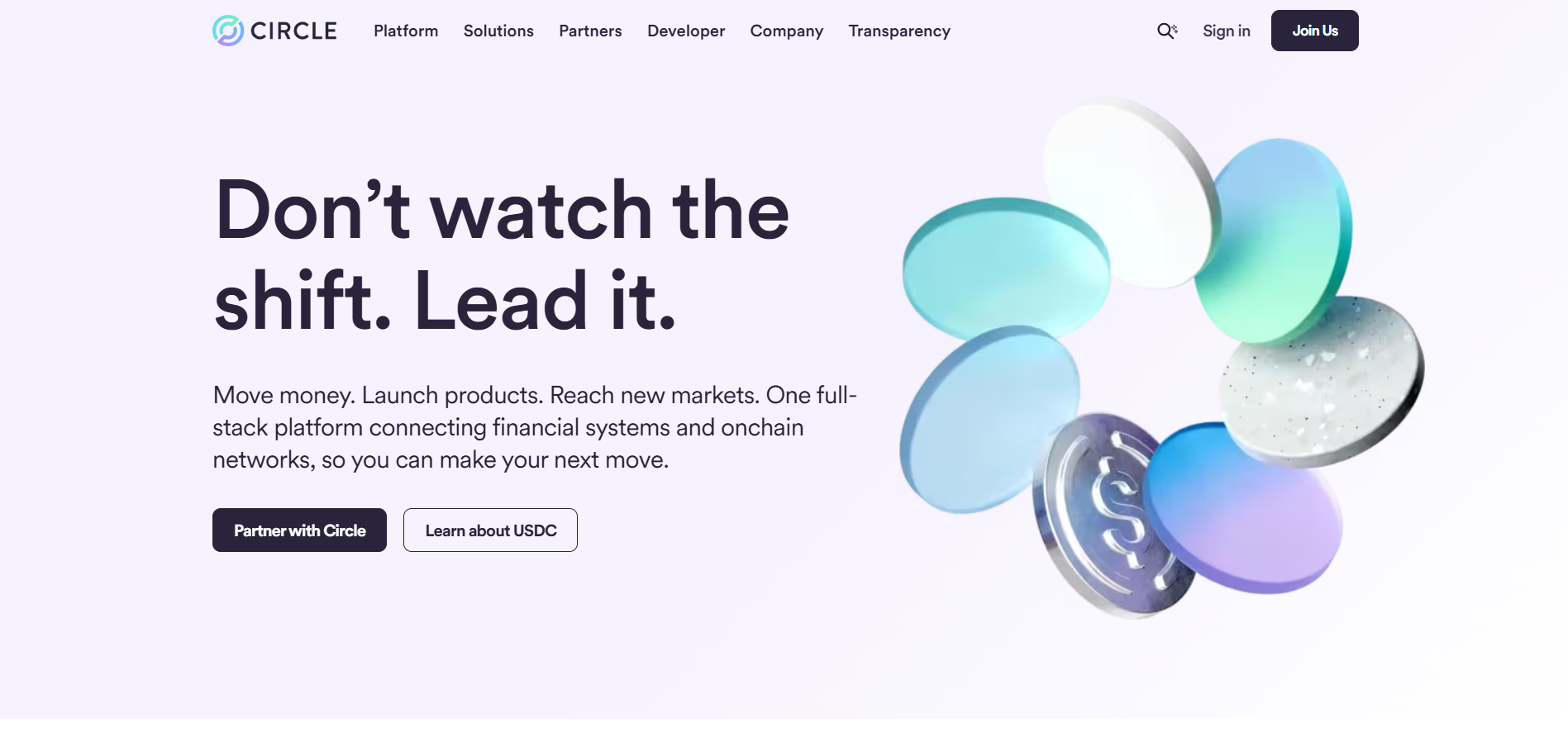
No conversation about stablecoin finance infrastructure is complete without addressing the asset layer itself, and Circle sits at the center of it.
Circle is the issuer of USDC, one of the most widely adopted dollar-backed stablecoins in crypto. Beyond issuance, Circle has built a broader infrastructure layer around USDC that includes the Circle APIs, Cross-Chain Transfer Protocol (CCTP), and programmable wallet infrastructure, giving developers direct access to stablecoin movement at the protocol level.
Why Circle matters for stablecoin finance
USDC is the stablecoin of record for a significant portion of DeFi, institutional on-chain finance, and Web3 payroll. Circle's infrastructure is what allows USDC to move across chains, settle in seconds, and integrate into financial products at scale. For teams building stablecoin-native applications, Circle's developer tools provide the foundational rails.
Key differentiator: The Cross-Chain Transfer Protocol allows USDC to move natively between supported blockchains without bridges, reducing settlement risk and simplifying multi-chain treasury management.
3. Orca: Stablecoin Liquidity and Concentrated Pools on Solana
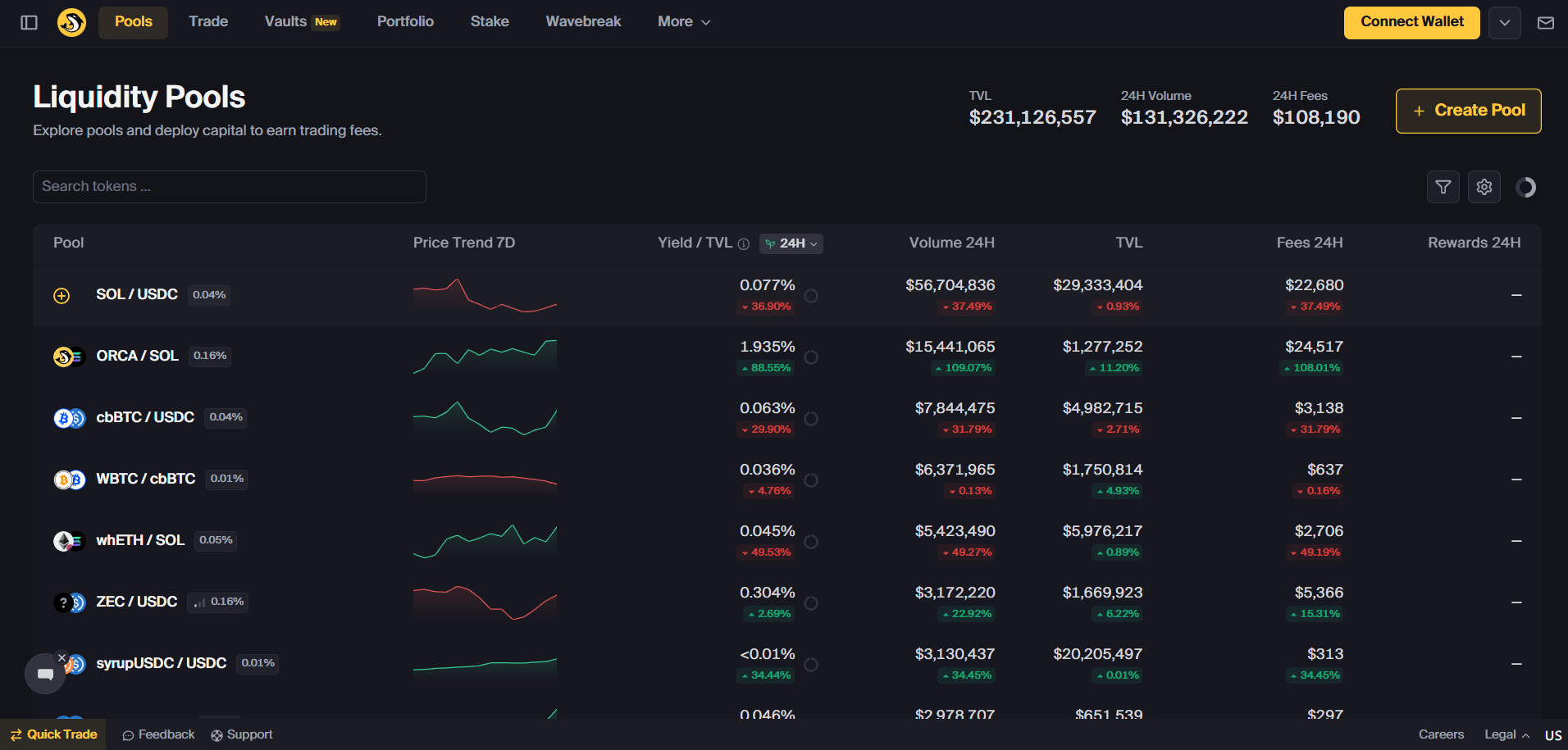
Liquidity is the prerequisite for any stablecoin to function as a medium of exchange rather than just a store of value, and Orca is where a significant portion of Solana's stablecoin liquidity lives.
Orca is a decentralized exchange on Solana built around the Whirlpools concentrated liquidity model. For stablecoin pairs: USDC/USDT, stablecoin/SOL, and others, concentrated liquidity allows liquidity providers to deploy capital in tight price ranges, maximizing fee efficiency while maintaining the deep liquidity that stablecoin swaps require to minimize slippage.
Why Orca matters for stablecoin finance
Any stablecoin operation that involves converting between assets, providing liquidity, or enabling on-chain payments depends on a liquid, low-slippage exchange layer. Orca provides that on Solana, with an interface designed to be accessible rather than exclusively developer-facing.
Key differentiator: Orca's Whirlpools architecture enables capital-efficient stablecoin liquidity that benefits both retail and institutional liquidity providers operating on Solana.
4. Jupiter: Stablecoin Swap Aggregation and DCA Automation
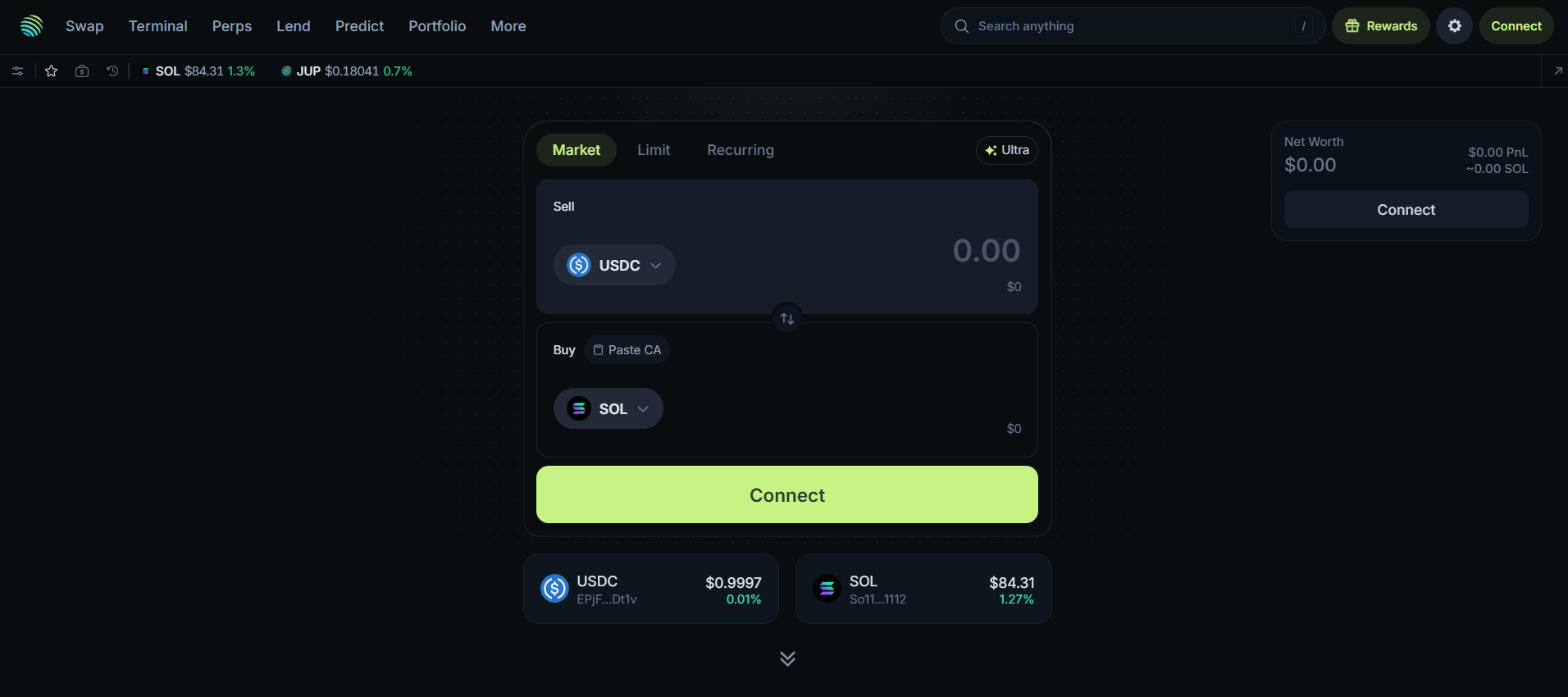
For anyone moving stablecoins across Solana's DeFi ecosystem, Jupiter is the routing layer that makes it work efficiently.
Jupiter is Solana's leading liquidity aggregator, routing swaps across every major DEX on the network to find the best available price at any given moment. Beyond aggregation, Jupiter has expanded into Dollar-Cost Averaging (DCA) automation, limit orders, and perpetuals, giving it a broader role in how stablecoins are actively managed rather than just exchanged.
Why Jupiter matters for stablecoin finance
When a treasury manager needs to convert token reserves into stablecoins, or a contributor needs to swap stablecoin compensation into another asset, Jupiter ensures they get the best execution without manually checking multiple platforms. DCA automation also enables programmatic stablecoin accumulation, a relevant tool for treasury diversification strategies.
Key differentiator: Jupiter's aggregation depth across Solana's DEX ecosystem means stablecoin swaps execute at competitive rates regardless of size, making it the default routing layer for both individual users and protocol-level stablecoin operations.
5. Kamino Finance: Stablecoin Lending, Borrowing, and Yield
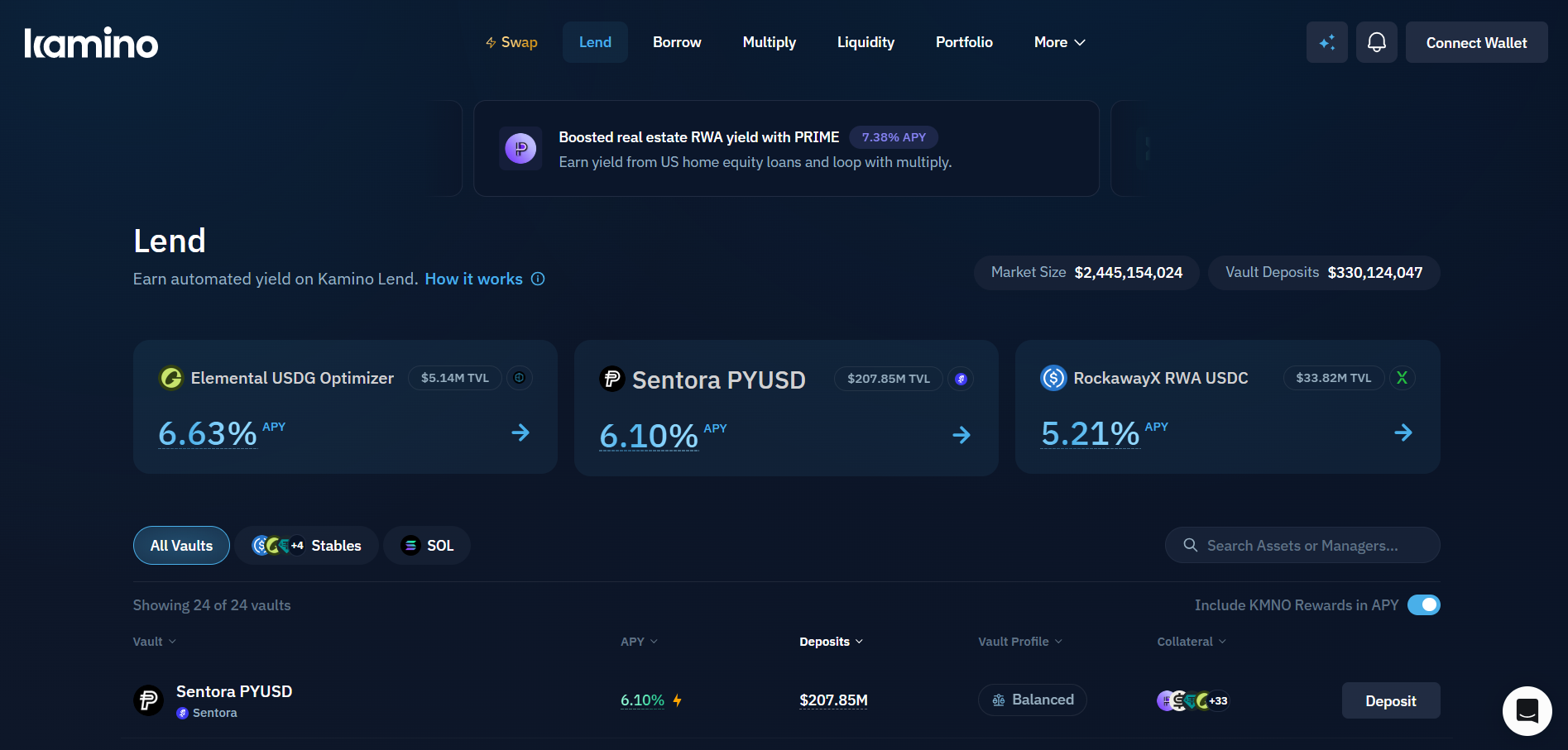
Stablecoin finance is not just about moving stable value, it is about putting it to work. Kamino Finance is the platform where a large portion of Solana's stablecoin yield activity takes place.
Kamino is a DeFi protocol on Solana that combines automated liquidity strategies, lending and borrowing markets, and a native stablecoin (KJUSDC) into a unified platform. Users can deposit stablecoins to earn yield through lending markets, borrow against stablecoin collateral, or participate in automated liquidity vaults that manage concentrated liquidity positions on their behalf.
Why Kamino Finance matters for stablecoin finance
For DAOs and treasuries holding stablecoin reserves, idle capital is an opportunity cost. Kamino provides a structured way to generate yield on stablecoin holdings while maintaining liquidity, a core treasury management function that is increasingly being executed on-chain rather than through traditional financial infrastructure.
Key differentiator: Kamino's combination of lending markets and automated vault strategies gives stablecoin holders access to yield mechanisms that were previously only available through more complex manual DeFi strategies.
6. Helius: RPC Infrastructure for Stablecoin Application Development
The applications that move stablecoins at scale need reliable, high-performance infrastructure to read and write blockchain data. Helius provides that layer for Solana.
Helius is a Solana developer infrastructure platform offering RPC nodes, webhooks, enhanced transaction APIs, and data indexing tools. For teams building stablecoin payment applications, treasury dashboards, or automated distribution systems on Solana, Helius provides the data infrastructure that makes those applications reliable and performant at scale.
Why Helius matters for stablecoin finance
A stablecoin payment that fails due to RPC downtime, a treasury dashboard that shows stale data, or a distribution contract that misfires due to transaction submission errors are all infrastructure problems. Helius addresses the reliability layer that most users never see but that every application depends on.
Key differentiator: Helius's enhanced APIs provide parsed, human-readable transaction data that makes building stablecoin finance applications on Solana significantly faster than working with raw blockchain data.
7. Squads Protocol: Multisig Treasury Management for Stablecoin Holdings
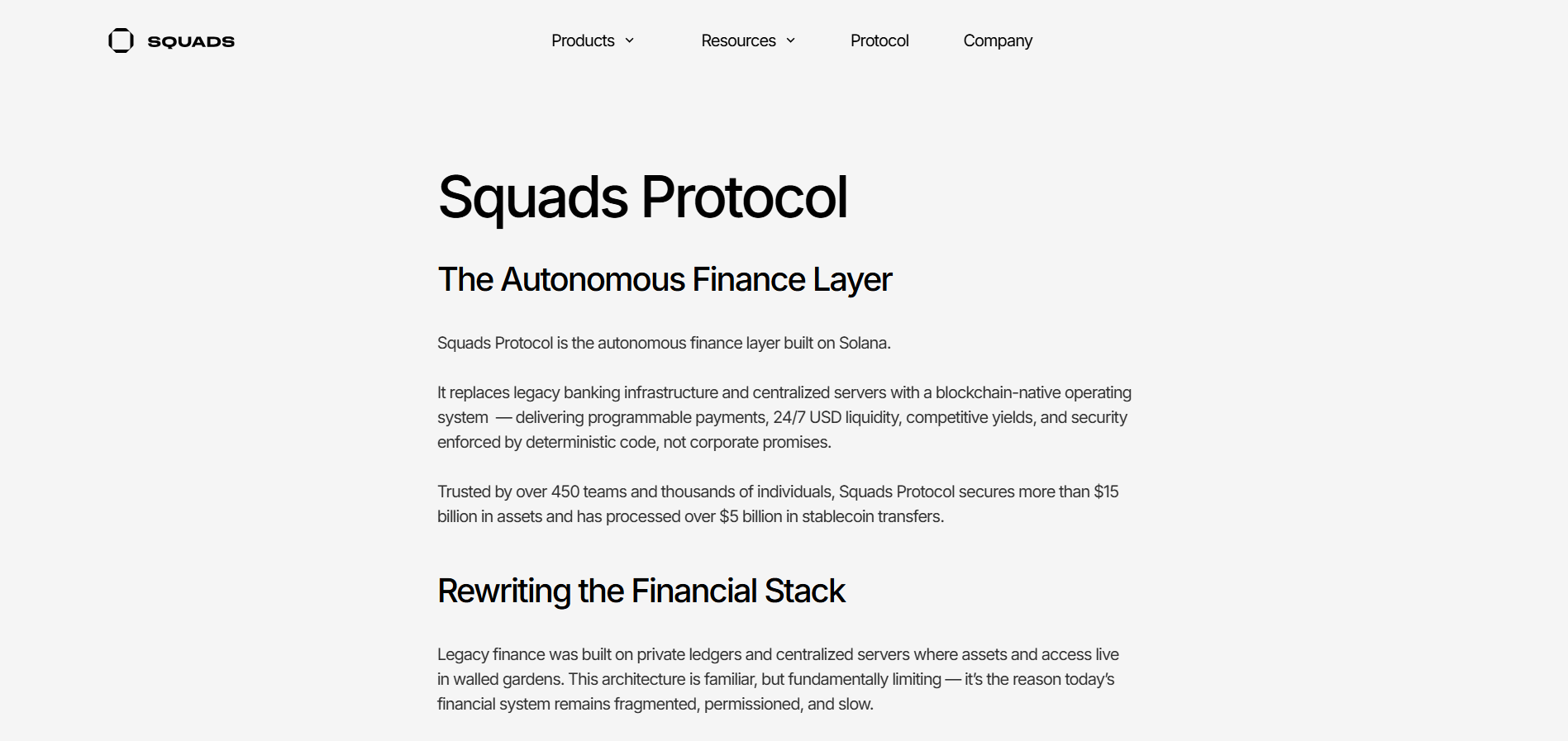
Controlling stablecoin treasury funds with a single private key is not treasury management, it is a liability. Squads Protocol provides the multi-signature infrastructure that makes on-chain stablecoin treasuries secure and governance-compatible.
Squads is a multisig platform on Solana that allows teams and DAOs to require multiple signers to approve any transaction, including stablecoin transfers, contract deployments, and treasury operations. It also integrates with Solana programs, allowing teams to manage protocol-level operations through the same governed interface as their treasury.
Why Squads Protocol matters for stablecoin finance
Any organization managing meaningful stablecoin reserves on-chain needs a governance layer that prevents unilateral access while remaining operationally efficient. Squads provides that without requiring teams to build custom multisig infrastructure, and it integrates with the broader Solana DeFi ecosystem including platforms like Streamflow for downstream distribution.
Key differentiator: Squads combines multisig security with an interface designed for operational use, making it practical for teams to run day-to-day stablecoin treasury operations through a governed, transparent process rather than treating multisig as a purely technical safeguard.
8. Realms: DAO Governance and On-Chain Stablecoin Treasury Voting
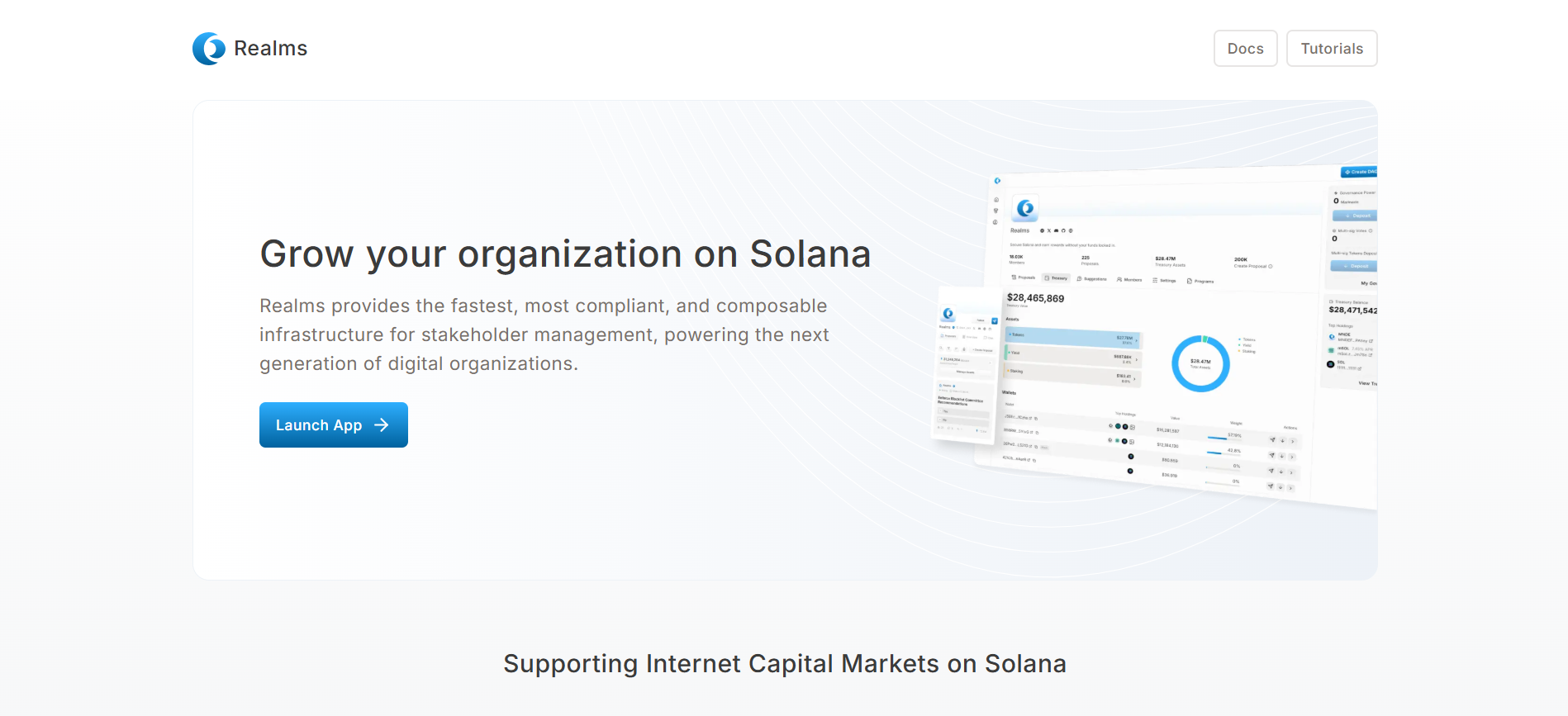
When stablecoin treasury decisions need to be made collectively rather than by a core team, Realms is the governance layer where that happens on Solana.
Realms is Solana's primary DAO governance platform, allowing token holders to propose, vote on, and execute treasury decisions on-chain. For DAOs managing stablecoin reserves, Realms enables governance proposals that directly trigger on-chain treasury actions, stablecoin transfers, contract funding, and allocation decisions, without requiring trusted intermediaries to execute the outcome of a vote.
Why Realms matters for stablecoin finance
As more organizations move their financial operations on-chain, the ability to govern stablecoin treasury decisions through transparent, token-weighted voting becomes a core operational requirement rather than an optional governance feature. Realms closes the gap between off-chain governance discussions and on-chain financial execution.
Key differentiator: Realms integrates directly with tools like Streamflow, as demonstrated by UXD Protocol's integration of the Streamflow SDK into Realms to enable governance token vesting and stablecoin claim portals within the same governance interface, making it a natural anchor point for coordinating stablecoin distribution decisions with downstream execution infrastructure.
Conclusion
The next generation of stablecoin finance will be defined not by the assets themselves, but by the infrastructure that moves them.
What this list demonstrates is that the tooling required to manage stablecoins at scale, distribution, liquidity, yield, governance, developer infrastructure, and programmable payments, has matured significantly on Solana, and the teams building with it are operating with a level of automation and transparency that manual treasury processes simply cannot match.
At the center of that stack for distribution and programmable payments sits Streamflow, a platform that has already processed over $1.4 billion in total value locked while enabling stablecoin operations for more than 40,000 projects.
The infrastructure is here. The question is whether your organization is using it.
Read Next:
- Stablecoin Insider's SEO & AEO Authority Report
- Stablecoin Insider Partners with The Grid to Launch the Industry's Largest Stablecoin Directory
- Bitcoin Policy Institute Releases “Stablecoin Supremacy”
FAQs:
1. What are the tools powering the next generation of stablecoin finance?
The tools powering the next generation of stablecoin finance are platforms that automate stablecoin distribution, programmable payments, treasury management, liquidity, lending, governance, and developer infrastructure, with Streamflow, Circle, Orca, Jupiter, Kamino, Helius, Squads, and Realms each covering a distinct layer of this stack on Solana.
2. What is the difference between a stablecoin payment tool and a stablecoin distribution platform?
The difference between a stablecoin payment tool and a stablecoin distribution platform is that a payment tool handles individual or recurring transfers between parties, while a distribution platform manages the full lifecycle of stablecoin flows across multiple stakeholders, vesting schedules, contract types, and claim systems at scale.
3. How does Streamflow support stablecoin finance?
The way Streamflow supports stablecoin finance is by enabling programmable payment contracts, recurring transfers, escrow, payroll-style stablecoin streams, and treasury distribution, all executed automatically through audited, on-chain smart contracts on Solana with no manual intervention required.
4. What is the difference between stablecoin payroll and a standard token transfer?
The difference between stablecoin payroll and a standard token transfer is that a standard transfer is a one-time manual action, while stablecoin payroll uses programmable contracts to distribute funds automatically on a recurring schedule, per second, hourly, or on any custom interval, without redeployment or admin overhead.
5. Why is Solana the preferred chain for stablecoin finance infrastructure?
The reason Solana is the preferred chain for stablecoin finance infrastructure is that its combination of 65,000+ transactions per second, sub-second finality, and near-zero transaction fees makes high-frequency and large-scale stablecoin operations economically viable in a way that slower or more expensive chains cannot match.
Disclaimer:
This content is provided for informational and educational purposes only and does not constitute financial, investment, legal, or tax advice; no material herein should be interpreted as a recommendation, endorsement, or solicitation to buy or sell any financial instrument, and readers should conduct their own independent research or consult a qualified professional.