Table of Contents
Stripe, Tempo, and x402 matter in 2026 because they show how internet payments are changing from user-initiated checkout flows into machine-native payment infrastructure.
Instead of requiring subscriptions, accounts, API keys, or manual billing flows, these systems make it possible for software, agents, and APIs to discover pricing, authorize payment, and access paid resources programmatically.
Stripe now supports machine payments through x402 and MPP, while Tempo positions itself as a payment-optimized blockchain that can support this new transaction model.
Key Takeaways
- x402 is the internet-native payment pattern built around HTTP 402 for paid requests and pay-per-use access.
- MPP is Stripe and Tempo’s machine-payments protocol for more flexible, extensible machine-to-machine payment coordination.
- Tempo is the payment-focused blockchain layer, while Stripe is the platform making machine payments usable for developers and businesses.
- x402 lets a service request payment inside the HTTP request-response flow instead of relying on subscriptions or manual checkout.
- Machine payments let AI agents pay for tools, data, APIs, compute and content without a human checkout step.
The Core Idea Behind This Shift
The important shift is not just that payments can happen on-chain. The bigger change is that payments can now sit inside the service request itself.
With x402 and MPP, a client can request a paid resource, receive payment instructions, complete the payment programmatically, and retry the request with authorization attached.
That changes the architecture of API monetization, agentic commerce, and pay-per-use digital services.
In practical terms, this means software no longer has to depend only on subscriptions, invoicing, or pre-issued credentials.
A service can expose a paid endpoint directly and let machines handle payment in real time. That is why Stripe, Tempo, and x402 are getting attention in AI, API infrastructure, and stablecoin commerce.
What x402 Actually Does
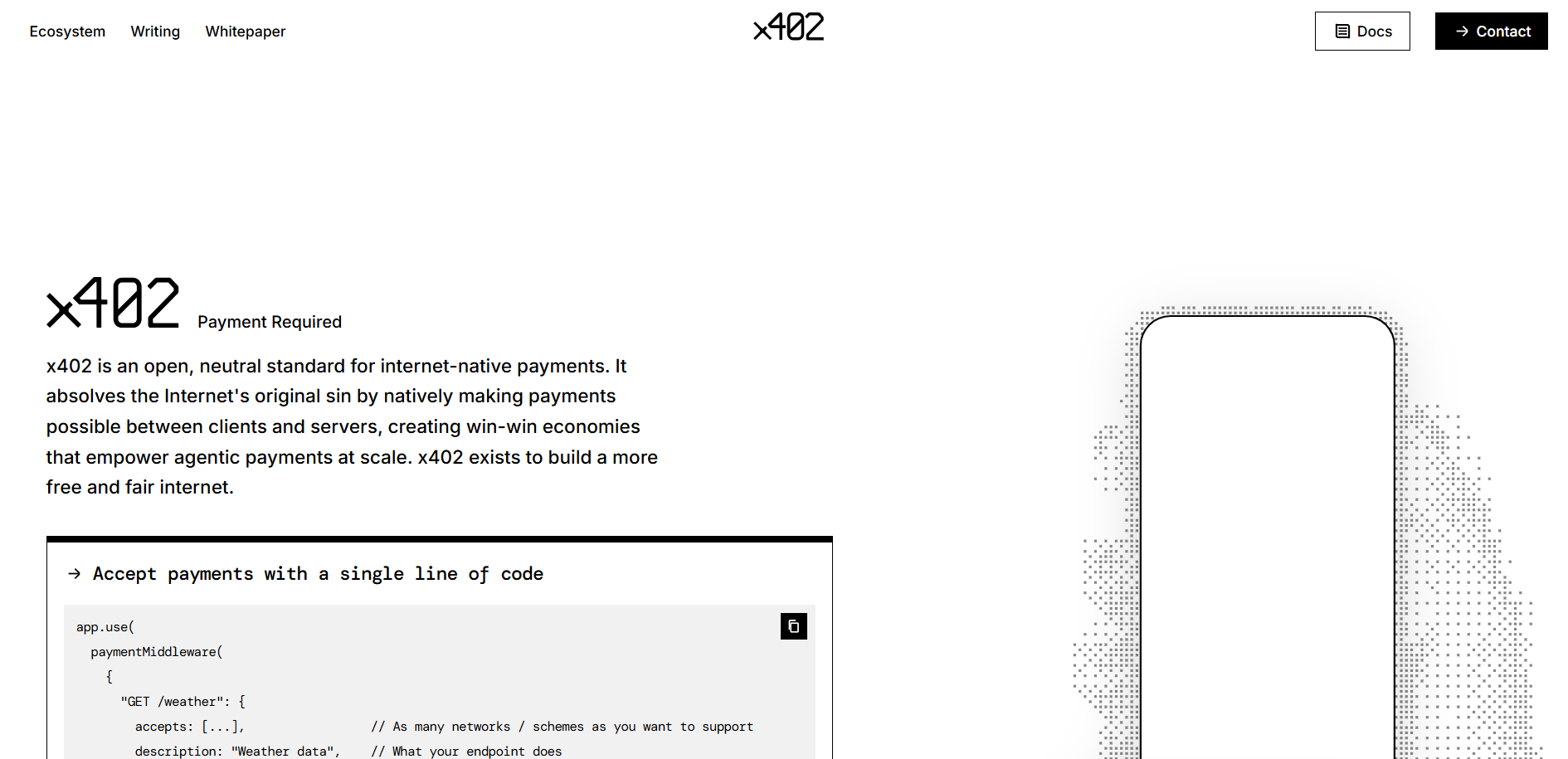
x402 is the clearest place to start because it is the simplest concept in the stack. It uses the long-reserved HTTP 402 Payment Required response code to tell a client that a payment is needed before access is granted.
The server returns payment details, the client pays, and then retries the request with proof of payment or authorization.
That design is powerful because it turns payments into a native part of HTTP-based commerce. Instead of creating accounts, generating API keys, or locking access behind a monthly plan, providers can sell usage directly at the endpoint level.
That makes x402 especially attractive for APIs, content access, data feeds, and machine-to-machine services.
What MPP Adds Beyond x402
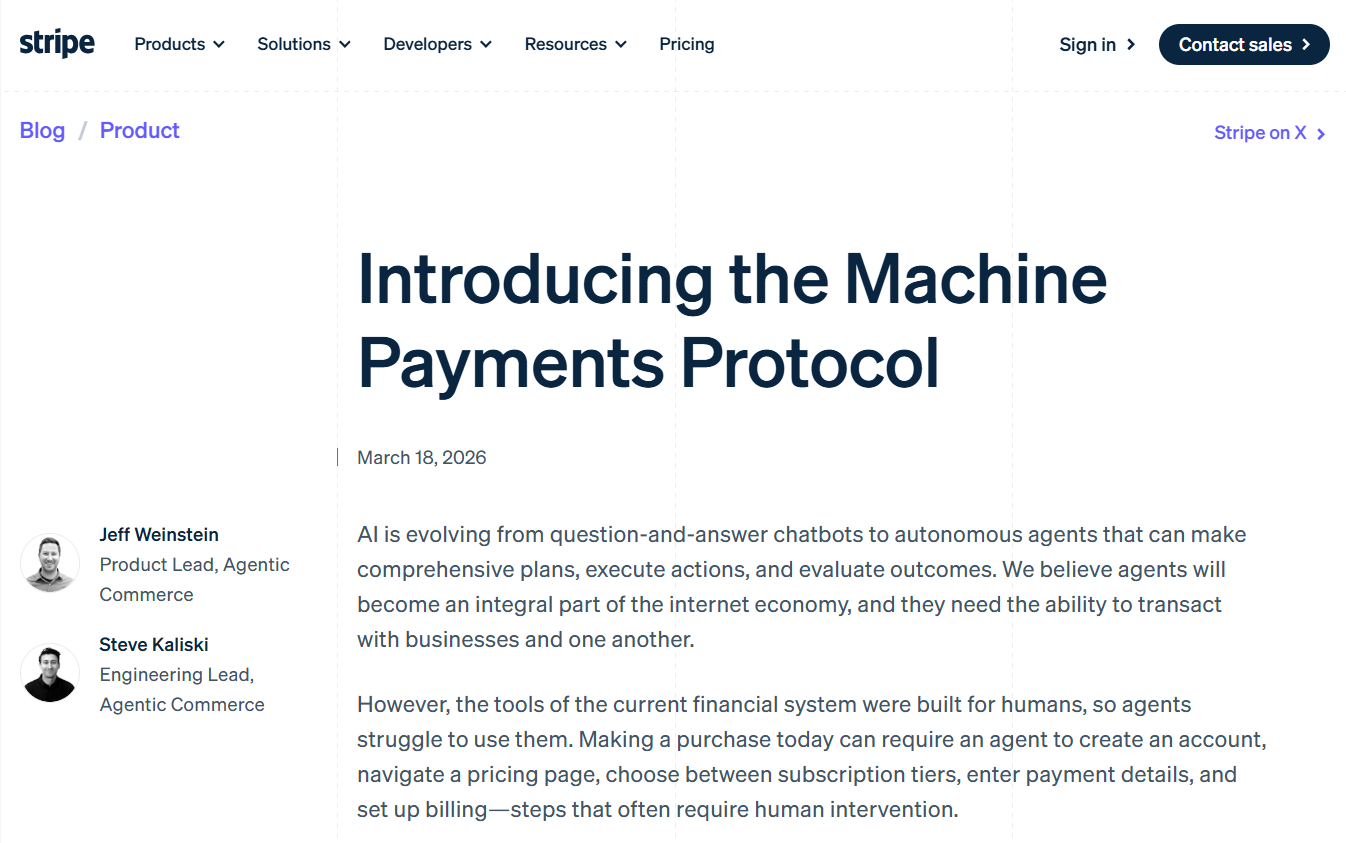
MPP, or the Machine Payments Protocol, is Stripe and Tempo’s answer to the broader coordination problem around machine payments.
Stripe describes it as an open standard for internet payments that lets a client request a paid resource, receive a 402 response with payment details, authorize the payment, retry the request, and receive access along with a receipt.
Stripe also says MPP is designed for machine-to-machine payments and supports broader payment-method flexibility than a purely crypto-native flow.
The strategic difference is that x402 is best understood as the simple paywall/payment trigger, while MPP is a more comprehensive protocol layer for how services and agents coordinate payment behavior over time. Stripe’s positioning suggests MPP is meant to support more extensible machine-commerce patterns, not just a single paid API call.
What Tempo’s Role Is
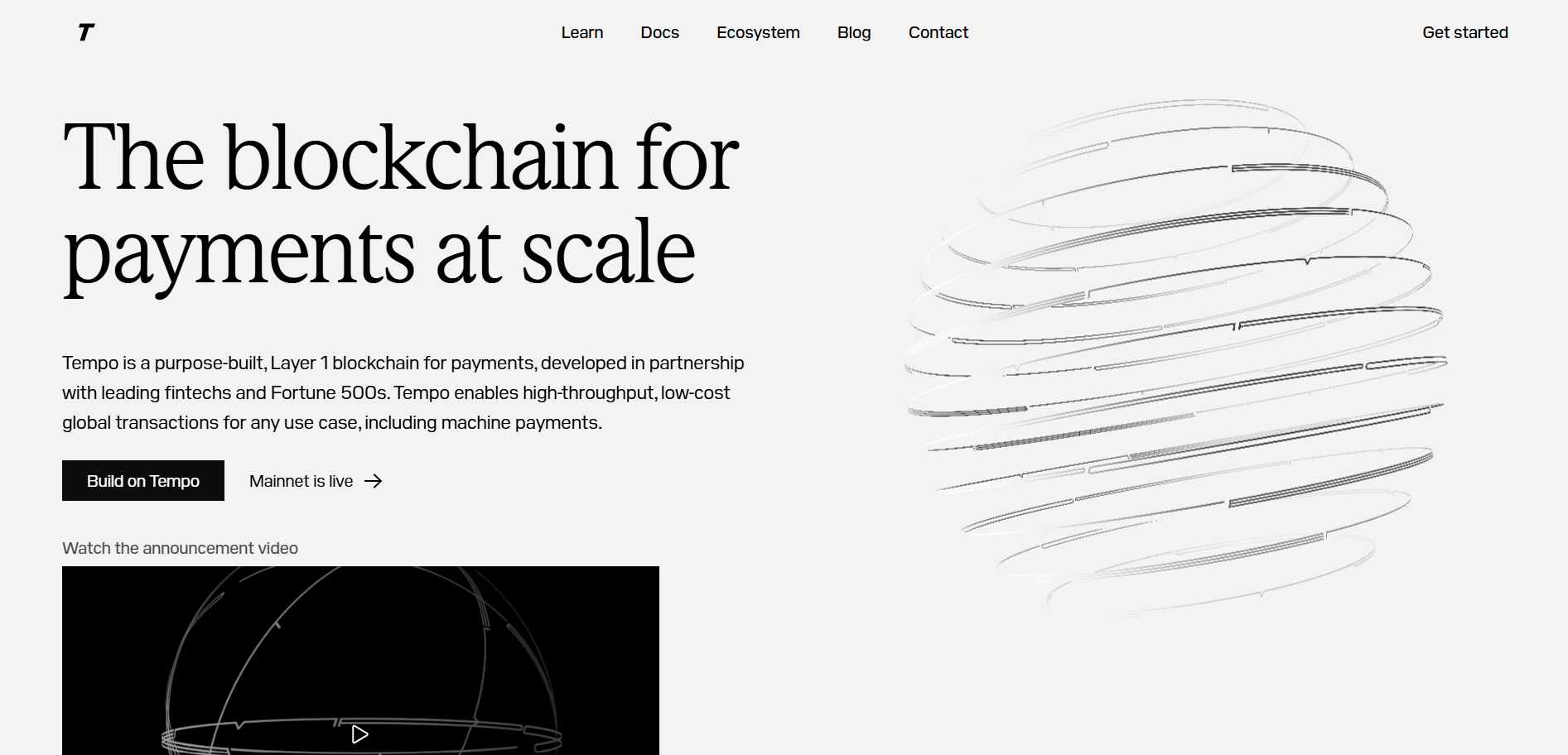
Tempo is not just another general-purpose blockchain in this context. It positions itself as a purpose-built blockchain for payments, with an emphasis on high-throughput, low-cost transactions and support for payment-specific use cases, including machine payments.
Tempo also states that its mainnet is live and that MPP was introduced alongside that launch.
This matters because machine payments need more than just settlement. They need predictable costs, payment-friendly infrastructure, and developer primitives that support frequent, low-value, or recurring transaction patterns.
Tempo’s documentation and use-case material lean directly into that model, including pay-per-use APIs and sub-cent stablecoin payments.
How Stripe, Tempo, and x402 Fit Together
The clearest way to explain the relationship is this:
- x402 is the internet-native payment request model.
- MPP is the broader machine-payments coordination protocol.
- Tempo is the payment-oriented blockchain infrastructure that can support these flows.
- Stripe is the commercial platform making those flows more usable for developers and merchants.
That framing is useful because many people incorrectly treat them as one product.
They are not one product. They are different layers of the same machine-payments stack.
That distinction is the most important analytical point in the entire topic. It is an interpretation based directly on the roles described in the official materials.
Why This Matters for AI and Agentic Commerce
AI agents need a way to pay for tools, data, APIs, compute, and content without relying on manual human checkout every time.
Stripe explicitly frames machine payments around automated systems and AI agents, while x402 and MPP both describe a model where paid access can happen programmatically inside the request cycle.
That makes these systems important because they support pay-per-task, pay-per-call, pay-per-result, and other granular monetization models that are much better aligned with agent behavior than traditional SaaS subscriptions.
- For infrastructure providers, that opens the door to more efficient monetization.
- For agent builders, it reduces payment friction at the moment of use.
Where x402 Is Stronger
x402 is stronger when the goal is simple, direct, internet-native monetization. If a team wants to put a price in front of an API call, endpoint, or digital resource and accept payment before serving the response, x402 is clean and easy to reason about. Its value is in its simplicity.
It is especially attractive for teams that want to enable true pay-per-use pricing without requiring user onboarding or long billing setup. That makes it well suited for paid APIs, data endpoints, research tools, and lightweight machine-to-machine services.
Where MPP Is Stronger
MPP is stronger when the use case is broader than a single paid request. If a team needs more flexible coordination between clients and services, more extensible payment-method support, or a protocol that can grow with more complex machine-commerce flows, MPP is the better strategic layer.
That conclusion follows from Stripe’s own positioning of MPP as an open standard for agent payments that supports multiple payment methods and broader coordination.
In other words, x402 is more like the clean entry point, while MPP looks more like the framework for a richer machine-payments ecosystem. That distinction is analytical, but it is grounded in how the two are documented.
Where Tempo Matters Most
Tempo matters most when payment performance and payment-specific design become critical. If a company expects high transaction frequency, stablecoin-heavy flows, or payment-native infrastructure requirements, then the chain itself starts to matter more. Tempo’s entire positioning is built around that thesis.
For that reason, Tempo is less important as a consumer brand and more important as the infrastructure layer that could make machine payments more practical at scale. That is the right way to frame it in an analysis article.
Conclusion
Stripe, Tempo, and x402 should not be understood as buzzwords from the same announcement cycle.
They represent different layers of a machine-payments stack that is becoming increasingly relevant for APIs, stablecoin commerce, and AI-agent workflows.
- x402 handles the internet-native payment request model.
- MPP extends machine-payment coordination.
- Tempo provides payment-focused blockchain infrastructure, and Stripe makes the stack usable for real developers and businesses.
For companies evaluating this space in 2026, the real opportunity is not in treating these systems as isolated products, but in understanding how they work together across the payment stack.
Teams that want to build pay-per-use APIs, agentic workflows, or machine-native commerce systems should evaluate where request-level monetization, protocol flexibility, and settlement infrastructure each matter most.
As machine payments become more relevant across AI, software, and digital commerce, Stripe, Tempo, and x402 are becoming important building blocks for what this next layer of internet payments looks like.
Read Next:
- Cobo Launches Adoption Clearing Layer (ACL)
- Société Générale-FORGE Partners with Consensys
- Tether Launches tether.wallet
FAQs:
1. What is the difference between x402 and MPP?
The difference between x402 and MPP is that x402 is a payment model built around HTTP 402 for pay-per-use internet access, while MPP is a broader machine-payments protocol designed for more flexible coordination between clients, agents, and services. x402 is best understood as the payment trigger at the request level, while MPP is better understood as a more extensible protocol layer for machine commerce.
2. Is Tempo part of Stripe?
Tempo is not part of Stripe in the sense of being the same product, but Tempo is closely connected to Stripe in the machine-payments ecosystem. Tempo positions itself as a payment-focused blockchain, while Stripe provides the commercial payment infrastructure and developer tools that help operationalize machine payments.
3. What is Stripe x402 used for?
Stripe x402 is used for enabling machine-to-machine payments for paid internet resources such as APIs, data endpoints, and other usage-based digital services. Stripe x402 allows a service to request payment directly in the request-response flow instead of relying only on subscriptions, accounts, or manual checkout flows.
4. Why does Tempo matter for machine payments?
Tempo matters for machine payments because it is designed as payment-focused blockchain infrastructure built to support stablecoin payments, frequent transactions, and machine-native payment flows at scale. Tempo’s role in this stack is to provide the settlement and execution layer for payment use cases that need more specialized infrastructure than a general-purpose blockchain may offer.
5. Why do machine payments matter in 2026?
Machine payments matter in 2026 because more digital services, APIs, and AI agents now need a way to pay for tools, data, content, and compute programmatically. Machine payments make it easier to support pay-per-use business models, reduce billing friction, and align payment flows with how automated systems actually operate.
Disclaimer:
This content is provided for informational and educational purposes only and does not constitute financial, investment, legal, or tax advice; no material herein should be interpreted as a recommendation, endorsement, or solicitation to buy or sell any financial instrument, and readers should conduct their own independent research or consult a qualified professional.