Table of Contents
Non-custodial wallets have become the gold standard for stablecoin holders who refuse to compromise on security or financial sovereignty in 2026.
With billions in stablecoins like USDT, USDC, and DAI circulating across dozens of blockchain networks, choosing the right wallet has never been more consequential.
This guide breaks down the best non-custodial wallets for storing stablecoins in 2026, covering hardware and software options, key selection criteria, and what sets each wallet apart.
Key Takeaways
- Non-custodial wallets give you full control over your private keys and stablecoins.
- Hardware wallets offer the highest security for long-term stablecoin reserves.
- Software wallets best serve daily transfers, DeFi access, and yield earning.
What Is a Non-Custodial Wallet?
A non-custodial wallet, also called a self-custody or self-custodial wallet, is a crypto wallet where only you hold the private keys. Unlike custodial wallets held by exchanges or third-party platforms, no company or intermediary can access, freeze, or control your funds. You are the sole owner of whatever stablecoins are stored inside.
Access to a non-custodial wallet is typically secured in one of three ways:
- Seed phrase - a 12 or 24-word recovery phrase generated when you set up the wallet.
- MPC (Multi-Party Computation) technology, which splits the private key across multiple parties, eliminating the risk of a single point of failure and removing the need for a seed phrase entirely.
- Hardware-based key storage, where your private keys live offline on a dedicated physical device and never touch an internet-connected environment.
Understanding the difference between these mechanisms matters a great deal in 2026, as the self-custody landscape now spans everything from beginner-friendly seedless apps to enterprise-grade hardware vaults.
What Are the Benefits of Non-Custodial Wallets for Storing Stablecoins in 2026?
The case for holding stablecoins in a non-custodial wallet has strengthened considerably in recent years, and 2026 brings a broader range of options than ever before. Here is why more stablecoin holders are moving toward self-custody:
No Counterparty Risk
When your stablecoins sit on an exchange or custodial platform, you are trusting that platform to remain solvent, compliant, and operational. With a non-custodial wallet, there is no platform standing between you and your funds. Your stablecoins cannot be frozen, seized, or lost because a company went under.
Direct Access to DeFi and Yield Opportunities
Non-custodial wallets connect directly to decentralized finance protocols like Aave and Compound, where USDT, USDC, and DAI can earn between 3% and 8% APY. Many wallets now offer native "Earn" features that tap these protocols without requiring users to navigate complex DeFi interfaces manually.
Low-Fee Transfers Across Networks
Self-custody wallets support low-cost stablecoin rails like Tron (TRC-20) for ultra-cheap USDT transfers, Solana (SPL tokens) for speed and minimal fees, and Ethereum Layer 2 networks like Arbitrum, Base, and Polygon for DeFi activity at a fraction of mainnet costs.
Cross-Chain Bridging
Moving stablecoins between blockchains is straightforward with most modern non-custodial wallets, many of which include built-in bridging tools so you can shift USDC from Ethereum to Base or USDT from Ethereum to Tron without using a centralised exchange as an intermediary.
Real-World Spending
In 2026, several wallets, including MetaMask and Bleap, offer Mastercard debit cards that let you spend stablecoins directly at merchants worldwide. This closes the loop between holding stables and using them in daily life, without selling through an exchange first.
2026 Advancements
The latest generation of non-custodial wallets features MPC-based seedless recovery, account abstraction that allows gas fees to be paid in stablecoins rather than native tokens, and increasingly robust Web3 firewalls that flag malicious transaction approvals before you sign them.
Key Criteria for Choosing Non-Custodial Stablecoin Wallets in 2026
Not all non-custodial wallets are built equally. Before choosing one for your stablecoin holdings, evaluate each option across the following dimensions:
Security
This is the most important factor, particularly for larger holdings. Look for secure element chips in hardware wallets, MPC architecture in software wallets, open-source firmware you can verify independently, a clean audit history with no major hacks, and features like transaction simulation and Web3 firewalls that catch threats before they cost you money.
Stablecoin and Chain Support
A wallet that only supports USDC on Ethereum is too limited for 2026. The best wallets handle USDT, USDC, and DAI natively across a wide range of networks: Ethereum, Tron, Solana, BNB Chain, Polygon, Arbitrum, Base, and more. The ability to use low-fee networks is especially important for users who send stablecoins frequently.
Features
Beyond basic storage, look for built-in DEX swaps, yield or earn integrations, cross-chain bridging, NFT support if relevant, and debit card functionality for real-world spending.
Usability and Platform Availability
Consider whether you need a mobile app (iOS/Android), a browser extension, a desktop client, or all three. Also consider whether the wallet is designed for beginners with simple onboarding or for advanced DeFi users who want granular control over every transaction.
Recovery Options
How do you regain access if you lose your device? Options range from the traditional seed phrase backup to biometric-linked cloud recovery, Shamir backup (splitting the seed into multiple shares), and fully seedless MPC recovery. Your choice here should match your level of technical comfort and risk tolerance.
Cost
Most software wallets are free to download and use. Hardware wallets require a one-time purchase ranging from approximately $50 to $400 depending on the model and features. Factor this into your decision, particularly if you are evaluating hardware options.
Best Non-Custodial Wallets for Storing Stablecoins in 2026
Best Hardware Wallets for Secure Long-Term Stablecoin Storage
1. Ledger (Nano X, Nano S Plus, Stax) - Best Overall Hardware Wallet
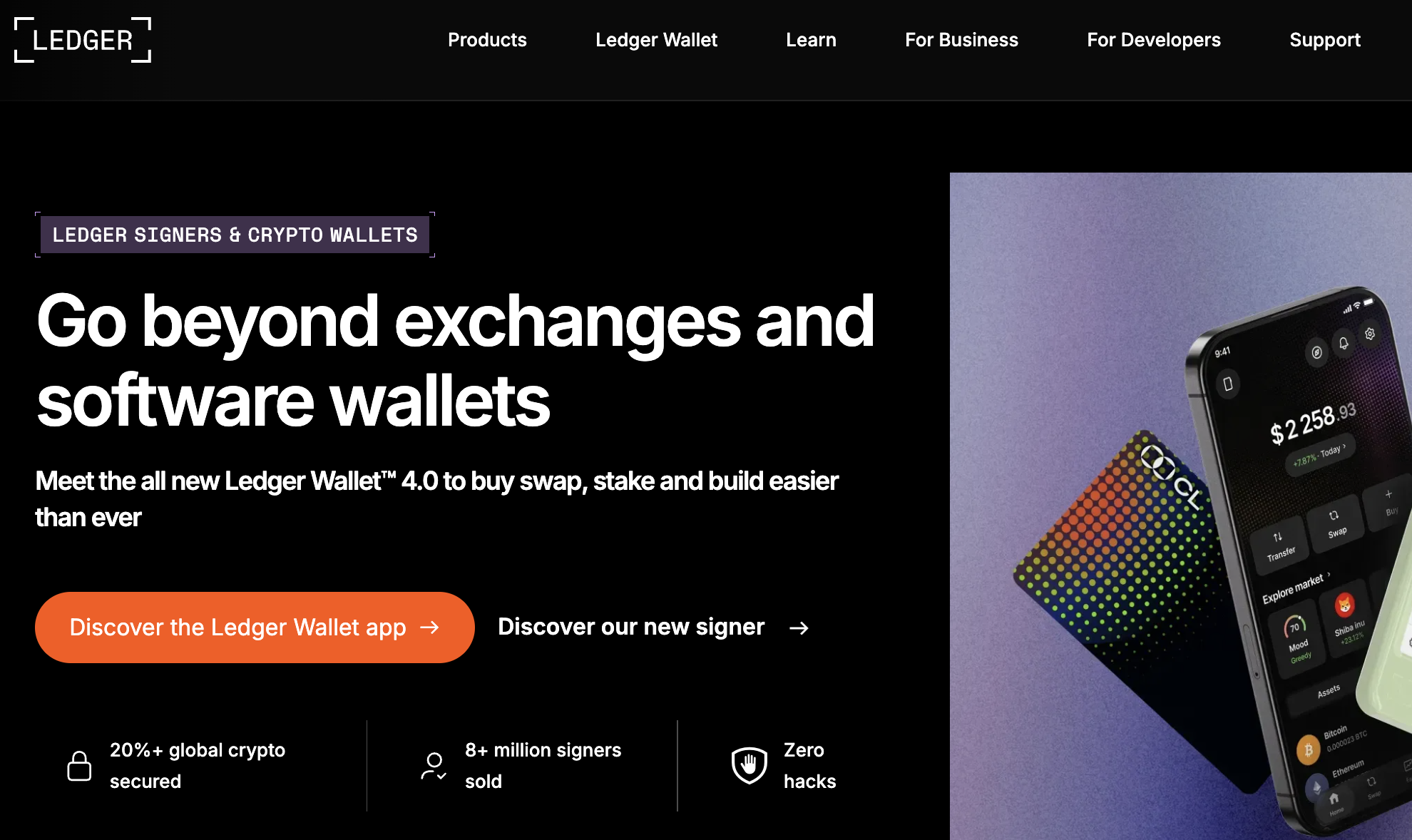
Type: Hardware (cold) wallet with Ledger Live companion app
Supported Stablecoins and Chains: USDT, USDC, DAI, and thousands of other assets across 5,500+ supported coins and 50+ blockchains, including strong coverage for EVM chains, Tron (TRC-20), Solana, and Bitcoin.
Key Features: Ledger keeps your private keys stored on a certified secure element chip that never connects to the internet. The Nano X adds Bluetooth connectivity for wireless signing with your mobile device, while the Stax (Ledger's premium model) features a touchscreen that displays full transaction details before you sign.
Ledger Live integrates staking, swaps, and yield tools so you can manage your stablecoins without leaving the ecosystem. For active DeFi users, Ledger pairs seamlessly with MetaMask and Trust Wallet, giving you the security of cold storage with the convenience of a hot wallet interface.
Pros:
- Maximum protection against online hacks and phishing attacks
- Mature ecosystem with 5,500+ supported assets
- Clear transaction display (especially on Stax) reduces blind-signing risks
- Excellent for large stablecoin reserves or treasury management
Cons:
- Hardware purchase required ($79–$399)
- Less convenient for frequent daily transactions
- Bluetooth on the Nano X slightly increases the attack surface compared to fully air-gapped alternatives
Best For: Long-term stablecoin savings and reserves. Ideal as a foundation for a two-wallet strategy - cold storage for your reserve, hot wallet for active use.
Cost: $79–$399 for the device; Ledger Live app is free.
2. Trezor (Safe 5, Safe 7, Model T) - Best Open-Source Hardware Alternative
Type: Hardware wallet with touchscreen options and open-source firmware
Supported Stablecoins and Chains: 1,800+ assets with strong EVM and Bitcoin support; slightly fewer chains than Ledger on certain networks, but comprehensive for the most widely used stablecoin rails.
Key Features: Trezor's biggest differentiator is full transparency. Both the firmware and hardware design are completely open source, meaning anyone can inspect the code for vulnerabilities.
The Safe 5 and Safe 7 models include touchscreens for clear on-device transaction confirmation, and Trezor supports Shamir backup, which splits your recovery seed into multiple independent shares that must be combined to restore access. This significantly reduces the risk of a single point of seed phrase compromise. Air-gapped signing options are also available for maximum isolation.
Pros:
- Fully open-source firmware and hardware - verified by the security community
- Shamir backup provides more sophisticated recovery than a standard seed phrase
- Durable and privacy-focused with a strong track record
- No dependency on any proprietary security element
Cons:
- Supports fewer assets and chains than Ledger
- Some models have a steeper learning curve for less technical users
Best For: Security-focused and privacy-conscious stablecoin holders who prefer to verify the code behind their wallet rather than trust a proprietary chip.
Cost: $79–$249+
Top Software and Mobile Wallets for Daily Stablecoin Management and DeFi
3. Trust Wallet - Best Multi-Chain Mobile Wallet for Everyday Use and Yield
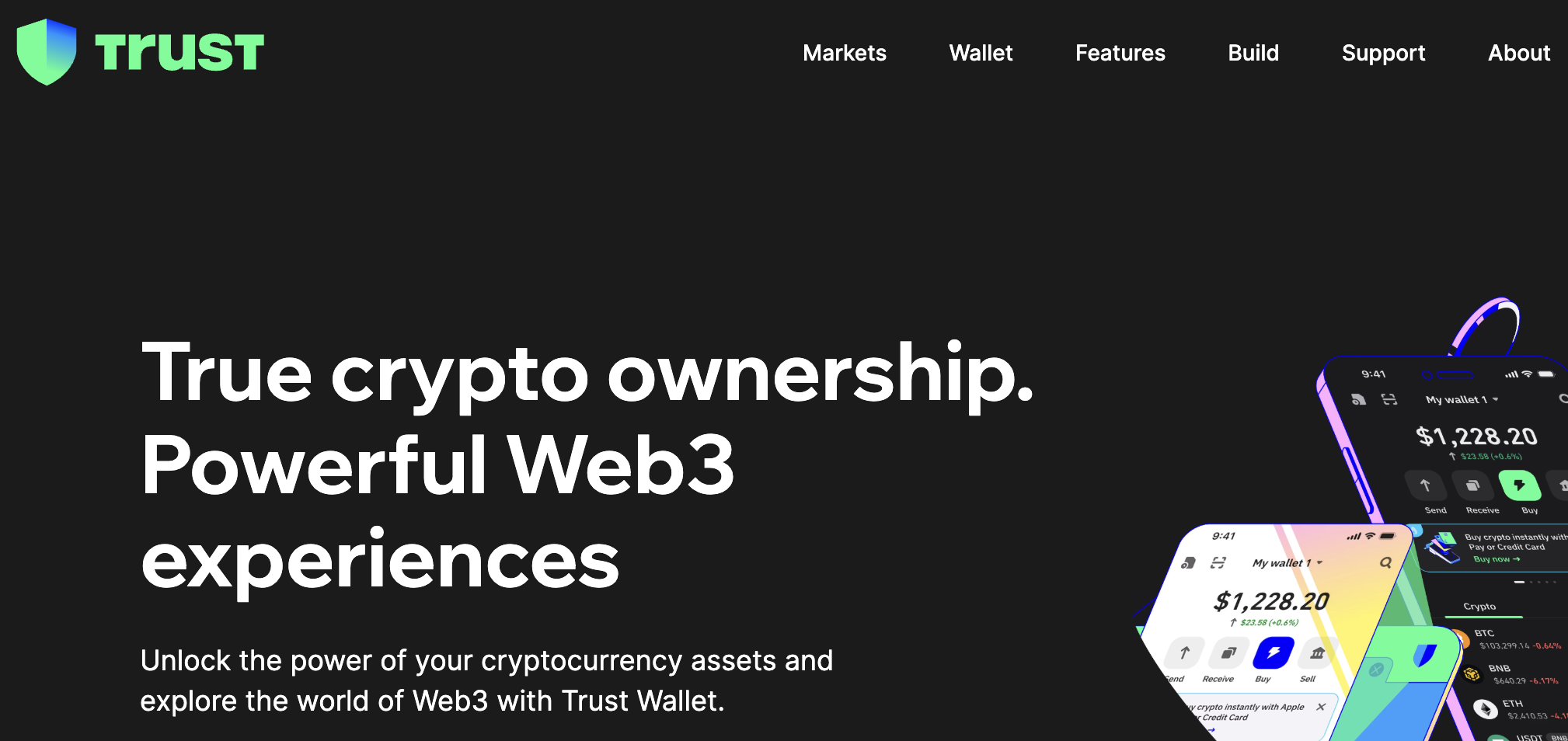
Type: Mobile-first software wallet (iOS and Android) with browser extension
Supported Stablecoins and Chains: 100+ blockchains including Ethereum, Tron, Solana, BNB Chain, Polygon, and many more. Supports millions of tokens, including USDT, USDC, and DAI across all major networks and low-fee rails.
Key Features: Trust Wallet is one of the most versatile mobile wallets available in 2026. It includes a built-in DEX for swapping stablecoins across chains, a dApp browser for DeFi access, native staking, and a "Stablecoin Earn" feature that generates variable yield on USDT, USDC, DAI, and USDA at no additional wallet fee.
FlexGas allows users to pay transaction fees in stablecoins on supported networks rather than in native tokens, simplifying the experience for users who hold stables exclusively.
Optional Ledger hardware pairing is available for users who want cold storage security without giving up Trust's mobile convenience.
Pros:
- Broadest chain coverage of any software wallet on this list
- Over 220 million users - battle-tested at scale
- Genuinely beginner-friendly, ideal for remittances and multi-chain transfers
- All-in-one tool for DeFi, NFTs, swaps, and stablecoin earning
Cons:
- Seed phrase required - users must protect it carefully
- As a hot wallet, online risk is higher than hardware or MPC alternatives
Best For: Mobile users who need a single wallet for multi-chain stablecoin transfers, DeFi access, and earning yield. An excellent everyday wallet, especially when paired with a Ledger for reserve storage.
Cost: Free
4. MetaMask - Best for EVM DeFi, L2s, and Stablecoin Spending
Type: Browser extension and mobile app
Supported Stablecoins and Chains: Ethereum and all major EVM-compatible Layer 2 networks (Base, Arbitrum, Optimism, Polygon), with expanded support in 2026 for Tron (TRC-20 USDT), Solana, and Bitcoin. Strong coverage of ERC-20 stablecoins including USDT, USDC, DAI, and the native mUSD stablecoin.
Key Features: MetaMask remains the de facto standard wallet for Ethereum and EVM DeFi, giving users seamless access to the widest range of decentralized applications, bridges, perpetuals platforms, and yield protocols on the market. The 2026 version introduces native multichain support beyond EVM, bringing Tron and Solana into the same interface.
MetaMask's standout feature for stablecoin users is the MetaMask Card, a Mastercard debit product that lets you spend stablecoins anywhere Mastercard is accepted, with 1–3% cashback paid in mUSD, available in virtual and physical tiers with Apple Pay and Google Pay support. The built-in Stablecoin Earn feature offers 3–8% APY on supported stables. Snaps extend MetaMask's functionality with third-party plugins.
Pros:
- Industry standard for DeFi and yield farming on stablecoins
- MetaMask Card enables seamless real-world stablecoin spending with cashback
- Hardware wallet support (Ledger and Trezor) for secure signing
- Built-in scam detection and transaction simulation reduce approval errors
Cons:
- Phishing and malicious approval risks remain - hardware pairing strongly recommended for significant holdings
- Historically EVM-centric, though this is changing rapidly in 2026
Best For: Active DeFi users trading or farming on L2s, anyone who wants to spend stablecoins with a debit card, and developers interacting with the Ethereum ecosystem.
Cost: Free (MetaMask Card has tiered plans with associated fees)
5. Zengo - Best Seedless MPC Wallet for Beginners and Businesses
Type: Mobile MPC wallet - no seed phrase required
Supported Stablecoins and Chains: USDT, USDC, DAI, and 120+ assets across major networks including Ethereum, Polygon, Tron, and more. Built-in fiat on-ramps and off-ramps are available across supported regions.
Key Features: Zengo solves the single biggest pain point for new self-custody users: the seed phrase.
Using MPC technology, Zengo splits your private key between your device and Zengo's servers, so no single party ever holds the complete key. Recovery is handled through a three-factor biometric system tied to your face ID, eliminating the risk of losing a seed phrase entirely.
The wallet's Web3 Firewall (branded as ClearSign) actively flags malicious transaction requests and phishing approvals before you can be tricked into signing them. Zengo Business adds team-based approval workflows, audit logs, and governance controls that make it viable for corporate stablecoin treasury management and payroll.
Pros:
- No seed phrase - the biggest usability breakthrough for beginners
- Never been hacked, with an ISO certification for enterprise security
- Web3 Firewall provides proactive scam protection
- Business version purpose-built for teams and treasury management
Cons:
- Fewer chains supported than Trust Wallet - not ideal for heavy multi-chain users
- Some reliance on Zengo's servers for key management, a trade-off that advanced users should evaluate
Best For: Beginners entering self-custody for the first time, anyone who fears losing a seed phrase, and businesses that need governance and compliance tools for stablecoin operations.
Cost: Free (business plan pricing is transparent and available on their website)
6. Phantom - Best Wallet for Solana-Based Stablecoins
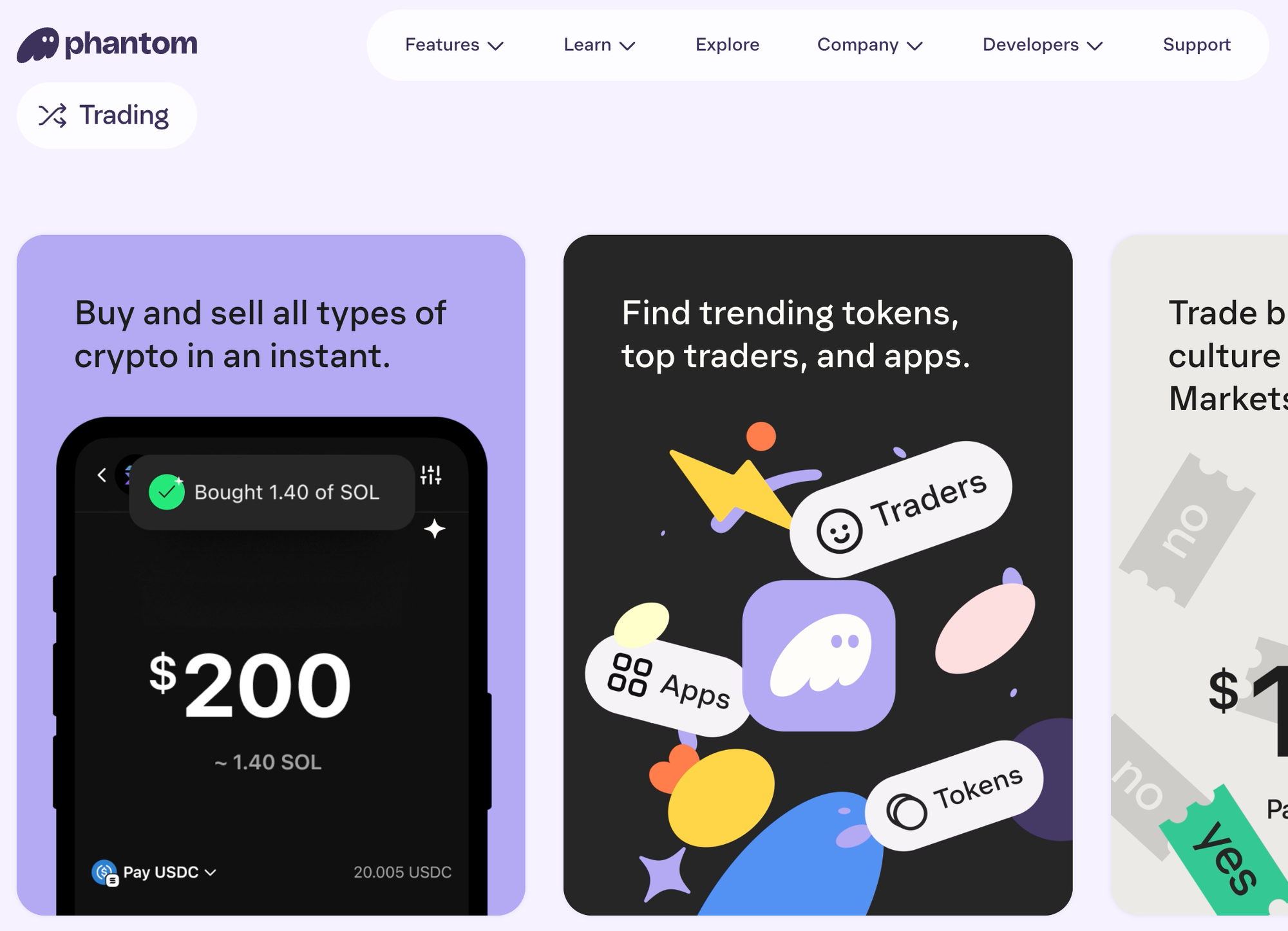
Type: Mobile app and browser extension, Solana-first with multi-chain expansion
Supported Stablecoins and Chains: Exceptional USDC and USDT support via Solana's SPL token standard, offering some of the fastest and cheapest stablecoin transactions available anywhere in crypto. Also supports Ethereum, Polygon, Bitcoin, and a total of 8 chains as of 2026.
Key Features: Phantom was built for Solana and remains the best wallet for anyone whose stablecoin strategy centres on that network.
SPL-based USDC and USDT transfers on Solana cost fractions of a cent and settle in under a second, making Phantom the go-to choice for high-frequency stablecoin movements. The wallet includes built-in swaps, staking for Solana-native yield, full dApp connectivity, and hardware wallet compatibility with Ledger.
The UX is polished and consistent across mobile and browser, and the wallet has a strong reputation within the Solana DeFi ecosystem.
Pros:
- Unmatched performance for Solana stablecoin transfers - fast, cheap, and reliable
- Clean, intuitive interface suitable for a wide range of experience levels
- Growing multi-chain support beyond its Solana roots
- Ledger hardware pairing available
Cons:
- Less relevant outside the Solana ecosystem - not the right choice as a primary wallet for EVM DeFi
Best For: Users who move stablecoins frequently and want the lowest fees possible, Solana DeFi participants, and anyone whose primary stablecoin is USDC on Solana.
Cost: Free
7. Rabby Wallet - Best for EVM Transaction Security and DeFi Previews
Type: Browser extension, desktop app, and mobile (EVM-focused)
Supported Stablecoins and Chains: 200+ EVM-compatible chains, covering the full range of Ethereum mainnet, Layer 2 networks, and EVM sidechains.
Key Features: Rabby is purpose-built to protect DeFi users from the most common and costly mistakes in stablecoin management: bad approvals, chain errors, and phishing transactions.
Its transaction simulation feature previews exactly what will happen before you confirm any transaction, showing expected token changes so you know precisely what you're signing. Rabby automatically detects and switches to the correct chain for each dApp, eliminating the frequent errors caused by being on the wrong network.
Integration with DeBank provides a comprehensive cross-chain portfolio view. Hardware wallet support is included.
Pros:
- Transaction simulation significantly reduces costly approval mistakes
- Automatic chain detection eliminates a major source of user error in DeFi
- Strong scam alerts and approval management tools built-in
- Excellent for users managing stablecoin positions across many DeFi protocols
Cons:
- EVM-only - no native support for Solana, Tron, or non-EVM chains
- Lacks the mobile dApp browser found in Trust Wallet
Best For: Advanced EVM DeFi traders managing active stablecoin positions who want the strongest available protection against transaction errors and malicious approvals.
Cost: Free
8. Coinbase Wallet and Exodus - Best for Beginners Entering Self-Custody
Coinbase Wallet is a non-custodial wallet completely separate from the Coinbase exchange, supporting Ethereum, Solana, and other major networks with built-in fiat on-ramps and gasless swaps on supported chains.
It is one of the most beginner-friendly entry points into self-custody, with a clean interface and a brand name that new users already trust. The wallet is seed-phrase based, so users must secure their recovery phrase.
Exodus takes a different approach with a polished, portfolio-focused multi-platform experience available on desktop, mobile, and browser. It supports 300+ assets with built-in swaps and staking, and its clean interface makes it easy to track stablecoin holdings across multiple networks at a glance.
Exodus also integrates Trezor hardware wallet support for users who want cold storage backing.
Both wallets sacrifice some of the advanced features found in MetaMask or Rabby in exchange for simplicity and visual polish - a worthwhile trade for users just getting started with self-custody stablecoins.
Best For: New self-custody users who want a low-friction, well-designed wallet without the learning curve of more advanced options.
Cost: Free
Comparison Table: Best Non-Custodial Wallets for Stablecoins in 2026
| Wallet | Type | Chains Supported | Key Stablecoin Features | Security Level | Best For | Cost |
|---|---|---|---|---|---|---|
| Ledger | Hardware | 5,500+ | Broad support, on-device signing | Highest | Long-term reserves | $79–$399 |
| Trezor | Hardware | 1,800+ | Open-source, Shamir backup | Highest | Privacy/open-source holders | $79–$249 |
| Trust Wallet | Mobile | 100+ | Yield earning, swaps, FlexGas | Medium-High | Daily multi-chain use | Free |
| MetaMask | Browser/Mobile | EVM + Tron/Solana | DeFi, Card (1–3% cashback) | Medium-High | DeFi + real-world spending | Free |
| Zengo | Mobile MPC | Major networks | Seedless, business governance | Very High | Beginners and businesses | Free |
| Phantom | Mobile/Browser | Solana + 7 chains | Fast, cheap Solana stables | Medium-High | Solana ecosystem users | Free |
| Rabby | Browser/Desktop | 200+ EVM chains | Tx simulation, scam alerts | Medium-High | Advanced EVM DeFi traders | Free |
| Coinbase Wallet | Mobile/Browser | Ethereum, Solana+ | Fiat ramps, gasless swaps | Medium | New self-custody users | Free |
Conclusion
Choosing the right non-custodial wallet in 2026 is one of the most important decisions a stablecoin holder can make for long-term security and financial flexibility.
Hardware wallets like Ledger and Trezor remain the gold standard for protecting significant reserves offline, while software wallets like MetaMask, Trust Wallet, Zengo, and Phantom lead for daily stablecoin management, DeFi access, yield earning, and real-world spending.
The right choice ultimately depends on your holding size, frequency of use, and technical comfort level - but across all options, one principle holds: self-custody puts you in full control of your stablecoins, with no third party standing between you and your funds.
Read Next:
- Stablecoin Insider's SEO & AEO Authority Report
- Stablecoin Insider Partners with The Grid to Launch the Industry's Largest Stablecoin Directory
- Bitcoin Policy Institute Releases “Stablecoin Supremacy”
FAQs:
1. What is a non-custodial wallet for stablecoins?
A non-custodial wallet for stablecoins is a wallet where only the user holds the private keys, meaning no exchange or third party can access, freeze, or control the stored funds.
2. What is the difference between a hardware wallet and a software wallet for stablecoins?
The difference between a hardware wallet and a software wallet is that a hardware wallet stores private keys offline on a physical device for maximum security, while a software wallet stores keys on an internet-connected device for faster, more convenient daily access.
3. What is the safest non-custodial wallet for storing stablecoins in 2026
The safest non-custodial wallets for storing stablecoins in 2026 are hardware wallets like Ledger and Trezor, as they keep private keys completely offline and require physical confirmation for every transaction.
4. What is the best non-custodial wallet for stablecoin yield earning in 2026?
The best non-custodial wallets for stablecoin yield earning in 2026 are MetaMask and Trust Wallet, both of which offer native "Earn" features with 3–8% APY on assets like USDT, USDC, and DAI through integrated DeFi protocols.
5. What is the difference between an MPC wallet and a seed phrase wallet for stablecoins?
The difference between an MPC wallet and a seed phrase wallet is that an MPC wallet splits the private key across multiple parties to eliminate a single point of failure, while a seed phrase wallet relies on a single recovery phrase that must be kept secure by the user alone.
6. What is the best non-custodial wallet for USDT on Tron (TRC-20) in 2026?
The best non-custodial wallets for USDT on the Tron network in 2026 are Trust Wallet and MetaMask, both of which natively support TRC-20 transfers on Tron - one of the cheapest and most widely used rails for stablecoin transactions.
7. What is the best non-custodial wallet for beginners storing stablecoins in 2026?
The best non-custodial wallets for beginners storing stablecoins in 2026 are Zengo and Coinbase Wallet, as both offer simplified onboarding, biometric recovery options, and user-friendly interfaces that remove the complexity of managing seed phrases.
8. What is the difference between a custodial and a non-custodial stablecoin wallet?
The difference between a custodial and a non-custodial stablecoin wallet is that a custodial wallet is controlled by a third party like an exchange that holds your private keys on your behalf, while a non-custodial wallet gives you sole ownership and control of your private keys and funds.
9. What is the best non-custodial wallet for Solana stablecoins in 2026
The best non-custodial wallet for Solana stablecoins in 2026 is Phantom, which offers native support for USDC and USDT via the SPL token standard with near-instant transaction speeds and fees of fractions of a cent.
Disclaimer:
This content is provided for informational and educational purposes only and does not constitute financial, investment, legal, or tax advice; no material herein should be interpreted as a recommendation, endorsement, or solicitation to buy or sell any financial instrument, and readers should conduct their own independent research or consult a qualified professional.