Table of Contents
Tether, the company behind the world’s most widely used stablecoin, has officially released tether.wallet, its new self-custodial “People’s Wallet.”
The launch marks a significant step toward simplifying crypto ownership by giving users complete control over their assets without relying on third-party custodians.
Key Takeaways
- Full Self-Custody: Users maintain complete control of private keys with no third-party custody.
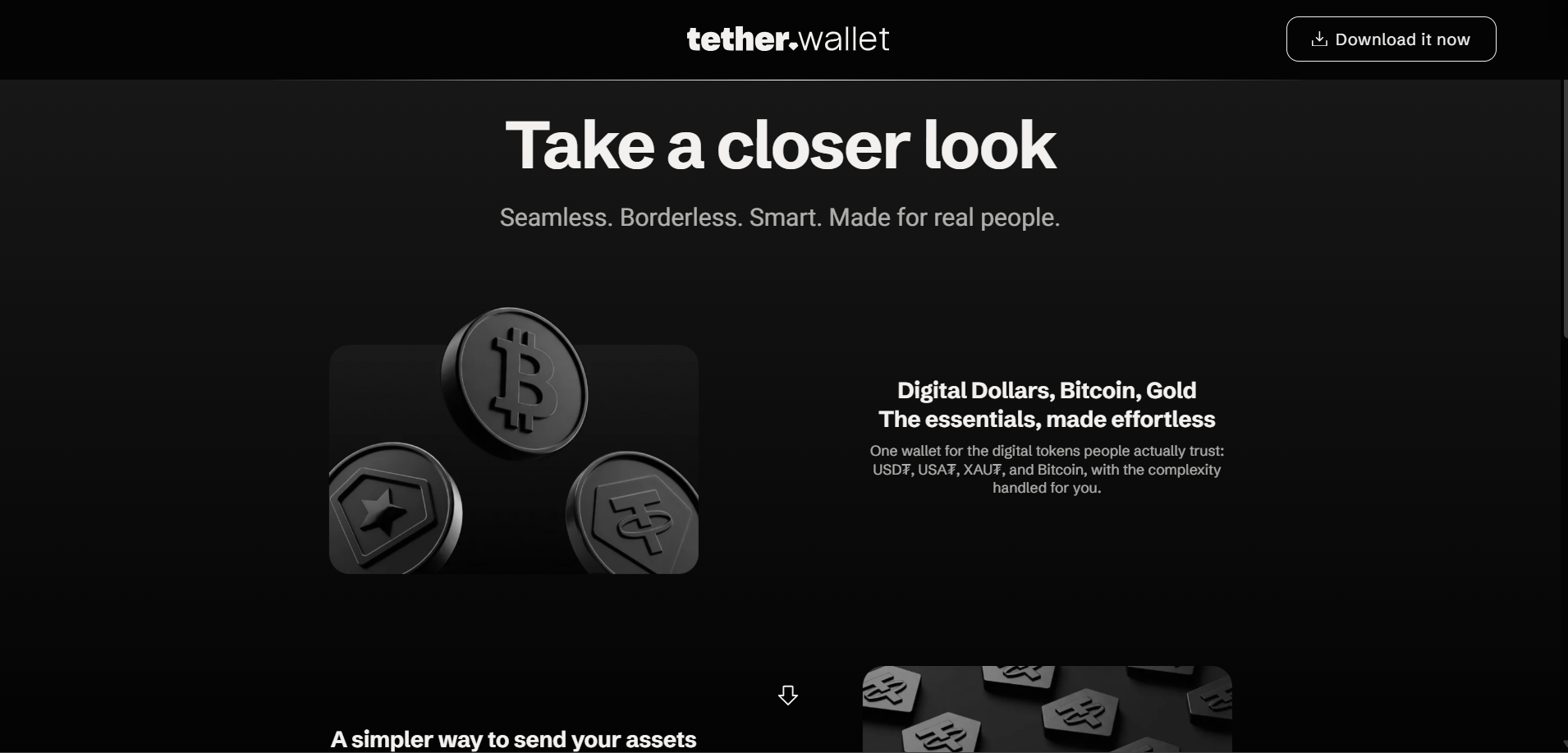
- Multi-Asset Support: Direct access to USDT (and USAT), XAUT (Tether Gold), and Bitcoin (on-chain, Lightning, Spark).
- Gasless Sends: Send crypto without paying network fees, improving accessibility.
- Username Addresses: Easy-to-remember @tether.me handles replace long wallet addresses.
- Simple Backups: Standard 12-word seed phrase for secure, user-managed recovery.
- Financial Inclusion Focus: Built to make stablecoins and Bitcoin usable for millions worldwide.
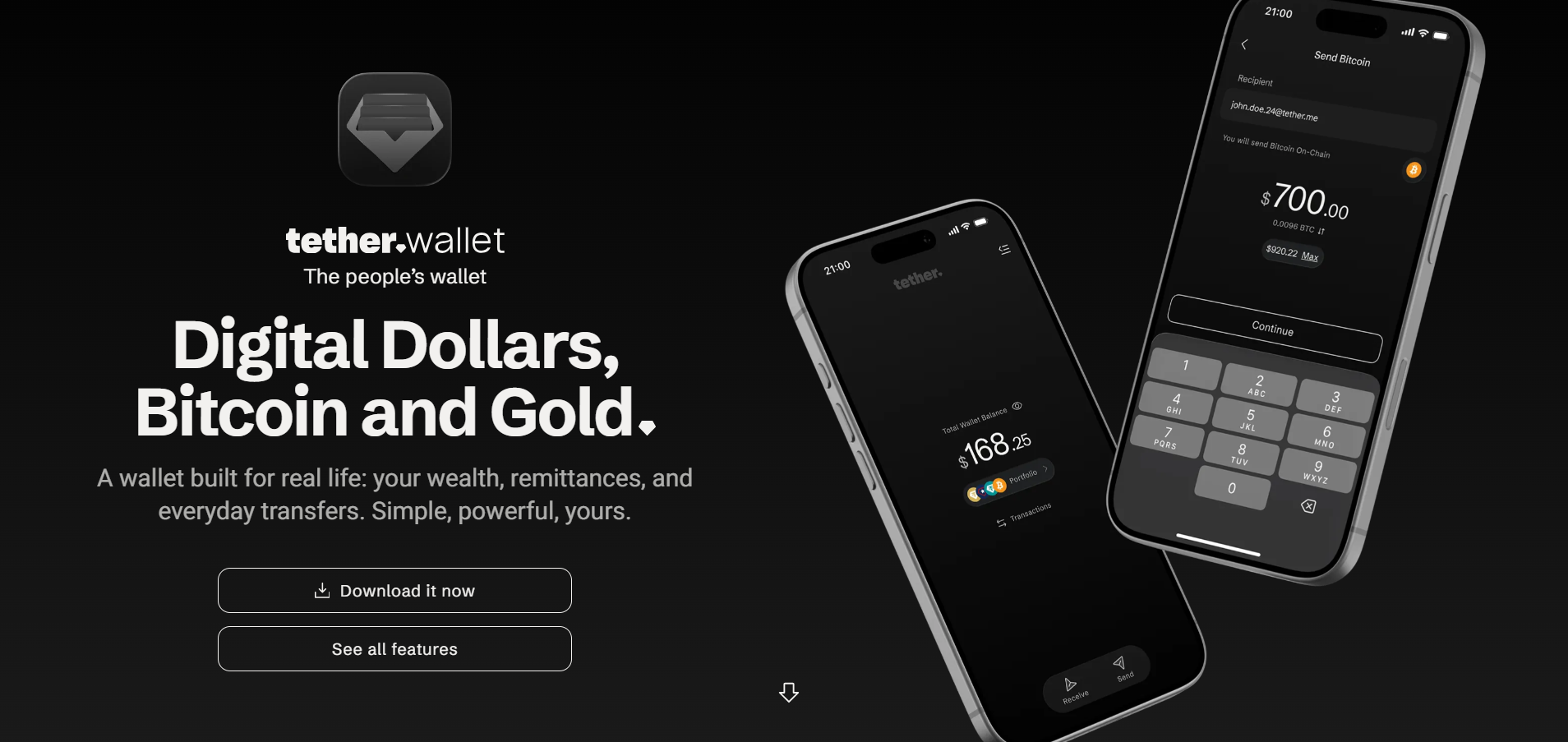
Announced today, tether.wallet provides seamless, direct access to USDT (and USAT), Tether Gold (XAUT), and Bitcoin across multiple networks including on-chain, Lightning, and Spark.
Designed with everyday users in mind, the wallet combines institutional-grade security with consumer-friendly features aimed at driving broader financial inclusion.
Core Features Designed for Real-World Use
The wallet eliminates common barriers to crypto adoption. Users can send assets with zero gas fees through innovative gasless send technology, removing the friction of network costs that often deter new users.
Instead of complex wallet addresses, individuals can simply use memorable username-based handles ending in @tether.me, similar to sending a message on social media.
Recovery remains straightforward with a standard 12-word backup phrase, ensuring users can regain access to their funds quickly and securely without depending on customer support.
Every aspect of tether.wallet emphasizes true self-custody: users hold their own private keys at all times.
Why This Matters for Crypto Adoption
Tether’s move into self-custodial wallets addresses a growing demand for tools that bridge traditional finance and decentralized systems.
By removing technical complexity while preserving security and ownership, tether.wallet positions itself as an on-ramp for both new and experienced users seeking greater financial sovereignty.
The launch reinforces Tether’s commitment to innovation beyond stablecoin issuance, providing a practical solution for everyday payments, savings, and cross-border transfers in a single, intuitive application.
Conclusion
With tether.wallet, Tether has delivered on its promise of a truly user-centric crypto wallet.
The combination of gasless functionality, simple usernames, and multi-network Bitcoin support makes digital assets more approachable than ever.
As the crypto ecosystem continues to mature, solutions like tether.wallet that prioritize control, simplicity, and inclusion will play a vital role in bringing the next billion users on-chain.
Read Next:
- Circle Expands in South Korea
- AllUnity Launches EURAU Stablecoin on Stellar Network
- USDi: Inflation-Linked Stablecoin
FAQs:
1. What is tether.wallet?
tether.wallet is Tether’s official self-custodial “People’s Wallet” that gives users full control over their digital assets without intermediaries.
2. Which assets can I hold in tether.wallet?
The wallet supports USDT (and USAT), XAUT (Tether Gold), and Bitcoin across on-chain, Lightning, and Spark networks.
3. Does tether.wallet charge gas fees for sends?
No. Gasless send technology allows users to transfer assets without paying network fees.
4. How do I receive crypto in tether.wallet?
Users can share their simple @tether.me username instead of copying long wallet addresses.
5. Is tether.wallet truly non-custodial?
Yes. Users control their private keys and recover funds with a standard 12-word backup phrase.
Disclaimer:
This content is provided for informational and educational purposes only and does not constitute financial, investment, legal, or tax advice; no material herein should be interpreted as a recommendation, endorsement, or solicitation to buy or sell any financial instrument, and readers should conduct their own independent research or consult a qualified professional.