
Table of Contents
Stablecoins are now large enough to attract full-scale regulatory frameworks, not just guidance.
In 2025–2026, the global rulebook is increasingly defined by:
- Who is allowed to issue a stablecoin
- What reserves must back it
- How redemption works
- What compliance controls apply across transfers and intermediaries.
Key Takeaways
- Stablecoin regulation is primarily issuer-led: reserves, redemption, governance, disclosures, and supervision.
- The US GENIUS Act creates a federal framework for payment stablecoins and limits what can qualify as reserve assets.
- EU MiCA regulates stablecoins through token categories (EMTs and ARTs) and applies on a defined schedule, with transitional rules for existing providers.
- Many jurisdictions are converging on a licensing model for fiat-referenced stablecoin issuers, including Hong Kong from 1 August 2025.
- The AML/CFT “plumbing” matters as much as reserves: FATF reported Travel Rule legislation passed in 85 of 117 surveyed jurisdictions in 2025 (excluding those that prohibit VASPs).
Stablecoin Regulation Basics
What Regulators Usually Mean by “Stablecoin”
Most modern rules focus on tokens that are designed to maintain a stable value against a reference (often a fiat currency) and are used for payments, settlement, trading collateral, or transfers.
In practice, regulators separate stablecoins by what backs the token and what legal claim the holder has.
Common Stablecoin Types Used in Policy
- Single-Currency Fiat-Referenced (Payment Stablecoins): Typically backed 1:1 with cash and high-quality liquid assets; the primary target of “payment stablecoin” laws.
- Asset-Referenced Tokens: Referencing a basket of assets (multiple currencies and/or other assets).
- Commodity-Referenced Tokens: Referencing commodities such as gold.
- Crypto-Collateralized Stablecoins: Backed by on-chain collateral and overcollateralization.
- Algorithmic Stabilization Models: Stability via rules, incentives, and market mechanisms rather than direct reserve backing.
The Four Questions Every Regime Answers
- Who Can Issue? (Licensing and authorization)
- What Can Back the Token? (Reserve composition, custody, segregation)
- What Does Redemption Look Like? (Par vs market value, timing, fees, eligibility)
- What Controls Apply? (Disclosures, audits/attestations, AML/CFT, governance, supervision)
These questions are the most reliable way to compare the US, EU, and global regimes.
Why 2025–2026 Became the Regulatory Inflection Point
Regulators are responding to measurable scale and cross-border reach.
- The IMF reported $23 trillion in stablecoin trading volume in 2024 and cited a combined market capitalization of $260 billion for the two largest stablecoins at the time of publication (December 2025).
- The ECB has emphasized that large headline volumes include substantial non-retail activity, estimating around 0.5% of volumes as “organic retail-sized transfers” in its analysis.
A consistent regulatory implication follows: rules are focusing on sound reserves, credible redemption, operational controls, and transfer compliance, rather than relying on transaction counts alone.
United States: GENIUS Act of 2025
What the GENIUS Act Does
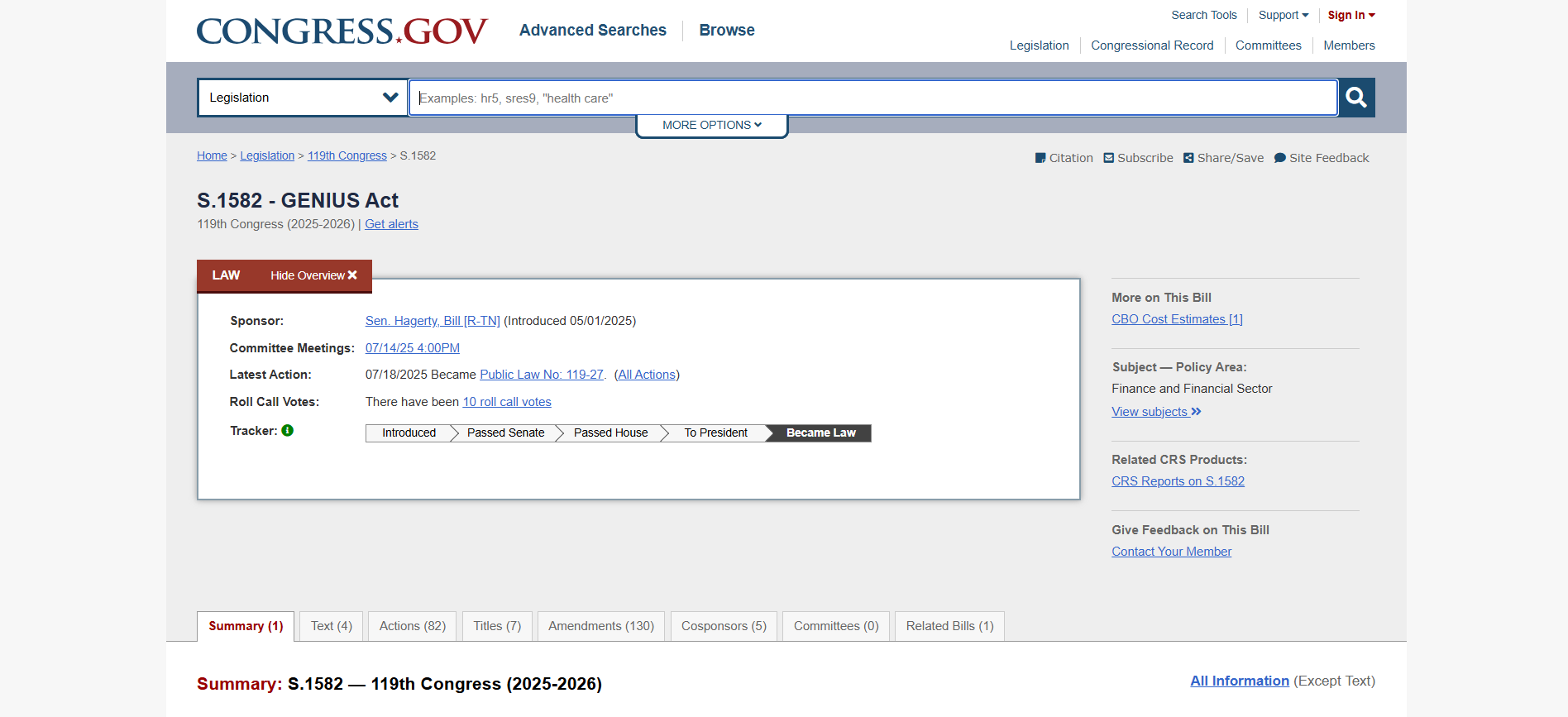
The GENIUS Act establishes a federal framework for regulating payment stablecoins in the United States, including who may issue them, reserve standards, disclosures, and supervision.
It was enacted as Public Law on July 18, 2025.
Who Can Issue Under the Framework
The Act is built around the concept of a permitted payment stablecoin issuer and introduces a rule that issuance must occur within that permitted perimeter.
The operational takeaway is that “issuer status” is not a marketing label; it is a regulated activity with defined obligations.
Reserve Requirements and Asset Constraints
GENIUS is reserve-prescriptive. Instead of allowing broad “cash equivalents,” it points to specific categories of highly liquid, low-risk assets and sets expectations that reserves must at least match outstanding stablecoin obligations (1:1 backing) while being held and managed under regulated standards.
From a systems perspective, this pushes issuers toward a “narrow-reserve” operating model:
- Liquidity-first reserve design
- Conservative duration management
- Tight controls on how reserves can be deployed
Disclosure, Monthly Reporting, and Independent Examination
A distinguishing feature is monthly rigor:
- Issuers must produce monthly reserve-related reporting and have that information examined by a registered public accounting firm, alongside executive certifications.
This matters operationally because “proof of reserves” marketing is not a substitute for repeatable compliance-grade reporting and examination.
Governance, Risk Management, and Supervision
GENIUS also ties issuers to capital, liquidity, and risk management standards aligned with their business model and risk profile, which generally implies:
- Board-level governance and risk oversight
- Documented risk frameworks (market, liquidity, operational, legal, cyber)
- Supervisory engagement and exam readiness
What Changes for Platforms Integrating Stablecoins
If you are not the issuer but you distribute, list, custody, or facilitate transfers:
- The issuer’s compliance posture becomes a counterparty risk you must evaluate.
- Redemption reliability becomes a user experience dependency.
- Transfer compliance (including sanctions and suspicious activity monitoring) becomes a workflow requirement, not a policy statement.
European Union: MiCA (Markets in Crypto-Assets Regulation)
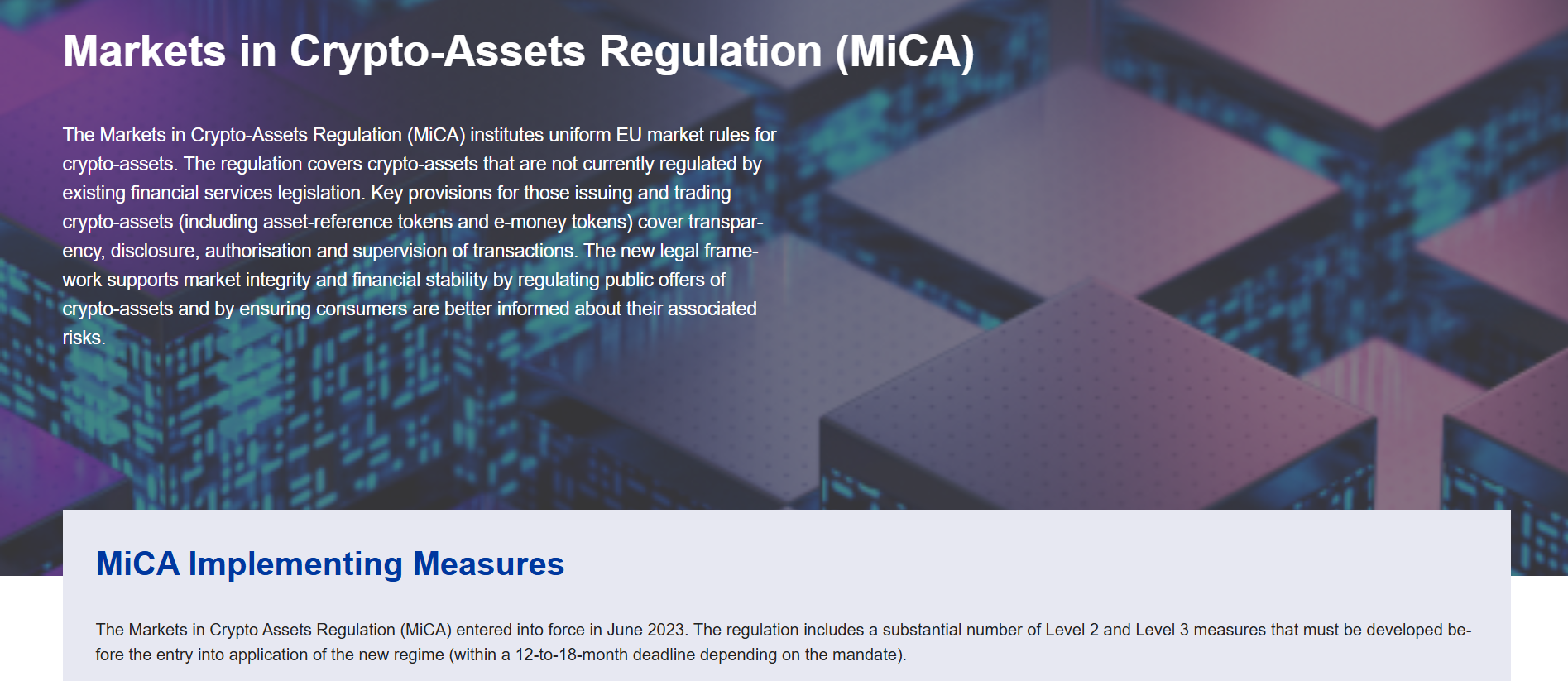
When MiCA Applies
MiCA is already in effect by phases:
- Titles covering ARTs and EMTs apply from 30 June 2024.
- The broader MiCA framework applies from 30 December 2024.
- Transitional measures allow existing providers in many cases to continue during a “grandfathering” period that can run up to 1 July 2026, depending on Member State choices.
How MiCA Defines Stablecoin Categories
MiCA does not regulate “stablecoins” as one legal object.
It regulates:
- E-Money Tokens (EMTs): Tokens referencing one official currency.
- Asset-Referenced Tokens (ARTs): Tokens referencing more than one asset (for example, a basket of currencies and/or other assets).
This classification drives core obligations:
What must be disclosed, how reserves are handled, and what redemption rights apply.
Redemption Rules: The Practical Difference Between EMTs and ARTs
MiCA’s policy design reflects user expectation differences:
- EMTs align more closely with e-money logic and emphasize redemption at par in EU summaries of the regime.
- ARTs reflect a different structure and can include constraints when used widely as a means of exchange.
For product teams, this translates into two immediate deliverables:
- Redemption Terms Must Be Explicit and User-Readable
- Token Classification Must Match Product Reality (not just branding)
“Means of Exchange” Thresholds and Issuance Constraints
MiCA includes specific thresholds intended to limit stablecoins from becoming too systemically payment-like without additional safeguards.
Reporting and monitoring logic is tied to whether an ART is used widely as a means of exchange, including thresholds of 1 million transactions per day and EUR 200 million per day (estimated quarterly averages) within a single currency area.
Operationally, this means:
- Issuers need monitoring that can measure relevant transaction categories and geography.
- Compliance teams need escalation playbooks if thresholds are approached.
- Product teams should avoid building incentive schemes that could unintentionally accelerate “means of exchange” usage in sensitive corridors.
CASPs and the Stablecoin Distribution Layer
Even if you are not issuing a token, MiCA affects listing, custody, brokerage, and exchange-like services through the CASP perimeter.
The practical result is that “stablecoin compliance” in the EU is a two-layer problem:
- The issuer’s MiCA obligations (ART/EMT)
- The service provider’s authorization and operational obligations (CASP)

Global Frameworks That Matter in 2025–2026
Regulatory approaches differ, but most advanced frameworks are converging on:
- Licensing for fiat-referenced stablecoin issuance
- Reserve, redemption, and disclosure requirements
- Stronger supervisory tools and enforcement posture
Singapore: MAS Stablecoin Framework (Single-Currency Stablecoins)
Singapore’s framework targets single-currency stablecoins issued in Singapore and pegged to SGD or a G10 currency, with features that include:
- Reserve asset requirements and independent attestation expectations
- Timely redemption at par, including a stated expectation of redemption within five business days upon a legitimate request under the framework description.
For implementation, MAS provides a clear pattern: value stability is not only about reserve assets, but also about enforceable redemption timelines and auditability.
Hong Kong: Stablecoins Ordinance Licensing (Effective 1 August 2025)
Hong Kong implemented a licensing regime where issuance of fiat-referenced stablecoins is a regulated activity, and a license is required from the HKMA from 1 August 2025.
A practical takeaway for global firms: Hong Kong is positioning issuance as a supervised financial activity, and public plans by major institutions to seek licensing indicate that compliance readiness will be a competitive requirement for market participation.
United Kingdom: Timing and Direction of Travel
The UK is developing a comprehensive crypto-asset regulatory regime with a start date reported as October 2027, while regulators continue publishing and consulting on stablecoin-related requirements and systemic-risk safeguards.
If you operate in the UK market in 2025–2026, the practical stance is:
- Expect evolving consultation outputs and staged implementation
- Design controls so the product can “tighten” without rebuilding from scratch
AML/CFT and the Travel Rule: The Operational Bottleneck
Even the best reserve design does not remove transfer compliance obligations.
FATF’s 2025 targeted update and related materials show Travel Rule coverage expanding, with legislation passed in 85 of 117 jurisdictions surveyed (excluding those that prohibit VASPs) and additional jurisdictions in progress.
What This Changes for Stablecoin Products
Travel Rule maturity affects:
- Transfer completion rates across counterparties
- Compliance data collection and reconciliation
- Screening and monitoring workflows
- Customer support volume (failed transfers, delayed transfers, documentation requests)
For many stablecoin businesses, “compliance scalability” is shaped more by Travel Rule interoperability than by on-chain settlement time.
A Practical Compliance Playbook for 2025–2026
For Issuers
- Build a Reserve Policy That Survives the Strictest Regime You Serve
Focus on liquidity, conservatism, segregation, and documented controls rather than yield optimization. - Treat Redemption as a Measurable Service Level
Redemption must be operationally deliverable under stress conditions, not just described in a policy. - Standardize Disclosure and Examination Cadence
Monthly reporting, repeatable examination processes, and clear user-facing disclosure language reduce both regulatory and reputational risk. - Instrument Transaction Monitoring Early
You cannot manage thresholds, AML obligations, or incident response without telemetry.
For Exchanges, Wallets, and Payment Providers
- Create Listing and Due Diligence Standards for Stablecoins
Require clear reserve disclosures, redemption mechanics, and governance artifacts as prerequisites. - Design Travel Rule Workflows as Product Infrastructure
Data collection, secure transmission, and error handling must be engineered end-to-end. - Prepare for Regional Token Taxonomy
MiCA classification concepts affect disclosure and user communications in the EU, even if the token is globally branded.
For Enterprises Using Stablecoins (Treasury, Payroll, Settlement)
- Adopt Corridor Policies
The same stablecoin can have different regulatory treatment and operational risk depending on jurisdiction and counterparty type. - Define Internal Controls for Stablecoin Exposure
Set limits, approved issuers, approved networks, and escalation paths for anomalies. - Document Auditability
If stablecoin flows matter financially, auditors will want consistent records, approvals, and reconciliation.
Conclusion
Stablecoin regulation in 2025–2026 is converging on a clear core: licensed issuance, conservative and transparent reserves, enforceable redemption rights, and strong compliance controls around transfers and intermediaries.
The regimes differ in structure, but the operational destination is similar.
Teams that treat compliance as product infrastructure, rather than as legal paperwork, will be best positioned to scale across jurisdictions.
Read Next:
- 2025 Stablecoin Year-End Report
- Best Chain for Stablecoin Micropayments in 2026
- Best Stablecoin On/Off-Ramps for 2026 Compared
FAQs:
1. What Is the GENIUS Act in Stablecoin Regulation?
The GENIUS Act is a US federal law enacted on July 18, 2025, that creates a regulatory framework for payment stablecoins, including issuer standards, reserve expectations, and reporting requirements.
2. What Does MiCA Regulate for Stablecoins in the EU?
MiCA regulates stablecoins through two categories, e-money tokens (EMTs) and asset-referenced tokens (ARTs), and sets EU-wide rules for issuance, disclosures, supervision, and crypto-asset services.
3. When Did MiCA Start Applying in Practice?
MiCA’s stablecoin titles (Titles III and IV) apply from 30 June 2024, and the rest of MiCA applies from 30 December 2024, with transitional measures for existing providers that can extend to 1 July 2026 depending on Member State decisions.
4. What Are MiCA’s Thresholds for a Stablecoin Used Widely as a Means of Exchange?
MiCA monitoring includes thresholds of 1 million transactions per day and EUR 200 million per day (estimated quarterly averages) for uses as a means of exchange within a single currency area, tied to additional obligations and constraints for ARTs.
5. What Is the MAS Stablecoin Rule on Redemption Timing?
Singapore’s MAS framework describes timely redemption at par and states an expectation of redemption within five business days for a legitimate request under the regulated framework description.
6. When Did Hong Kong Require a License to Issue Fiat-Referenced Stablecoins?
Hong Kong’s stablecoin issuer regime under the Stablecoins Ordinance took effect on 1 August 2025, making issuance of fiat-referenced stablecoins a regulated activity that requires HKMA licensing.
7. What Is the Travel Rule and Why Does It Matter for Stablecoins?
The Travel Rule requires certain originator and beneficiary information to accompany qualifying crypto transfers, and it drives real operational cost through data capture, screening, interoperability, and exception handling across counterparties.
8. Are Stablecoin Volumes Mainly Retail Payments?
Not typically. Some central bank analysis estimates only a small fraction of stablecoin transfer volumes are organic retail-sized transfers, indicating that most volume relates to non-retail activity.
9. What Is the Most Practical Way to Launch a Stablecoin Globally in 2025–2026?
Start by selecting target jurisdictions, confirming issuer licensing requirements, designing a reserve policy that meets the strictest regime in scope, building redemption operations with measurable service levels, and implementing Travel Rule-ready transfer compliance from day one.
Disclaimer:
This content is provided for informational and educational purposes only and does not constitute financial, investment, legal, or tax advice; no material herein should be interpreted as a recommendation, endorsement, or solicitation to buy or sell any financial instrument, and readers should conduct their own independent research or consult a qualified professional.