
Table of Contents
In 2026, stablecoin payment providers play a pivotal role in enterprise finance, enabling faster and more cost-effective transactions compared to traditional systems.
The global stablecoin market capitalization has reached approximately $310 billion, with major assets like USDT at $187 billion and USDC at $75 billion driving adoption.
Leading providers (Cobo, Circle, Fireblocks, Stripe, and Coinbase) offer institutional-grade solutions focused on security, compliance, and scalability.
These platforms support cross-border settlements, treasury management, and B2B payments amid regulations like the U.S. GENIUS Act and EU's MiCA.
This breakdown evaluates them based on proven features and real-world performance for business use.
Key Takeaways:
- Prioritize regulated providers like Circle for full reserve transparency and licenses to minimize compliance risks.
- Opt for broad multi-chain support (e.g., Fireblocks' 120+ chains) to optimize costs and avoid lock-in.
- Choose non-custodial options like Cobo for enterprises needing self-sovereignty over assets.
- Select merchant-focused platforms like Stripe or Coinbase for seamless e-commerce and instant payouts.
- Evaluate monthly volume handling, Fireblocks processes $200 billion, to ensure scalability for high-frequency operations.
Understanding Stablecoins: The Foundation of Modern Payments
Stablecoins are digital assets pegged to fiat currencies, designed to maintain stable value through reserves, making them suitable for payments without cryptocurrency volatility.
Key Types and Mechanisms
- USDT: The largest by market cap at $187 billion, backed by fiat reserves and treasuries, dominates trading pairs with high liquidity.
- USDC: Regulated USD-pegged stablecoin with $75 billion market cap, fully backed by cash and U.S. Treasuries, featuring monthly audits and 1:1 redeemability.
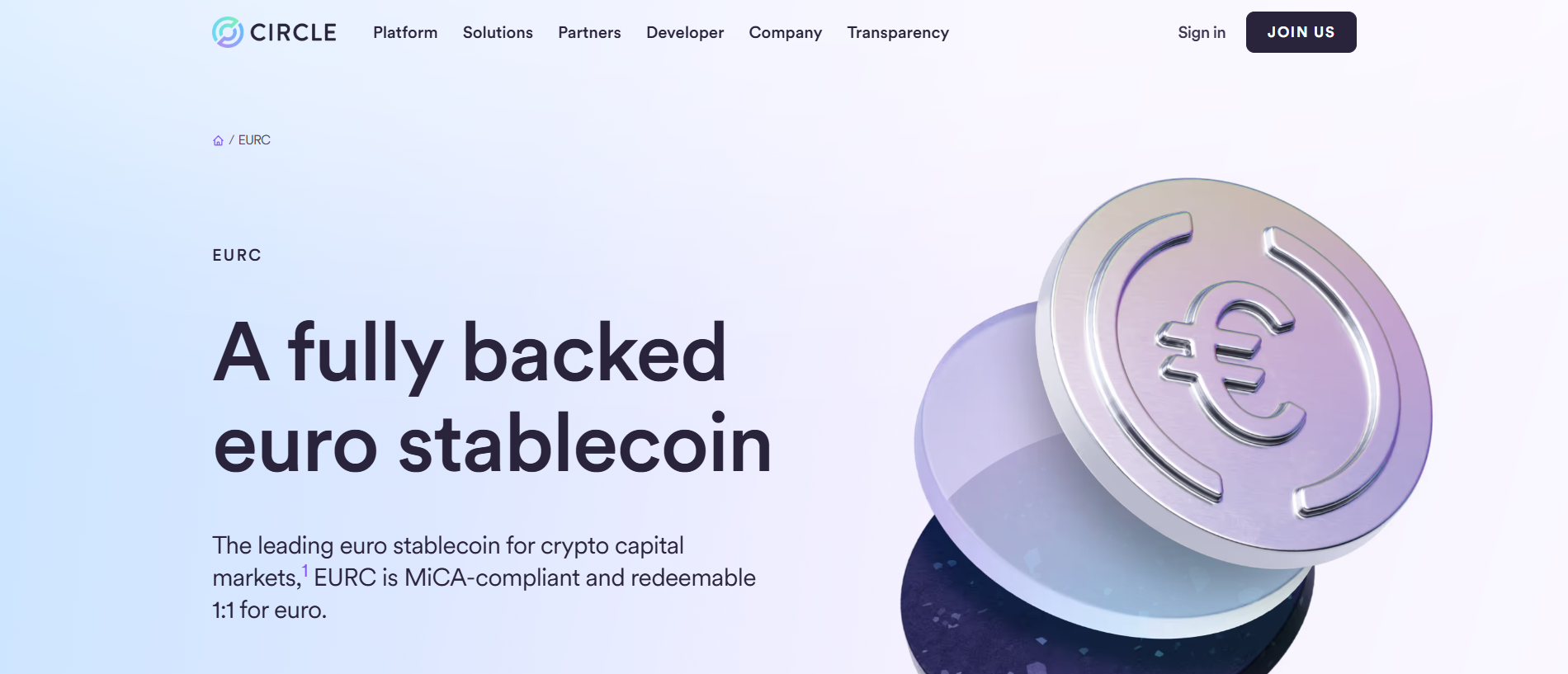
- EURC: Euro-pegged with around $361 million market cap, compliant under MiCA, backed by high-quality reserves for European markets.
Benefits for Enterprises
Enterprises gain from near-instant settlements, reduced fees (up to 90% savings on cross-border transfers), and 24/7 availability.
Regulated stablecoins rarely depeg due to transparent reserves and oversight, supporting use cases like remittances, B2B payments, and treasury where volumes now exceed trillions annually.
The Role of Payment Providers in Stablecoin Ecosystems
Payment providers bridge stablecoins to business applications, managing compliance, interoperability, and scalability.
In 2026, regulatory clarity from the GENIUS Act (requiring 1:1 reserves and audits) and MiCA has accelerated adoption, with total market cap at $310 billion.
Trends include non-custodial models for asset control, multi-chain interoperability to reduce costs, and integrations with traditional banking for hybrid flows.
Providers enable efficient treasury, remittances, and programmable payments, positioning stablecoins as core infrastructure for global finance.
Essential Criteria for Evaluating Stablecoin Payment Providers
Evaluate providers across these core factors for enterprise fit:
- Security → Look for certifications (SOC 2, ISO 27001), MPC wallets, cold storage (90-95% offline), and AML tools.
- Speed → Prioritize near-instant settlements (under 500ms), 24/7 automation, and high-volume handling.
- Multi-Chain Support → Assess breadth (e.g., 80+ chains) for cross-chain transfers and redundancy.
- Supported Stablecoins → Ensure coverage of majors like USDC, USDT, and EURC, noting regulatory biases.
- Additional Factors → Consider API integrations, compliance with GENIUS Act/MiCA, and enterprise scalability.
In-Depth Profiles of The Best Stablecoin Payment Providers in 2026
1. Cobo
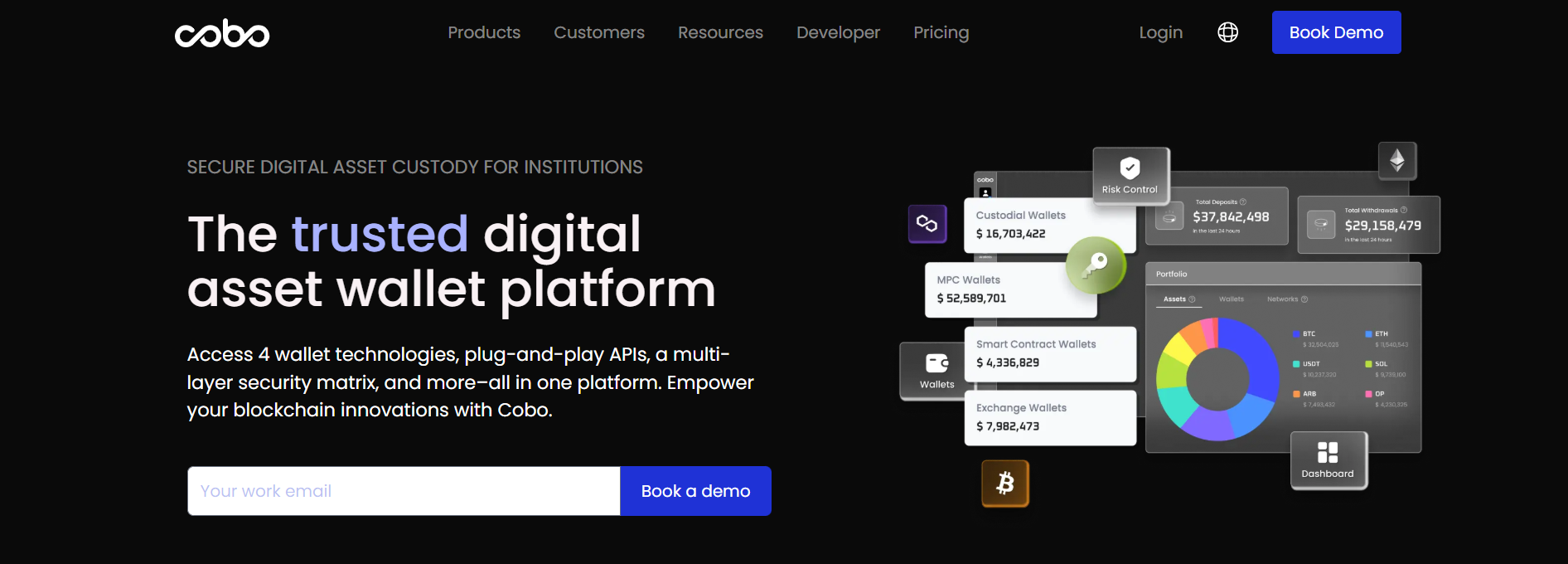
Cobo delivers self-hosted custody and wallet infrastructure tailored for stablecoin payments in B2B and remittances.
- Security Features: Multi-layer matrix with SOC 2 Type II, ISO 27001, integrated AML/KYT (Chainalysis/Elliptic), customizable policy engine, and 90-95% cold storage using MPC wallets.
- Speed and Automation: High-frequency payments via token sweeping, address rotation, instant onboarding, and 24/7 support.
- Multi-Chain Support: 80+ blockchains with 3,000+ tokens supported.
- Stablecoin Compatibility: Broad token coverage includes major stablecoins like USDC, USDT, and EURC.
- Enterprise Strengths: Ideal for sovereignty-focused businesses managing billions in assets through API integrations.
Pros and Cons of Cobo
- Pros:
- Full self-custody eliminates third-party risks.
- Extensive chain support for cost optimization.
- Strong compliance tools for regulated environments.
- Cons:
- Requires technical expertise for self-hosted setup.
- Less focus on merchant-facing integrations compared to Stripe.
2. Circle

Circle issues regulated stablecoins and provides rails for global payments.
- Security Features: Licenses in 46 U.S. states, MiCA (EU), FCA (UK); full 1:1 reserves with third-party audits.
- Speed and Automation: Near-instant settlements under 500ms, 24/7 real-time transfers.
- Multi-Chain Support: 30 networks including Ethereum, Solana, Avalanche; CCTP for cross-chain.
- Stablecoin Compatibility: Primary focus on USDC ($75 billion cap) and EURC ($361 million cap).
- Enterprise Strengths: Suited for treasury and cross-border flows with banking integrations; lifetime USDC volume exceeds $50 trillion.
Pros and Cons of Circle
- Pros:
- Highest regulatory compliance and transparency.
- Seamless cross-chain liquidity.
- Strong institutional partnerships.
- Cons:
- Limited native support for USDT.
- Ecosystem bias toward own-issued stablecoins.
3. Fireblocks
Fireblocks offers enterprise orchestration for stablecoin flows.
- Security Features: MPC key management, SOC 2 Type II, ISO 27001, CCSS Level 3, automated sanctions screening.
- Speed and Automation: Real-time rebalancing; processes $200 billion monthly stablecoin volume.
- Multi-Chain Support: 120+ blockchains and 1,000+ assets.
- Stablecoin Compatibility: Broad support including USDC, USDT, PYUSD via self-serve tools.
- Enterprise Strengths: Powers multi-rail settlements for institutions serving billions of users.
Pros and Cons of Fireblocks
- Pros:
- Massive scale and volume handling.
- Neutral across stablecoins.
- Comprehensive compliance for global ops.
- Cons:
- Integration may require expertise.
- Higher focus on institutional vs. retail merchants.
4. Stripe
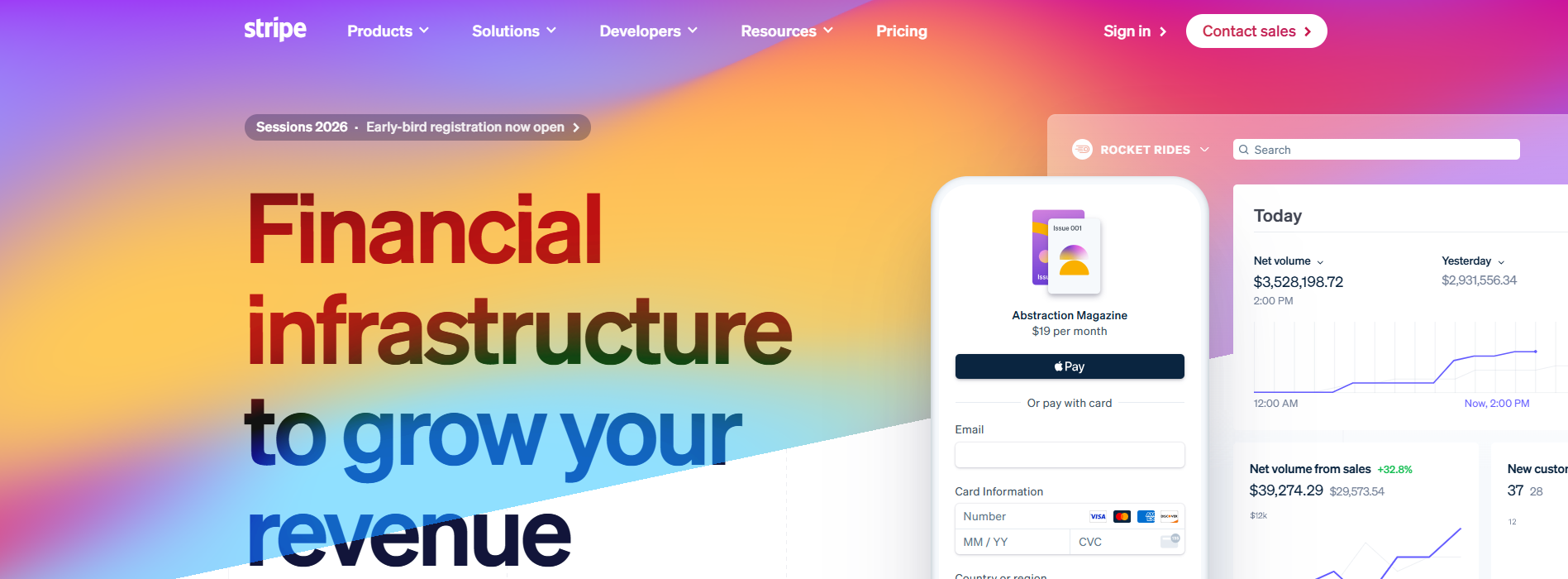
Stripe integrates stablecoins into merchant and remittance flows.
- Security Features: Radar fraud detection, high authorization rates (~90%), institutional-grade reserves.
- Speed and Automation: Instant payouts and 24/7 global settlements.
- Multi-Chain Support: 8+ blockchains via Tempo L1 and Financial Accounts.
- Stablecoin Compatibility: Core USDC support with broad majors.
- Enterprise Strengths: Excels in e-commerce, corporate cards, and remittances.
Pros and Cons of Stripe
- Pros:
- Seamless merchant integrations.
- Fraud prevention and no chargebacks.
- Global expansion tools.
- Cons:
- Fewer chains than specialized providers.
- Less emphasis on self-custody.
5. Coinbase

Coinbase focuses on USDC-centric merchant and ecosystem tools.
- Security Features: Real-time validation, no chargebacks, public-company compliance.
- Speed and Automation: Instant settlements (~200ms on Base), 1% fees via Onchain Protocol.
- Multi-Chain Support: Selective (Base, Ethereum, Polygon).
- Stablecoin Compatibility: Primary USDC with auto-conversions; limited others.
- Enterprise Strengths: Strong for checkouts and plugins like Shopify.
Pros and Cons of Coinbase
- Pros:
- Easy USDC integrations and conversions.
- Merchant-friendly with e-commerce focus.
- Reliable public-company oversight.
- Cons:
- Limited chain and stablecoin variety.
- Selective ecosystem bias.
Comparative Analysis: Head-to-Head Breakdown

Emerging Trends and Future Outlook for Stablecoin Payments in 2026 and Beyond
- Stablecoin regulations like the GENIUS Act and MiCA mandate full reserves and audits, boosting institutional trust.
- Technological shifts include AI-driven automation and non-custodial sovereignty.
- Market growth projects stablecoin cap toward higher levels with 30-40% CAGR potential.
- Challenges around interoperability are easing via cross-chain protocols, while focus remains on regulated issuers for stability.
How to Choose the Right Provider for Your Business
Follow this step-by-step guide to select the optimal provider:
- Assess Your Needs: Determine primary use case (e.g., remittances, treasury, merchant sales) and volume requirements.
- Evaluate Core Criteria: Score providers on security certifications, settlement speed, chain support, and stablecoin coverage.
- Check Compliance Fit: Ensure alignment with regulations like GENIUS Act or MiCA, especially for cross-border ops.
- Test Scalability and Integrations: Review API ease, automation features, and real-world volume handling (e.g., $200B monthly for Fireblocks).
- Compare Costs and Risks: Factor fees, custody model (custodial vs. non-custodial), and vendor lock-in risks.
- Pilot and Onboard: Start with demos or sandboxes; prioritize providers with fast integration and support.
- Monitor and Optimize: Post-launch, track performance and switch if needs evolve (e.g., add chains).
Recommendations:
Fireblocks or Circle for large-scale institutions; Cobo for self-custody; Stripe or Coinbase for merchants.

Conclusion
In 2026, providers like Cobo, Circle, Fireblocks, Stripe, and Coinbase deliver secure, efficient stablecoin infrastructure.
These tools transform payments with speed, cost savings, and global reach. Enterprises adopting them gain competitive advantages in treasury and commerce.
Explore demos today to future-proof your operations.
Read Next:
- Best Cross-Chain Stablecoin Bridges for 2026
- Best Stablecoins for Cross-Border Payments in 2025
- The Role of Stablecoins in Monetary Policy Transmission
FAQs:
1. What are the most reliable stablecoin payment providers in 2026?
Top providers include Circle (regulated issuer), Fireblocks (institutional scale), Cobo (self-custody), Stripe (merchant focus), and Coinbase (USDC integrations), chosen for proven security and compliance.
2. Which stablecoin is best for enterprise payments?
USDC offers strong regulation and transparency ($75B cap), while USDT provides highest liquidity ($187B cap); choice depends on compliance needs.
3. How do stablecoin providers ensure security?
They use MPC wallets, SOC 2/ISO certifications, cold storage, AML screening, and full reserve audits under frameworks like GENIUS Act.
4. What is the difference between custodial and non-custodial providers?
Custodial (e.g., Circle) hold assets for ease; non-custodial (e.g., Cobo) give full key control for sovereignty.
5. Are stablecoins regulated in 2026?
Yes, U.S. GENIUS Act mandates reserves/audits; EU MiCA enforces compliance, driving safer adoption.
6. How fast are stablecoin transactions compared to traditional wires?
Settlements occur in seconds to minutes (e.g., <500ms with Circle), versus days for wires, with 24/7 availability.
Disclaimer:
This content is provided for informational and educational purposes only and does not constitute financial, investment, legal, or tax advice; no material herein should be interpreted as a recommendation, endorsement, or solicitation to buy or sell any financial instrument, and readers should conduct their own independent research or consult a qualified professional.