Table of Contents
There is a reason almost no SaaS product has a $5 plan, and it is not that nobody would buy one. It is that the payment rail eats the price.
A $5 charge on standard US card pricing costs 2.9% plus $0.30, which is $0.445, or just under nine percent of the sale. Drop the price to $3 and the effective rate passes thirteen percent, which is why pricing pages tend to start around $9 and go up.
Stablecoin rails remove the fixed component of that fee, and the question is whether removing it is enough. The honest answer is that it changes the arithmetic and leaves the harder problem untouched.
The fixed fee is what kills small plans, not the percentage. Removing it makes a $5 price possible, and makes it no more profitable to support.
Key Takeaways
- Fixed fees break small tickets. A $5 card charge loses almost nine percent.
- On-chain fees scale with size. Percentage pricing leaves small payments intact.
- Support costs do not shrink. A $5 customer costs what a $50 one does.
- Prepaid credits beat tiny charges. One payment funds many small deductions.
- Small prices buy entry, not margin. Treat them as acquisition spending.
Why Small Plans Barely Exist on Cards
Card pricing is built around a fixed component that assumes a meaningful basket, and SaaS inherited that assumption without choosing it.
At $50 the fixed thirty cents is negligible. At $5 it is six percent on its own, and the percentage sits on top of it. The pricing table most SaaS companies land on is therefore not a statement about value, since it is partly a statement about what the payment rail makes survivable.
Failed payments make it worse, because the cost of recovering a declined card does not scale down with the amount. A dunning sequence that spends two emails and a support reply to rescue a $5 renewal has spent more than the renewal is worth.
What to note: calculate the effective fee rate for every plan you sell, because the smallest plan is usually the one quietly funded by the largest.
What the Numbers Look Like On-Chain
The structure of the fee is what changes, and it changes in exactly the place that small plans need.
Processor pricing for stablecoin payments is percentage-only. At 1.5% a $5 payment costs seven and a half cents rather than forty-four, which turns an unworkable plan into a merely thin one. Receiving directly to a wallet on a low-cost network pushes the cost down to a fraction of a cent, since the only charge is the network fee.
Per-call infrastructure is priced in the same spirit. Coinbase's x402 facilitator settles USDC payments with a free monthly allowance and a tenth of a cent per transaction after it, which is pricing designed for payments measured in cents rather than dollars.
What does not change is how the payment is triggered. Customers push stablecoin payments rather than being charged automatically, and our guide to stablecoin subscription models covers the four ways teams solve that, each of which matters more at $5 than at $500.
What to note: the fee gap at small ticket sizes is proportionally enormous, which is the opposite of the picture at enterprise ticket sizes.
The Cost That Refuses to Shrink
Fees were never the whole economics of a cheap plan, and this is where most small-plan experiments quietly fail.
A $5 customer sends the same support tickets as a $50 customer. They ask the same onboarding questions, hit the same bugs, and need the same documentation, and none of those costs are indexed to what they pay.
Stablecoin billing adds a second line that cards did not have. Payments arrive attached to addresses rather than customer records, and matching them is work that exists per payment rather than per dollar, so a thousand small payments cost more to reconcile than ten large ones.
The sequencing problem compounds it. A customer who forgets to push a $5 renewal is worth chasing for exactly zero minutes, which means the plan has to be designed so that chasing is unnecessary rather than cheap.
What to note: any small plan needs to be self-serve end to end, because one human interaction per year erases a year of revenue.
What a $5 Price Is Actually For
The companies that run cheap plans successfully almost never run them for the margin.
A small price is a threshold. It converts an undecided visitor into a paying customer, establishes a payment relationship, and creates the account that later upgrades, which is the same job a trial does without the awkward expiry conversation.
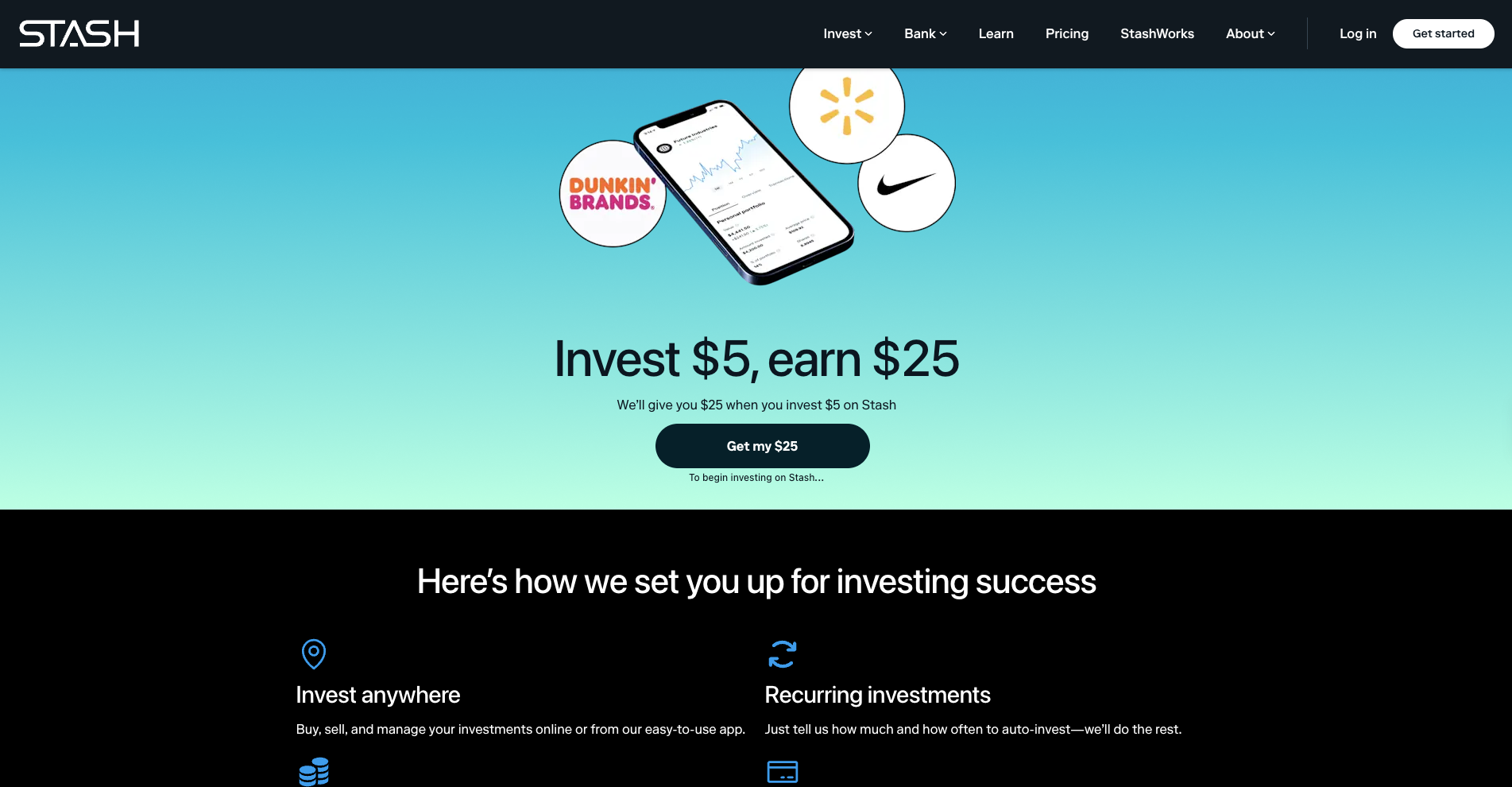
Consumer fintech is unusually honest about this arithmetic. An offer to invest $5, earn $25 spends several times the first deposit to win it, because the deposit is the conversion event rather than the revenue. Nobody models the five dollars as income.
Read against that, a cheap SaaS tier belongs in the acquisition budget rather than the revenue plan. It competes with the free tier and the trial, not with the paid plans, and our piece on stablecoin free trials covers the same conversion question from the other direction.
What to note: if the small plan is not producing upgrades, lowering its price will not fix it, and removing it probably will.
Price Points Compared
| Price | Card fee at 2.9% plus $0.30 | Stablecoin at 1.5% | Verdict |
|---|---|---|---|
| $1 | $0.33, about 33% | $0.015, about 1.5% | Impossible on cards, viable only as credits on-chain |
| $5 | $0.445, about 8.9% | $0.075, about 1.5% | Workable if fully self-serve |
| $9 | $0.56, about 6.2% | $0.135, about 1.5% | The usual floor on cards for a reason |
| $49 | $1.72, about 3.5% | $0.735, about 1.5% | Fee structure stops being the deciding factor |
The pattern in the right-hand column is the useful part. On cards the effective rate moves by a factor of nine across the table, while on-chain it does not move at all.
What to note: flat percentage pricing is what makes small tickets possible, so any processor that adds a fixed minimum removes the advantage entirely.
Where Small Payments Actually Work
1. Prepaid credits instead of recurring charges
One payment of $20 funds forty deductions of fifty cents, with the reconciliation cost paid once. This is the structure most usage-priced products land on, and it sidesteps the push problem completely.
2. Per-call API and agent pricing
Where the buyer is software rather than a person, the payment can happen per request without anyone remembering to send it. Pricing per call only makes sense if the settlement cost is a fraction of a cent, which is precisely the case the newer protocols were built for.
3. Annual rather than monthly at the low end
A $60 annual payment carries one twelfth of the operational burden of twelve $5 payments. The discount needed to persuade someone usually costs less than the reconciliation and chasing it removes.
4. Add-ons attached to an existing relationship
A small charge against a customer who already pays is cheap, because the account, the record, and the address are already in place. The expensive part of a small plan is acquiring and maintaining a new one.
5. Recognise it correctly whichever shape you pick
Prepaid credits and annual payments are liabilities until they are consumed, which changes what the revenue line actually says, as our guide to revenue recognition works through in detail.
What to note: every workable pattern here reduces the number of payments rather than the size of them.
Risks and Limitations
- Processor caps and minimums apply: pricing advantages disappear if a provider sets a floor per transaction, and Stripe caps stablecoin payments at $10,000 per customer transaction at the other end.
- Self-custody shifts the work: the sub-cent cost of direct receipt comes with reconciliation, screening, and key management handled in-house.
- Push billing hurts most at the low end: a forgotten $5 renewal is not worth recovering, so churn looks structurally different from card churn.
- Network fees are not fixed forever: congestion on a cheap chain can make a tiny payment uneconomic on a given day.
- Support economics are unchanged: no payment rail reduces the cost of answering a question, which is the real ceiling on cheap plans.
Conclusion
Can a SaaS company make $5 plans work on stablecoin rails? The fee arithmetic says yes, because the fixed component that made small tickets absurd on cards simply is not there.
The operational arithmetic is less generous. Support, reconciliation, and renewal handling cost the same at five dollars as at fifty, so a small plan only survives when it is entirely self-serve and designed to produce few payments rather than many.
The better framing is to stop treating a cheap tier as revenue. It is an acquisition instrument that happens to collect money, and stablecoin rails make it affordable to run rather than profitable to keep.
Read Next:
FAQs:
1. Why do card fees make cheap SaaS plans unviable?
Because the fee has a fixed component. At standard US pricing of 2.9% plus $0.30, a $5 charge loses about nine percent and a $1 charge loses about a third, so the smallest plans carry the worst economics on the pricing page.
2. How much cheaper are stablecoin payments at small amounts?
Substantially, because the pricing is percentage-only. A $5 payment costs around seven and a half cents at a 1.5% processor rate, and a fraction of a cent when received directly on a low-fee network.
3. Does that mean micro-subscriptions are now practical?
Only in the right shape. Thousands of tiny recurring charges create reconciliation and renewal work that scales per payment, so prepaid credits, annual payments, and per-call pricing tend to work where monthly micro-charges do not.
4. What is the real cost of a cheap plan?
Support and operations. A customer paying five dollars asks the same questions as one paying fifty, which is why a low tier has to be completely self-serve to break even.
5. Should a small plan exist at all?
Only if it produces upgrades. A cheap tier is best understood as acquisition spending that collects a little revenue, and if it is not feeding the paid plans it is usually cheaper to remove it than to reprice it.
Disclaimer:
This content is provided for informational and educational purposes only and does not constitute financial, investment, legal, or tax advice; no material herein should be interpreted as a recommendation, endorsement, or solicitation to buy or sell any financial instrument, and readers should conduct their own independent research or consult a qualified professional. Processor rates, network fees, and transaction limits change frequently; verify current pricing with each provider before building a plan around it.