Table of Contents
Security guidance for stablecoin payments is written almost entirely in the preventive mood. Verify the address, confirm by voice, use an allowlist, send a test transfer.
None of that helps the finance manager staring at a confirmed transaction hash for $80,000 that left fourteen minutes ago. At that moment the only useful question is what can still be influenced, and in what order.
The answer is more than nothing and less than most people hope. Recovery is unlikely, containment is achievable, and the difference between the two outcomes is usually decided inside the first hour.
Irreversible describes the transaction, not the incident. The tokens cannot be recalled, but the attacker's access, the next payment, and the chance of a freeze are all still in play.
Key Takeaways
- Assume the attacker still has access. The second payment is the preventable one.
- Issuers freeze on law enforcement requests. A company email will not trigger one.
- Exchange deposits are the realistic chance. Act before the funds are withdrawn.
- Report immediately, not after investigating. Delay costs more than incomplete details.
- Containment includes mailboxes and keys. The payment was the symptom.
The First Decision Is Not About the Money
The instinct is to chase the transaction. The correct first move is to assume the conditions that produced it are still live.
Most business losses of this kind begin with a compromised or spoofed email thread rather than a broken wallet, which means the attacker may still be reading the company's mail while the response is being organised. Any discussion of the incident inside that mailbox is intelligence handed straight to them.
Move the conversation to a channel the attacker cannot see, then freeze the outbound payment queue entirely. Our breakdown of why businesses lose stablecoins shows how often the same access produces a second payment while the first is still being investigated.
What to note: no payment leaves the company until the incident is scoped, including payments that look routine and were approved before the fraud was discovered.
What Can Actually Be Frozen, and by Whom
Stablecoins differ from a bank wire in one way that matters here, which is that the issuer can disable an address.
Both major issuers hold that power and use it very differently. Tether says its cooperation with law enforcement has led to freezing more than $4.4 billion in assets, working with over 340 agencies across 65 countries, while Circle's USDC blacklist footprint is smaller by an order of magnitude and the company states it acts when legally required or at the request of law enforcement.
The practical consequence is the part most victims learn too late. A freeze is almost never triggered by a company writing to the issuer directly, because issuers act on law enforcement and court requests rather than on a customer's account of what happened.
The other realistic intervention is the destination. If the stolen funds move to an exchange or a custodial service, that venue can freeze the deposit, and its compliance team responds to a credible report with a transaction hash faster than almost anyone else in the chain.
What to note: watch the destination address on a block explorer while the report is being filed, because the window closes when the funds are withdrawn or bridged.
The Notification Order That Matters
Sequence matters more than completeness in the first hour, and the common mistake is investigating internally before telling anyone outside.
Law enforcement comes first, because the issuer freeze path and any future seizure both run through it. In the US that means the FBI's internet crime reporting channel alongside a local report; elsewhere it means the national cybercrime or fraud reporting body. File with the transaction hash, the destination address, the chain, the amount, and the timestamp, and update the report later rather than waiting for a full picture.
The exchange or custodial venue is second if the funds have landed somewhere identifiable. The issuer is third, as a supporting record rather than an expectation. The insurer is fourth, since crime and cyber policies frequently carry notification deadlines measured in days.
The counterparty is the one people forget. If a supplier's email was the vector, their other customers are being targeted with the same thread, and the question of who bears the loss is decided partly by how each side behaved once the fraud was known.
What to note: write the reference numbers from every report into one timeline document, because insurers and investigators both ask for the sequence later.
Contain the Access, Not Only the Funds
The payment is the visible symptom, and treating it as the whole incident is how companies get hit twice in a week.
Start with the mailbox that carried the instruction. Check for forwarding rules, inbox rules that hide replies from a supplier, new app passwords, and OAuth grants, then reset credentials and re-enroll multi-factor authentication rather than simply changing a password.
Then rotate what touches money. Wallet signers, API keys for payment providers, allowlist entries added in the last thirty days, and any standing approval that lets one person release funds alone all need review in the same session.
Finally, correct the record that caused it. If a vendor's payment details were changed in the accounting system, restore the verified address and mark the entry so the next person does not copy the attacker's details from history.
What to note: the attacker usually keeps a quiet persistence mechanism, so a password reset without a rules and token audit is not containment.
The First Hour, Step by Step
| Window | Action | Why it is in this slot |
|---|---|---|
| 0 to 5 minutes | Halt all outbound payments, move comms off the affected channel | Stops the second loss while the first is still being understood |
| 5 to 15 minutes | Capture the hash, destination, chain, amount, and timestamp | Every external party will ask for exactly this set |
| 15 to 30 minutes | File the law enforcement report and contact the destination venue | Both paths depend on the funds not having moved again |
| 30 to 45 minutes | Reset mailbox access, audit rules, rotate keys and signers | Access is what turns one incident into several |
| 45 to 60 minutes | Notify the counterparty, the insurer, and internal leadership | Notification deadlines and shared exposure start running immediately |
The slots are deliberately short because the useful version of this document is one page taped near the person who releases payments. A runbook that requires reading cannot be followed by someone who has just lost eighty thousand dollars.
What to note: rehearse the first fifteen minutes once, because the hash and destination are routinely lost in the panic of the first five.
Rebuilding the Payment Path
After containment comes the question nobody wants to ask, which is whether the payment needed to be irreversible in the first place.
Finance teams tend to apply one rail to every outflow, and that is what makes a single compromised thread so expensive. Supplier settlements across borders may genuinely need the speed, while recurring software subscriptions, advertising spend, and travel do not.
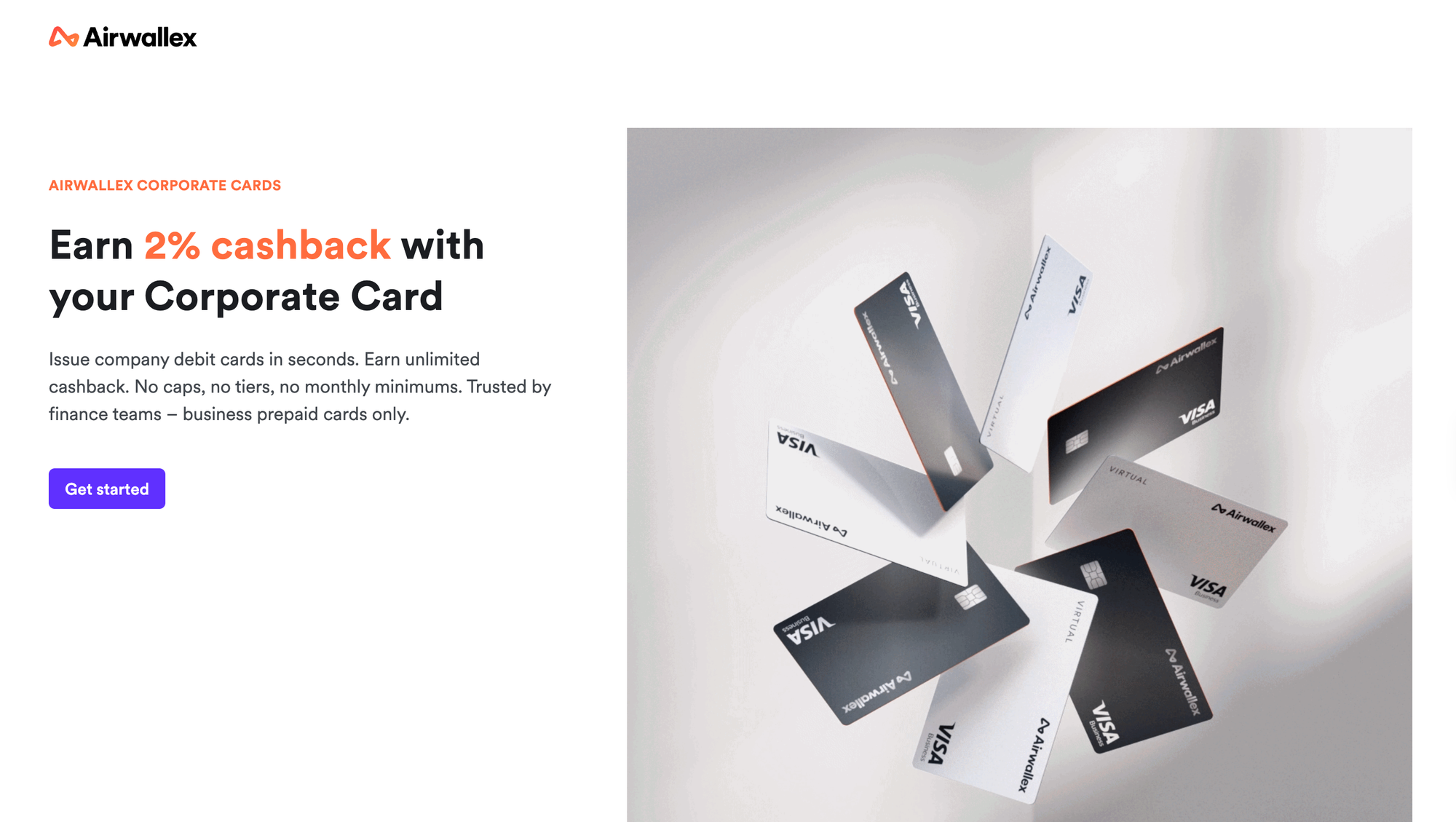
Moving the second category onto a business account with cards, limits, and approval rules reintroduces the control that on-chain payments removed, because a disputed card charge has a process behind it. Airwallex pairs that structure with 2% cashback on eligible transactions, which turns a security decision into one that also returns something on the spend it covers.
The remaining on-chain payments then deserve the stricter treatment, meaning allowlists, dual approval, test transfers, and out-of-band confirmation of every address change. Training helps here too, and our catalogue of stablecoin scam patterns is more useful to staff than a policy document nobody reads.
What to note: sort outflows by whether reversibility is worth paying for, rather than treating the rail as a company-wide decision.
Risks and Limitations
- Recovery remains unlikely: most stolen stablecoins are moved, swapped, or bridged within minutes, and a freeze reaches only funds that have stopped somewhere identifiable.
- Issuer policies differ sharply: freeze behaviour is not a feature a victim can rely on, and the two largest issuers apply it at very different scales.
- Frozen is not returned: a blacklisted balance is immobilised rather than reissued to the victim, and release usually requires a court process.
- Insurance may not respond: crime policies often treat authorised-but-induced payments differently from theft, and notification deadlines are strict.
- Reporting duties vary: depending on jurisdiction and data exposure, an incident may trigger regulatory notification obligations beyond the fraud report itself.
Conclusion
What should a business do in the first hour after a stablecoin payment is stolen? Stop the next payment, capture the transaction details, report to law enforcement and the destination venue, and treat the mailbox and keys as compromised until proven otherwise.
The chance of getting the money back is small and depends almost entirely on whether the funds stopped at a venue that can freeze them. The chance of avoiding a second loss is high and depends entirely on how fast access is cut.
Write the sequence down before it is needed. An irreversible payment rail is a reasonable thing to use and an unreasonable thing to use without a rehearsed answer for the hour after something goes wrong.
Read Next:
FAQs:
1. Can a stolen stablecoin payment be reversed?
No. The transaction itself is final once confirmed, and no intermediary can recall it. What remains possible is freezing the tokens at the destination through the issuer or an exchange, which immobilises them rather than returning them.
2. Can I ask Tether or Circle to freeze the thief's address?
You can report it, but issuers act on law enforcement and legal requests rather than on victim reports. Tether describes its freezes as coordinated with agencies it works with across dozens of countries, and Circle states it acts when legally required or at law enforcement request, so the police report is the step that matters most.
3. Who should be contacted first?
Law enforcement, because both the freeze path and any later seizure run through that report. The destination exchange follows immediately if the funds have landed somewhere identifiable, then the issuer, the insurer, and the affected counterparty.
4. How long is the window to act?
Minutes rather than hours in most cases, since stolen funds are typically swapped, bridged, or withdrawn quickly. The window stays open only while the balance sits at an address that a venue or issuer can still reach.
5. Does business insurance cover this?
Sometimes, and the distinction that decides it is usually whether the payment was unauthorised or was authorised by an employee who was deceived. Check the policy wording for social engineering cover and for the notification deadline, which often runs from the moment of discovery.
Disclaimer:
This content is provided for informational and educational purposes only and does not constitute financial, investment, legal, or tax advice; no material herein should be interpreted as a recommendation, endorsement, or solicitation to buy or sell any financial instrument, and readers should conduct their own independent research or consult a qualified professional. Reporting obligations, insurance terms, and issuer freeze policies vary by jurisdiction and change over time; confirm the applicable procedure with counsel and your insurer before an incident rather than during one.