
Table of Contents
A SaaS subscription on a card works because the company holds the card on file and charges it every month without asking. The customer does nothing after signing up, which is exactly why subscriptions retain so well.
Stablecoins do not work that way. The customer sends the payment rather than the company taking it, so there is no equivalent of a card on file, and a product that promises stablecoin subscriptions is almost always doing something structurally different from what the word implies.
Subscriptions are a pull model built on top of the card network. Stablecoins are a push model, and most of what gets marketed as stablecoin billing is a push model dressed as a pull one.
Key Takeaways
- Cards are pull, stablecoins are push. That breaks auto-renewal.
- Stripe invoices each cycle. The customer still pays manually.
- Allowances enable true pull billing. With permission risk attached.
- Push billing raises involuntary churn. Forgotten payments look like cancellations.
- Annual prepay sidesteps the problem. For customers who accept it.
The Push Versus Pull Problem
Every payment method sits on one side of a single distinction, and it decides whether recurring billing is easy.
A pull payment is initiated by the merchant. The customer authorises it once, and the merchant draws funds on schedule, which is how cards, direct debit, and ACH debits support subscriptions. A push payment is initiated by the payer each time, which is how wire transfers and stablecoin transfers work.
SaaS economics are built on pull. Revenue renews automatically, churn happens only when a customer actively cancels, and finance teams forecast from that assumption. Push breaks it, because every renewal now requires the customer to do something.
What to note: the question is not whether a provider supports stablecoins for subscriptions. It is which side of this distinction its implementation actually sits on.
What Stripe Billing Actually Does
The most widely available implementation is also the clearest example of the distinction in practice, and our guide to accepting stablecoins on Stripe covers its setup in operational detail.
Stripe Billing supports stablecoins on invoices and subscriptions, but crypto on an invoice works only with the send_invoice collection method, subject to a $10,000 cap. That means each billing cycle generates an invoice, and the customer pays it by sending stablecoins, rather than Stripe drawing funds automatically as it would from a card.
That is a legitimate and useful model. It is also a push model with subscription scheduling around it, priced at 1.5% all-in against 2.9% plus $0.30 for domestic cards.
What to note: the subscription object renews automatically; the payment does not.
Model One: Invoice Every Cycle
This is the default, and for many SaaS companies it is the right answer.
The platform generates an invoice at each renewal and the customer pays it on-chain. It requires no special wallet permissions, works with any wallet, and keeps the customer fully in control of every payment.
The cost is behavioural rather than technical. Every cycle depends on someone at the customer remembering to act, and B2B customers already accustomed to paying invoices handle that well while self-serve users frequently do not. The mechanics of a clean stablecoin invoice are covered in our guide to invoicing in stablecoins.
What to note: this model suits annual B2B contracts far better than monthly self-serve plans.
Model Two: Token Allowances
This is the closest thing to a true pull subscription, and it carries a trade-off most customers will notice.
Token standards let a wallet grant a contract permission to spend a defined amount on its behalf. A subscription contract with that permission can draw the renewal amount each cycle without the customer acting, which restores the automatic renewal that cards provide.
The trade-off is the permission itself. An allowance is standing access to funds, and an unlimited or oversized one is a meaningful security exposure if the contract is compromised. Well-designed implementations cap the allowance at the renewal amount and scope it to a period, which limits the damage but also means the customer has to renew the permission itself.
What to note: ask how the allowance is scoped before relying on it, since that answer decides whether this is convenient or risky.
Model Three: Prepaid Credits
This model avoids recurring payments by changing what the customer buys.
The customer tops up a balance in stablecoins and the SaaS draws down against it as usage accrues. It fits usage-based and metered pricing particularly well, since consumption rather than calendar time determines the charge.
The customer still pushes funds, but less frequently, and a low-balance warning replaces a failed renewal as the thing that prompts action. That is a better experience than a missed invoice, because the product keeps working until the balance actually runs out.
That liability has to sit on a business's books rather than a founder's personal ones. If you are still billing under your own name, you can register your FREE LLC today and have that structure in place before customer balances start accumulating.
What to note: prepaid balances create a liability on your books that recurring invoices do not, which your accountant will want to know about in advance.

Model Four: Annual Prepayment
The simplest solution to a recurring payment problem is to have fewer recurrences.
An annual plan paid upfront in stablecoins reduces twelve push events to one. For B2B SaaS where annual contracts are already common, this is frequently the path of least resistance, and it pairs naturally with a discount for paying in advance.
The limitation is that it moves the problem rather than solving it. The renewal still arrives, just once a year, and a customer who forgets an annual payment represents twelve times the revenue at risk.
What to note: build the renewal reminder sequence before the first annual term ends, not when it does.
Why Churn Behaves Differently
Push billing changes the composition of churn, and SaaS metrics are not built to show it.
On cards, involuntary churn comes mostly from expired or declined cards, and dunning tools recover a large share automatically. On a push model, involuntary churn comes from customers who intended to renew and simply did not send the payment, and there is no card to retry.
That churn looks identical to a cancellation in most dashboards. A customer who forgot and a customer who left produce the same missing payment, which makes it easy to misread a billing problem as a product problem.
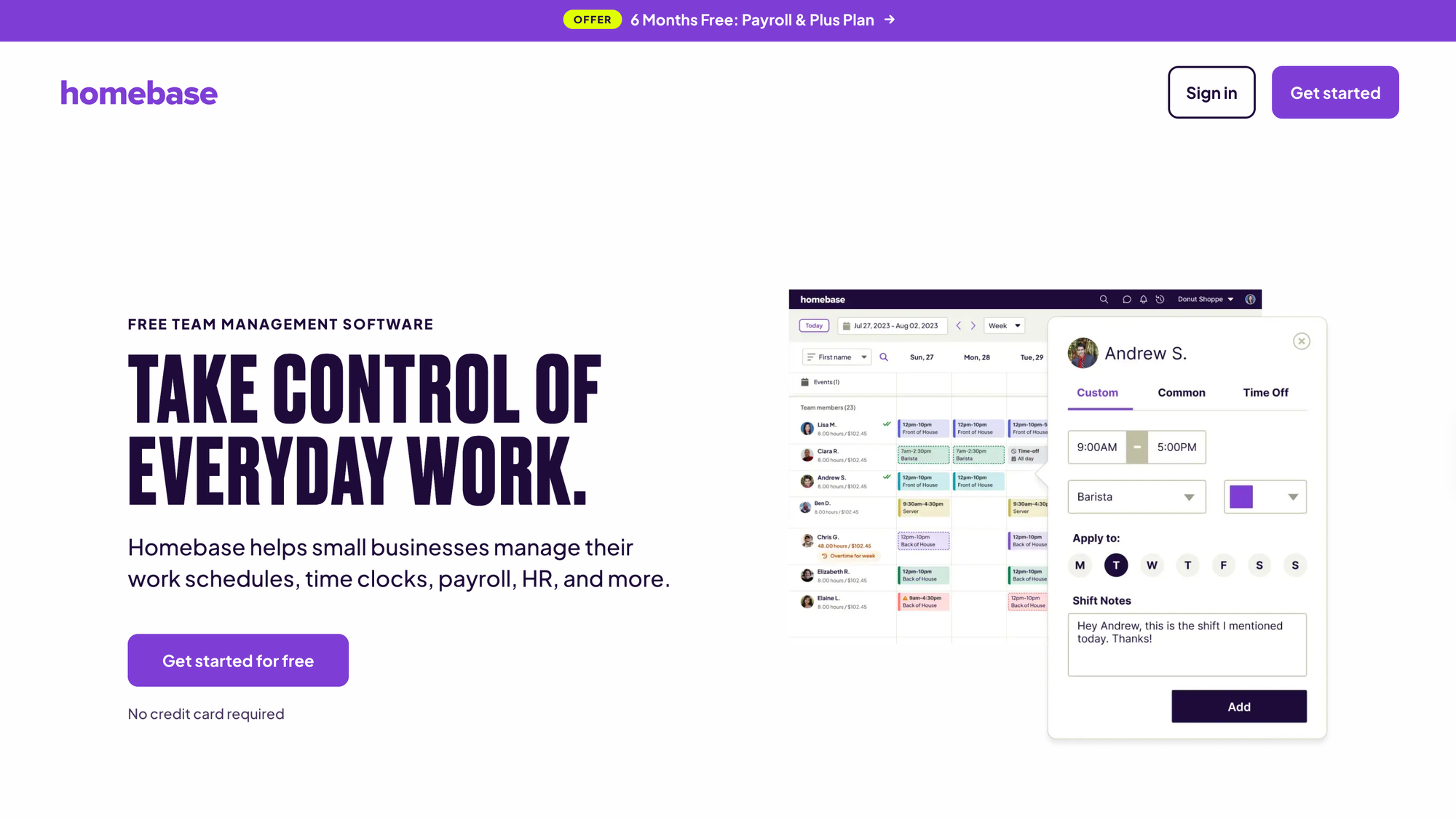
Recovering those missed renewals is manual outreach rather than an automated retry, and on a small team someone has to own it as part of a shift. Free employee scheduling and time tracking for your team makes that ownership explicit, with payroll & HR added when you need it. No card or code required.
What to note: track missed renewals separately from explicit cancellations, or the two will be indistinguishable in your retention data.
Refunds and Failed Payments
Two operational details differ from card billing in ways that support teams need to know before launch.
Refunds on stablecoin payments return as stablecoins to the customer's original wallet rather than as a card credit, so the refund path has to be documented and the customer's wallet has to still be reachable. There are no chargebacks, which removes a fraud cost and also removes the customer's dispute mechanism.
A failed payment is also different. Rather than a declined card to retry, it is usually a payment that was never sent, sent on the wrong network, or sent in the wrong amount, each of which requires a different response.
What to note: write the refund and failed-payment scripts for support before enabling the payment method.
Where This Is Heading
The push model is a limitation of how people pay today rather than a permanent feature of stablecoins.
Agent-driven payments are the clearest example of change. Protocols such as x402 allow software to sign payment authorisations on a user's behalf within defined limits, which restores something close to pull behaviour through delegation rather than through a card network, a pattern our guide to AI agent payments examines alongside the spending controls it requires.
For now, most SaaS companies will run one of the four models above, and the choice depends on customer type rather than technology.
Conclusion
How do SaaS subscriptions work with stablecoins? Not the way card subscriptions do, because stablecoins are pushed by the customer rather than pulled by the company, and that removes the automatic renewal subscriptions depend on.
Four models address it. Invoicing every cycle keeps the customer in control and suits B2B annual contracts. Token allowances restore pull billing at the cost of standing permission risk. Prepaid credits fit usage-based pricing and replace failed renewals with low-balance warnings. Annual prepayment reduces twelve payment events to one.
The practical test is customer type. B2B buyers who already pay invoices adapt easily, while self-serve monthly users are where push billing produces the involuntary churn that looks, in every dashboard, exactly like customers leaving.
Read Next:
FAQs:
1. Can SaaS companies charge subscriptions in stablecoins?
Yes, though usually not the way card subscriptions work. Stablecoins are push payments initiated by the customer, so there is no equivalent of a card on file, and most implementations either invoice each cycle, use scoped token allowances, draw down prepaid credits, or bill annually upfront.
2. Does Stripe support recurring stablecoin payments?
Stripe Billing supports stablecoins on invoices and subscriptions, but crypto on an invoice works only with the send_invoice collection method and a $10,000 cap. That means each cycle generates an invoice the customer pays by sending stablecoins, rather than Stripe drawing funds automatically as it would from a card.
3. What is a token allowance subscription?
A model where the customer grants a subscription contract permission to spend a defined amount from their wallet, letting it draw each renewal without the customer acting. It restores automatic renewal, but the permission is standing access to funds, so well-designed implementations cap it at the renewal amount and scope it to a period.
4. Why does stablecoin billing increase churn?
Because push billing requires the customer to act at each renewal, so customers who intended to renew but forgot to send payment appear in dashboards exactly like customers who cancelled. On cards, dunning tools recover most involuntary churn automatically by retrying the card, which has no stablecoin equivalent.
5. How are refunds handled for stablecoin subscriptions?
Refunds return as stablecoins to the customer's original wallet rather than as a card credit, so the wallet must still be reachable and the refund path should be documented for support. There are no chargebacks, which removes a fraud cost and also removes the customer's formal dispute mechanism.
Disclaimer:
This content is provided for informational and educational purposes only and does not constitute financial, investment, legal, or tax advice; no material herein should be interpreted as a recommendation, endorsement, or solicitation to buy or sell any financial instrument, and readers should conduct their own independent research or consult a qualified professional.