

Table of Contents
Payroll guidance for stablecoins almost always describes a pay run that works. Agree the dollar amount, verify the wallet, send on the named chain, keep the record.
Payroll in practice includes the run that does not work. A decimal lands in the wrong place, a timesheet was approved twice, someone's address changed last month, and the payment confirms anyway.
On a bank rail those mistakes are annoying. On an irreversible rail they become two separate problems at once, one technical and one legal, and the legal one is usually the bigger of the two.
A wrong pay run cannot be recalled, but it can almost always be corrected. The difference is that correction requires the employee's cooperation rather than the bank's.
Key Takeaways
- Nothing on-chain can be reversed. Every correction runs through the recipient.
- Overpayment recovery is governed by wage law. Deduction rules vary by state.
- Underpayment has a statutory clock. Fix it in the same cycle.
- A wrong address is a loss. Wage obligation survives the mistaken payment.
- The real control is the timesheet. Approve hours before anything settles.
Four Ways a Pay Run Goes Wrong
The failures look different on-chain but reduce to four cases, and they do not carry equal consequences.
Overpayment is the most common and the most awkward, because the money is already in someone's wallet and the obligation to return it is governed by employment law rather than payment rules. Underpayment is the opposite, simple to fix and dangerous to delay, since wage statutes care about when workers are paid in full.
The wrong address is the harshest. The tokens are gone, the worker was never paid, and the employer owes the wages anyway, which is the allocation our guide to who bears the loss sets out for business payments generally.
The fourth is the duplicate run, where an approval is pushed twice and every worker receives two payments. It is an overpayment multiplied by headcount, and it arrives with an audit trail showing the employer did it.
What to note: classify the failure before acting, because the right response to an overpayment makes an underpayment worse.
Overpayment Is a Legal Problem Before a Technical One
The instinct is to ask the worker to send the difference back, and that instinct is usually fine. The mistake is assuming the employer can simply take it from the next run.
In the US, federal rules generally allow an employer to recover an overpayment from future wages, while state rules layer on requirements that change the answer in practice. Written notice, the worker's agreement, caps on how much can be deducted from a single cycle, and limits on timing all appear depending on where the person works.
Stablecoins add a wrinkle that catches teams by surprise, because the worker received tokens and the obligation is denominated in dollars. If the person has already converted to local currency, returning the exact amount may cost them a spread and a bad exchange rate, which is a fairness problem long before it is a legal one.
What to note: put the overpayment, the cause, the exact amount, and the proposed repayment schedule in writing on the day it is discovered, and ask rather than deduct.
Underpayment Has a Clock on It
Underpayment is the easier failure to fix and the more expensive one to sit on.
Wage payment laws set when workers must be paid in full, and a shortfall discovered on Friday is not cured by a correction in the next cycle two weeks later. The cheapest response is a same-day top-up, which is one place where the rail genuinely helps, since a second transfer settles in minutes rather than waiting for a banking window.
The constraint is liquidity rather than technology. A team that converts its entire stablecoin balance on payday has nothing left to send when a shortfall appears, which is why the guidance in our guide to pay a small team keeps a buffer and a fiat fallback available every cycle.
What to note: keep enough balance after each run to cover a correction, because the fix is only fast if the funds are still there.
The Fix Sits Upstream of the Payment
Every correction described above is expensive, awkward, or both, and all of them originate before the payment is ever built.
The source is almost never the wallet. It is a shift someone covered and nobody logged, a timesheet approved twice, overtime calculated by hand, or a rate changed in one system and not another. The payment layer faithfully executes whatever number the hours produced.
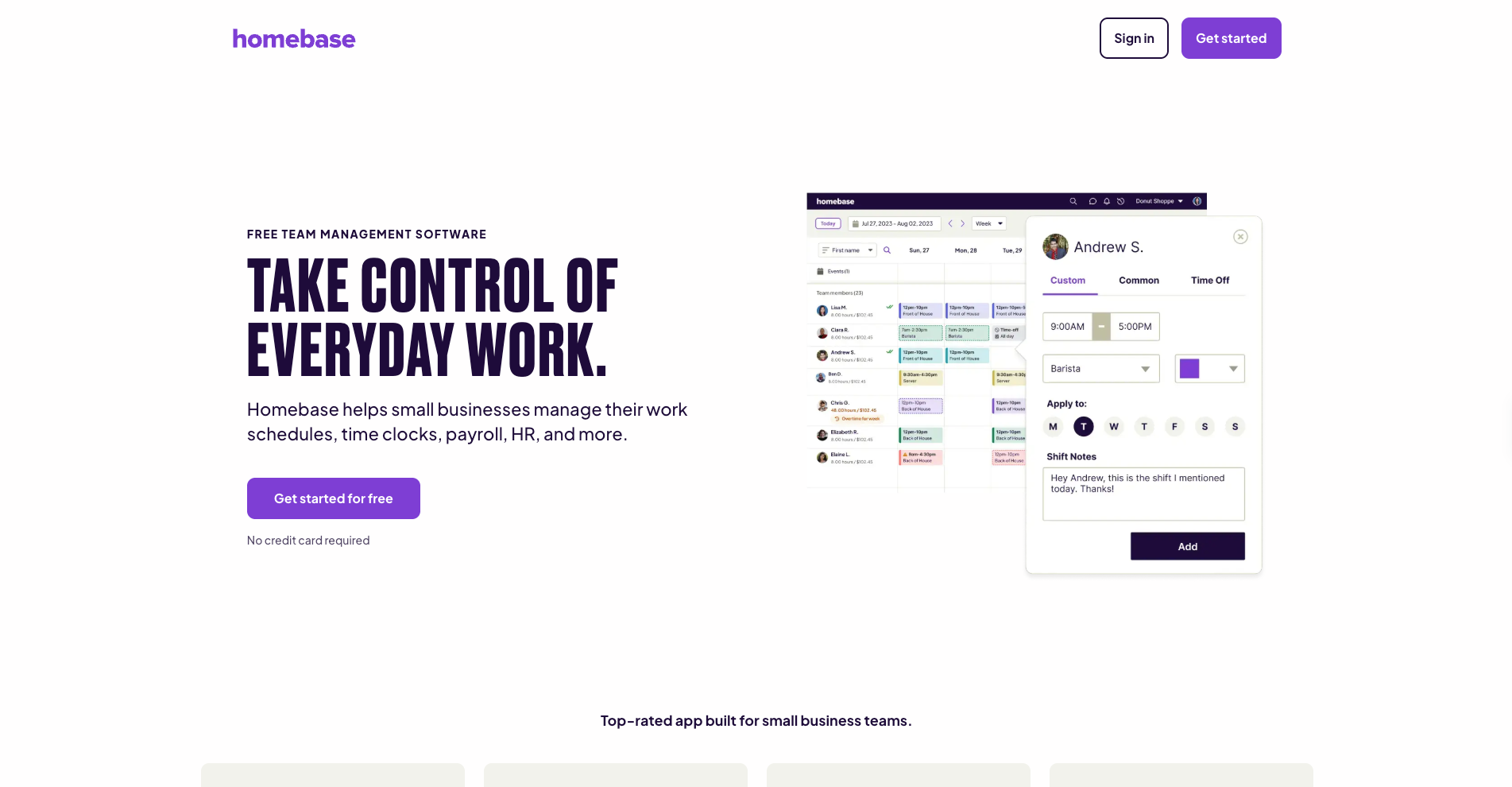
That is the argument for putting the time record on a system rather than a spreadsheet before moving any part of settlement on-chain. Free employee scheduling and time tracking for your team means hours are approved before anything is calculated, with payroll and HR added when you need them, and no card or code required to start the first cycle.
The sequencing rule is simple enough to state in one line. If you cannot produce an approved, dollar-denominated figure for every worker before the run, the problem is not the payment rail.
What to note: a disputed timesheet settled in an irreversible token converts a five-minute conversation into a recovery negotiation.
What Can Be Undone, and What Cannot
| Failure | Reversible | Correction path | Prevention |
|---|---|---|---|
| Overpayment to the right worker | No, but recoverable | Written notice, agreed repayment or future deduction where permitted | Approved hours and a second review of the run total |
| Underpayment | Not applicable | Same-day top-up transfer, corrected pay statement | Retained balance after every run |
| Wrong address | No | Pay the worker again, pursue the loss separately | Allowlists and a small test transfer |
| Wrong network | Sometimes | Recoverable only if you control the destination address | Chain named in the payment record |
| Duplicate run | No | Individual recovery conversations with every worker paid twice | Dual approval and a per-cycle run identifier |
Read the second column and the pattern is clear. One of the five is technically fixable, and the other four are resolved through people rather than through the chain.
What to note: the prevention column costs almost nothing, while the correction column costs a week of someone's time in every row.
A Correction Runbook
1. Stop the next run before anything else
If the cause is systemic, such as a rate error or a duplicated approval, the following cycle will repeat it. Freeze scheduled payments until the cause is identified rather than after the correction is agreed.
2. Fix the dollar record, not the token record
Wages, withholding, and pay statements are dollar obligations, so the correction belongs in the payroll record first. The transfer that follows is the delivery of a corrected number, not the correction itself.
3. Tell the worker the same day
People spend what arrives, and an overpayment discovered quietly in week one becomes a much harder conversation in week three. Early notice also supports whatever recovery route the local rules allow.
4. Agree the repayment in writing
Record the amount, the cause, the schedule, and the method, including who absorbs any conversion cost if the worker already off-ramped. A signed agreement is the difference between a recovery and a dispute.
5. Close the loop in the documentation
Amend the pay statement, note the correction against the cycle, and check whether the error crosses a tax year, which complicates withholding and reporting. The record-keeping discipline in our guide to payroll in USDC applies to corrections exactly as it does to the original run.
What to note: an error corrected without a paper trail is indistinguishable from an unexplained payment during an audit.
Risks and Limitations
- Recovery depends on cooperation: an irreversible payment to a worker who declines to return it leaves only employment and civil remedies.
- Deduction rules vary widely: what is permitted from a future paycheck differs by state and by country, and guessing creates a second violation.
- Conversion costs complicate fairness: a worker who already converted may need to buy back tokens at a worse rate to repay the exact amount.
- Tax years do not forgive timing: an overpayment recovered after year end raises withholding and reporting questions the payroll system may not handle automatically.
- Departed workers are the hard case: recovery from someone who has left usually depends on final-pay rules and, failing that, a civil claim.
Conclusion
What happens when a stablecoin payroll payment is wrong? The payment stands, and the correction becomes a conversation governed by wage law rather than a reversal processed by a bank.
Underpayments are cheap to fix if the balance to fix them is still there. Overpayments and duplicate runs are recoverable only through notice, agreement, and whatever deduction the local rules permit, and a payment to the wrong address is simply a loss sitting alongside wages that are still owed.
None of that argues against settling wages in stablecoins. It argues for approving the hours, reviewing the total, and keeping a buffer, because the rail executes the number it is given and offers no opinion about whether the number is right.
Read Next:
FAQs:
1. Can a stablecoin payroll payment be reversed?
No. Once confirmed, the transfer is final and no intermediary can recall it, so every correction depends on the recipient returning funds or on an adjustment to a future payment where local rules allow one.
2. Can an employer deduct an overpayment from the next paycheck?
Sometimes, and the rules are local. In the US, federal law generally permits recovery from future wages while state law adds notice requirements, consent, and caps on the amount deducted per cycle, so the specific jurisdiction decides what is allowed.
3. What if the payment went to the wrong wallet address?
The wages remain owed and must be paid again, because the worker never received them. The mistaken transfer becomes a separate loss, recoverable only if the destination is controlled by someone willing or compelled to return it.
4. What if the worker already converted the overpayment to local currency?
The obligation is still the dollar amount, but the practical cost of returning it has risen because of the spread and the rate at the time of repayment. Agree in writing who absorbs that difference rather than leaving it to the final transfer.
5. How can these errors be prevented?
Almost all of them originate in the time record rather than the payment. Approved hours, a reviewed run total, dual approval, allowlisted addresses, and a small test transfer to any new destination remove the majority of the failure modes before a payment is ever built.
Disclaimer:
This content is provided for informational and educational purposes only and does not constitute financial, investment, legal, or tax advice; no material herein should be interpreted as a recommendation, endorsement, or solicitation to buy or sell any financial instrument, and readers should conduct their own independent research or consult a qualified professional. Wage deduction, final pay, and payroll correction rules vary significantly by jurisdiction; confirm the applicable requirements with qualified counsel before recovering an overpayment.