

Table of Contents
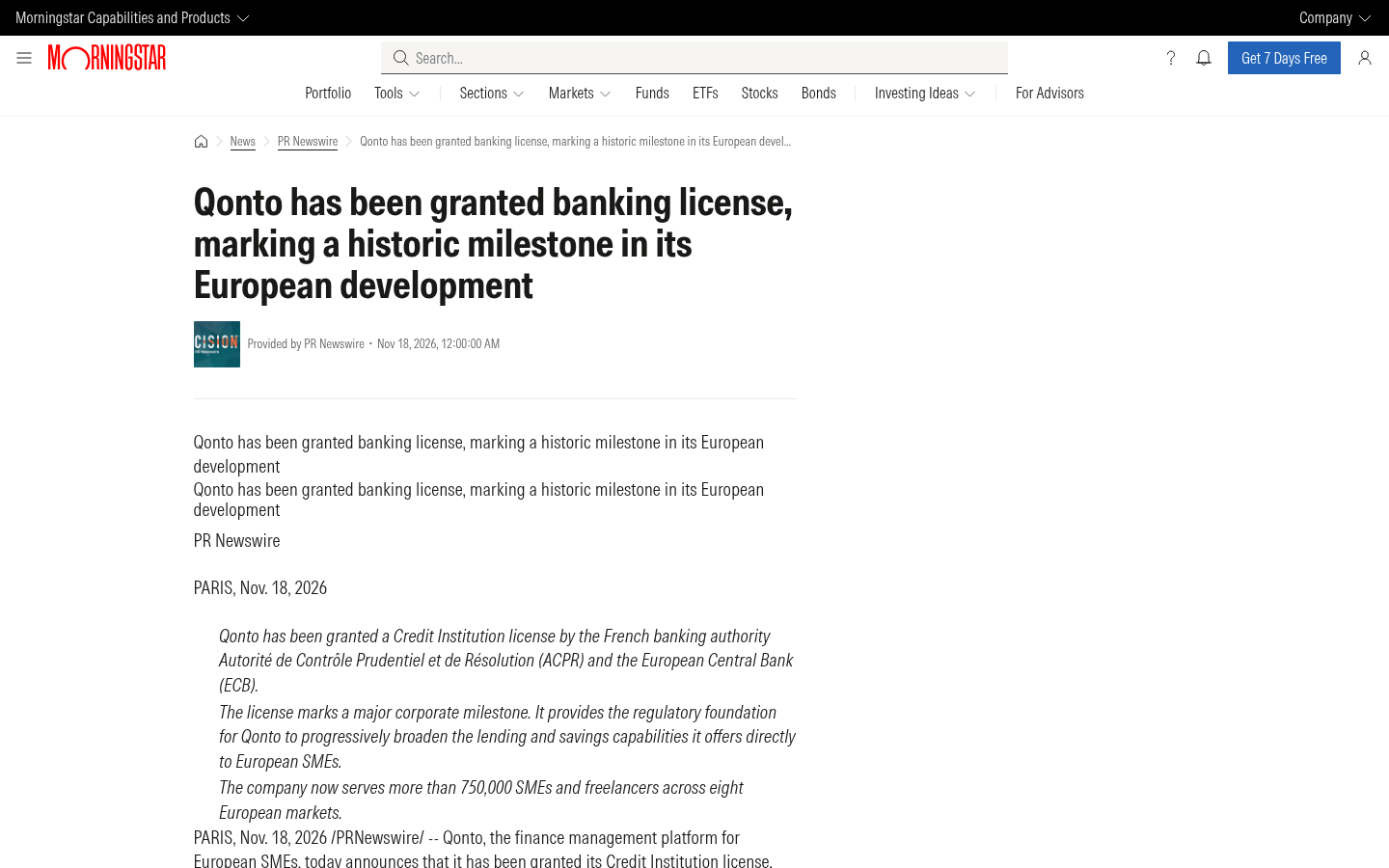
Qonto, which serves more than 750,000 small businesses and freelancers across eight European markets, was granted a full banking licence by the French regulator ACPR and the European Central Bank on 18 November 2026 (Source: Qonto via PR Newswire).
Stablecoin Insider compares the accounts European businesses use to get paid, pay suppliers and move money across borders, and Qonto and Revolut Business are two of the most common choices.
Until now, Qonto ran as a payment institution, while Revolut already had a bank licence in the EU. With Qonto's new licence, both are now fully licensed banks.
The choice now comes down to price, transfer allowances, foreign exchange and what each plans to offer next.
This guide compares Qonto and Revolut Business on licences, deposit protection, plan prices, transfers and FX, and says which fits which kind of business.
Key Takeaways
- Qonto became a fully licensed bank on 18 November 2026.
- Qonto plans start at €9 a month, billed annually.
- Revolut Business plans start at €10 a month in France.
- Revolut is cheaper for frequent foreign exchange within allowances.
- Both protect eligible deposits up to €100,000.
What Changed for Qonto
Qonto has held a payment institution licence since 2018 and run its own core banking system since 2019. The new credit institution licence lets it offer lending and savings directly, starting with invoice financing, credit lines, loans and term deposits in the first half of 2027.
Once the licence is active, eligible deposits are covered by the French deposit guarantee scheme, the FGDR, up to €100,000 per depositor (Source: Qonto via PR Newswire).
For customers, the day-to-day account does not change. What changes is the safety net under their balances and the range of credit products Qonto can offer over the next year.
The move fits a wider trend of payment firms becoming full banks, which we covered in our explainer on PSD3 and the PSR, the EU rules that reshape how non-bank payment firms operate.
Licences and Deposit Protection
Revolut Business customers in the EU hold their money with Revolut Bank UAB in Lithuania, where it is protected by Lithuania's deposit guarantee scheme.
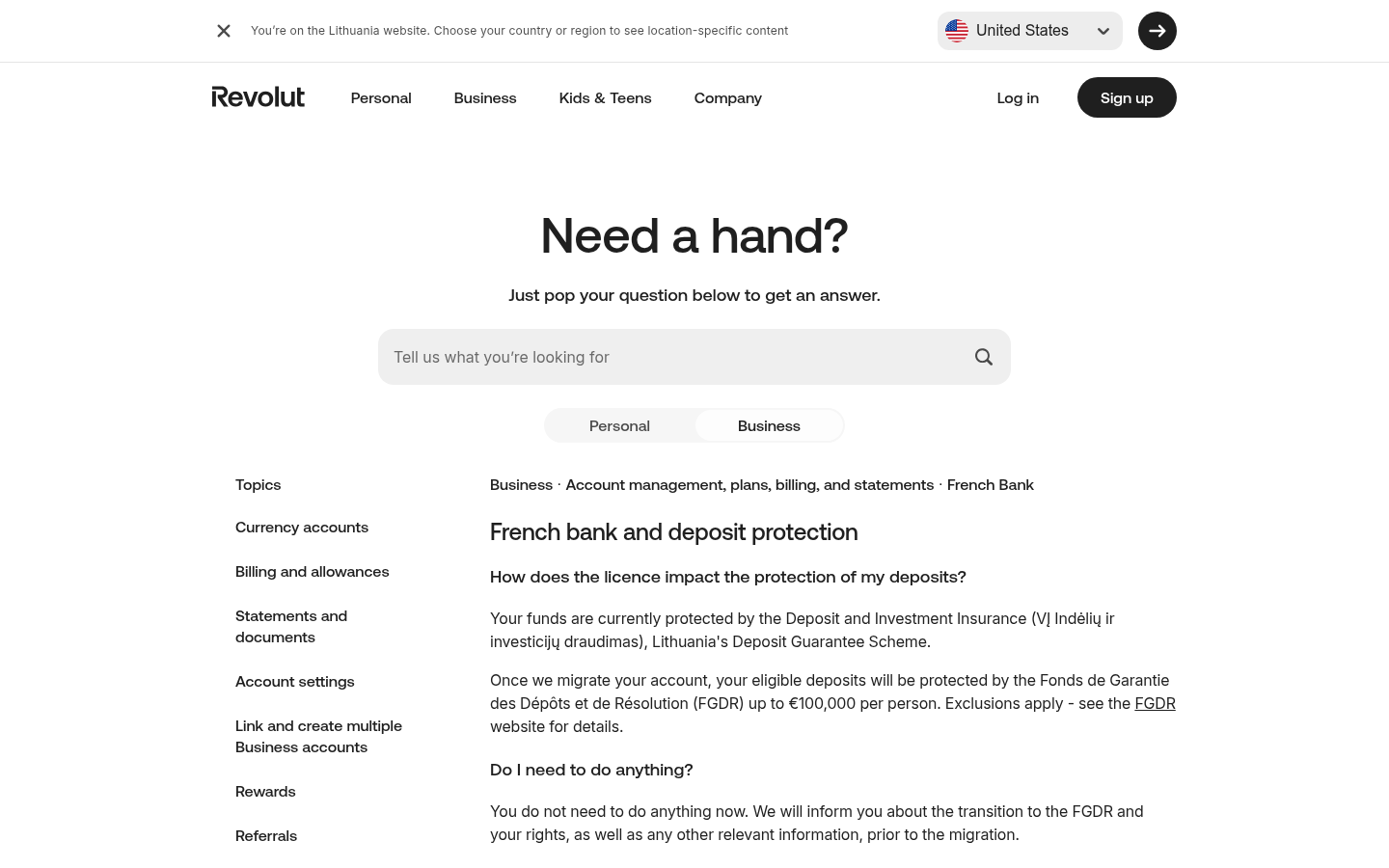
Revolut has also set up a French bank and says that once it migrates an account there, eligible deposits will be protected by the FGDR up to €100,000 per person (Source: Revolut).
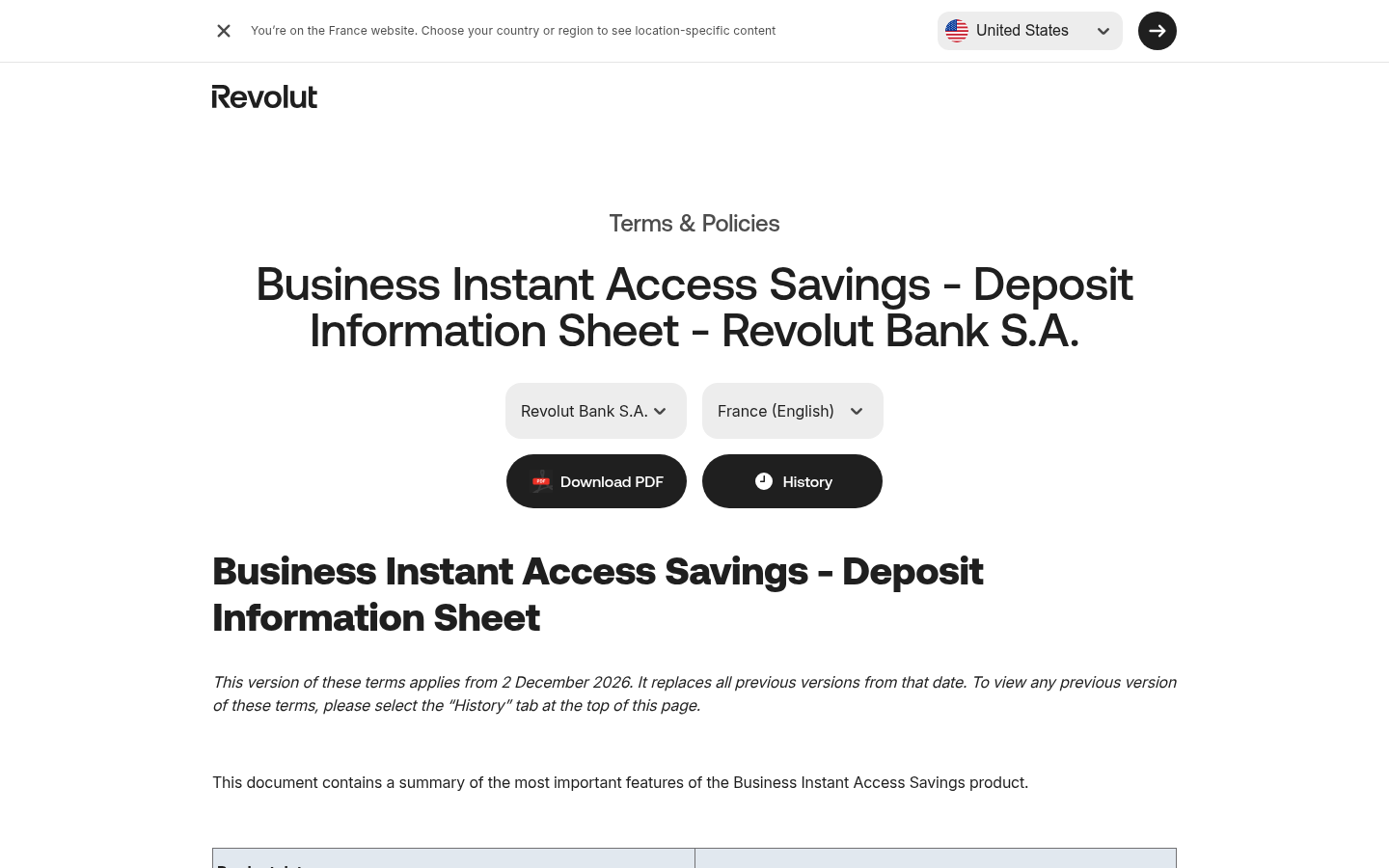
Revolut's business deposit information sheet for its French entity, Revolut Bank S.A. in Paris, confirms FGDR cover of up to €100,000 per person per bank, in a version that applies from 2 December 2026 (Source: Revolut Bank S.A.).
| Item | Qonto | Revolut Business |
|---|---|---|
| Licence | French bank | EU bank |
| Bank entity | Qonto, Paris | Revolut Bank UAB |
| Deposit cover | FGDR, €100,000 | Up to €100,000 |
| Next step | Loans from 2027 | French bank move |
For most small businesses, the protection is now equivalent: up to €100,000 per depositor at each bank. Businesses holding more than that should spread balances across banks either way.
Qonto Pricing
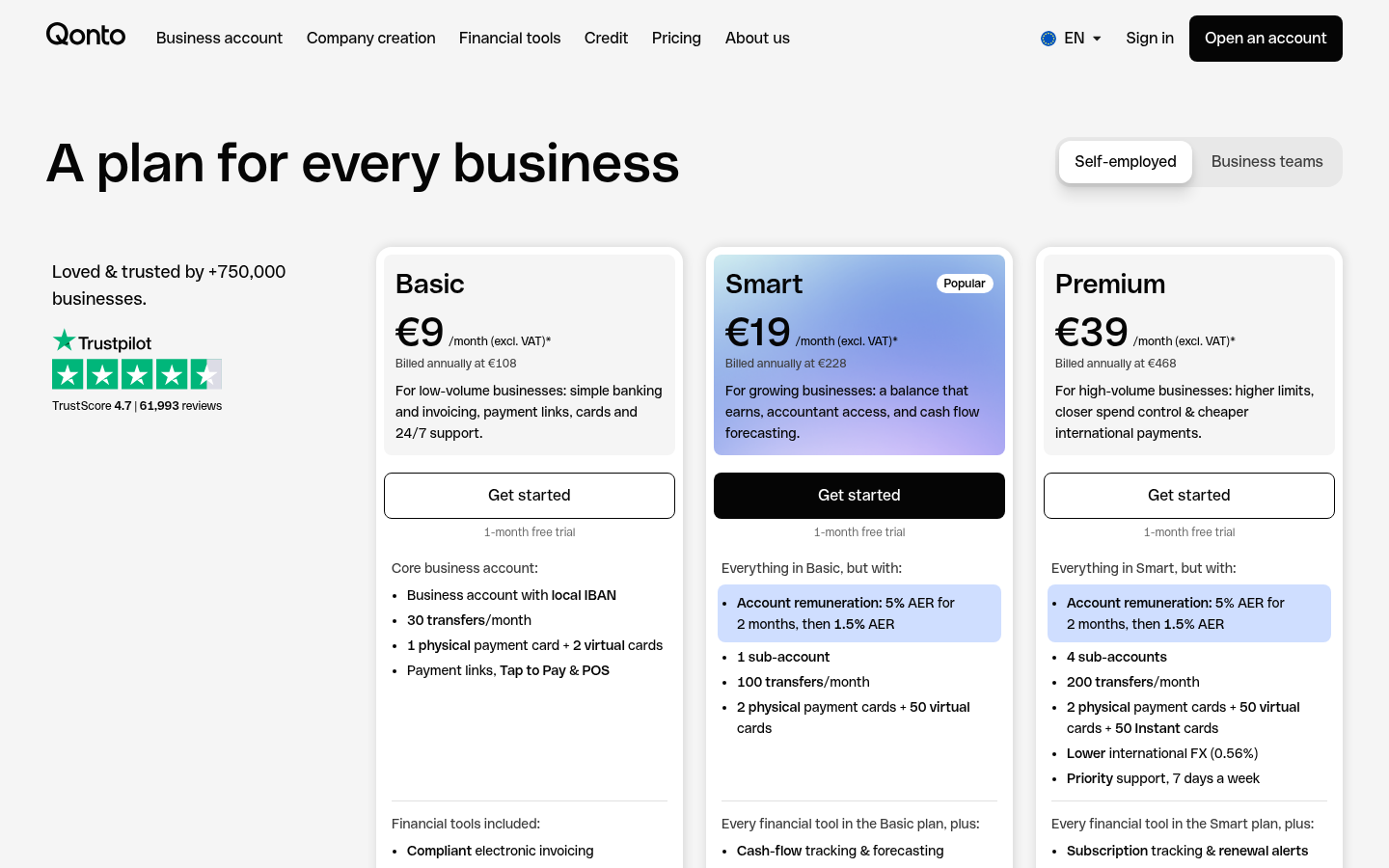
Qonto's Basic plan costs €9 a month, Smart €19 and Premium €39, all excluding VAT and billed annually. Basic includes 30 transfers a month, Smart 100 and Premium 200, with extra transfers costing €0.20 on Basic and Smart and €0.10 on Premium. Outgoing international transfers in standard currencies cost 0.8% with a €5 minimum, or 0.56% on Premium, and card payments outside the euro zone carry a 1% exchange fee on the standard Plus card (Source: Qonto).
- Strength: Low entry price and generous euro transfer allowances for domestic businesses.
- Strength: Built-in invoicing, bookkeeping and spend tools, plus unlimited accountant access from the Smart plan.
- Trade-off: Foreign exchange costs more than Revolut for businesses that convert currencies often.
Revolut Business Pricing
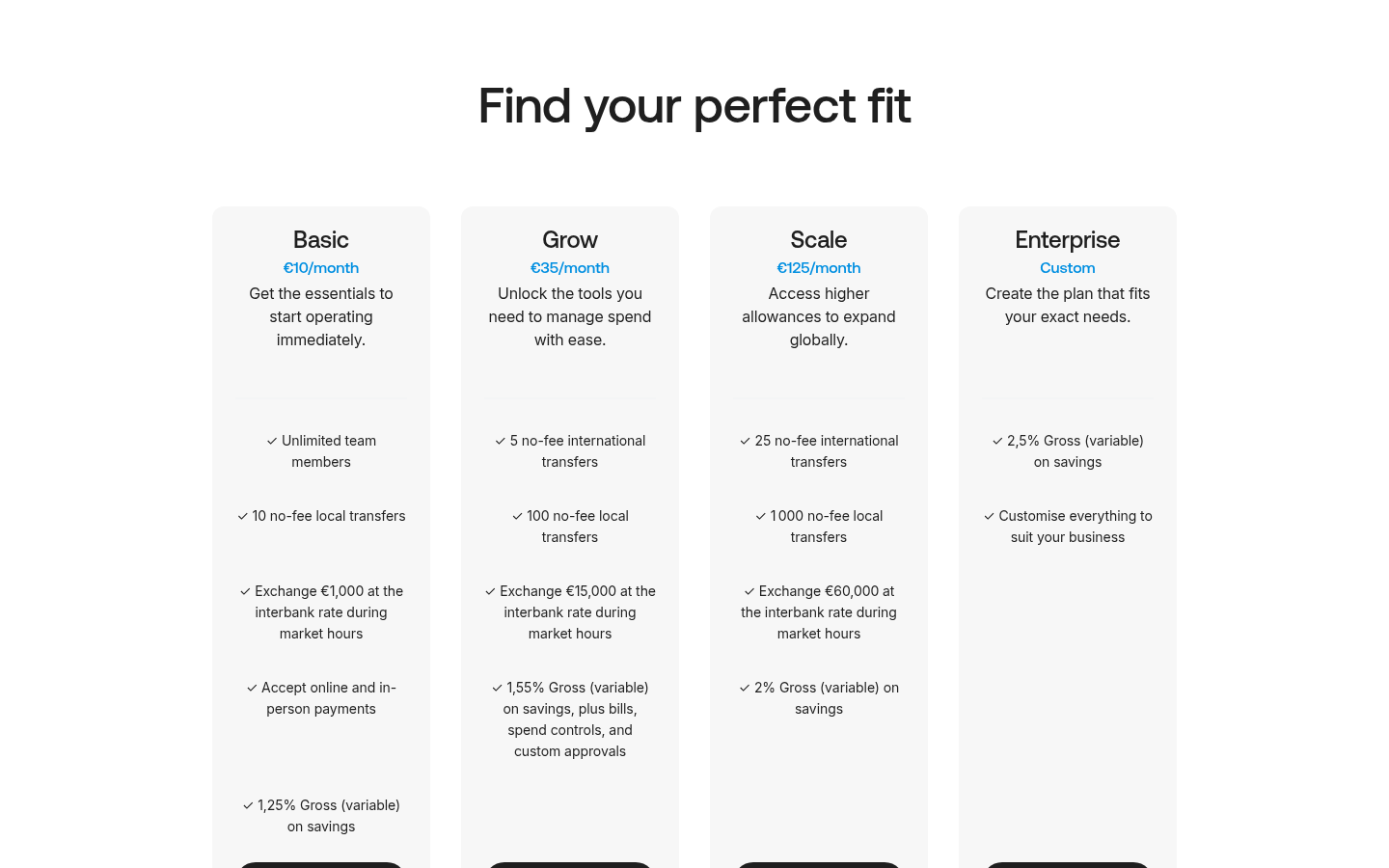
On Revolut's French site, Revolut Business costs €10 a month for Basic, €35 for Grow and €125 for Scale, with Enterprise priced on request. Basic includes 10 free local transfers and €1,000 of currency exchange at the interbank rate each month; Grow includes 100 local and 5 international transfers with €15,000 of exchange; and Scale includes 1,000 local and 25 international transfers with €60,000 of exchange. Beyond the allowance, exchange costs 0.6%, local transfers cost €0.20, and international transfers cost €5 (Source: Revolut).
- Strength: Interbank FX allowances and many currencies in one account suit businesses that buy or sell abroad.
- Strength: Unlimited team members on every plan.
- Trade-off: Basic includes only 10 free local transfers, so busy domestic businesses quickly pay per transfer or move up to Grow.
Our comparisons of Wise vs Revolut and Monzo vs Revolut cover how Revolut stacks up against other providers.
Qonto vs Revolut Business: Head to Head
| Feature | Qonto | Revolut Business |
|---|---|---|
| Entry plan | €9 a month | €10 a month |
| Mid plan | €19 a month | €35 a month |
| Free transfers | 30 to 200 | 10 to 1,000 |
| FX fee | 0.56% to 0.8% | 0.6% over allowance |
| Free FX | None on transfers | €1,000 to €60,000 |
Qonto prices are excluding VAT and billed annually. Revolut prices are the monthly prices shown on its French site. All figures were read from each provider's pricing page on 24 November 2026.
Which One Should You Choose
- Choose Qonto if: You mainly pay and get paid in euros, make 30 to 200 transfers a month, and want invoicing and bookkeeping built into the account.
- Choose Revolut Business if: You pay suppliers or receive money in other currencies, since the interbank FX allowance can save more than the plan costs.
- Use both if: Some businesses keep Qonto for daily euro banking and Revolut for currency exchange and international payments.
A simple test: a business converting €10,000 a month would pay about €80 on Qonto's Basic or Smart plan at 0.8%, but nothing on Revolut's Grow plan, whose €15,000 interbank allowance covers it.
What This Means for Stablecoin Users
Neither account holds stablecoins as a standard business balance today. Revolut has moved further into digital assets, including plans for a euro stablecoin covered in our piece on Revolut's EURR.
Businesses that want to hold stablecoins next to euros can compare options in our guide to business accounts that hold stablecoin balances.
What to Watch
- Qonto's first loans: Invoice financing, credit lines, loans and term deposits are due in the first half of 2027.
- Revolut's French bank: When Revolut moves French business accounts to Revolut Bank S.A. and FGDR cover.
- Price changes: Whether either provider changes plan prices as they add lending products.
- Interest on balances: Qonto is extending account remuneration to Germany and Portugal from November 2026.
Conclusion
Stablecoin Insider tracks how European businesses bank and move money, and Qonto's new licence puts it on an equal footing with Revolut as a fully licensed bank.
Both now offer the same basic safety net of up to €100,000 in deposit protection, so the decision rests on how your business uses its account.
Qonto is the cheaper and simpler choice for euro-based businesses with steady domestic transfers and a need for built-in invoicing.
Revolut Business is the stronger choice for businesses that deal in several currencies, where its interbank exchange allowances quickly pay for the higher plan prices.
Read Next
- 2027 Social Security COLA Increase: 3.6% Raise, Net Pay After Medicare and Payment Dates
- How Institutional Treasury Teams Lock FX Rates When Converting USDC or USDT to Fiat: A Treasury Guide for High-Value Transfers
- Betterment vs Wealthfront in 2026: Fees, Cash APY and Tax
FAQs
1. Is Qonto a real bank now?
Qonto is a real bank now. It was granted a credit institution licence by the French regulator ACPR and the European Central Bank on 18 November 2026, after operating as a payment institution since 2018.
2. Are deposits with Qonto protected?
Deposits with Qonto are protected by the French deposit guarantee scheme, the FGDR, up to €100,000 per depositor once its banking licence is active, the same cover as any other French bank.
3. Is Qonto cheaper than Revolut Business?
Qonto is cheaper than Revolut Business on plan price, starting at €9 a month billed annually against €10 a month for Revolut. Revolut can be cheaper overall for businesses that exchange currencies often, thanks to its interbank FX allowances.
4. Which is better for international payments, Qonto or Revolut Business?
Revolut Business is usually better for international payments, because its plans include currency exchange at the interbank rate up to a monthly limit. Qonto charges 0.56% to 0.8% on outgoing international transfers in standard currencies.
5. Can I use Qonto and Revolut Business together?
You can use Qonto and Revolut Business together. Some businesses keep Qonto for everyday euro banking and invoicing and use Revolut Business for foreign exchange and payments in other currencies.
Disclaimer: This content is provided for informational purposes only and does not constitute legal, financial, or investment advice. Prices, licences and product timelines cited here reflect publicly available information as of November 2026 and may change. Check each provider's current pricing, terms and eligibility in your country before opening an account.