Table of Contents
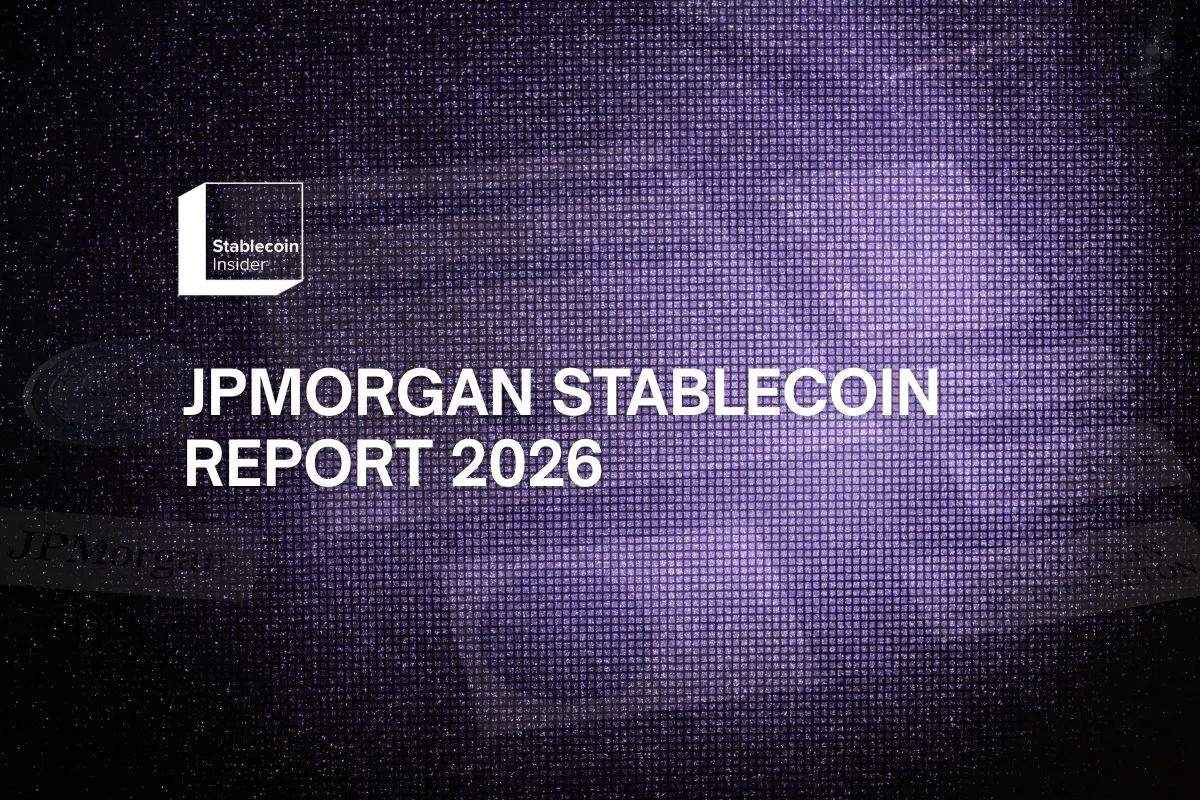
Despite offering meaningfully higher yields than stablecoins, tokenized money market funds have captured only about 5% of the broader stablecoin universe, and a new JPMorgan report published on May 21, 2026 argues they are unlikely to grow beyond 10% to 15% without significant regulatory change.
The finding cuts against a widely held expectation that yield-bearing tokenized Treasury products would progressively displace stablecoins as the preferred on-chain cash instrument, and it has direct implications for the best tokenized money market funds in 2026 including BlackRock BUIDL, Franklin Templeton BENJI, and Ondo USDY.
The JPMorgan analysis, led by analyst Nikolaos Panigirtzoglou, identifies regulatory classification as the structural barrier preventing tokenized money market funds from competing on equal terms with stablecoins across the crypto ecosystem.
Key Takeaways
- JPMorgan estimates tokenized money market funds represent approximately 5% of the stablecoin universe despite offering higher yield.
- The bank believes tokenized money market funds are unlikely to exceed 10% to 15% of the stablecoin market absent meaningful regulatory change.
- Securities classification is identified as the primary structural disadvantage limiting tokenized money market fund circulation across crypto markets.
Source: JPMorgan Research · Nikolaos Panigirtzoglou · May 21, 2026
What JPMorgan's Report Actually Found
The core finding is structurally significant. Stablecoins continue to dominate crypto trading, collateral management, settlement, cross-border payments, and liquidity management across centralized exchanges and DeFi protocols because they have become the ecosystem's default cash instrument.
As covered in our analysis of stablecoin transaction volumes projected to overtake Visa and Mastercard, stablecoin volume growth has been driven by exactly these use cases, and that utility advantage compounds with network effects.
Tokenized money market funds, by contrast, face what JPMorgan's analysts call a structural regulatory disadvantage. Because they are classified as securities, they are subject to registration, disclosure, reporting, and transfer restrictions that limit their ability to circulate freely within the crypto ecosystem.
A stablecoin moves frictionlessly between wallets, exchanges, and DeFi protocols. A tokenized money market fund share carries compliance obligations at every transfer that stablecoins do not.
JPMorgan's analysts wrote: "We doubt that tokenized money market funds would grow beyond 10% to 15% or so of the stablecoin universe, unless there is a regulatory change that reduces the structural disadvantage arising from tokenized money market funds classified as securities."
Why the Yield Advantage Has Not Been Enough
The paradox at the center of the JPMorgan analysis is that tokenized money market funds offer better returns than stablecoins. USDC and USDT pay no yield directly to holders.
Products like Ondo USDY deliver approximately 4.8% APY, and BUIDL and BENJI deliver 4% to 4.5% APY, all backed by US Treasuries. By any conventional financial logic, the yield-bearing instrument should attract capital away from the non-yield-bearing one.
The reason it has not is utility. Stablecoins are accepted everywhere in crypto. Every exchange, every DeFi protocol, every payment corridor runs on stablecoin liquidity. Tokenized money market fund shares require whitelisted addresses, transfer approvals, and redemption mechanics that create friction at every integration point.
For a DeFi protocol considering whether to accept USDC or BUIDL as collateral, the compliance overhead of supporting BUIDL is a meaningful integration cost that USDC does not impose.
This dynamic is why the Q1 2026 Stablecoin Report showed USDC commanding 63% of stablecoin transaction volume even as the tokenized Treasury market crossed $7 billion in AUM. The two markets are growing simultaneously but addressing structurally different needs.
What Demand for Tokenized Money Market Funds Actually Looks Like
JPMorgan's analysts found that demand for tokenized money market funds is largely confined to two segments. The first is crypto-native investors seeking yield on idle cash. These are participants who already hold stablecoin positions and want to earn while waiting, deploying funds into BUIDL or BENJI as a parking mechanism rather than as a circulation instrument.
The second is institutional investors looking to combine blockchain-based settlement and programmability with traditional investor protections.
This maps closely to the institutional adoption pattern covered in our reporting on BlackRock's tokenized fund filings targeting stablecoin issuers. BlackRock's new fund structures are explicitly designed for stablecoin issuers who need to park reserve assets in yield-bearing instruments, which is precisely the idle cash parking use case JPMorgan identifies as the primary demand driver.
JPMorgan also noted emerging partnerships that allow institutions to use tokenized money market funds as off-exchange trading collateral while still earning yield, which is a narrow but commercially real use case.
What Would Change the Trajectory
The JPMorgan report acknowledged that the SEC introduced a streamlined process earlier in 2026 to simplify the issuance and redemption of on-chain money market funds. But the analysts characterized these developments as marginal, unlikely to overcome the broader regulatory disadvantages that prevent tokenized money market funds from matching the seamless utility of stablecoins across crypto markets.
For the trajectory to change materially, two things would need to happen simultaneously: the securities classification framework would need to be revised to allow tokenized money market fund shares to transfer with similar frictionlessness to stablecoins, and the resulting product would need to be integrated across the exchange and DeFi protocol infrastructure that currently runs on stablecoin liquidity.
The first requires regulatory action. The second requires industry-wide integration work that takes years even after regulatory clarity arrives.
The context connects directly to the Bank of England's stablecoin regulation update covered earlier this week, where regulators are still working through the basic question of how to treat stablecoin holding limits, let alone the more complex question of how to treat yield-bearing tokenized securities in a payments context.
What This Means for the Tokenized Finance Market
The JPMorgan analysis does not argue that tokenized money market funds are failing. It argues that they are succeeding in a different, more constrained market segment than their yield advantage would suggest. The funds are growing faster than stablecoins in percentage terms and will continue to grow, but from a small base and into a narrower use case set than stablecoin optimists have projected.
For investors evaluating the most promising tokenized RWAs in 2026, the JPMorgan finding reinforces a structural reality that the RWA guide addresses: tokenized Treasury products are the most liquid and most regulated segment of the tokenized asset market, but their circulation constraints mean they function more like a yield-optimized cash management tool than a general-purpose payment instrument.
Conclusion
JPMorgan's analysis arrives at a conclusion that is counterintuitive but well-supported: yield advantage alone is not sufficient to displace a network-effect-dominant instrument from its default role in a financial ecosystem.
Stablecoins win on utility and ubiquity even where they lose on returns. Tokenized money market funds win on yield and regulatory structure where circulation constraints are acceptable.
The two product categories are likely to coexist for the foreseeable future, with stablecoins handling the vast majority of on-chain transaction volume and tokenized money market funds capturing the idle cash and institutional collateral segments where their yield advantage justifies their compliance overhead.
FAQ:
1. What did JPMorgan's report say about tokenized money market funds?
JPMorgan's May 2026 report found that tokenized money market funds represent approximately 5% of the broader stablecoin universe despite offering higher yields than stablecoins, and concluded that they are unlikely to exceed 10% to 15% of the stablecoin market without meaningful regulatory change that reduces the structural disadvantage arising from their classification as securities under current regulatory frameworks.
2. Why do stablecoins dominate over tokenized money market funds despite lower yields?
Stablecoins dominate over tokenized money market funds despite lower yields because they function as the default cash instrument across the crypto ecosystem, accepted frictionlessly across centralized exchanges, DeFi protocols, cross-border payment corridors, and collateral management systems, while tokenized money market fund shares carry securities registration, disclosure, and transfer restrictions that create compliance overhead at every integration point and limit their ability to circulate as freely as stablecoins.
3. What is the structural regulatory disadvantage JPMorgan identified for tokenized money market funds?
The structural regulatory disadvantage JPMorgan identified for tokenized money market funds is their classification as securities, which subjects them to registration, disclosure, reporting, and transfer restrictions that prevent their shares from moving as freely between wallets, exchanges, and DeFi protocols as stablecoins do, creating friction at every transfer that stablecoin transactions do not carry and limiting the addressable market to use cases where that compliance overhead is acceptable.
4. What is the difference between a stablecoin and a tokenized money market fund?
The difference between a stablecoin and a tokenized money market fund is that a stablecoin is a blockchain token pegged to a fiat currency that circulates freely across crypto markets without paying yield to holders, while a tokenized money market fund is a blockchain-represented share in a registered investment fund that pays yield from underlying Treasury or money market assets but carries securities regulation compliance obligations at each transfer that restrict its free circulation and limit its utility as a general-purpose payment instrument.
5. Who is primarily using tokenized money market funds in 2026?
According to JPMorgan's May 2026 analysis, the primary users of tokenized money market funds in 2026 are crypto-native investors seeking yield on idle cash holdings who want to earn returns while waiting to deploy stablecoin positions, and institutional investors looking to combine blockchain-based settlement efficiency and programmability with the traditional investor protections that registered fund structures provide.
6. What regulatory change would allow tokenized money market funds to grow beyond 15% of the stablecoin market?
The regulatory change that would allow tokenized money market funds to grow beyond 10% to 15% of the stablecoin market, according to JPMorgan analysts, is a revision to the securities classification framework that reduces the transfer restrictions and compliance overhead currently imposed on tokenized money market fund shares, allowing them to circulate with a frictionlessness closer to stablecoins across exchanges, DeFi protocols, and payment corridors while retaining their yield and investor protection characteristics.
Disclaimer:
This content is provided for informational and educational purposes only and does not constitute financial, investment, legal, or tax advice; no material herein should be interpreted as a recommendation, endorsement, or solicitation to buy or sell any financial instrument, and readers should conduct their own independent research or consult a qualified professional.