

Table of Contents
As stablecoins continue moving deeper into enterprise finance, most of the conversation still revolves around payments.
But according to Eric Queathem, Co-Founder and CEO of Velocity, the much larger opportunity sits behind the payment itself: treasury infrastructure.
In a conversation with Chiara Munaretto, Co-Founder and Managing Partner of Stablecoin Insider, Queathem explained why Velocity is building specifically for CFOs and treasurers, why stablecoins fundamentally change how businesses manage capital, and why the future of stablecoin infrastructure may look much closer to modern treasury management than crypto trading.
Stablecoins Are Becoming a Back-Office Upgrade
For Velocity, the next major wave of stablecoin adoption is not happening at the consumer layer.
It is happening inside the corporate back office.
Queathem believes CFOs are increasingly being forced to rethink how they manage liquidity, move capital globally, and optimize treasury operations in an environment where traditional banking infrastructure still relies heavily on delayed settlement windows, fragmented banking relationships, trapped cash, and manual workflows.
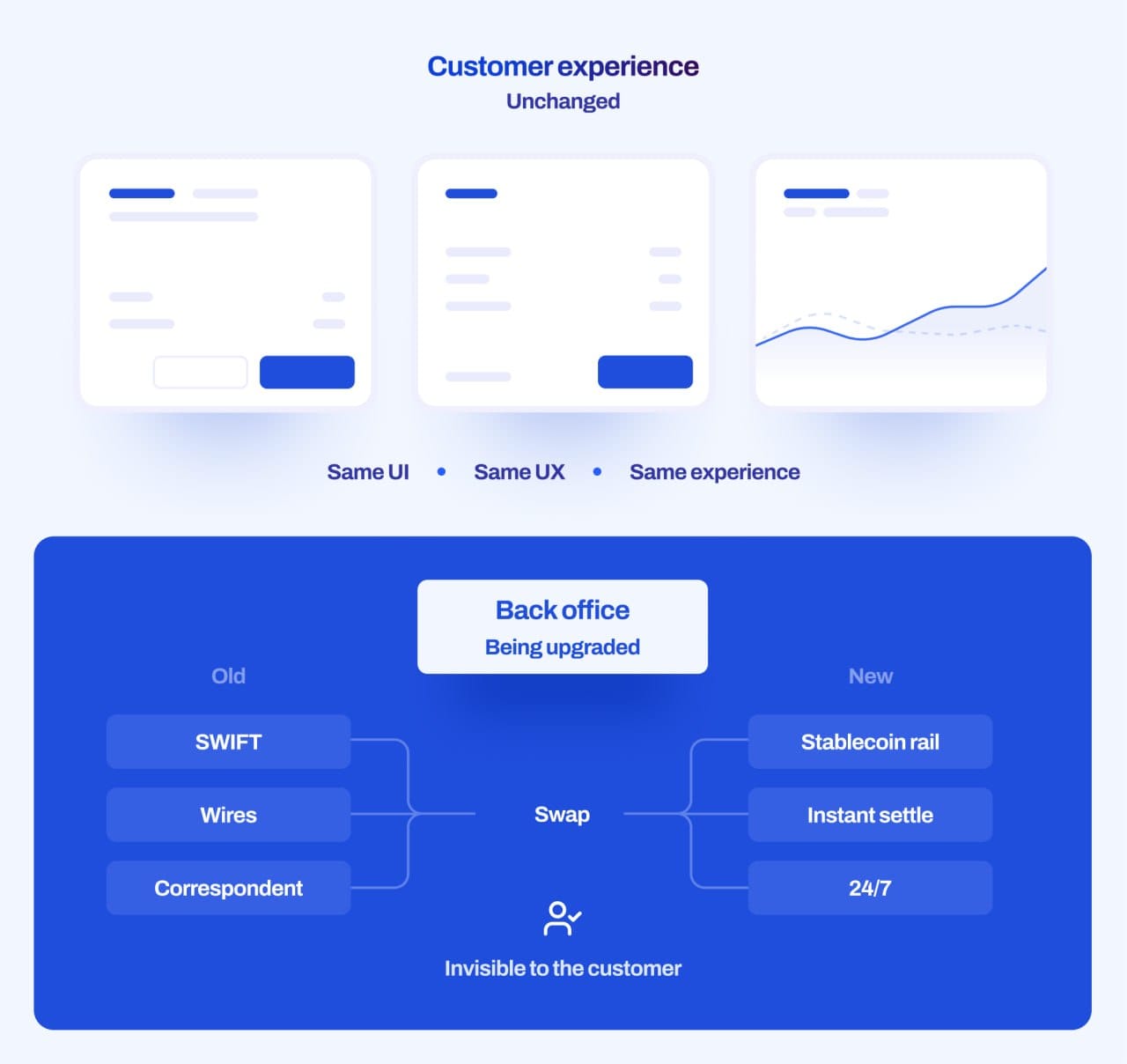
Historically, businesses simply accepted those inefficiencies as part of operating internationally.
Cross-border transfers took days.
Weekend settlements were impossible.
Large companies often relied on dozens or even thousands of bank accounts across different jurisdictions, many of which lacked proper API infrastructure entirely.
“People conceded a lot of the frustration because there really wasn’t an alternative,” Queathem explained.
Stablecoin infrastructure changes that assumption.
Instead of waiting multiple business days for settlement, capital can move in near real-time across borders. Instead of manually managing fragmented banking relationships, treasury teams can operate through programmable digital wallet infrastructure that offers visibility, automation, and significantly greater control over liquidity.
According to Queathem, the core value proposition is not simply “faster payments.”
It is capital optimization.
Treasury Problems Often Disguised as Payment Problems
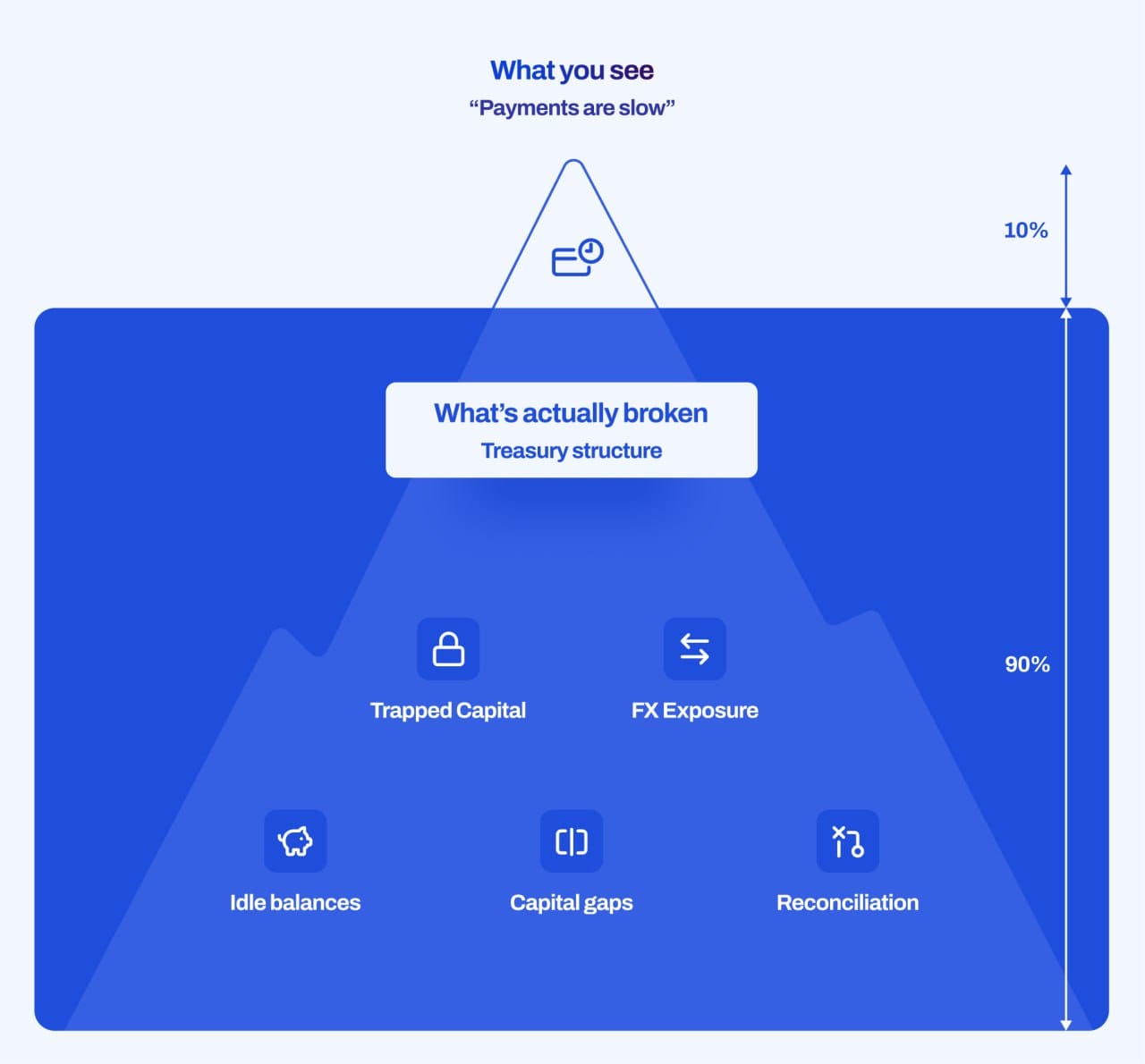
One of the more interesting distinctions Queathem made during the interview was that many so-called “payment problems” are actually treasury inefficiencies.
For example, trapped liquidity caused by slow settlement rails is typically framed as a payments issue.
Velocity sees it differently.
“The cause may be payments, but ultimately it’s a treasury optimization problem,” he said.
By reducing settlement friction and allowing businesses to move capital instantly between counterparties, CFOs can retain control over liquidity for longer periods of time while improving internal cash management.
That becomes especially meaningful at enterprise scale.
Large multinational organizations frequently operate thousands of bank accounts globally, many managed through outdated interfaces and highly manual workflows. In some markets, treasury staff are literally logging into banking portals in languages they do not speak in order to manage liquidity.
Velocity believes programmable wallet infrastructure can dramatically simplify that complexity.
Once capital moves into digital wallet systems, treasury operations become both more transparent and more programmable. Businesses gain the ability to automate movement of funds, optimize liquidity allocation, and reduce operational overhead without being constrained by banking hours, currency fragmentation, or settlement delays.
The Future Is a Dual-Asset World
Despite being deeply focused on stablecoin infrastructure, Velocity is not betting on the disappearance of fiat.
Quite the opposite.
Queathem expects most global capital to remain in fiat-based systems for the foreseeable future, with stablecoins gradually handling a smaller, but strategically important, portion of treasury and payment flows.
Velocity describes this future as a “dual-asset world.”
Businesses will continue operating traditional fiat accounts while simultaneously using stablecoin-based infrastructure for certain corridors, treasury functions, and global settlement operations.
The challenge is operational integration.
Treasury teams do not want entirely separate systems for fiat and on-chain assets.
Visibility, reconciliation, reporting, compliance, and treasury controls all need to exist inside the same operational workflows.
That creates an important infrastructure problem that Velocity is attempting to solve.
Wallet addresses, for example, are fundamentally incompatible with many legacy treasury management systems built around traditional banking identifiers.
To bridge this gap, Velocity focuses heavily on abstracting away crypto-native complexity and making stablecoin infrastructure behave more like familiar financial infrastructure.
Over time, Queathem expects terms like “wallet address” or even “gas fees” to disappear from enterprise conversations entirely.
Businesses will simply think of stablecoin accounts as another treasury account inside their broader financial stack.
Why Velocity Is Focused on CFOs
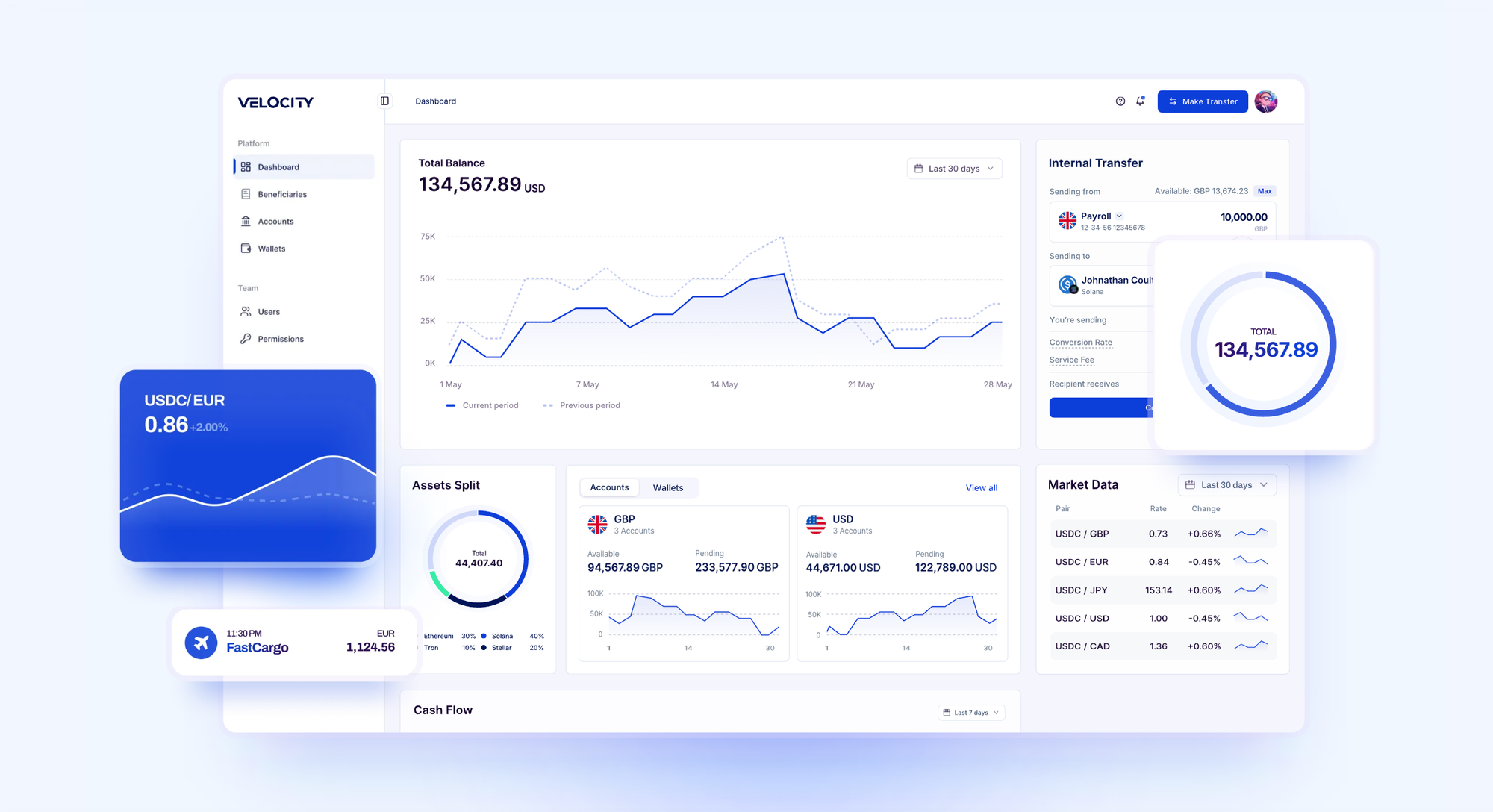
Velocity’s positioning differs from many crypto-native infrastructure providers because the company is targeting CFOs and treasury departments directly.
That focus stems from the backgrounds of the team itself.
While the company has strong Web3 expertise internally, Queathem emphasized that Velocity was fundamentally built from a traditional payments perspective rather than a crypto-first perspective.
According to him, much of the stablecoin industry has struggled to translate crypto-native infrastructure into workflows that traditional businesses can comfortably adopt.
Velocity’s strategy is to bridge that gap.
Rather than forcing enterprises to adapt to crypto tooling, the platform aims to package stablecoin infrastructure into operational systems CFOs already understand.
The company currently supports both API integrations and GUI-based onboarding, allowing businesses to integrate stablecoin treasury infrastructure directly into existing financial operations.
Velocity also abstracts much of the complexity associated with moving between fiat and stablecoins.
Queathem described the process as a “stablecoin sandwich”:
Fiat enters through banking rails, moves on-chain via stablecoins, and then exits back into fiat rails on the receiving side when necessary.
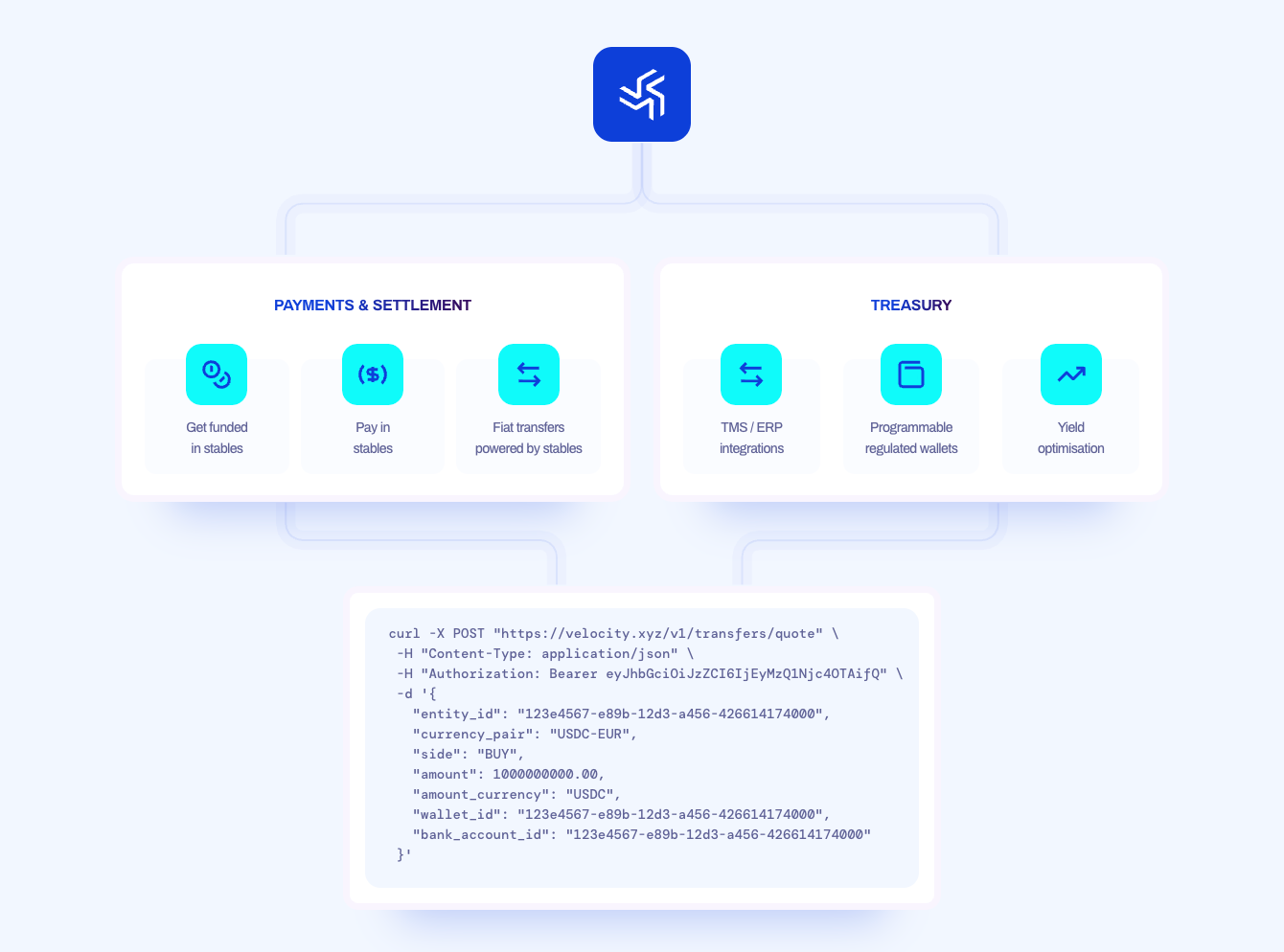
Underneath that workflow sits a coordinated infrastructure stack involving banks, liquidity providers, custodians, fraud tooling, compliance systems, and blockchain infrastructure providers.
Velocity’s role is orchestrating all of it into a unified treasury experience.
Yield Is Becoming a Treasury Conversation
One of the most important themes discussed during the interview was yield.
Queathem argued that stablecoins introduce a major shift in how businesses think about idle capital.
Today, enormous amounts of corporate cash globally sit in bank accounts earning little or no interest.
He pointed to estimates suggesting that roughly £180 billion currently sits in UK business accounts earning 0% yield.
“If even a portion of that capital moved into stablecoin-based yield infrastructure earning 3%, you’re injecting billions back into the economy,” he said.
Velocity currently enables yield and reward-sharing through stablecoins including USDG and AUSD, with plans to support additional stablecoin and DeFi-related treasury products over time.
The long-term thesis is that businesses will increasingly expect treasury infrastructure to generate yield automatically rather than leaving idle capital dormant inside traditional banking systems.
Queathem also pushed back against the argument that yield-bearing stablecoins inherently threaten the banking system.
Instead, he believes they create competitive pressure that could force banks to pass through more interest income to customers.
Security and Custody Remain Critical
Despite the enthusiasm around on-chain treasury infrastructure, security remains one of the largest concerns for enterprise treasury teams.
Velocity’s approach heavily emphasizes regulated custodianship.
Rather than expecting businesses to manage private keys directly, the company integrates regulated custody infrastructure into its platform through third-party providers.
Queathem believes this model significantly reduces operational and security risk for enterprises while preserving the advantages of programmable stablecoin infrastructure.
He also noted that traditional finance is hardly immune from systemic failures either, referencing both the 2008 financial crisis and the collapse of Silicon Valley Bank as examples.
From his perspective, the stablecoin ecosystem has now matured enough with more than $300 billion in stablecoins circulating globally, that institutional confidence is growing rapidly.
Enterprise Stablecoin Adoption Is Still Early
Velocity is only 13 months old, but the company is already expanding rapidly.
The platform currently supports eight stablecoins across six blockchain networks and offers eight live currencies, with roughly a dozen more expected in the near future.
While smaller businesses can often move faster when adopting stablecoin infrastructure, Queathem believes the largest long-term opportunity sits with enterprises due to the scale and complexity of their treasury operations.
Interestingly, many of Velocity’s early customers are not crypto-native companies at all.
Instead, the strongest adoption is currently coming from businesses already operating inside the broader payments ecosystem, including payment networks, remittance providers, PSPs, and acquirers.
These organizations already understand the operational pain points of moving money globally, making them natural early adopters for stablecoin treasury infrastructure.
Building the “JP Morgan” of Stablecoin Treasury
Perhaps the clearest summary of Velocity’s long-term ambition came near the end of the conversation.
If you ask a CFO today who they trust for fiat treasury infrastructure, they will immediately name a major global bank.
But if you ask the same question about stablecoin treasury infrastructure, there is no universally trusted answer.
“That category doesn’t exist yet,” Queathem said.
Velocity wants to become one of the companies that defines it.
The company’s broader thesis is that stablecoins are evolving beyond crypto trading and remittances into enterprise-grade financial infrastructure for treasury management, capital optimization, and global liquidity movement.
And according to Velocity, the businesses that embrace that shift earliest may gain a significant operational advantage over the rest of the market.
About Velocity.xyz
Velocity.xyz is a stablecoin infrastructure platform focused on enterprise treasury and payments. The company provides API and treasury infrastructure that enables businesses to move capital globally using stablecoins while integrating seamlessly with existing fiat-based financial operations. Velocity supports multiple stablecoins, blockchain networks, and global payment corridors, with a strong focus on CFOs, treasury teams, and enterprise-grade operational workflows.
About Stablecoin Insider
Stablecoin Insider is the leading media and research platform covering stablecoins, digital payments, on-chain finance, treasury infrastructure, and the evolving global financial system. The publication focuses on enterprise adoption, fintech innovation, banking transformation, and the broader stablecoin ecosystem.