Table of Contents
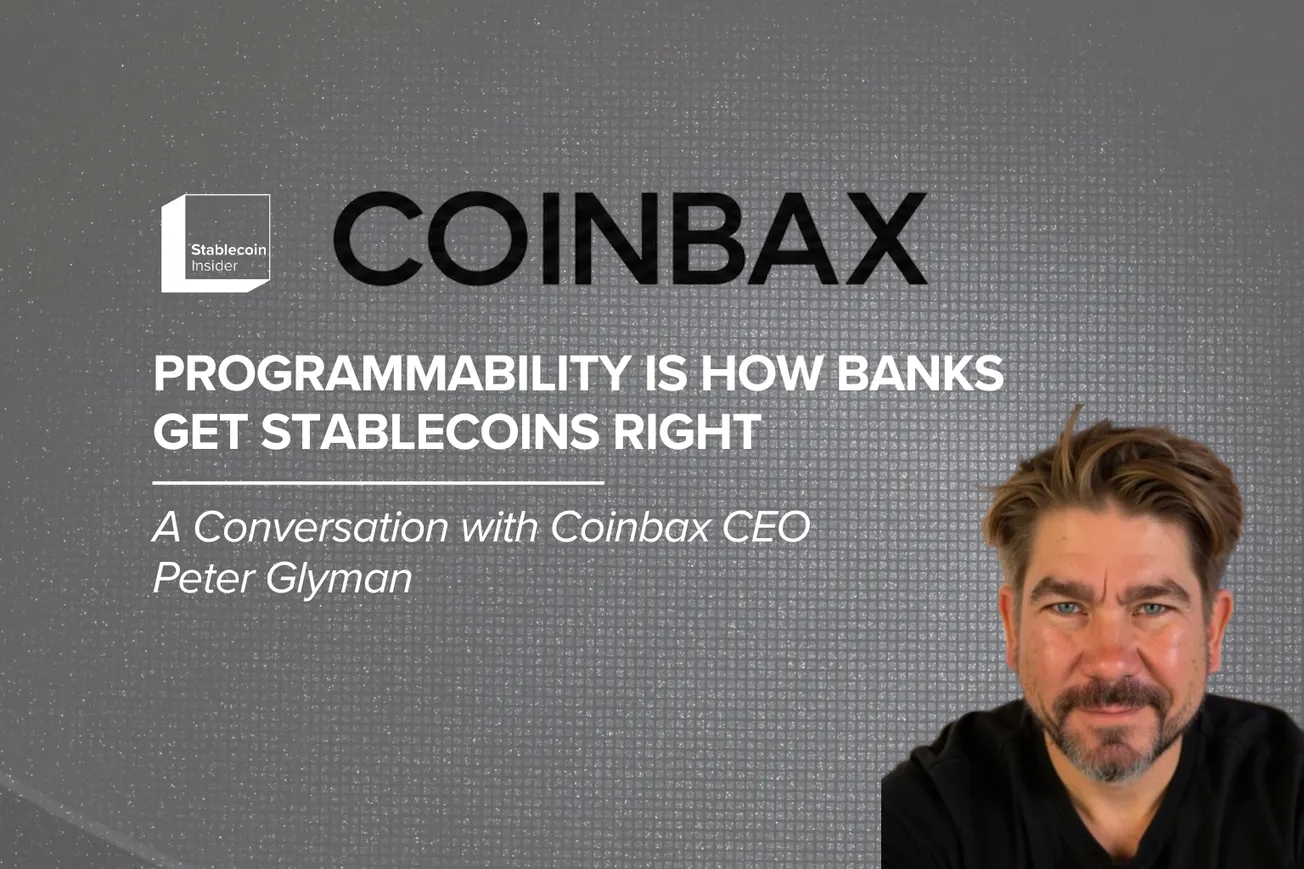
Coinbax founder and CEO Peter Glyman explains why banks are not waiting on technology or appetite, but on controls, and how programmable payment infrastructure finally makes stablecoins a decision banks already know how to make.
Any bank could technically move a stablecoin tomorrow. Almost none of them do.
That gap, between what is technically possible and what a regulated institution can actually defend in front of an examiner, is exactly where Coinbax operates.
In an interview with Stablecoin Insider, Peter Glyman, Founder and CEO of Coinbax, explained why banks have stayed on the sidelines of stablecoins for so long, and why that is finally changing.
Glyman is not a crypto founder. He is, in his own words, "a banker's fintech founder." He co-founded Geezeo, a personal financial management platform that grew to roughly 700 financial institutions and ten million users before being acquired by Jack Henry in 2019. He then spent nearly six years at Jack Henry on the corporate development team, where he led the company's digital asset strategy.
That seat gave him a front-row view of the real blocker to bank adoption of stablecoins. It was never a lack of interest.
The Wall Banks Keep Hitting
Inside Jack Henry, Glyman worked on genuinely ambitious digital asset projects, from the USDF consortium to exploring whether a core banking provider could run blockchain nodes. Every wave of enthusiasm, from Bitcoin to buy-sell-hold to the pre-FTX boom, ended at the same closed door: no regulatory clarity.
"Banks are conservative by design, and without a green light from compliance they will not move, because the downside is not worth it," Glyman explained.
When the GENIUS Act passed, that door finally started to open. But Glyman's insight was that clarity alone does not solve the problem.
"Clarity unlocks a bank's permission to act. It does not build the thing that makes acting safe," he said.
A stablecoin still settles with finality and no undo. Once funds leave, getting them back depends entirely on the goodwill of the receiver. Someone had to build the controls for that, and Glyman decided he would rather have them ready the day banks are allowed to walk through the door than start building afterward.
Why Banks Are Not Adopting Stablecoins Today
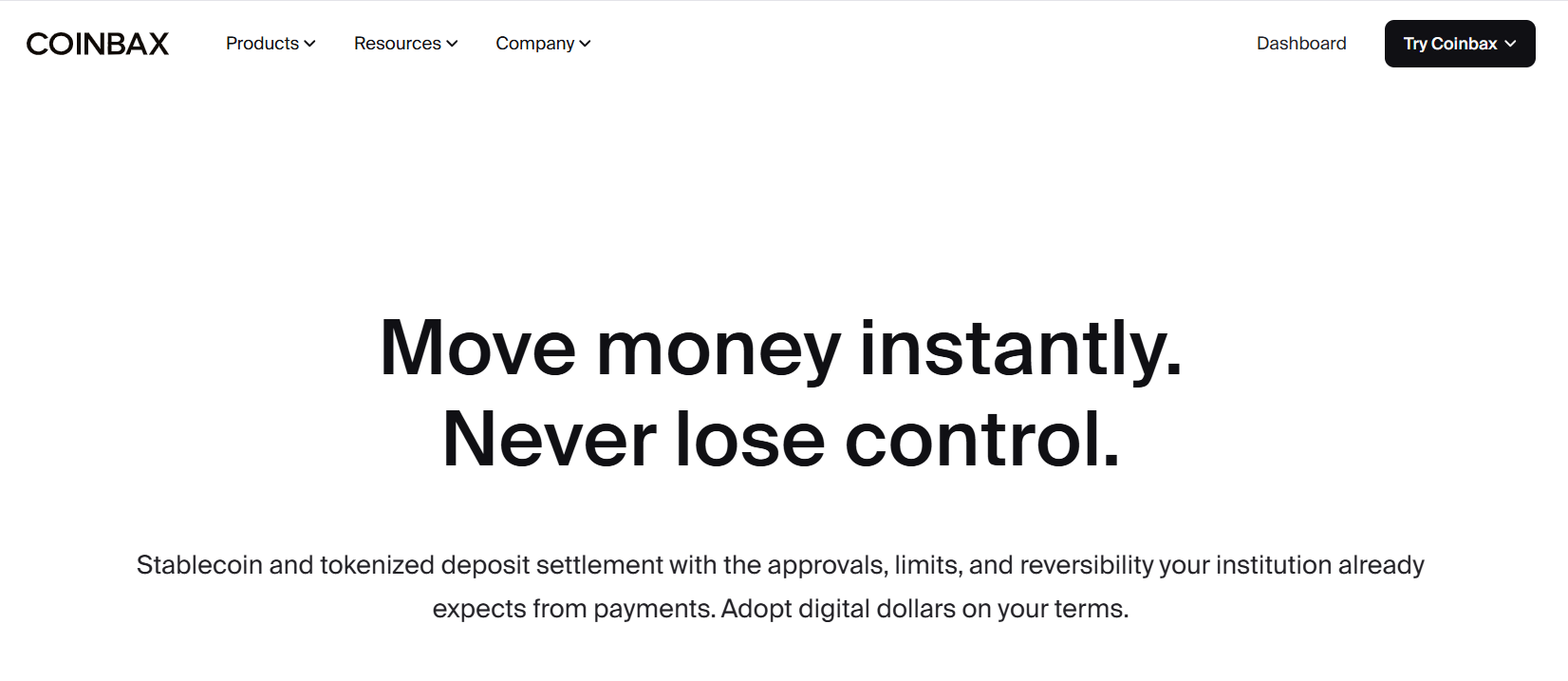
A raw stablecoin transfer strips out every safeguard a regulated institution is required to have. That is the honest blocker, not technology and not appetite.
Glyman pointed to real-time payments as a preview of the same institutional instinct. Banks have had RTP and FedNow for years, yet the large majority that turned on FedNow enabled it receive-only. Nobody wants to be the one who sent an irreversible payment out the door that turns out to be fraudulent or illicit.
"Stablecoins look like that same risk with the volume turned up," Glyman said. "No one wants to be the person explaining an irreversible, unscreened payment to their examiner or their board."
His answer is to put the controls inside the transaction itself:
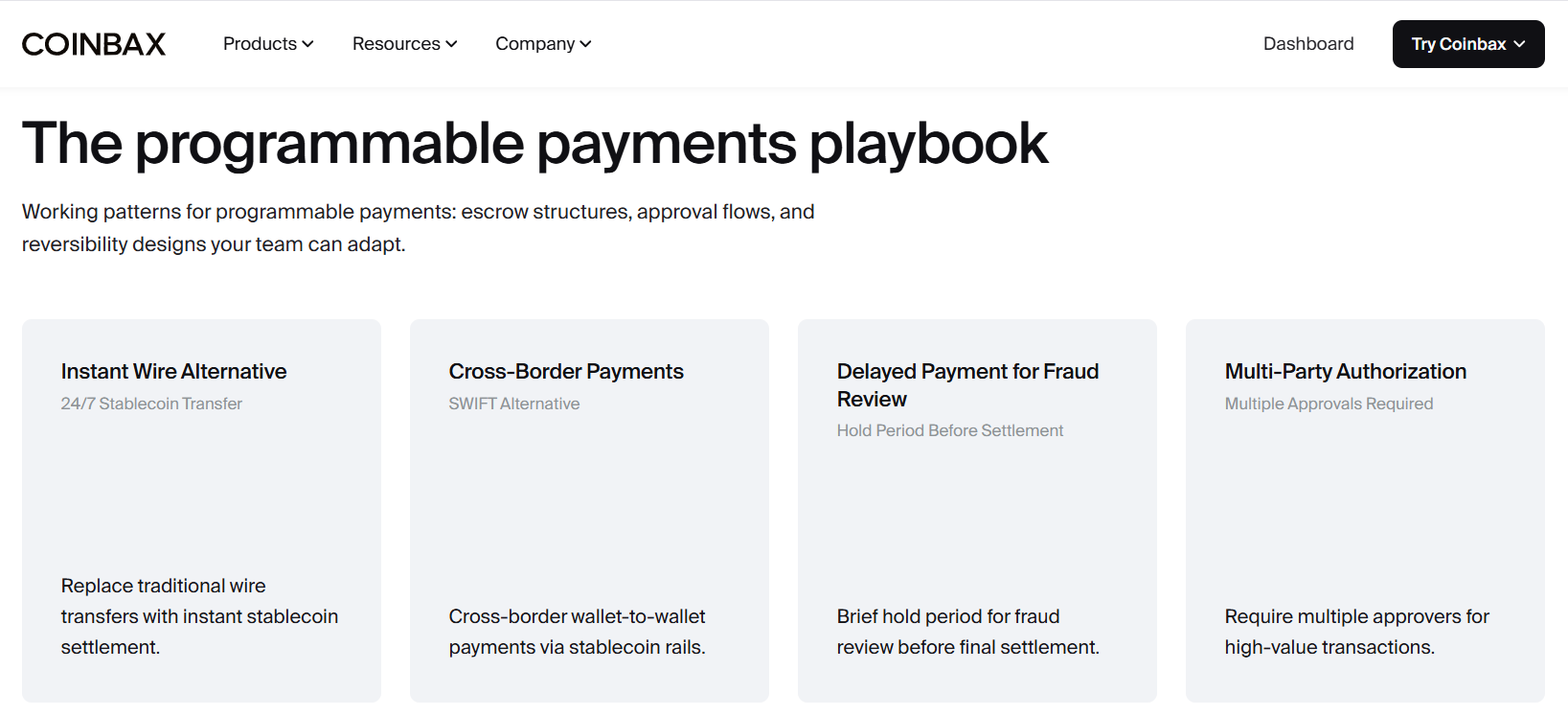
- Screening before funds move
- A window to hold or pull a payment back
- A full audit trail for compliance and examiners
"Put the controls inside the transaction and it stops being a crypto decision. It becomes a payments decision they already know how to make," he explained.
Two Hands Out of Sixty
One anecdote from the conversation captured just how early institutional adoption still is.
Over the winter, Glyman spoke at a conference in front of roughly sixty bankers, including CTOs, CIOs, and executives. He asked for a show of hands: how many had ever used a self-custody wallet to move a stablecoin or buy a digital asset?
Two hands went up.
Those are exactly the people who will have to adopt this technology, and most of them have never touched it. That is why Coinbax was not built only for crypto-native users who already live on chain. It was built so that anyone moving programmable money, from the institutions serving everyone else to individuals transacting wallet-to-wallet, can do it safely.
The core audience is community and regional banks and credit unions, and the people inside them who carry the risk: the compliance officer, the head of payments, the CIO, the CEO who answers to a board. But the control layer also serves fintechs, larger banks, developers, payment platforms, and DeFi teams. The common thread is anyone who needs to move programmable money with real controls around it.
"If it does not pass the examiner's desk, it does not matter how elegant the technology is," Glyman said.
Taking the Nomenclature Away
The stablecoin story started with crypto-native, self-sovereign users. Glyman is clear that this is not the story anymore.
"The self-sovereign, be-my-own-bank crowd is what got us here, but it is not what keeps this going. What keeps it going is people who just want a better, faster product that still lets them operate in a safe, sound, compliant way," he said.
His most effective move with bankers is a linguistic one: stop saying crypto, stablecoin, or tokenization entirely.
"Just say: I have a better payment option. The moment you do that, a stablecoin stops looking like an asset class they have to worry about and starts looking like what it is, a payment rail."
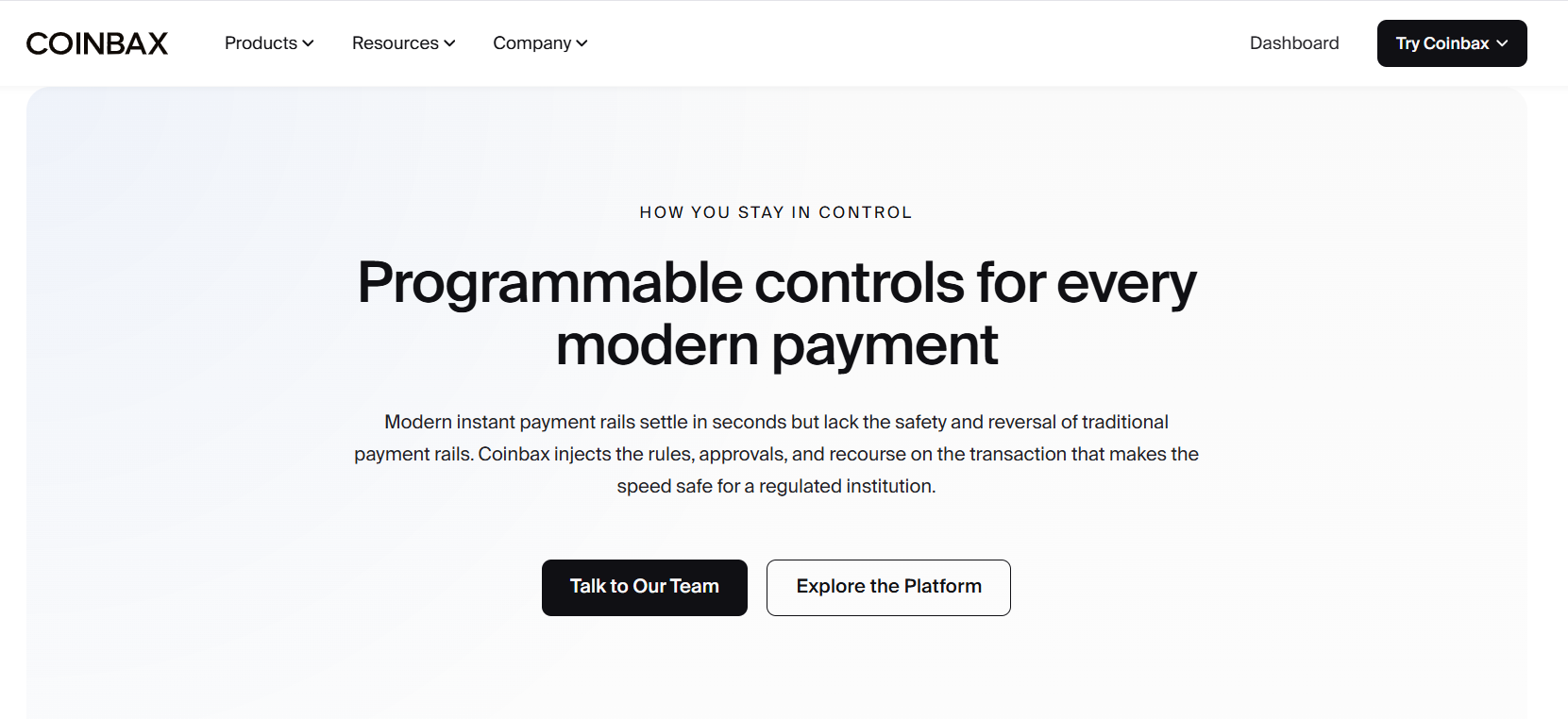
And the second a real payment rail carries institutional money, it needs everything every other rail has. Who can send. How much. Screened against sanctions. Held if something looks wrong. Reversible if it is a mistake. Logged for the examiner. The crypto-native world opted out of those controls on purpose. Institutions cannot, legally or culturally.
A Control Layer, Not a Replacement
Banks already run a full stack of vendors: custody, wallets, compliance screening, core providers. Coinbax deliberately does not replace any of it.
Instead, Coinbax sits on top of the rail and orchestrates the payment itself through what the company calls the Coinbax Execution Framework: Verify, Fund, Confirm, Settle. The issuer still issues, the custody provider still secures the assets, the existing fraud and compliance tools still screen, and the core is still the core. Coinbax adds the controls and the audit trail around the transaction.
In practice, the company often goes further. Most institutions Coinbax talks to do not have a wallet or custody provider yet, so the company helps banks with vendor selection, choosing the wallet, custody, and screening partners that fit their risk appetite, and then integrates with whatever they pick. Coinbax works with issuers on minting and redemption and coexists with the cores, including Jack Henry, Fiserv, and FIS, rather than competing with them.
For most banks, adopting Coinbax does not mean ripping anything out. It means getting help standing the rest of the stack up.
What a Year of Pitching Bankers Taught Him
Glyman was candid about how his own approach has evolved.
Early on, he led with the technology, the reversibility and the programmable escrow, because he was proud of it. What he learned is that bankers do not buy the mechanism.
"Bankers buy the examiner conversation and the operational efficiency," he said.
The second shift was making the first step tiny. With the GENIUS Act still being codified and the CLARITY Act giving banks one more reason to wait, Coinbax stopped selling a production decision and started selling muscle memory: a board-approvable ninety-day pilot with defined scope, internal-only, moving a little money on chain so the team gets comfortable with the workflow.
"I stopped selling fear. Adoption is coming to these institutions either way. My job is to be the safe way in, not the person telling them they are late."
The Phone Call That Captures the Whole Problem
When the GENIUS Act passed, Glyman was still at Jack Henry, and his phone started ringing daily. Bankers wanted to know their stablecoin strategy. Real pressure, real urgency.
And in almost the same breath, most of them did not actually know what a stablecoin was. Experienced, smart bankers were asking him which stablecoin they should invest in, as if it were a stock to pick.
"That is the whole problem in one phone call. The pressure to move arrived years before the understanding did, and long before anyone had built the safety rails these institutions need," Glyman said.
Underneath the confusion is a real and specific fear, and he believes it is the right one. On these rails, money moves with finality and no undo. Ask a banker to send an irreversible payment on a system they do not fully understand, and of course they freeze.
The Coinbax answer reframes the whole thing: what if the money did not actually move until you were sure, and what if you could still pull it back even after you released it? Real-time settlement, with a way back. Once a banker sees that, the fear drops and the conversation finally moves.
Why the Timing Is Arithmetic, Not Hype
According to Glyman, this is the rare moment when the rules and the market arrive at the same time.
The GENIUS Act gives banks a federal framework and becomes effective in January 2027. The NCUA has a proposal out for credit unions. And the infrastructure that reaches the long tail of banks is starting to move: FIS and Fiserv have stablecoin initiatives, with FIS announcing Lyriq and Fiserv launching FIUSD, and Jack Henry has publicly announced work with Circle. Once the cores light up the roughly four thousand institutions they serve, scale arrives, and on top of scale people build real products.
But the sharper point is about lead time.
"Doing nothing is no longer a strategy. Implementation realistically runs six to nine months, and these institutions move deliberately. A bank that waits until GENIUS is effective to begin is going live a year behind," Glyman said. "The timing is not hype, it is arithmetic."
The Quiet Risk: Disintermediation, Not Extinction
Glyman deliberately avoids apocalyptic framing. Most community and regional institutions will still be here in ten years. The real risk is quieter.
He hears the mechanism directly from companies being built right now: all of their transaction revenue lands in a wallet, and that wallet needs a bank that can take it, hold it, and off-ramp it to dollars. Today only a handful can, so that is who gets the treasury.
Multiply that across every business that starts using stablecoins as a method of commerce. If a bank's commercial customers cannot send and receive on these rails through their bank, they will find the vendor that lets them, and the balance, the relationship, and the data leave with them, one client at a time.
"You do not lose the customer in a dramatic moment. You quietly become the back-end account they fund from while someone else owns the experience and the deposits," Glyman warned. "The banks that wait don't disappear, they just get smaller and less central. That is a worse outcome than a crisis, because it is easy to ignore until it is done."
The Three-Year View: Every Bank Account Gets a Wallet
Asked to zoom out, Glyman offered the prediction he says he will die on the hill for: within three years, every bank account has a wallet address associated with it, and plenty of people would flip it and say every wallet has a bank account. Settlement moves wallet-to-wallet, and it simply becomes part of the payment stack.
The deeper shift is where compliance lives. Today, most of it happens at the edges, at the on-ramps and off-ramps, through correspondents and counterparties. As everyone gets a wallet, those edges disappear and true wallet-to-wallet transactions emerge.
At that point, compliance stops sitting at the edges and becomes programmable logic on the chain itself, the ability to screen, hold, and reverse at the transaction level.
The controls also become composable building blocks:
- A treasury payment gets multi-signature approval and a delay
- A marketplace payout gets a dispute window
- A cross-border payment gets extra geographic checks
The same rails, across every workflow.
And then there is the piece Glyman believes the industry underestimates: agents.
"We are going to need KYA, know your agent, right alongside know your customer, because AI agents are not going to open accounts, they are going to spin up wallets. Banks should be thinking now about providing banking services to agents."
Beyond Banks: A Horizontal Control Layer
While banks are the center of gravity, the control layer itself is horizontal.
Enterprises running cross-border payouts or contractor payments care about exactly what a bank's compliance officer cares about: screening, limits, a way to pull back a payment that is wrong, a clean audit trail, plus the corridor economics.
Fintechs and platforms that want to embed payments can consume Coinbax Controls through the API instead of spending six to nine months building compliance posture that is not their product.
On tokenized deposits, Glyman expects the cores to lean in, with tokenized deposits becoming how banks recognize dollars on the balance sheet. They settle on the same rails and need the same controls, which is why Coinbax was built issuer-neutral and instrument-neutral on purpose.
"We sit above the thing being moved. Whether it is a stablecoin today, a tokenized deposit tomorrow, or an agent initiating the payment after that, someone has to make moving it safe. That is the layer we intend to be, wherever regulated money goes programmable."

Final Take
The most striking part of the conversation was not about blockchain mechanics. It was about institutional psychology.
Banks do not need to be convinced that stablecoins are interesting. They need a way to use them that survives the examiner's desk, the board meeting, and the worst-case scenario of a payment that should not have gone out.
That is why the Coinbax framing lands: stop selling crypto and start selling a better payment option with the controls institutions already expect from every other rail. Screening before funds move. A way back after they do. An audit trail that holds up.
For Coinbax, the bet is that the winning stablecoin infrastructure will not be built to the crypto market's standard, but to the regulated institution's. And if Glyman's prediction holds, and every bank account gets a wallet address within a few years, the institutions that started building muscle memory now will be the ones acting as the trusted rail, rather than quietly funding someone else's.
About Coinbax
Coinbax provides payment controls for programmable money, giving banks, credit unions, fintechs, and enterprises the ability to move stablecoins and tokenized deposits with institutional-grade safeguards. Its control layer adds pre-transaction screening, hold and reversibility windows, programmable escrow, and audit-grade trails on top of existing custody, compliance, and core banking relationships, orchestrated through the Coinbax Platform.
About Stablecoin Insider
Stablecoin Insider is the leading media and research platform covering stablecoins, digital payments, treasury infrastructure, fintech innovation, and the evolving role of on-chain finance in the global economy.