Table of Contents
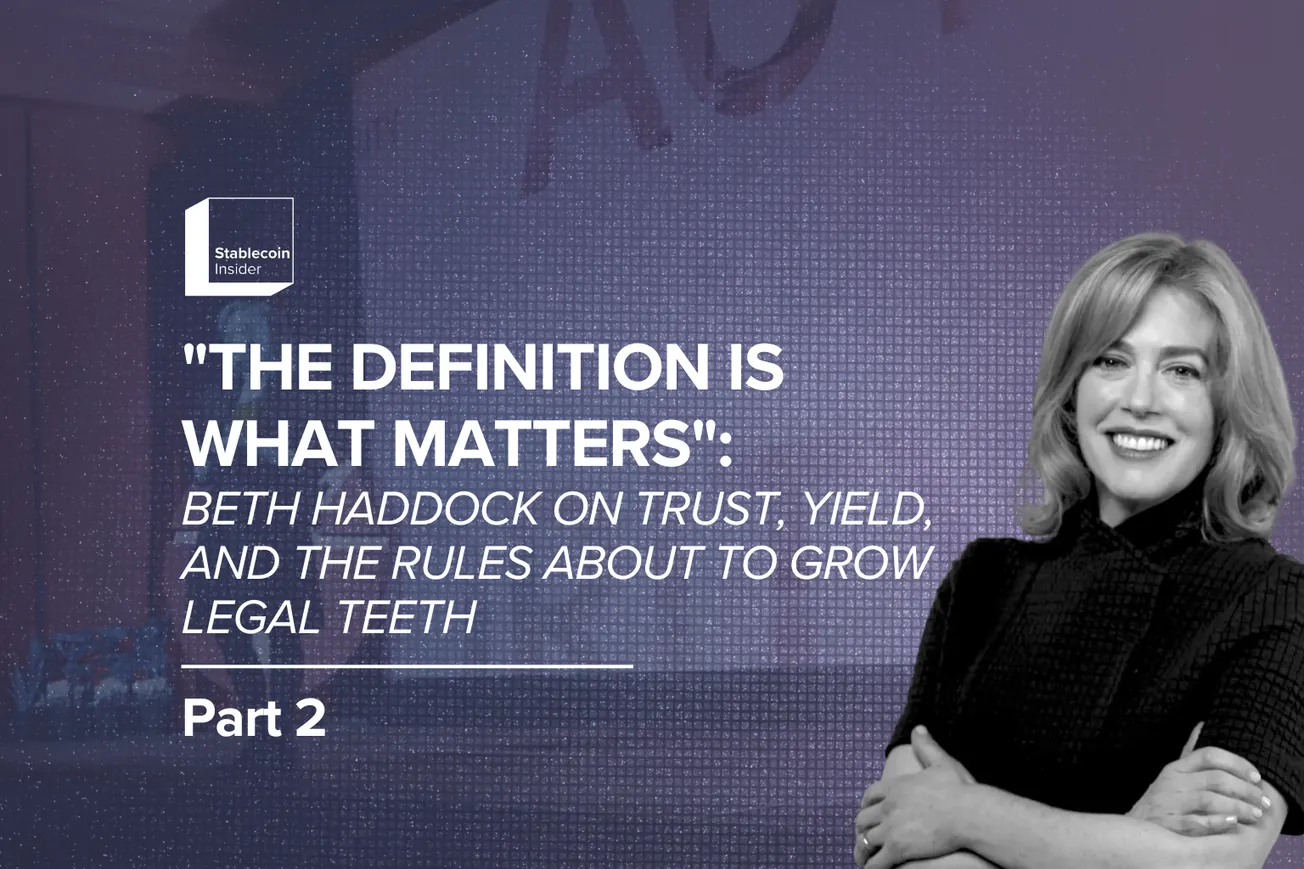
In conversation with Beth Haddock
In the second half of our conversation, Beth Haddock makes the case for stablecoins in cross-border payments, draws the line that excludes most tokenized RWAs, and explains why the real risk lives in the exemptions nobody's reading.
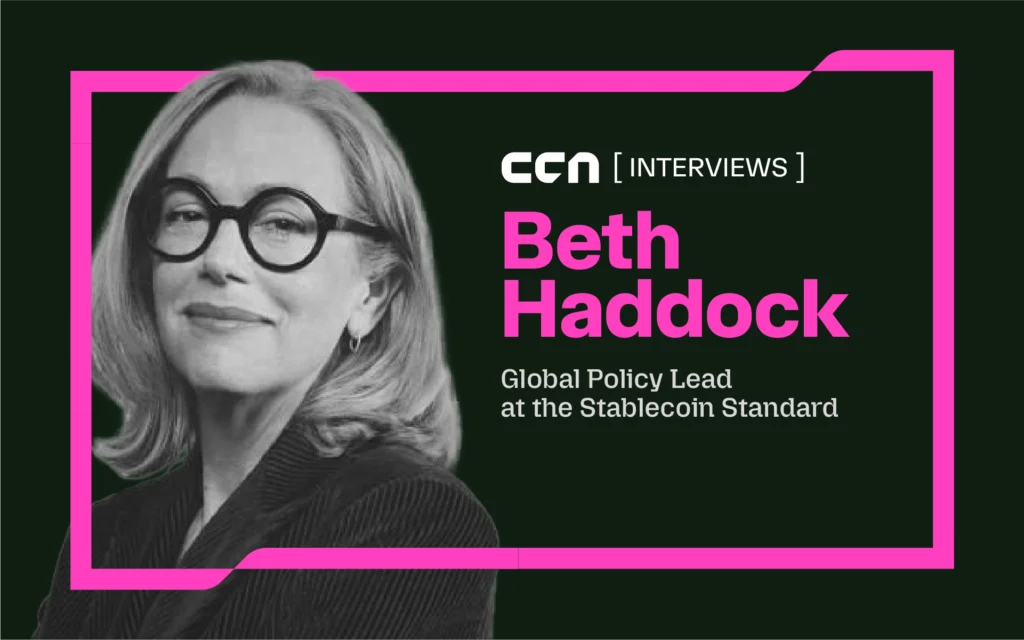
Beth Haddock is the Global Policy Lead at the Stablecoin Standard. She is also the founder of, Founder, Warburton Advisers and · Chair of the Compliance Committee at, GMO-Z.com Trust Company (NYDFS-regulated)
Missed the first half? → Read Part 1.
In Part 1 of this conversation, Beth Haddock, Founder of Warburton Advisers and Global Policy Lead at the Stablecoin Standard, argued that "stablecoin" has become one word stretched across a stack of very different products, and that the laws now taking shape will make those differences expensive to ignore.
In Part 2, she turns from the definitional problem to its consequences: where stablecoins genuinely improve on the old system, which products don't deserve the name at all, and what an institution should actually do before the rules acquire legal teeth.
Remittances, RWAs, and the Things That Aren't Really Stablecoins At All
On cross-border payments, Haddock pushes back on the doubts about the value of stablecoins.
"When you send money cross-border in traditional finance, you're already taking risk. You're waiting days, trusting a chain of correspondents. Global remittances are not a risk-free baseline that stablecoins are degrading. They're a slow, expensive baseline that stablecoins can improve."
She is more cautious on real-world-asset tokenization, which she thinks gets lumped under the stablecoin umbrella far too casually. Many tokenized RWA products are closer to collective investment schemes, or other products that function as financial instruments, and should be regulated as such.
"Calling that a DeFi stablecoin is exactly the kind of category error the next wave of enforcement is going to target."
Trust, the Credit Cycle, and Why This is Happening Now
Why is institutional and retail appetite shifting at all? Haddock points to a familiar villain: eroding trust in incumbents. A creeping credit-confidence problem, a lack of transparency, banks that don't pass through yield. These push people toward alternatives.
Trust plays an enormous role here, and right now that trust is being withheld from centralized institutions and, increasingly, from politics itself.
But she draws a sharp institutional/retail line:
- Institutions, she says, genuinely have the experience and skills to understand the difference between the products. They do the diligence, they read the reserve attestations, they know a payment coin from a yield-bearing instrument from a tokenized fund.
- Retail users frequently don't, which is exactly why the terminology gap is dangerous and why regulators reach for blunt tools like holding caps.
So what actually makes an issuer worth trusting?
Here Haddock points back to the Stablecoin Standard's framework, which tries to convert "trustworthy" from an adjective into a checklist. Its operational-resilience standard requires reserves to be fully collateralised in high-quality liquid assets, valued daily on a mark-to-market basis at no less than 100% of par, stress-tested and where possible overcollateralized, legally titled for the benefit of holders, shielded from re-hypothecation, and structured to be bankruptcy-remote.
Its transparency standard demands monthly public reporting on circulating supply and reserve composition, with attestations verified by an accounting firm and annual audits. And it layers in standards of conduct for AML, sanctions, cybersecurity, and protocol-level technology due diligence.
"Those aren't aspirational," she said. "Those are what a counterparty for a payment stablecoin should be able to demand before they touch a token. Monthly attestation, bankruptcy-remote design, limited to no re-hypothecation, redemption at par without punitive fees. If an issuer can't commit to that, you've learned which flavor you're dealing with."
Notably, the framework polices reserve quality without forcing reserves into unremunerated central-bank deposits the way the BoE does, which means it permits a viable, yield-earning business model while still demanding bank-grade discipline.
Digital Dollars, Not Stablecoins?
Haddock expects the language itself to keep moving. "Digital dollars," "digital currencies," "payment stablecoins": the vocabulary will fragment further, and each new term will redraw a regulatory boundary.
The likely end state, in her view, is a stack of products sorted by use case: one kind of coin for treasury and cash management, another for payments, another for collecting loyalty points or rewards.
"Whether you're doing treasury or payments, you'll hold different tokenized assets for different jobs. People keep predicting these things will get boring and standardized. I expect that in the short term they keep innovating."
That, she insists, is a feature. Stablecoins are good for competition and good for capitalism, but only if you let them innovate rather than freezing the category in place. Her one real fear is that the financial system is grabbing the tech upgrade, faster settlement, programmability, transparency, while quietly leaving behind the other half of the original promise of digital assets: increased financial access.
"A faster pipe owned by the same gatekeepers is not the revolution it's marketed as."
The Takeaway for the Next Three to Five Years
Asked what she'd tell an institution acting today, Haddock didn't hedge.
"The definition is what matters. Once the rules take effect, 'stablecoin' stops being a marketing term and becomes a legal one, with real obligations attached. The risk over the next few years isn't the headline definition. It's the exemptions and exclusions underneath it, because that's where both the opportunity and the liability sit. Institutions should read those closely and decide what they're actually equipped to hold and oversee."