
Table of Contents
As of 25 October 2026, the entire euro stablecoin market was worth roughly $855 million against a total stablecoin market of $300.5 billion, meaning euro-denominated tokens account for less than 0.3% of all stablecoin value in circulation (source: Stablecoin Beat).
Stablecoin Insider tracks issuance, regulation and treasury practice across every major stablecoin market, and that single ratio explains why the EURC-versus-USDC question is harder than it looks on paper.
A European business reading MiCA documentation would conclude that a euro token is the obvious choice.
A European business looking at order books, counterparty acceptance and settlement depth usually concludes the opposite.
This article breaks down both sides with current market data, regulatory detail, and a decision framework you can apply to your own treasury policy.
Key Takeaways
- USDC offers deep liquidity at $71.6 billion; EURC holds roughly $483 million.
- EURC removes EUR/USD currency risk entirely for euro-reporting businesses.
- Neither token may pay interest to EU holders under MiCA Article 50.
- The euro fell about 4% against the dollar during 2026.
- Most businesses need both, split by payable currency rather than preference.
The European Stablecoin Market Entering 2027
Europe is the only major jurisdiction with a complete, operational stablecoin rulebook.
MiCA classifies both EURC and USDC as e-money tokens, which means single-currency backing, 1:1 redemption at par, segregated reserves held at regulated credit institutions, and no interest paid to holders.
That shared classification is why the choice between them is not a compliance question.
Both are legal to hold, both are authorised, and both are distributed by MiCA-licensed providers across the European Economic Area.
What differs is scale.
The euro stablecoin market reached $835 million by the end of August 2026, up roughly sixteenfold from about €50 million in early 2024 (source: OneBullex).
That is real growth.
It is also roughly 1.2% of USDC's standalone supply. The regulatory environment in Europe has matured far faster than the euro-denominated liquidity that was meant to follow it, and treasury teams are living inside that gap.
What Changed in 2026
Three developments reshaped the calculation this year.
- First, on 14 October 2026, the European Banking Authority classified USDC as the first significant e-money token under MiCA, with split EBA and ACPR supervision taking effect from 12 November 2026.
USDC was the first of 45 notified EMTs to receive the designation (source: Yahoo Finance).
The significance brings heavier reserve and liquidity oversight onto the issuer, not new duties onto holders, and it arguably makes USDC the most closely supervised dollar token in the world.
Our USDC Q2 2026 report covers how Circle has monetised that compliance position.
- Second, the euro weakened.
EUR/USD opened 2026 near 1.173, peaked at 1.2081 on 27 January, and hit a low of 1.1113 on 14 October, finishing the period down about 4% for the year and roughly 8% off its January high (source: NAGA).
Any European business that parked operating cash in USDC in January and converted in October booked a gain.
The same move in reverse would have cut purchasing power by the same amount.
- Third, competition arrived.
Qivalis, the bank-owned joint venture now backed by 37 European banks, is targeting a regulated euro stablecoin launch in the second half of 2026 (source: ING), and the ECB is running a digital euro pilot from 2027 ahead of a possible 2029 issuance (source: Blockonomi).
Neither competes with EURC today, but both affect how long a euro-token commitment should be locked in.
EURC vs USDC at a Glance
| Dimension | EURC | USDC |
|---|---|---|
| Issuer | Circle (Circle France, ACPR-licensed) | Circle (Circle France, ACPR-licensed) |
| Reference currency | Euro | US dollar |
| Market cap (25 Oct 2026) | ~$483M | ~$71.6B |
| Share of all stablecoins | ~0.16% | 23.82% |
| MiCA classification | E-money token | Significant e-money token from 12 Nov 2026 |
| Native chains | 5 (Ethereum, Base, Solana, Avalanche, Stellar) | 38 |
| 24h volume (late Oct 2026) | ~$28.7M | ~$14.05B |
| Interest to EU holders | Prohibited | Prohibited |
| FX risk for EUR reporters | None | Full EUR/USD exposure |
Sources: ( Stablecoin Beat, CoinGecko, ad-hoc-news ).
Liquidity: The Gap That Decides Most Cases
EURC traded roughly $28.7 million in 24 hours on a circulating supply of 430.5 million tokens in late October 2026 (source: CoinGecko).
USDC turned over about $14.05 billion in the same window on 72.16 billion in supply (source: ad-hoc-news).
That is a ratio of roughly 490 to 1.
The practical consequence is slippage. A €2 million EURC sale is a meaningful event in that market; a $2 million USDC sale is noise.
Businesses that need to move size quickly, or that settle with counterparties in Asia, Latin America, or the Middle East, will find dollar rails priced tighter and available at more venues.
If your treasury cycle involves frequent large conversions, test execution with your liquidity provider before committing a policy to paper.
EURC's position within its own category is strong, though.
It holds roughly 63% of the euro stablecoin market and grew more than 100% over twelve months, with about $76 million in institutional DeFi deposits concentrated on Aave V3 (source: Crypto Briefing).
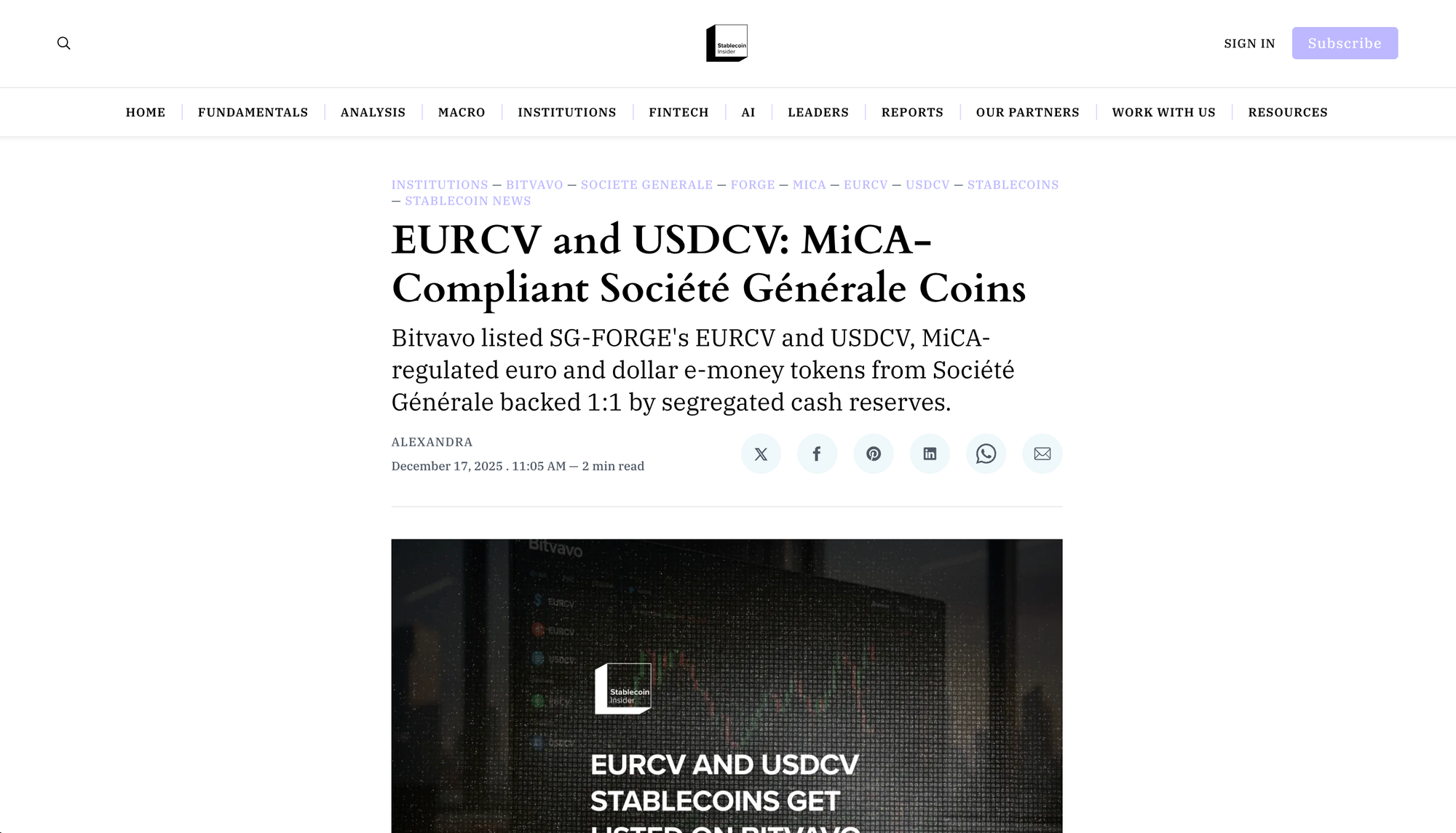
It is the clear euro leader, ahead of SG-Forge's EURCV at roughly $191 million.
Our breakdown of MiCA-compliant EURCV and USDCV covers the bank-issued alternative.
Currency Risk and the Accounting Consequence
This is where EURC earns its place.
A business that reports in euros and holds USDC carries an open FX position.
Under IFRS, that position is revalued at every reporting date, and the gain or loss lands in profit and loss whether or not you ever converted.
A dormant USDC balance therefore produces reported volatility with no corresponding commercial activity.
EURC removes that line item. Balances stay flat in your functional currency, bank reconciliation is clean, and auditors treat the holding as a cash-equivalent claim rather than a foreign currency asset.
For a company holding €500,000 in working capital, the 2026 EUR/USD range of 1.2081 to 1.1113 would have swung a dollar-denominated equivalent by roughly 8% between its extremes.
That is a six-figure accounting movement on a balance that existed only to pay suppliers.
Tax treatment follows the same logic and varies by member state.
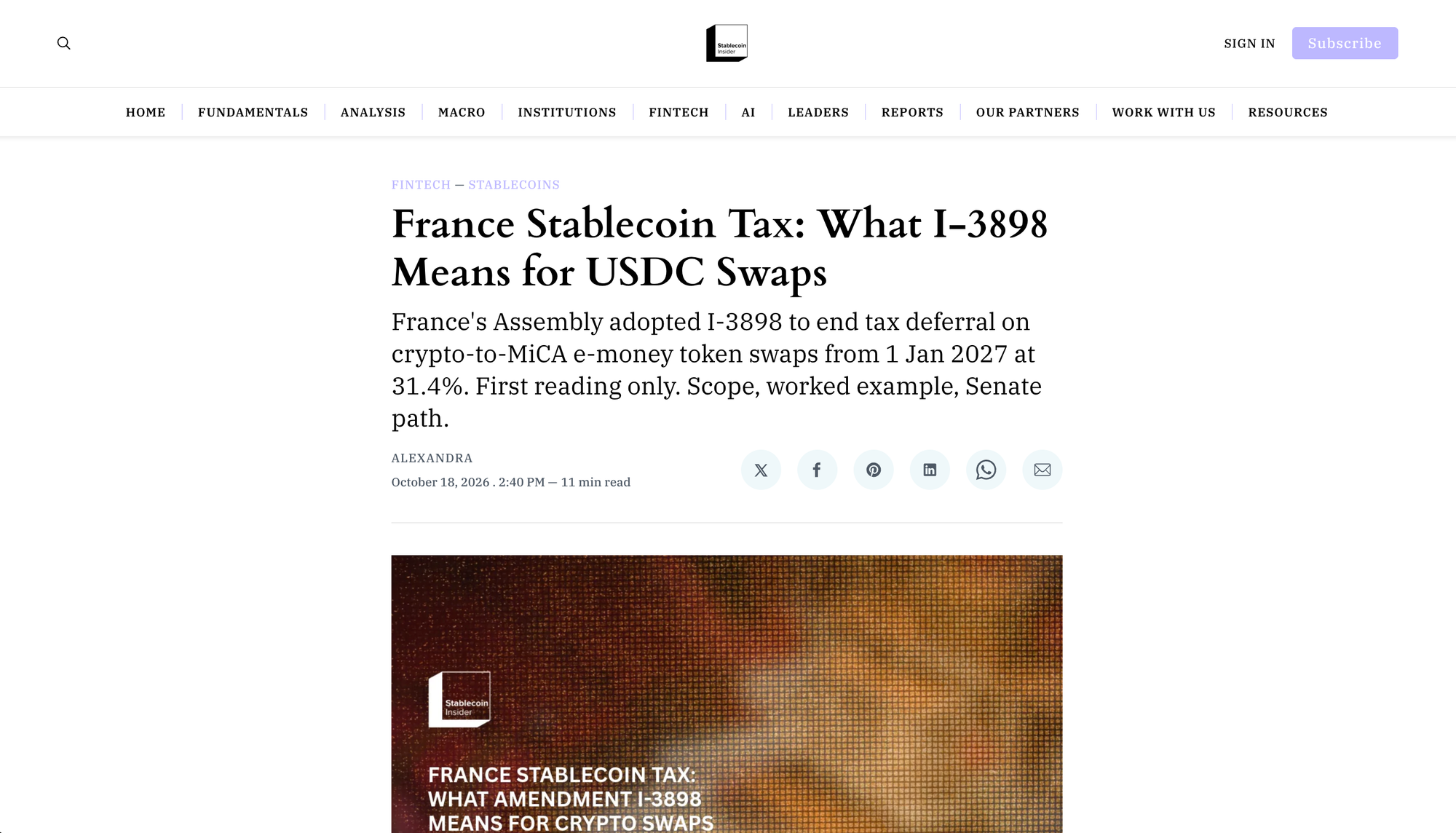
France, for example, applies specific rules to stablecoin disposals that catch conversion events; see our guide to France stablecoin tax before assuming a conversion is tax-neutral.
Conversion Costs: The Silent Expense
Currency match matters more than fee schedules. If you collect in euros, hold USDC, and pay in euros, you pay a spread twice.
Typical retail and SME FX spreads on EUR/USD conversion sit well above the 10 to 30 basis points institutional desks quote, and stablecoin on and off-ramps add their own margin on top.
Run the arithmetic on your own flows. A business converting €5 million annually at a blended 50 basis point round-trip cost burns €25,000 a year purely on currency translation it did not need.
Holding EURC for euro-in, euro-out flows eliminates that leg.
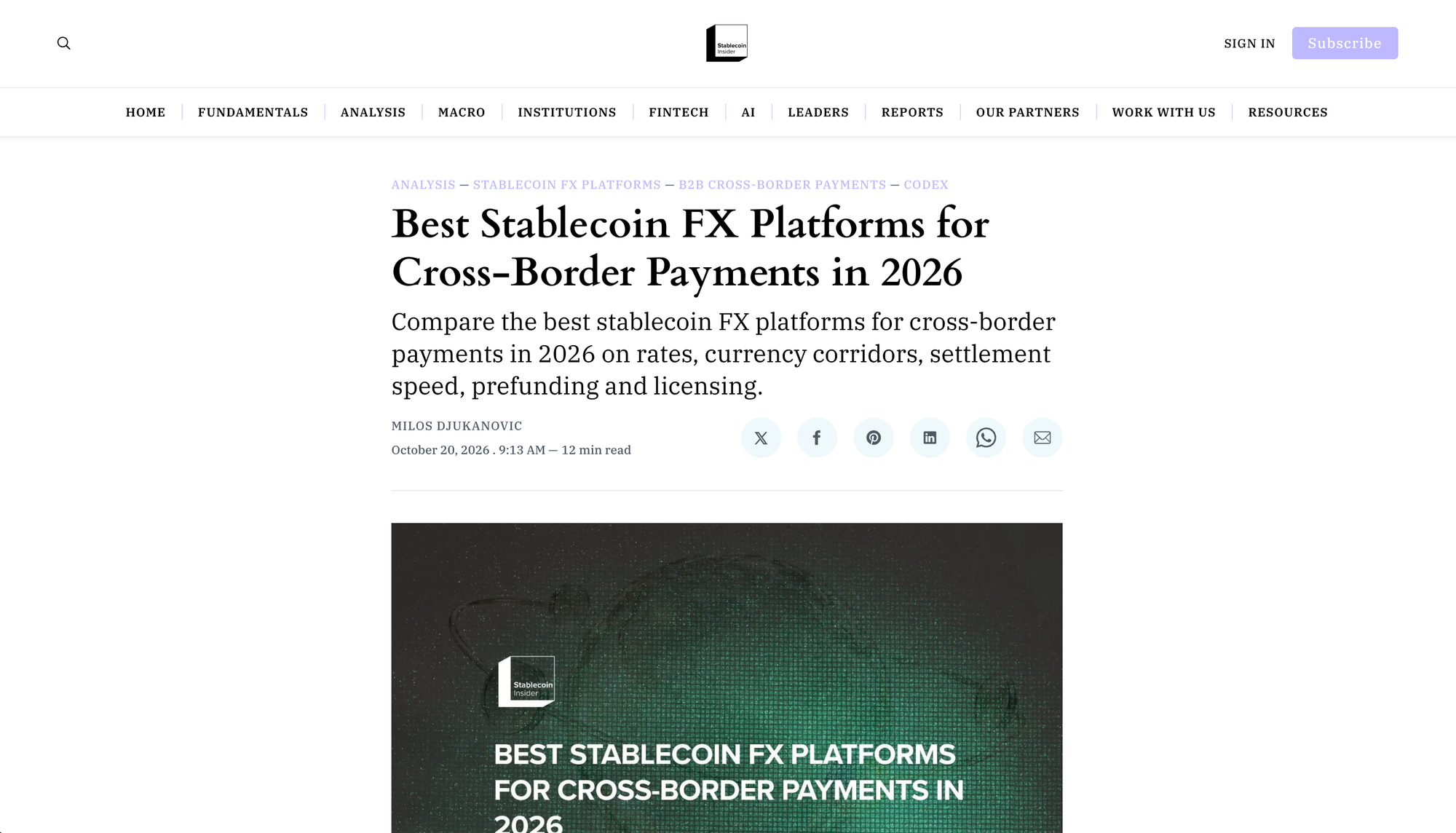
Comparing stablecoin FX platforms is worth doing before you assume the saving is theoretical, because provider spreads differ by a factor of three or more on the same corridor.
Yield: Neither Token Pays You
MiCA Article 50(1) prohibits EMT issuers from granting interest, and Article 50(2) extends the ban to authorised crypto-asset service providers offering EMT-related services.
Article 50(3) captures any benefit linked to holding period, including net compensation and equivalent discounts (source: CryptoTicker).
This levels the field. In the United States, treasury teams weigh yield-bearing alternatives against USDC.
In the EU, neither EURC nor USDC pays anything through a regulated channel, so the comparison reduces to currency match, liquidity, and operational fit.
Any yield you see advertised on a euro or dollar stablecoin inside the EEA is coming from lending the token out to third parties, which carries credit risk the issuer ban was designed to keep away from the token itself.
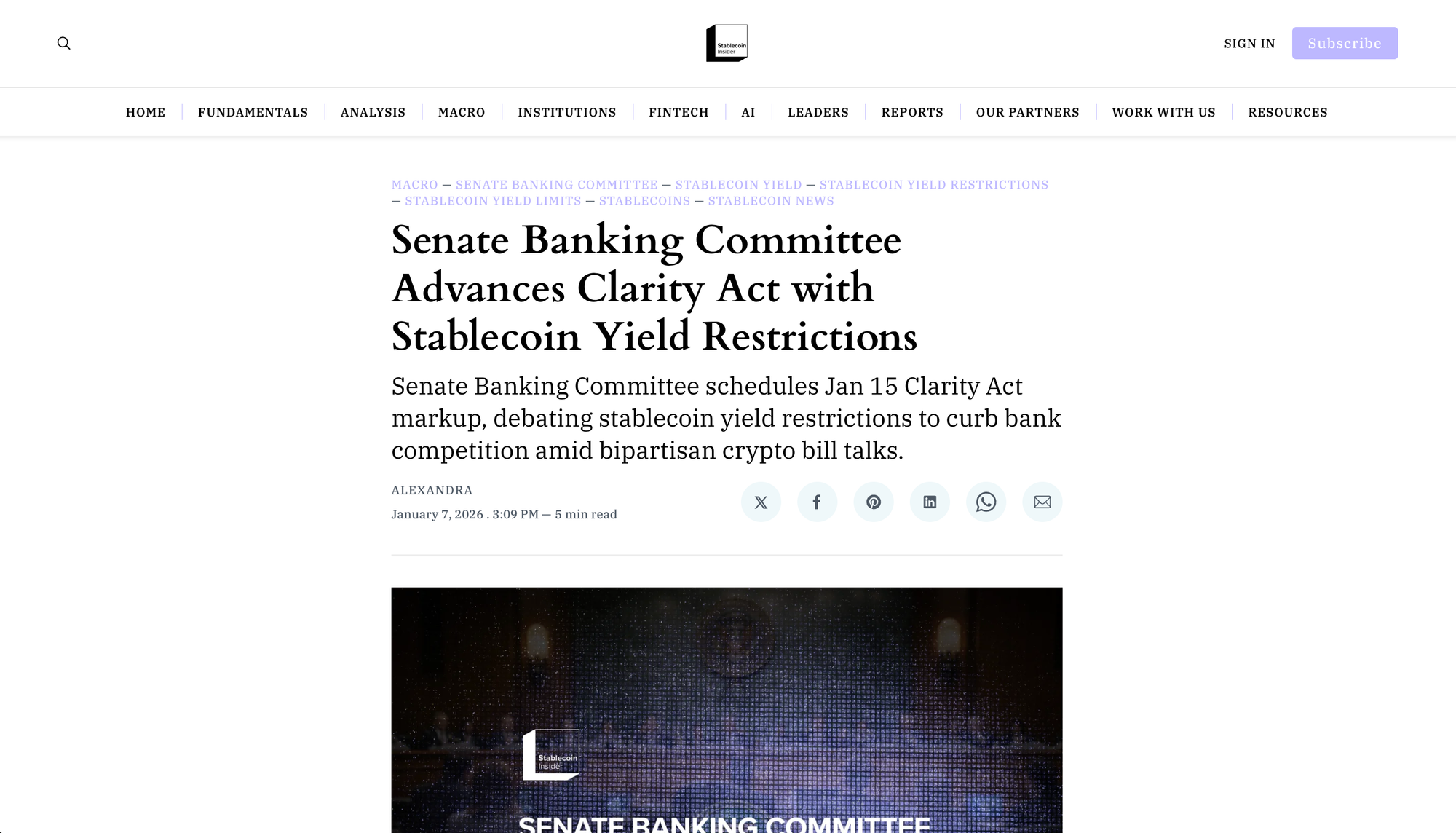
Our explainer on stablecoin yield restrictions sets out where the line falls.
Network Coverage and Operational Reality
USDC is natively issued on 38 blockchains. EURC is live on five: Ethereum, Base, Solana, Avalanche and Stellar.
Euro stablecoin supply is also heavily concentrated, with Ethereum holding 69.5%, Solana 14.8% and Base 6.9% (source: OneBullex).
Chain breadth matters for three things: paying counterparties who only operate on one network, keeping gas costs predictable, and routing around congestion.
If your vendors settle on Tron, Polygon, or an L2 outside EURC's footprint, a euro-only policy forces a bridge or a conversion at the edge.
It also raises the risk of a misdirected transfer, which is why peg monitoring and clear network procedures belong in any treasury runbook.
Both tokens share Circle's redemption architecture, which is the underappreciated advantage of choosing either.
Same issuer, same attestation cadence, same institutional redemption path.
Businesses already running a global stablecoin account can usually add the second token without a new onboarding cycle.
Counterparty Acceptance
Ask what your counterparties will actually take.
In practice, almost every crypto-native vendor, exchange, payroll provider, and marketplace accepts USDC.
A meaningful minority accept EURC. If you invoice European clients who hold euros, EURC is frictionless.
If you pay contractors in Argentina, Nigeria, Vietnam or the Philippines, dollars are what they want, and converting EURC to USDC to local currency adds a leg and a spread.
This is the asymmetry worth internalising: EURC is excellent inside Europe and awkward outside it, while USDC works everywhere but imports FX risk into a euro book.
Check your payment gateway and acquirer coverage before assuming parity.
How to Decide: Five Business Profiles
- EU-only SaaS or agency, euro revenue and euro costs: Hold EURC. There is no FX exposure to manage and no reason to create one.
- European exporter selling into dollar markets: Hold USDC against dollar receivables and EURC for domestic payables. Match the token to the obligation, not to your headquarters.
- Crypto-native company with global vendors: Hold mostly USDC. Liquidity and acceptance dominate, and the FX line is a known cost of operating in dollar markets.
- Regulated EU financial institution: Hold EURC, and watch Qivalis. Supervisory expectations and reporting currency both point the same way.
- Treasury holding reserves longer than 90 days: Hold EURC if liabilities are in euros. A 4% annual currency drift is not an acceptable outcome for a cash buffer.
A workable policy for most mid-sized European businesses: hold 60% to 80% of operating balances in EURC matched to euro payables, keep the remainder in USDC sized to dollar obligations over the next two quarters, and set a conversion threshold rather than converting ad hoc.
Businesses can execute this inside most business accounts that hold stablecoin balances without running two separate custody stacks.
Risks to Monitor Through 2027
Four risks deserve a line in your register.
- EURC liquidity could stay thin, which makes large exits expensive at exactly the wrong moment.
- The Qivalis launch and the digital euro pilot could fragment euro-token liquidity further before consolidating it.
- Political pressure on non-euro stablecoins continues, including proposals from Germany and Italy for an EU kill switch mechanism.
- Significant supervision of USDC from 12 November 2026 is new, untested machinery whose practical effects on issuance and redemption capacity are not yet visible.
None of these argues for avoiding stablecoins.
They argue for keeping the policy reviewable, documenting the rationale, and maintaining institutional on- and off-ramp relationships with more than one provider.
Conclusion
Stablecoin Insider exists to replace guesswork in stablecoin treasury decisions with data, and this one resolves cleanly once the question is framed correctly.
EURC and USDC are issued by the same company under the same European licence, pay the same amount of interest, which is none, and redeem through the same institutional channels.
The only two differences that matter are the currency on the label and the depth of the market behind it.
EURC eliminates FX risk for euro-reporting businesses and keeps domestic settlement clean, but trades at a fraction of USDC's liquidity with a fifth of its chain coverage.
USDC gives you near-universal acceptance and institutional depth, at the cost of an open currency position that moved roughly 4% against the euro during 2026.
Most European businesses should not pick one.
They should hold both, sized to the currency of their actual obligations, and review the split quarterly.
Read Next
- Best Crypto Accounting and Subledger Tools
- Best Stablecoin On and Off-Ramps in Southeast Asia
- Stripe Treasury for Agents: What It Means for USDC
FAQs
1. Should a European business hold EURC or USDC?
A European business should hold EURC for euro-denominated revenue and payables, and USDC for dollar obligations and global counterparties. Most companies benefit from holding both, with the split determined by the currency of their liabilities rather than by preference. EURC removes FX risk from a euro-reporting balance sheet, while USDC provides the liquidity and acceptance that EURC's roughly $483 million market cap cannot yet match.
2. What is the difference between EURC and USDC?
The difference between EURC and USDC is the reference currency and the depth of the market behind each token. Both are issued by Circle, both are classified as e-money tokens under MiCA, and both redeem 1:1 through the same institutional channels. EURC is backed by euro reserves and lives on five blockchains; USDC is backed by dollar reserves and is natively issued on 38 chains with roughly 148 times the market capitalisation.
3. Is EURC MiCA compliant for European businesses?
EURC is MiCA compliant for European businesses because it is issued by Circle France under an ACPR e-money licence, backed 1:1 by segregated euro reserves at regulated credit institutions, and subject to monthly third-party attestations. It meets the full e-money token standard, including redemption at par on demand. USDC meets the same standard and carries additional significant EMT supervision from 12 November 2026.
4. Can a European business earn interest on EURC or USDC?
A European business cannot earn interest on EURC or USDC through a regulated channel in the EU. MiCA Article 50 prohibits e-money token issuers and authorised crypto-asset service providers from granting interest or any benefit tied to holding period. Yield offered on either token inside the EEA comes from lending the token to third parties, which introduces credit risk separate from the issuer's reserve guarantee.
5. Which stablecoin has better liquidity for European businesses, EURC or USDC?
The stablecoin with better liquidity for European businesses is USDC by a wide margin. USDC traded roughly $14.05 billion in 24 hours in late October 2026 against EURC's $28.7 million, a ratio of about 490 to 1. EURC leads the euro stablecoin category with roughly 63% share, but the entire euro stablecoin market is under 0.3% of total stablecoin value, so large EURC conversions carry materially more slippage risk.
Disclaimer: This content is provided for informational purposes only and does not constitute legal, financial, or compliance advice. Protocol versions, governance arrangements, and partner counts cited here reflect publicly announced milestones as of October 2026 and are moving quickly. Adoption figures come from vendor and foundation announcements with differing methodologies and should be treated as directional signals rather than guaranteed outcomes.