

Table of Contents
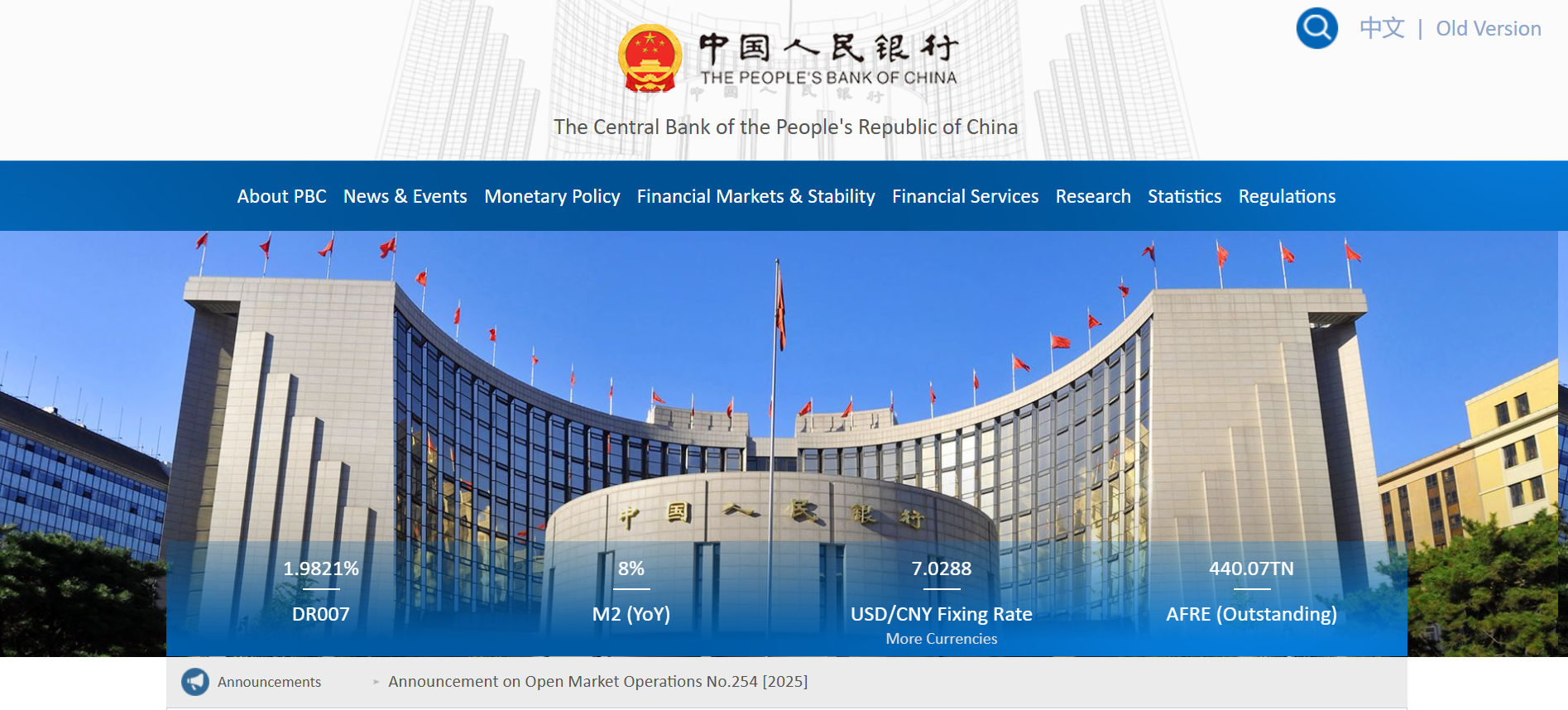
As of January 1. 2026, China's digital yuan, known as e-CNY, has officially begun accruing interest on wallet balances, marking a significant evolution in central bank digital currencies (CBDCs).
This development, announced in late 2025 by the People's Bank of China (PBOC), allows commercial banks to pay interest based on demand deposit rates, transitioning the e-CNY from a cash-equivalent (M0) to a deposit-like (M1) asset.
The move aims to boost adoption after years of pilots, with e-CNY transactions reaching over 7 trillion yuan ($987 billion) by mid-2025.
In response, Coinbase Chief Policy Officer Faryar Shirzad has warned that U.S. restrictions on yield-bearing stablecoins under the GENIUS Act could undermine American competitiveness, potentially allowing China to gain ground in digital finance.
Key Takeaways
- e-CNY interest payments start Jan 1 2026 via banks at demand deposit rates for verified wallets.
- US GENIUS Act bans stablecoin yields, limiting competitiveness against China's digital yuan.
- Coinbase warns restrictions risk ceding global digital finance edge to China CBDC.
- Shift elevates e-CNY to M1 deposit money, boosting adoption after 2025 pilots.
- Policy gap may drive users to interest-bearing foreign digital assets over US stablecoins.
This update comes amid escalating U.S.-China rivalry in fintech. While China's CBDC advances, U.S. stablecoins, face regulatory hurdles that limit their appeal.
The GENIUS Act, signed into law in July 2025, prohibits stablecoin issuers from directly paying interest or yields to holders, focusing them on payments rather than savings.
China's e-CNY Upgrade: Details and Implementation
The PBOC's new framework, effective January 1, 2026, introduces a "digital deposit money" model for the e-CNY. Previously functioning as digital cash without interest, the currency now earns yields on eligible wallets.
Interest rates align with commercial banks' demand deposit benchmarks, currently around 0.35% annually, and accrue quarterly on the 20th day of the last month per quarter.
Only verified wallets in categories one through three qualify; anonymous level-four wallets remain interest-free to maintain privacy options.
PBOC Deputy Governor Lu Lei outlined the changes in a December 2025 article in Financial News, emphasizing enhanced measurement, management, and operational systems.
This upgrade builds on e-CNY's rollout since 2019, with pilots in 26 cities and integration into apps like WeChat and Alipay.
By end-2025, over 300 million individuals held e-CNY wallets, facilitating cross-border trials with Hong Kong and Thailand.
The interest feature addresses low usage rates, e-CNY accounted for just 0.16% of China's money supply in 2025, by making it competitive with traditional deposits.
Experts like Liu Xiaochun from the Shanghai Finance Institute note this positions China as the first nation with an interest-bearing CBDC, potentially accelerating international adoption in Belt and Road countries.
State broadcaster CCTV reported the policy as a step toward a "next-generation" digital ecosystem, with commercial banks like Industrial and Commercial Bank of China handling payouts.

US Regulatory Landscape: The GENIUS Act
In contrast, the U.S. has prioritized stability over innovation in stablecoin regulation. The GENIUS Act, enacted in July 2025, establishes federal oversight for dollar-pegged stablecoins, requiring issuers to hold full reserves and obtain licenses.
A key provision bans direct interest or yield payments to holders, aiming to prevent stablecoins from competing with bank deposits and to mitigate financial risks.
This restriction stems from concerns raised by banking lobbies, who argue yields could erode traditional deposits and destabilize the system.
Stablecoin market cap hit $180 billion by late 2025, dominated by Tether and Circle, with usage surging 30% year-over-year for remittances and DeFi.
However, without yields, U.S. stablecoins may lag in attractiveness, especially as global users seek returns amid inflation.
Senate debates in December 2025 focused on enforcement, with some crypto firms interpreting the law to allow indirect incentives like loyalty points.
Regulators, including the Treasury, push for strict bans to align with banking norms.
Coinbase's Warning and Industry Response
Coinbase's Faryar Shirzad highlighted the risks in a December 30, 2025, X post, stating: "For those who misunderstand what’s at stake in the debate on offering rewards on US-issued stablecoins under the GENIUS Act, a sobering and timely announcement from the People’s Bank of China that they plan to pay interest on the Digital Yuan."
He argued that mishandling the issue could grant non-U.S. stablecoins and CBDCs a "critical competitive advantage" at a pivotal time.
Industry echoes this: Stablecoins drove $10 trillion in payments in 2025, outpacing Visa. Without yields, users might pivot to offshore alternatives or China's e-CNY for cross-border stablecoin trades.
Banking groups counter that yields pose systemic risks, urging broad prohibitions.
Broader Implications
This divergence underscores U.S.-China tensions in digital currency leadership.
- China's e-CNY could challenge dollar dominance in Asia and Africa, where it integrates with local systems.
- U.S. policymakers face pressure to balance innovation and safety, with potential GENIUS Act amendments discussed for 2026.
- Global CBDC adoption stands at 130 countries exploring, per Atlantic Council data, heightening the stakes.
Conclusion
China's e-CNY interest rollout strengthens its CBDC position; US must reassess GENIUS Act to maintain stablecoin edge.
Act swiftly on yields or risk lag.
Read Next:
- Best Cross-Chain Stablecoin Bridges for 2026
- Best Stablecoins for Cross-Border Payments in 2025
- The Role of Stablecoins in Monetary Policy Transmission
FAQs:
1. What is e-CNY interest rate?
Aligned with bank demand deposits, around 0.35% annually, paid quarterly.
2. How does GENIUS Act restrict stablecoins?
Prohibits direct yield payments to holders, enforcing payments focus.
3. Why does Coinbase warn about China?
US bans could make e-CNY more attractive globally, eroding dollar stablecoin dominance.
4. Which e-CNY wallets earn interest?
Verified categories 1-3; anonymous level 4 excluded.
5. What are implications for global finance?
Potential shift toward interest-bearing CBDCs, challenging US fintech lead.
Disclaimer:
This content is provided for informational and educational purposes only and does not constitute financial, investment, legal, or tax advice; no material herein should be interpreted as a recommendation, endorsement, or solicitation to buy or sell any financial instrument, and readers should conduct their own independent research or consult a qualified professional.