
Table of Contents
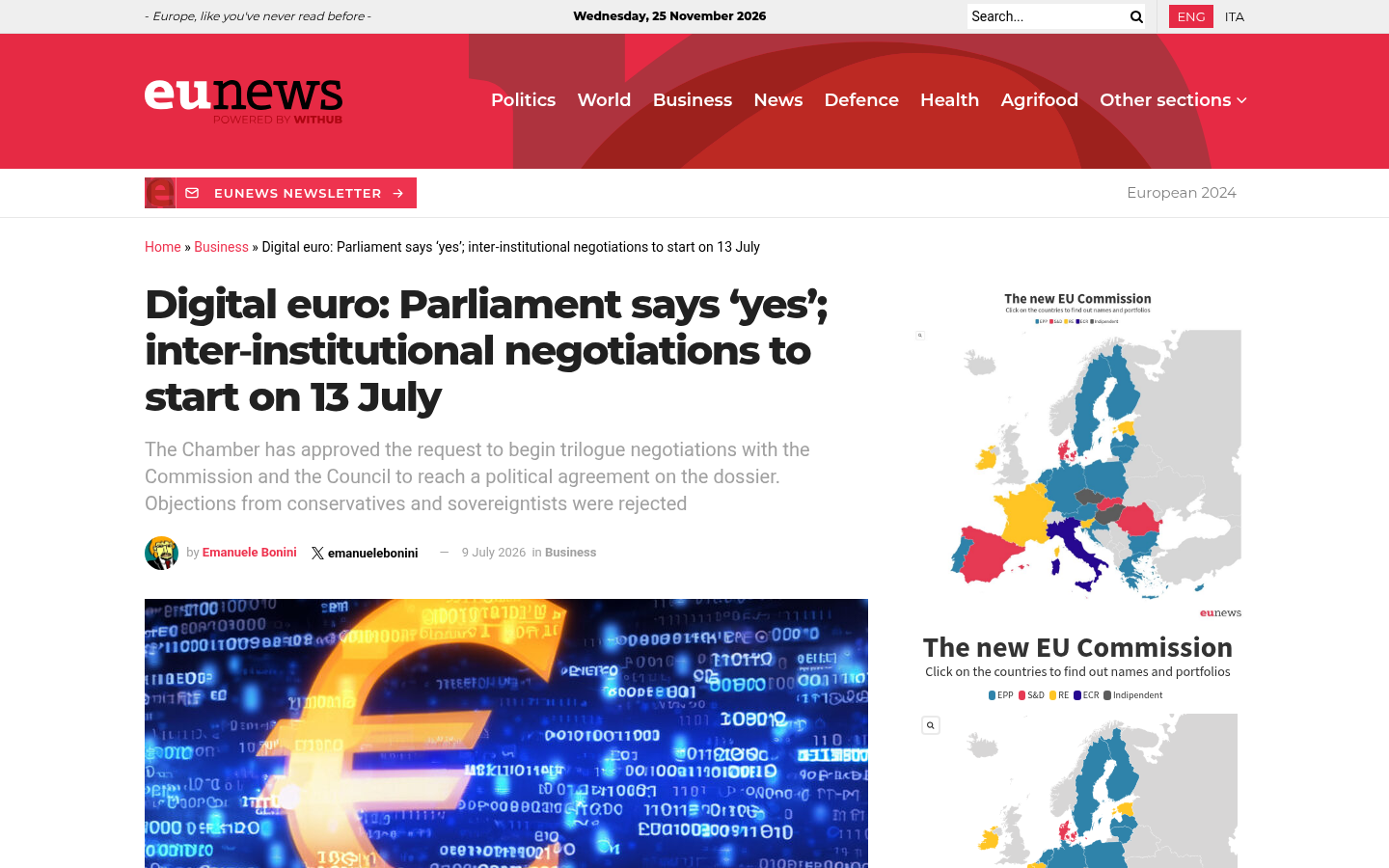
The European Parliament voted 416 to 169, with 22 abstentions, on 9 July 2026 to open final negotiations with EU governments on the digital euro, with the first trilogue held on 13 July (Source: Eunews).
Stablecoin Insider tracks public and private digital money in Europe, and the digital euro is now the biggest open question for euro payments.
The law that would create it has been under negotiation since July, and a marathon session on 18 and 19 November ended without a deal.
EU governments want the file closed before the end of 2026, while the European Central Bank is already preparing a pilot for 2027.
This guide explains what the digital euro is, where the law stands, what is still disputed, the ECB timeline, and what it means for banks, merchants and euro stablecoins.
Key Takeaways
- The digital euro law is still in final EU negotiations.
- The 18 November trilogue ended without a political agreement.
- New negotiating rounds are planned for 3 and 16 December.
- The ECB plans a 12-month pilot from the second half of 2027.
- First issuance is targeted for 2029 if the law passes in 2026.
What the Digital Euro Is
The digital euro would be a digital form of cash issued by the European Central Bank. It would be central bank money, like banknotes, rather than a claim on a commercial bank or a stablecoin issuer. People would hold it in a digital euro account or wallet offered by their bank or payment provider, and use it online or offline across the euro area.
- Online and offline: Both EU institutions want an online version and an offline version that works without an internet connection.
- Free basic use: Opening an account, paying and funding a wallet would be free for consumers.
- Holding limit: Each person could only hold a capped amount, so it works as a means of payment rather than a savings product.
- Legal tender: Most merchants would have to accept it, with exceptions for small businesses.
Supporters see it as a way to reduce Europe's reliance on non-European card schemes and tech platforms. Critics worry about bank deposit outflows, privacy and whether public money is needed where private options already work, as Freshfields sets out in its review of the two negotiating positions.
Where the Law Stands Now
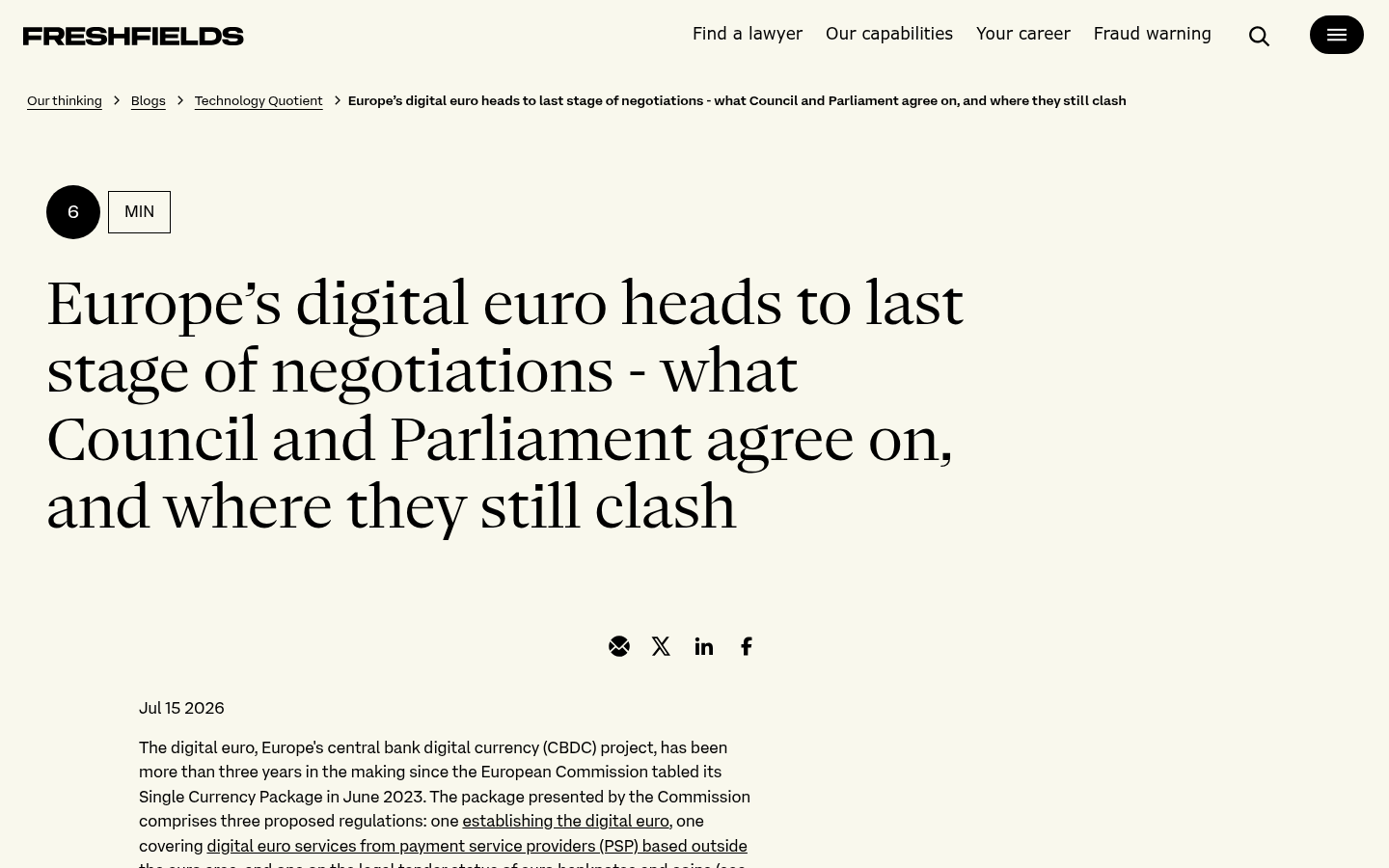
The European Commission proposed the digital euro regulation in June 2023. EU governments agreed their negotiating position in December 2025 and Parliament adopted its own in July 2026, opening trilogue talks between the two co-legislators and the Commission (Source: Freshfields).
| Step | Date | Status |
|---|---|---|
| Commission proposal | June 2023 | Done |
| Council position | 19 Dec 2025 | Done |
| Parliament position | 9 Jul 2026 | Done |
| Political deal | Dec 2026 target | Pending |
| Formal adoption | After deal | Pending |
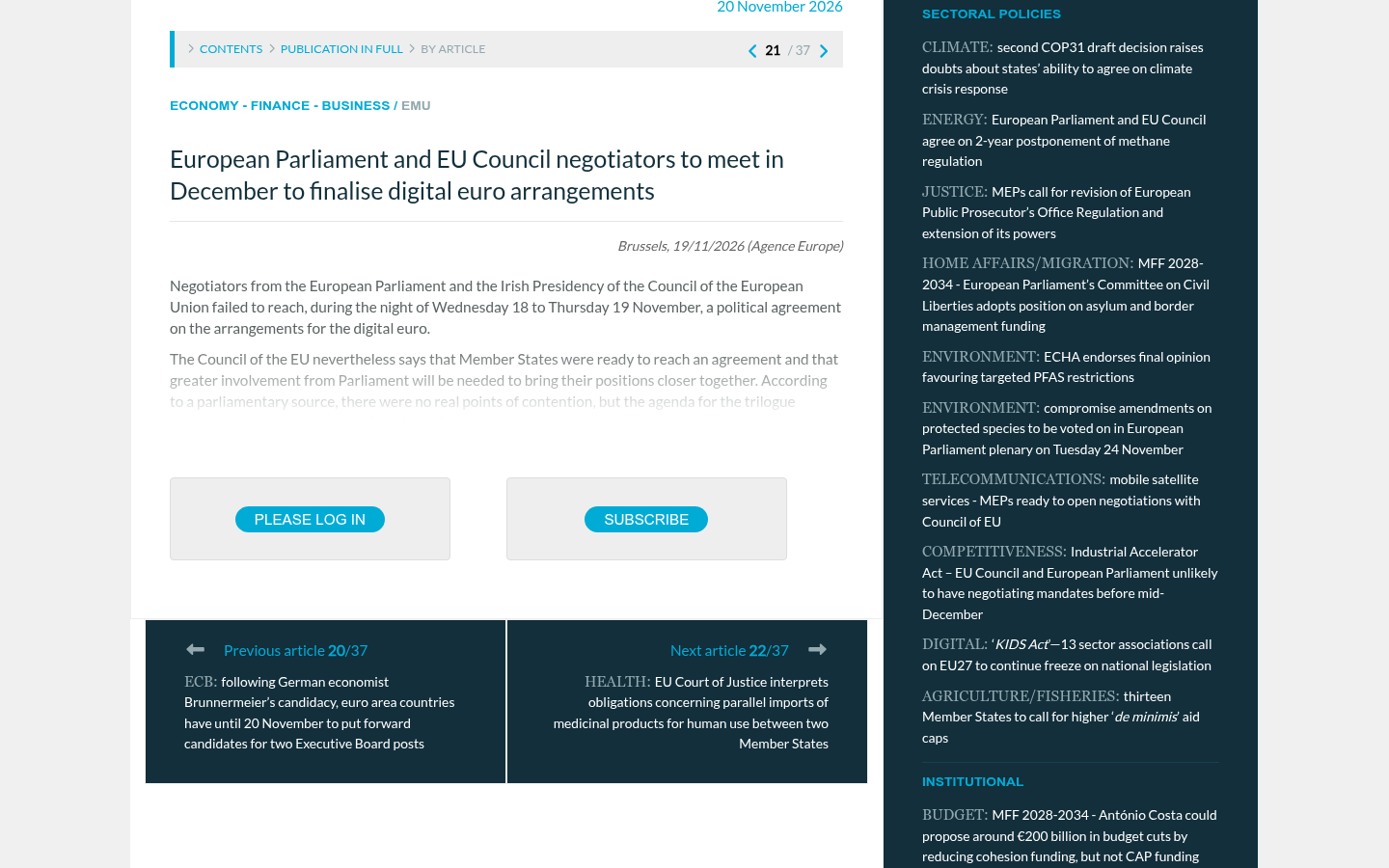
Negotiators from Parliament and the Irish Council Presidency failed to reach a political agreement during the night of 18 to 19 November. The Council said member states were ready to agree, while a parliamentary source said the agenda was simply too heavy. Two further sessions have been suggested for 3 and 16 December, with the Council insisting the file be concluded before the end of the year (Source: Agence Europe).
Even a political deal in December would not put the law in force. The text must then be finalised at technical level and formally adopted by both Parliament and the Council.
What Is Still Being Negotiated
According to Agence Europe, the November session focused on exceptions to mandatory acceptance in shops and on how payment providers will be paid. Wording appeared close on allowing people sanctioned by third countries to use the digital euro, and both sides seemed to agree on a staggered rollout because some cash machines and payment terminals use older technology.
| Issue | Council | Parliament |
|---|---|---|
| Who sets the cap | The Council | The Commission |
| Companies holding it | Left to the ECB | Near-total ban |
| Transitional fees | Max 10 years | Open-ended |
| Merchant fee cap | National level | Per merchant |
- Holding limit: No amount has been agreed. Freshfields reports that discussions have centred on roughly €1,500 to €3,000 per person, and the dispute is mainly over who decides.
- Compensation model: Both sides want fee caps linked to comparable payment methods during a transition, then a cost-based model. They disagree on how long the transition lasts.
- Acceptance: Both agree on exceptions based on business type and size. Parliament wants clearer carve-outs for small and micro enterprises.
- Privacy: Both want a high level of privacy, especially offline, but differ on the technical rules for checking offline payments.
For context on the wider rule changes for EU payment firms, see our explainer on PSD3 and the PSR.
The ECB's Timeline and Pilot
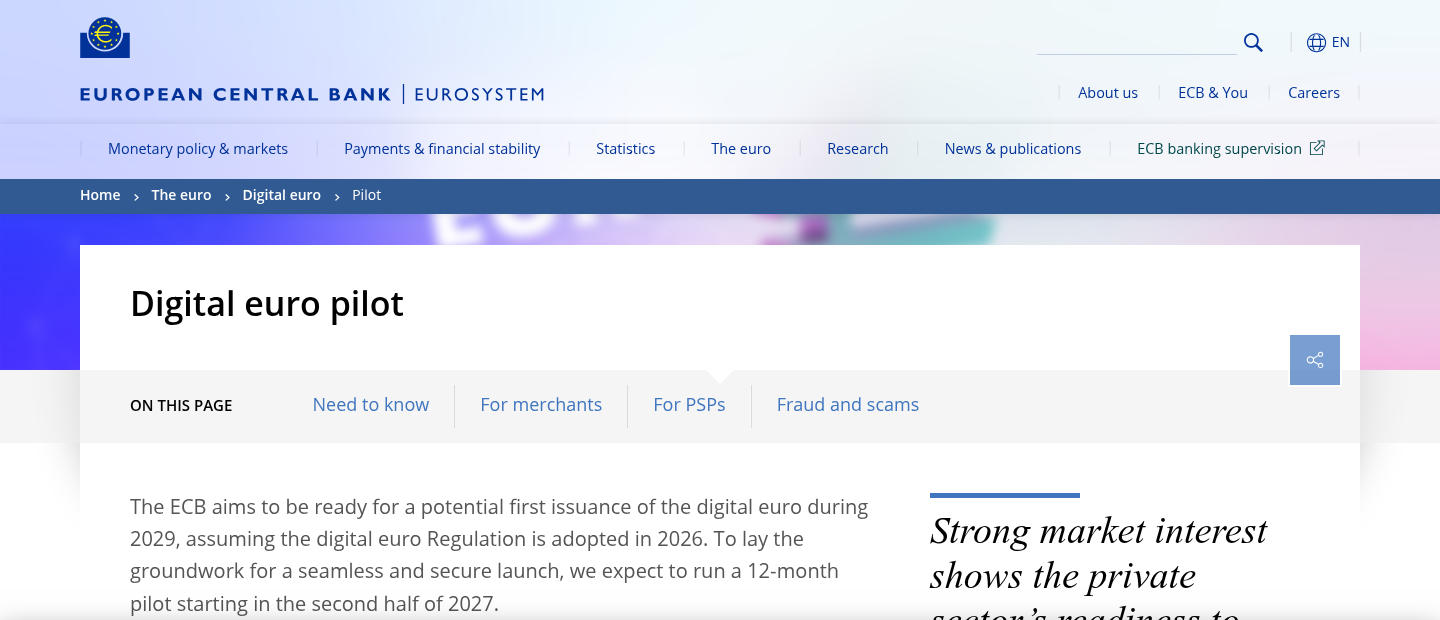
The ECB aims to be ready for a potential first issuance during 2029, assuming the regulation is adopted in 2026. It expects to run a 12-month pilot starting in the second half of 2027, and will only decide whether to issue a digital euro once the law has been adopted (Source: European Central Bank).
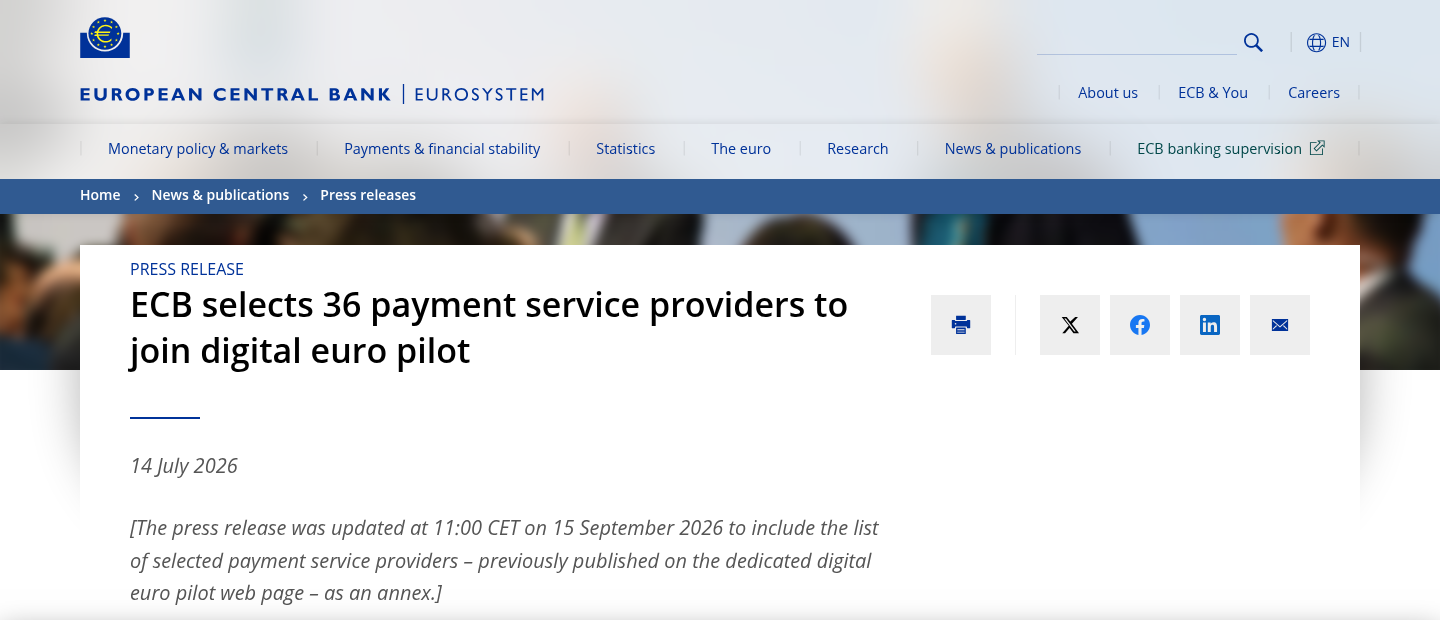
The ECB has already picked its pilot partners. It selected 36 payment service providers from more than 50 applicants, including banks and non-bank firms. The pilot will run at the ECB and 19 national central banks, with staff testing person-to-person payments online and offline, in-shop payments and e-commerce (Source: ECB).
| Milestone | Timing | Who |
|---|---|---|
| Pilot PSPs chosen | July 2026 | 36 providers |
| Pilot merchants | Early 2027 | ECB selection |
| Pilot runs | H2 2027, 12 months | ECB and 19 NCBs |
| First issuance | 2029 target | Eurosystem |
The pilot uses a beta version without legal tender status. A delay in the law beyond 2026 would squeeze the time available for testing and could push back the 2029 date.
What It Means for Banks, PSPs and Merchants
- Banks: The holding limit decides how much deposit outflow banks could face. A lower cap means less risk to funding.
- Payment providers: The compensation model decides how they earn from distributing the digital euro and serving merchants, and how fast they must build it into apps and terminals.
- Merchants: Most would have to accept it. Fee caps linked to existing card and digital payment costs aim to make it no more expensive than current options.
- Corporates: The treatment of companies matters for treasury and payment functions. Parliament's near-ban would limit business use far more than the Council's approach.
The digital euro would also sit next to private European schemes. Our comparison of Wero vs PayPal and our guide to Pay by Bank in Europe cover the private options it would compete with or complement.
Digital Euro vs Euro Stablecoins
| Feature | Digital euro | Euro stablecoin |
|---|---|---|
| Issuer | ECB, Eurosystem | Bank or EMI |
| Legal basis | Law in talks | MiCA, in force |
| Holding limit | Planned | None |
| Public blockchain | No | Usually yes |
| Available now | No, 2029 target | Yes |
Euro stablecoins are already live under MiCA, issued by banks and e-money institutions that must back them with reserves. Our explainer on what backs a euro stablecoin covers how that works, and our look at why nine European banks are issuing one euro stablecoin shows how private banks are moving in parallel.
The two are not direct substitutes. The digital euro is designed for everyday retail payments with a cap, while stablecoins serve crypto markets, cross-border transfers and on-chain settlement. For a wider comparison, see our stablecoins vs CBDCs statistics for 2026.
What to Watch
- 3 and 16 December trilogues: Whether negotiators reach a political agreement before the Irish Presidency ends.
- Holding limit decision: Who gets the power to set the cap, and the first figure proposed.
- Merchant selection: The ECB plans to announce pilot merchants by early 2027.
- Formal votes: Parliament and Council adoption votes after any political deal.
- Pilot start: Whether the 12-month pilot still starts in the second half of 2027.
Conclusion
Stablecoin Insider follows both public and private digital money in Europe, and the digital euro is now in the final stretch of its legislative journey.
Parliament and the Council agree on the basics: an online and offline digital euro, free basic use for consumers, a holding limit and wide acceptance.
The remaining fights are over who sets the cap, how payment providers are paid and how far companies can use it, and the November round showed these are not yet settled.
If a deal comes in December, the ECB's 2027 pilot and 2029 launch target remain realistic. If talks slip into 2027, the timeline is likely to move with them.
Read Next
These three guides go deeper on euro stablecoins, European payment rules and how public and private digital money compare.
- 401(k) Limits 2027: $25,500 Cap, $34,000 at 50+ and the New Roth Catch-Up Rule
- Square vs Clover in 2026: Fees, Hardware and Contracts
- Turkey Revaluation Rate 2027: 27.83% Rise in Fines, Passport Fees and Car Tax
FAQs
1. When will the digital euro launch?
The digital euro will launch in 2029 at the earliest. The ECB aims to be ready for a first issuance during 2029, but only if the EU adopts the digital euro regulation in 2026 and the ECB then decides to issue it.
2. Has the digital euro law been approved?
The digital euro law has not yet been approved. Parliament and the Council are in final trilogue negotiations; the 18 November session ended without a deal, and further rounds are planned for 3 and 16 December 2026.
3. How much digital euro can one person hold?
The amount of digital euro one person can hold has not been decided. Both institutions want a holding limit, and reports say talks have centred on roughly €1,500 to €3,000, but no figure has been agreed.
4. Is the digital euro a stablecoin?
The digital euro is not a stablecoin. It would be central bank money issued by the ECB, while euro stablecoins are issued by banks or e-money institutions under MiCA and are usually traded on public blockchains.
5. Will shops have to accept the digital euro?
Shops will have to accept the digital euro in most cases once it is issued, because it would have legal tender status. Both EU institutions support exceptions based on business type and size, and Parliament wants carve-outs for small and micro enterprises.
Disclaimer: This content is provided for informational purposes only and does not constitute legal, financial, or investment advice. Negotiating positions, dates and figures cited here reflect publicly available information as of November 2026 and may change as talks continue. Check official EU and ECB sources for the latest status.