Table of Contents
Apple and Google are both recruiting for senior roles that list stablecoins and tokenized deposits among the expertise they want, according to job postings surfaced on September 20 and 21, 2026. Apple is hiring an Apple Pay Financial Product Strategy Lead in the United States. Google is hiring an Industry Principal Architect for Web3 in Hong Kong, attached to Google Cloud.
Neither company has announced a stablecoin, a tokenized deposit product, or any change to Apple Pay or Google Pay. The postings describe what each company wants its people to understand, not what it has decided to build.
The two roles also sit in very different places. Apple's is a consumer payments strategy seat, while Google's is an institutional infrastructure role selling cloud services to exchanges, custodians, and banks.
A job posting is a question a company is paying someone to answer. These two postings are asking different questions, and neither has an answer attached yet.
Key Takeaways
- Apple is hiring an Apple Pay Financial Product Strategy Lead in the US.
- Apple lists stablecoins and tokenized deposits as preferred, not required, qualifications.
- Google is hiring a Hong Kong Web3 architect for Google Cloud's APAC business.
- Google names stablecoin rails, tokenized deposits, and regulated custody among its use cases.
- Neither company has announced a stablecoin or new payment product.
What the Postings Actually Say
Apple's listing is dated August 26, so the role itself is nearly a month old. What is new is that it was surfaced this weekend alongside Google's opening, first through Korean outlet Digital Asset and then Bloomingbit and Wu Blockchain. The coverage is recent, the hiring is not.
Apple's lead would sit within the Apple Card and Apple Cash group, which covers consumer credit, peer-to-peer transfers, and stored balances linked to Apple Pay. The role is to evaluate new product structures, commercial models, and potential partnerships, and to shape long-term financial product strategy.
Google's architect would support Google Cloud's Web3 and digital asset work across Asia-Pacific. The posting requires ten years in system architecture, distributed systems, or cloud infrastructure, plus at least four years with production-grade blockchain systems.
Apple Is Hiring a Strategist, Not Building a Coin
The detail that matters most in Apple's listing is where stablecoins sit in it. Knowledge of stablecoins, tokenized deposits, and blockchain appears among the preferred qualifications rather than the mandatory ones.
That places the work at the evaluation stage. Turning Apple Cash into a tokenized balance or adding onchain settlement to Apple Pay would require banking partners, legal decisions, and regulatory approval, none of which a single strategy hire can deliver.
The more realistic near-term model is distribution rather than issuance. A consumer platform can offer a stablecoin without issuing one, which is the route Revolut has taken for its US bank, as we covered in our report on Revolut's third-party stablecoin.
Google Is Selling Infrastructure to Institutions
Google's role is not about Google Pay. The listed clients are blockchain protocol foundations, institutional exchanges, digital asset custodians, and financial institutions working on real-world asset tokenization.
The use cases named are specific: RWA tokenization, stablecoin payment networks, tokenized deposits, and custody architecture for regulated environments. Preferred skills include multi-party computation, hardware security modules, transaction-signing systems, and confidential computing, which is the security stack a regulated custodian needs.
Google Cloud already markets Web3 infrastructure, and has built products including its Universal Ledger and the AP2 agent payments protocol. This hire extends an existing business line rather than starting one.
None of this reaches an ordinary business for some time, since custody architecture for regulated institutions is a long way from a company paying suppliers abroad. Those firms run cross-border payments on conventional multi-currency accounts today, some of which return 2% cashback on eligible transactions. That is the baseline any cloud-built stablecoin rail would eventually have to beat.
Why the Google Role Is in Hong Kong
The architect is expected to help clients design security and compliance frameworks that fit rules set by the Hong Kong Monetary Authority and the Securities and Futures Commission. Hong Kong has run a licensing regime for fiat-referenced stablecoin issuers since August 1, 2025, and granted its first two issuer licences in April 2026.
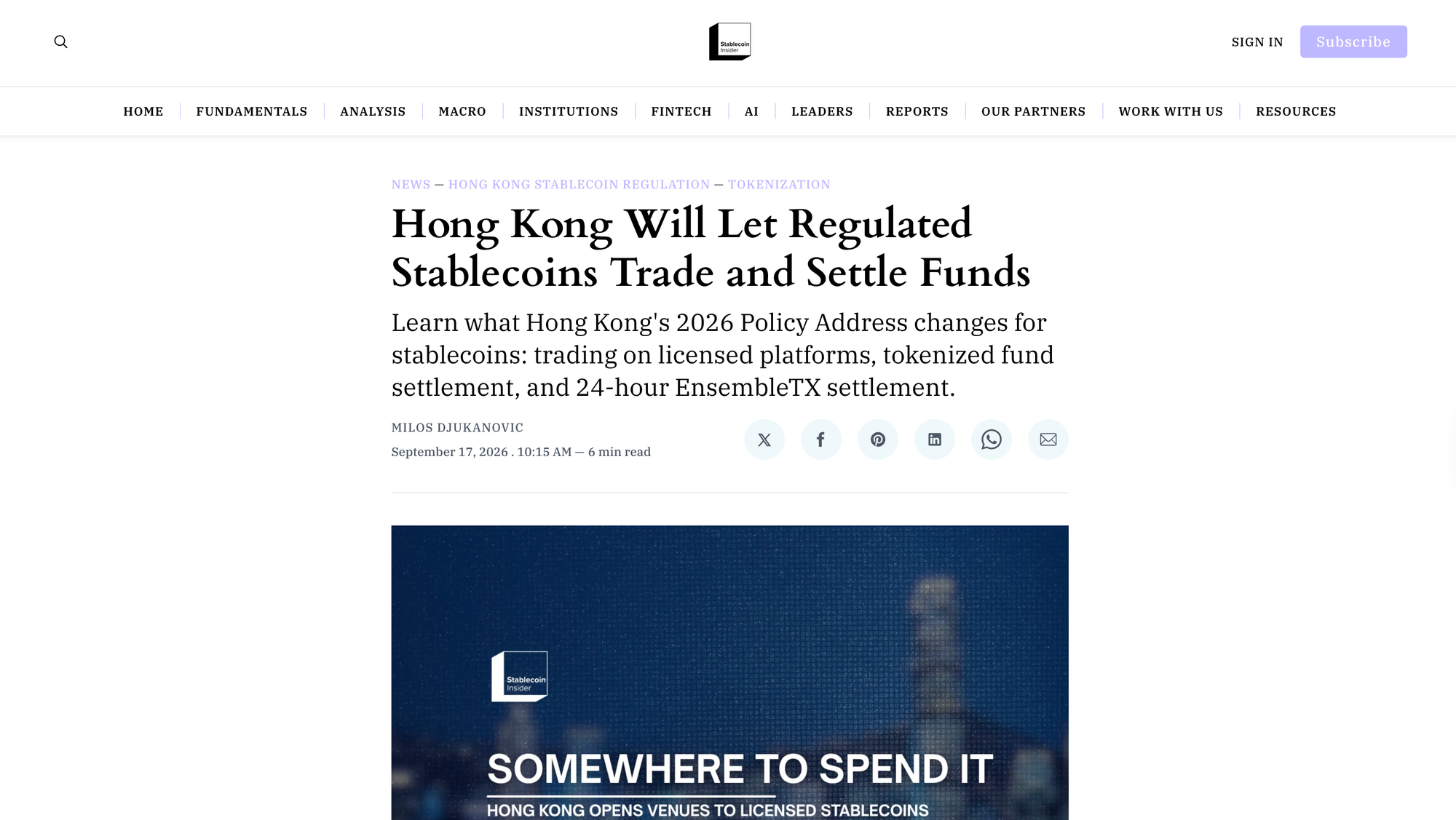
Last week the city went further, committing to let regulated stablecoins trade on licensed platforms and settle tokenized funds, which we covered in our report on the Hong Kong Policy Address. Those permissions create exactly the institutional build-out a cloud vendor wants to be inside.
What the Postings Do Not Show
No product, no issuer licence application, no banking partner, no timeline, and no chain. Neither posting states an intention to issue a stablecoin.
Recruiting is also an ordinary signal at this scale. Large companies hire for optionality constantly, and Korean coverage framed this as following Samsung Electronics into the same talent market, which suggests a sector-wide hedge rather than two isolated product decisions.
For consumers, the practical point is that nothing in an Apple or Google wallet changes because of a job listing. Anyone who wants a small, regulated position in markets can already start at a size where you invest $5 and earn $25. It is a more conventional route than waiting to see whether a stablecoin ever appears inside Apple Pay.

The Consumer Wallet Race Is Already Running
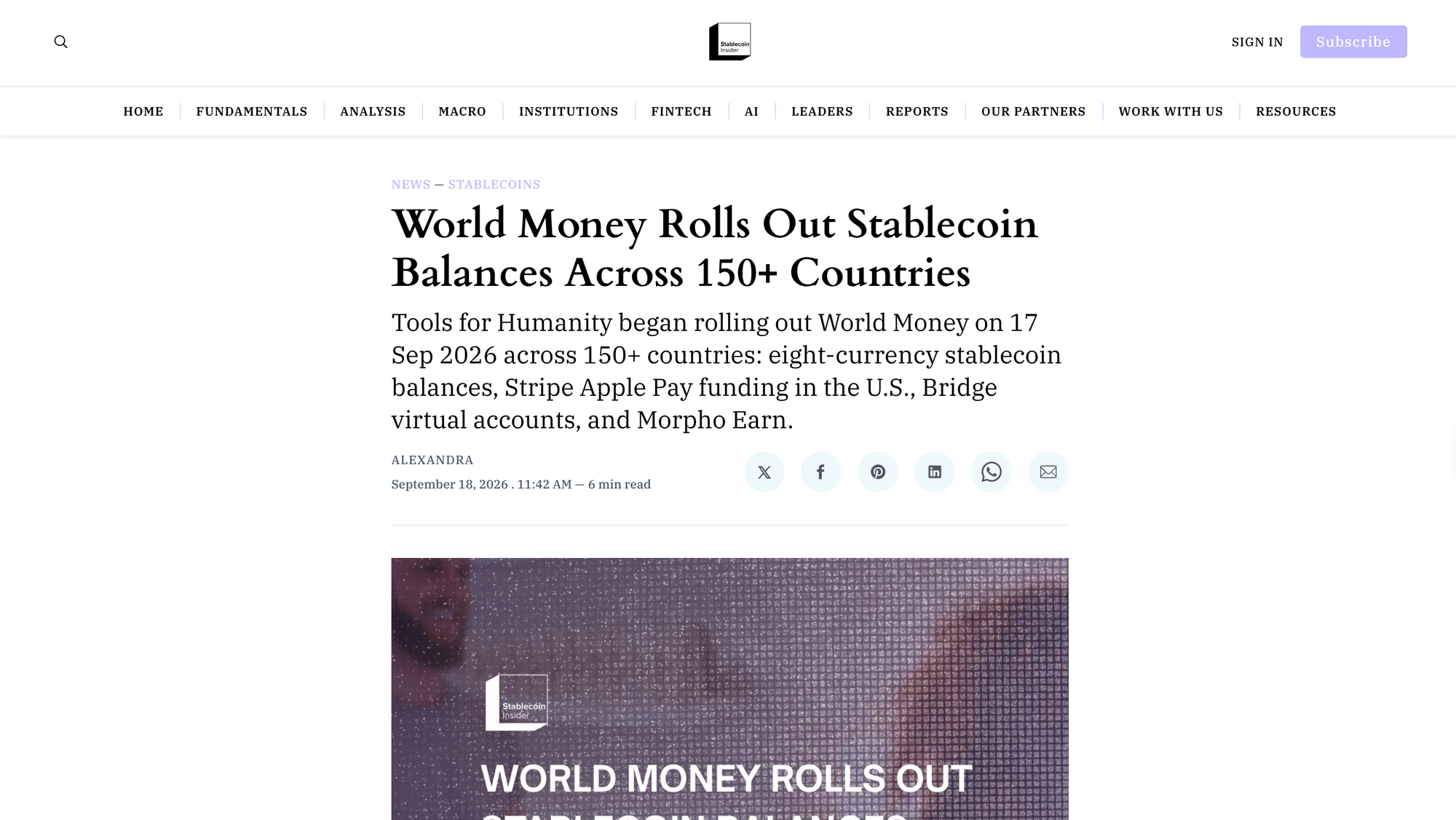
Apple's evaluation lands in a market where others have already shipped. World launched World Money across more than 150 countries last week, with Stripe powering Apple Pay funding into stablecoin balances for US users, which we covered in our report on the World Money rollout.
That detail is the useful one. Apple Pay is already an on-ramp into stablecoins through third parties, whether or not Apple ever touches the token itself. The strategic question for Apple is whether to keep that position or take more of the stack.
FAQs:
1. Is Apple launching a stablecoin?
No. Apple has not announced a stablecoin or any change to Apple Pay. It is hiring an Apple Pay Financial Product Strategy Lead in the US whose preferred qualifications include knowledge of stablecoins, tokenized deposits, and blockchain, with the role focused on evaluating products, commercial models, and partnerships.
2. When did Apple post the stablecoin-related role?
Apple's official careers posting is dated August 26, 2026. It drew attention on September 20 and 21 after Korean outlet Digital Asset reviewed Apple's and Google's job listings, with the report then picked up by Bloomingbit and other crypto media.
3. What is Google hiring for in Hong Kong?
An Industry Principal Architect, Web3, supporting Google Cloud's digital asset business across Asia-Pacific. The role serves institutional clients and lists RWA tokenization, stablecoin payment networks, tokenized deposits, and regulated custody architecture as relevant use cases.
4. Is Google adding stablecoins to Google Pay?
Nothing in the posting says so. The Hong Kong role sits in Google Cloud and is aimed at exchanges, custodians, protocol foundations, and financial institutions, not at Google Pay consumers. Google has not announced any stablecoin issuance or payment product.
5. Why does this hiring matter for stablecoins?
It shows two of the largest consumer and cloud platforms building internal expertise in stablecoins and tokenized deposits. It does not show a product decision, but it places both companies in position to move if regulation and partner economics make a launch worthwhile.
Disclaimer:
This content is provided for informational and educational purposes only and does not constitute financial, investment, legal, or tax advice; no material herein should be interpreted as a recommendation, endorsement, or solicitation to buy or sell any financial instrument, and readers should conduct their own independent research or consult a qualified professional.