
Table of Contents
AI agents are moving from chat interfaces to autonomous execution: they discover opportunities, call tools, negotiate terms, and complete transactions.
Stablecoins are the most practical settlement rail for that shift because they combine software-native transferability with price stability.
The data shows why this matters now. Stablecoins have reached massive scale, but most activity is still non-retail, and real payments remain a small slice.
That gap is exactly what agentic commerce standards like x402 and AP2 are trying to unlock: machine-friendly, policy-controlled payments that work at API speed.
Key Takeaways
- Stablecoins are already huge: on Feb 2, 2026, USDT ~$185.2B and USDC ~$70.6B market caps on CoinMarketCap.
- Retail usage is still small: the ECB cites estimates of ~0.5% of stablecoin volume being organic retail-sized transfers.
- Survey-based usage also shows limited everyday commerce: only ~6% of transactions for goods/services in the Stablecoin Utility Report coverage.
- Institutions are operationalizing stablecoins: Fireblocks reports 49% of institutions already use stablecoins for payments (with more piloting/planning).
- Standards are emerging for agents to pay autonomously: x402 (HTTP 402 micropayments) and Google AP2 (agent payment protocol) explicitly support stablecoins.
What Are AI Agents For Stablecoins
AI agents are autonomous software entities (often LLM-driven) that can:
- interpret objectives (budget, constraints, preferences),
- call tools (pricing APIs, exchanges, wallets, compliance checks),
- decide and execute actions (pay, swap, settle, reconcile),
- and iterate based on outcomes.
When you connect agents to stablecoins, you get machine-to-machine settlement: an agent can pay another agent, an API, a merchant, or a treasury endpoint instantly and programmatically, without waiting on card rails, wire cutoffs, or manual approvals.
The reason stablecoins are the default agent money candidate is not ideology; it’s systems engineering:
- Programmability: policies, spending limits, and conditional flows can be enforced at the wallet and protocol layers.
- Always-on settlement: public blockchains and L2s don’t close on weekends.
- Price stability: agents can budget in USD terms and avoid most spot-crypto volatility.
Stablecoin Reality Check: Big Scale, Small Everyday Share
Stablecoins are large enough to matter to any payments architect:
- On Feb 2, 2026, CoinMarketCap shows USDT ~$185.2B and USDC ~$70.6B market caps.
- McKinsey estimates real stablecoin payments around $390B annually and notes B2B stablecoin payments around $226B/year (still tiny relative to global payment volumes).
But two independent indicators point to the same conclusion:
Everyday commerce is not yet the dominant use.
- The ECB cites estimates that only ~0.5% of volumes are organic retail-sized transfers.
- Reuters coverage of the Stablecoin Utility Report says only ~6% of transactions go toward goods/services.
This matters for agents because agentic systems thrive on high-frequency, low-value, fully automated payments: per API call, per task, per outcome.
Those are precisely the types of small payments at machine speed that today’s consumer rails handle poorly.
The Agentic Payments Stack: x402 And AP2
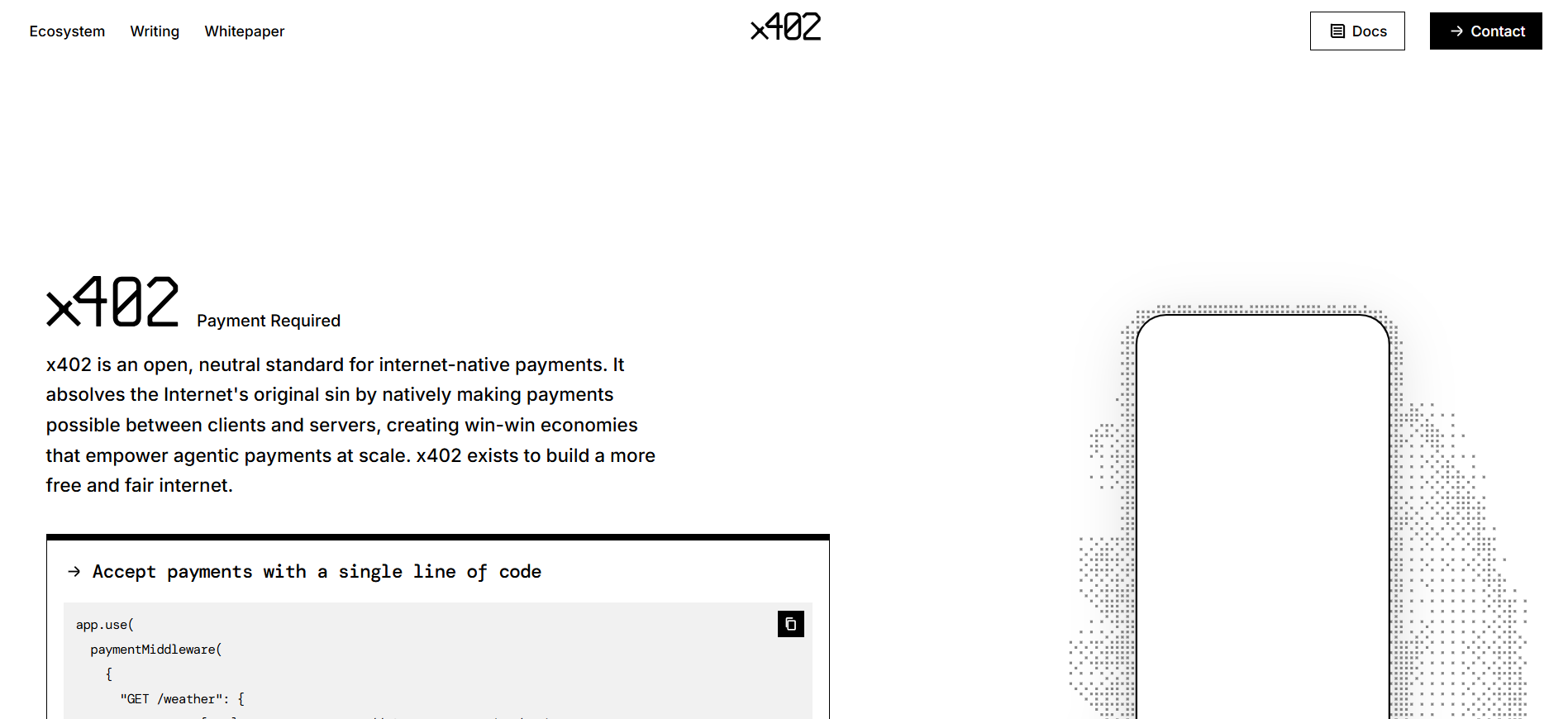
x402: HTTP-Native Payments For APIs And Agents
x402 modernizes a long-reserved web primitive: HTTP 402 Payment Required.
The idea is simple:
- An agent requests a resource (API/data/content).
- The server responds with a 402 and a payment request.
- The agent pays (often in stablecoins) and retries.
- Access is granted, and the transaction is auditable end-to-end.
Cloudflare announced it’s partnering with Coinbase to launch the x402 Foundation and add x402 support to Agents SDK & MCP servers, making it much easier to plug payments into agent workflows.
Coinbase frames x402 as embedding payments directly into web interactions using HTTP 402.
Why this is important: it turns monetization into infrastructure.
Instead of subscriptions and API keys managed by humans, agents can pay just-in-time for precisely what they use.
Google AP2: A Shared Protocol For Agent-Initiated Transactions
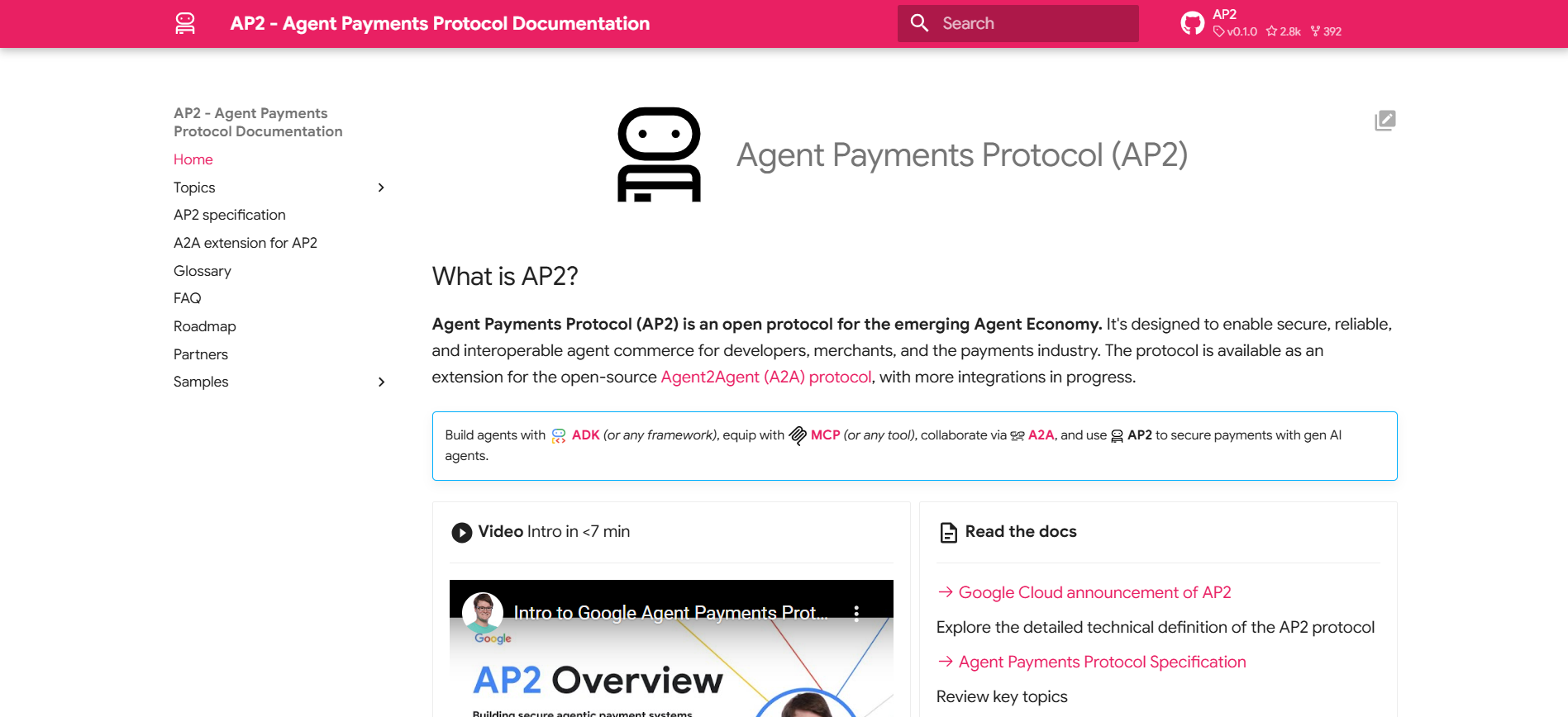
Google announced Agent Payments Protocol (AP2) as an open protocol meant to give agents and merchants a common language for secure, compliant transactions, explicitly including stablecoins as a supported payment type alongside cards and real-time bank transfers.
In practice, AP2 is aiming to prevent fragmentation: if every agent framework invents its own payment authorization and verification logic, merchants and banks won’t scale support. AP2 is a bet that standardized authorization + risk controls will accelerate adoption.
Reference Architectures: How AI Agents Actually Use Stablecoins
Architecture A: Pay-Per-Tool Invocation
Use case: an agent needs pricing data, KYC signals, travel inventory, or compute.
- Agent calls tool endpoint.
- Tool returns 402 payment request (x402).
- Agent pays a few cents (or fractions) in a stablecoin and receives the payload.
This fits microservices economics and can reduce billing complexity for providers (no invoicing, no chargebacks, no subscription leakage).
Architecture B: Programmable Wallets + Policy Engine
Use case: agent spends on behalf of a user or business under strict rules.
- Wallet is configured with budgets, allowlists/denylists, velocity limits, and approvals.
- Agent proposes transactions; policy engine enforces constraints.
- Every payment is logged for audit and reconciliation.
Circle’s developer walkthrough explicitly teaches building a multi-agent system and processing secure transactions using Circle Programmable Wallets.
Architecture C: Agentic Commerce
Use case: Find a weekend getaway under $800 and book it.
- Agent searches inventory, negotiates, confirms constraints, and pays.
- Merchant receives settlement (or stablecoin-linked card rails bridge to fiat).
Visa has been positioning itself for this direction, announcing a new era of commerce featuring AI, including stablecoin-linked card initiatives via partners like Bridge.

High-Value Use Cases In 2026
1) Autonomous Payments For APIs, SaaS, And Digital Workflows
This is the clearest near-term market:
- agents can pay per request,
- services can monetize without subscriptions,
- and both sides get machine-readable receipts.
This is where x402 fits naturally.
2) B2B Treasury And Payments Automation
Stablecoins are increasingly part of institutional payment operations:
- Fireblocks reports 49% of institutions already use stablecoins for payments.
- McKinsey’s estimate of $226B/year in B2B stablecoin payments supports the narrative that early adoption is most visible in cross-border and corporate contexts.
Agents can automate:
- invoice settlement,
- supplier payments,
- cash concentration and rebalancing,
- and reconciliation workflows (ERP posting + onchain proof).
3) DeFi Operations: Monitoring, Routing, And Risk-Limited Execution
DeFi is 24/7 and adversarial. Agents are useful for:
- monitoring yields and liquidity conditions,
- reallocating positions under risk constraints,
- and enforcing rules (exposure caps, protocol allowlists, emergency exit).
Important caveat: yields fluctuate and may involve smart contract, liquidity, and market risks.
In practice, serious deployments use guardrails, policy layers, and continuous monitoring rather than fully unconstrained autonomy.
4) Security And Smart Contract Risk Analysis
As stablecoin usage grows, the attack surface grows too. OpenAI introduced EVMbench, a benchmark to evaluate AI agents’ ability to detect, patch, and exploit smart contract vulnerabilities.
That matters because stablecoin issuance, custody, bridges, and DeFi integrations depend on smart contracts that can fail in non-obvious ways.
Economics: Why Agents Prefer Stablecoins Over Cards
Cards were designed for humans and merchants, not autonomous software:
- per-transaction fees,
- chargeback logic,
- and identity/authorization flows that assume a person is present.
Stablecoins can make sense for agents when:
- transaction values are tiny (micropayments),
- frequency is high,
- settlement must be immediate,
- and you want a deterministic audit trail.
McKinsey’s framing is useful here: headline stablecoin transaction volume can be enormous, but real payments are far smaller today, suggesting a lot of room for agent-driven expansion if usability and compliance improve.
Risk And Control: The Hard Parts You Must Engineer
Agents Can Spend Wrong Unless You Constrain Them
The single biggest failure mode is not settlement; it’s authorization.
Best practice patterns:
- spending limits (daily/weekly/monthly),
- per-merchant/per-protocol allowlists,
- velocity checks,
- human-in-the-loop triggers above thresholds,
- and escrow-like staging for large transfers.
Fraud And Adversarial Tooling
Agents can be manipulated through:
- prompt injection,
- poisoned tool outputs,
- and malicious payment request payloads.
Mitigations:
- signed tool responses,
- strict schema validation,
- deterministic policy evaluation outside the LLM,
- and transaction simulation when interacting with smart contracts.
Compliance, Monitoring, And Auditability
Whether you’re a fintech, enterprise, or marketplace, you’ll want:
- traceable payment intent,
- logs linking decision → tool output → payment,
- and reconciliation artifacts that satisfy finance teams.
The ECB’s point about limited retail usage is also a reminder: regulators are watching stablecoins closely, and broad adoption will likely require stronger controls, disclosures, and supervision.
What To Measure: KPIs For Agentic Stablecoin Systems
If you’re building AI agents for stablecoins, measure outcomes, not hype:
- Cost per successful task (including retries and tool calls)
- Settlement latency and failure rates
- Policy violations prevented (how often constraints block unsafe actions)
- Fraud/dispute rate
- Reconciliation time (time from payment to posted ledger entry)
- Unit economics for pay-per-call pricing (ARPU per agent, margin per tool)
Implementation Checklist: Build Order That Works
- Define scope: what the agent is allowed to do and what it must never do.
- Pick rails: which stablecoin(s) and which chains/L2s you’ll support.
- Choose wallet model: programmable/custodial vs user-controlled, and where policy is enforced.
- Add payment protocols: integrate x402 for API monetization; consider AP2 alignment if you’re in agent-to-merchant flows.
- Observability + audit: logs, receipts, and reconciliation pipelines.
- Progressive rollout: sandbox limits → small budgets → staged approvals → production.

Conclusion
Stablecoins are already big enough to support an agentic economy, but the data is clear: everyday commerce is still a small portion of usage. That is exactly why AI agents for stablecoins is a high-leverage frontier in 2026.
The winners will be teams that treat this as payments engineering, not just AI demos: standardized authorization (AP2), web-native monetization (x402), programmable wallet controls, and audit-grade observability.
Build those layers, and agents can safely transact at internet speed.
Read Next:
- Mastercard Stablecoin Pay In 2026
- The Machines Are Spending Stablecoins. Here's Where the Money Is Going.
- 50 Stablecoin Statistics That Matter in 2026
FAQs:
1. What are AI agents for stablecoins?
They are autonomous software systems that can hold or control a stablecoin wallet under rules, call tools, make decisions, and execute stablecoin payments programmatically.
2. Why do AI agents use stablecoins instead of cards?
Stablecoins can be better for machine-driven micropayments and always-on settlement. Cards are optimized for human checkout flows and often introduce fees and friction that don’t map cleanly to pay-per-call or pay-per-task economics.
3. What is x402 and why does it matter?
x402 is an HTTP-native payment standard built around HTTP 402 Payment Required, enabling agents to pay for APIs and content directly over the web in a programmatic way.
4. What is Google AP2?
AP2 is an open protocol announced by Google to standardize secure, compliant transactions initiated by agents, including stablecoin payments as a supported type.
5. Is stablecoin retail usage already mainstream?
Not yet. The ECB cites estimates that only ~0.5% of stablecoin volume is organic retail-sized transfers, and survey coverage reports only ~6% of transactions going to goods/services.
Disclaimer:
This content is provided for informational and educational purposes only and does not constitute financial, investment, legal, or tax advice; no material herein should be interpreted as a recommendation, endorsement, or solicitation to buy or sell any financial instrument, and readers should conduct their own independent research or consult a qualified professional.