

Table of Contents
The White House hosted its second meeting on February 10, 2026, bringing together key representatives from the cryptocurrency industry and traditional banking sectors.
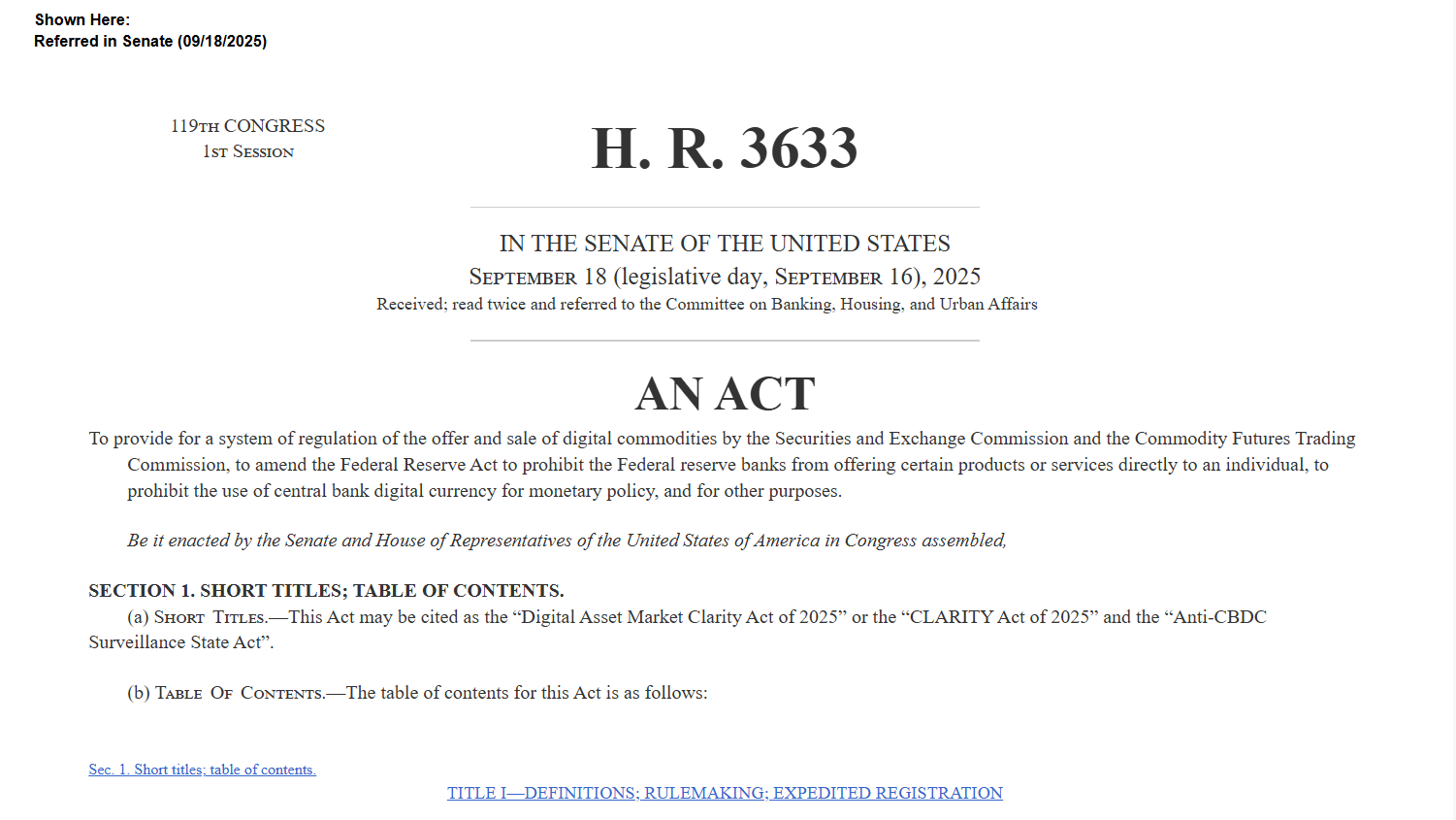
The discussions centered on stablecoin yield provisions within the proposed CLARITY Act.
Attendees described the talks as productive, yet no final compromise was reached, heightening tensions as a March 1 deadline looms.
This gathering underscores the ongoing effort to balance innovation in digital assets with financial stability, amid concerns over deposit outflows and credit availability for communities.
Key Takeaways
- Productive but Inconclusive: Smaller group fostered detailed discussions, but no deal on yield provisions.
- Bank Concessions: Willingness to consider limited exemptions marks progress.
- Core Dispute: Definitions of permissible activities remain contentious.
- Attendees and Leadership: High-profile crypto and banking reps, led by White House crypto advisor.
- Deadline Pressure: March 1 target for compromise, with implications for Clarity Act passage.
The meeting, led by Patrick Witt, Executive Director of the President's Crypto Council, was notably smaller and more focused than the first, with Senate Banking Committee staff in attendance.
Crypto participants included prominent figures like Paul Grewal from Coinbase, Miles Jennings from a16z, Stuart Alderoty from Ripple, Josh Rosner from Paxos, Summer Mersinger from the Blockchain Association, and Ji Kim from the Crypto Council for Innovation.
On the banking side, major institutions such as Goldman Sachs, JPMorgan, Bank of America, Wells Fargo, Citi, PNC Bank, and U.S. Bank were represented, alongside trade groups like the Bank Policy Institute, American Bankers Association, and Independent Community Bankers of America.
Meeting Details and Key Discussions
Sources from both sides highlighted progress in detailing potential compromises, though unresolved issues persist.
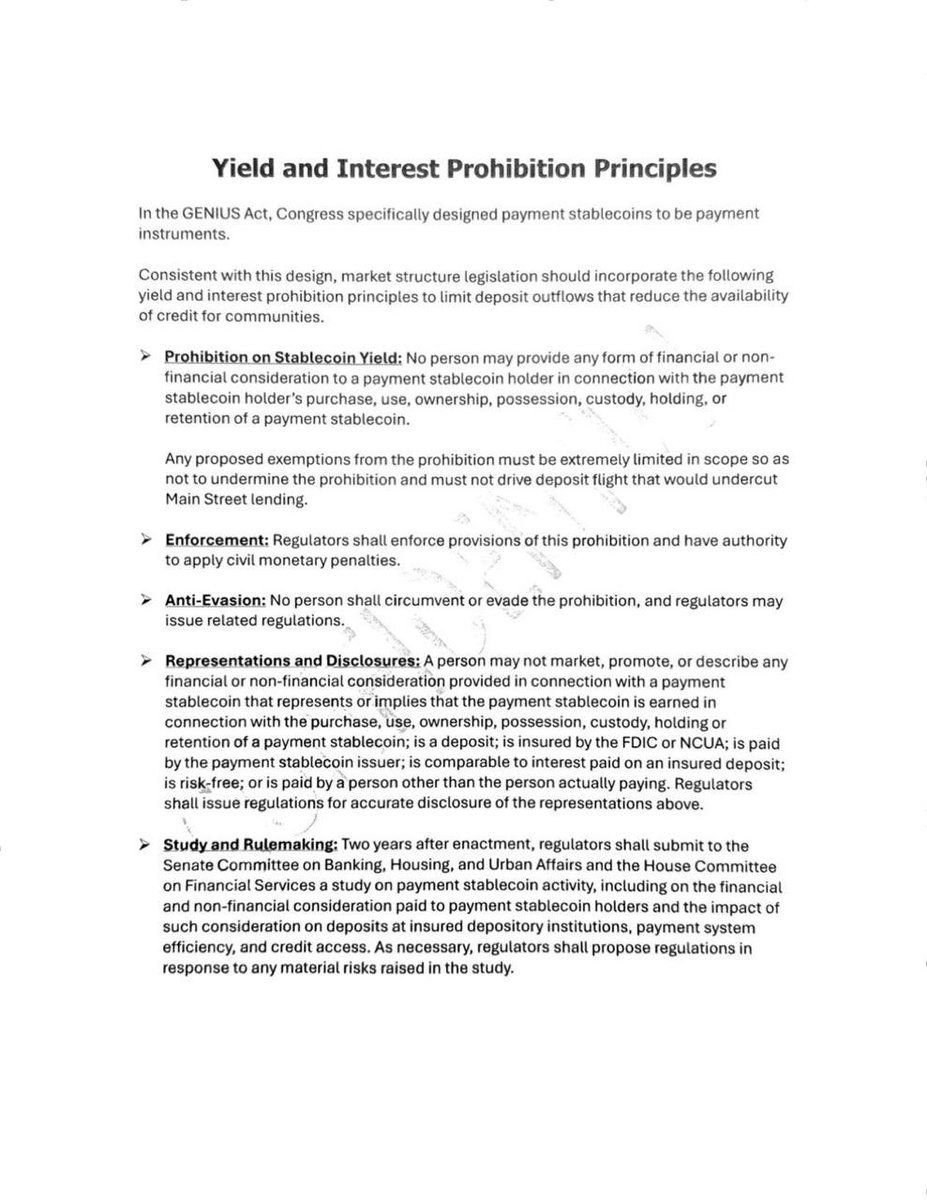
Banks presented a written document outlining "Yield and Interest Prohibition Principles," emphasizing the need to treat stablecoins as payment instruments rather than interest-bearing deposits.
The principles include:
- Prohibition on Stablecoin Yield: No financial or non-financial incentives for holding, using, or retaining stablecoins to prevent deposit flight from traditional banks.
- Limited Exemptions: Any exemptions must be narrowly scoped to avoid undermining Main Street lending.
- Enforcement and Anti-Evasion: Regulators to impose civil penalties and issue rules against circumvention.
- Representations and Disclosures: Strict guidelines on marketing stablecoins, prohibiting claims of FDIC/NCUA insurance or risk-free status.
- Study and Rulemaking: A mandated study two years post-enactment on stablecoin impacts, with potential new regulations.
A notable concession from banks was the inclusion of language allowing discussions on any proposed exemption for transaction-based rewards, a shift from their prior stance against any exemptions.
Crypto advocates pushed for broader definitions of permissible activities that could qualify for rewards, while banks advocated for narrower scopes to protect traditional financial systems.
Ripple's Chief Legal Officer, Stuart Alderoty, optimistically noted that "compromise is in the air."
The focus on permissible activities reflects the core divide: crypto firms seek flexibility to innovate and attract users, whereas banks aim to safeguard against risks like reduced credit availability.
No agreement was finalized, but further bilateral talks are anticipated in the coming days.
The White House has urged resolution by March 1, signaling potential legislative delays if unmet.
Conclusion
As the March 1 deadline approaches, this second White House meeting represents a critical juncture in U.S. crypto regulation.
The Clarity Act aims to provide a stable framework for payment stablecoins, potentially fostering innovation while mitigating risks to the broader financial ecosystem.
While optimism lingers, the absence of a breakthrough highlights the challenges in bridging crypto's disruptive potential with banking's stability concerns.
Ongoing dialogues could pave the way for a balanced outcome, benefiting consumers, businesses, and the economy.
Stakeholders will watch closely for developments that could shape the future of digital finance.
Read Next:
- Omnichain Stablecoins Explained
- What Are USDC Gateway Wallets?
- Top Stablecoins and Pegged Assets on Solana in 2026
FAQs:
1. What is the Clarity Act?
The Clarity for Payment Stablecoins Act is proposed legislation to regulate stablecoins as payment tools, including yield restrictions.
2. Why discuss stablecoin yields?
Yields could incentivize shifts from bank deposits, reducing credit for communities; talks aim to limit this while allowing innovation.
3. Who attended the meeting?
Crypto: Coinbase, a16z, Ripple, Paxos, Blockchain Association, Crypto Council. Banks: Goldman Sachs, JPMorgan, etc., with trade groups.
4. What are permissible activities?
Activities like transactions that might qualify for rewards; crypto wants broad definitions, banks prefer narrow ones.
5. What's next?
Further talks expected soon; White House pushes for March 1 resolution.
Disclaimer:
This content is provided for informational and educational purposes only and does not constitute financial, investment, legal, or tax advice; no material herein should be interpreted as a recommendation, endorsement, or solicitation to buy or sell any financial instrument, and readers should conduct their own independent research or consult a qualified professional.