Table of Contents
Fireblocks and Utila are both institutional MPC wallet platforms, and they are the only two names in this category that compete on the same architectural terms. Everything else marketed as a Fireblocks alternative is either a custodian with a charter or a payment rail with a licence stack.
They were built four years apart, and that gap explains almost every difference between them. Fireblocks launched in 2018, when institutional digital asset flows meant trading, custody, and exchange connectivity. Utila launched in 2022, when fintechs, PSPs, and banks were adopting stablecoins for payments.
The question is not which platform is better. It is whether your primary workload is trading and custody, where Fireblocks' exchange connectivity and off-exchange settlement are built for the job, or high-volume payment operations, where Utila was designed from the first line of code.
This analysis compares both platforms on architecture, chain coverage, payment operations, counterparty networks, pricing, and scale, and sets out which profile each fits.
Key Takeaways
- Both run institutional MPC wallets; the difference is the workload each was designed around.
- Fireblocks has the longer operating record; Utila reports $500 billion+ in cumulative transactions secured.
- Utila's advantages concentrate in payment operations: batching, gas sponsorship, whitelisting.
- Fireblocks retains off-exchange settlement and far deeper exchange connectivity.
- Utila can mirror a Fireblocks environment, which makes parallel operation possible.
- Published pricing differs, but reported Fireblocks starter figures conflict across sources.
What Fireblocks and Utila Actually Are
Both platforms provide multi-party computation wallet infrastructure, where a private key is never assembled in one place and signing authority is split across independently held shares. Neither is a custodian in the regulated sense, and neither can unilaterally move client assets.
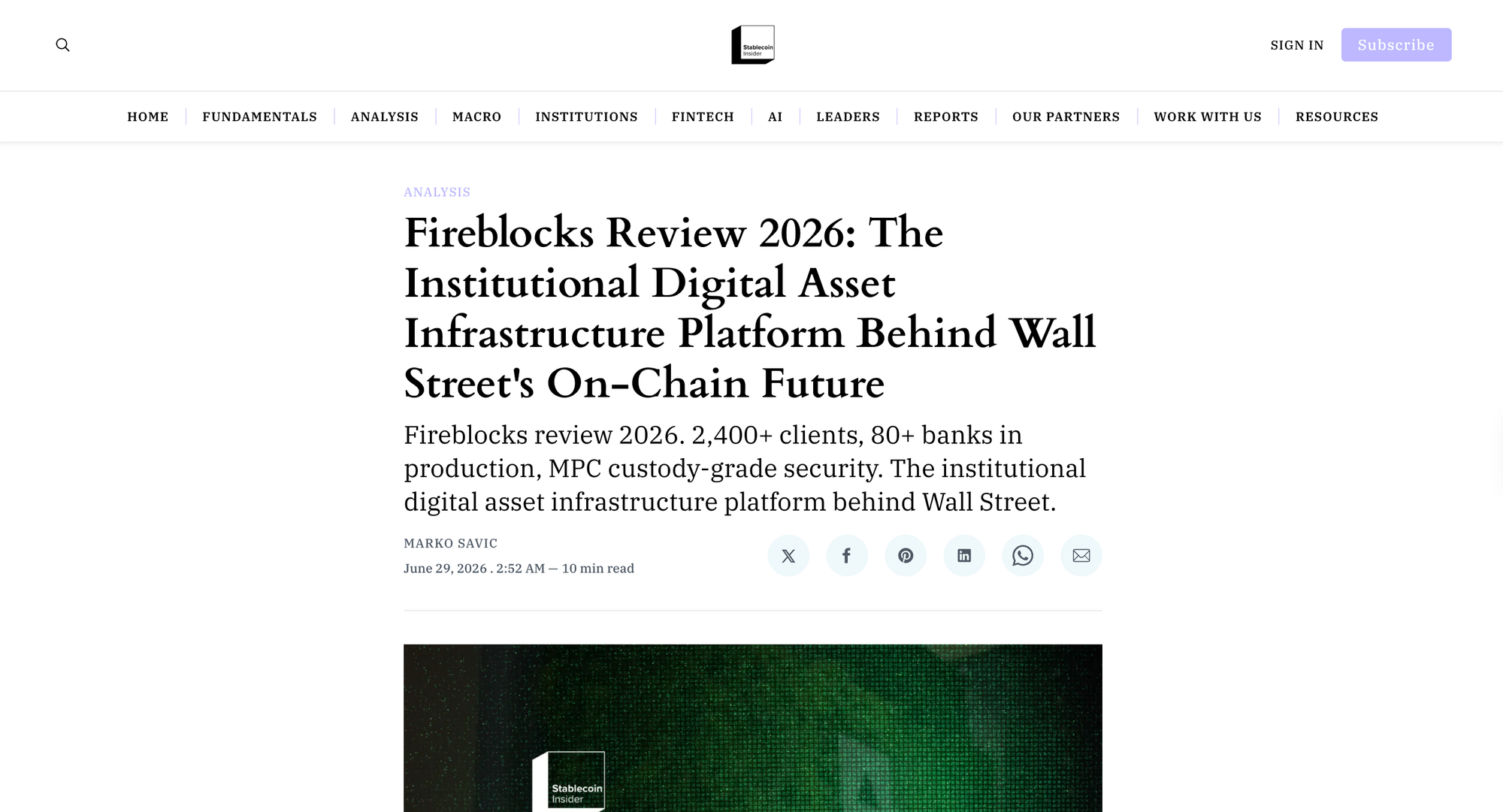
Fireblocks was founded in 2018 by Michael Shaulov, Pavel Berengoltz, and Idan Ofrat, and pioneered production-grade MPC through the MPC-CMP protocol. It has become the institutional standard: 2,400-plus organisations including more than 80 banks in live production, 550 million-plus wallets created, and over $10 trillion in digital asset transactions secured. Our Fireblocks review 2026 covers the full platform.
Utila was founded in 2022 and is led by co-founder and chief executive Bentzi Rabi. It has raised $51.5 million in total, through an $18 million Series A led by Nyca Partners and a $22 million extension led by Red Dot Capital Partners, and grew ARR 4.5 times during 2025. By Utila's own figures, the platform has secured over $500 billion in cumulative transaction volume since inception.
The framing Rabi has used publicly is direct about the positioning: most institutional wallet providers, in his description, are still solving yesterday's problems around trading connectivity and exchange integrations, while the infrastructure requirements for operational use cases are fundamentally different.
Why This Comparison Matters Now
Stablecoin operations moved from pilots into production across 2025 and 2026, and the infrastructure requirement changed with them.
A trading desk needs exchange connectivity, off-exchange settlement, and deep asset coverage. A payment operation needs to send ten thousand payouts on a Tuesday afternoon without ten thousand approval clicks, without holding six different gas tokens, and without a treasury analyst reconciling six chains by hand.
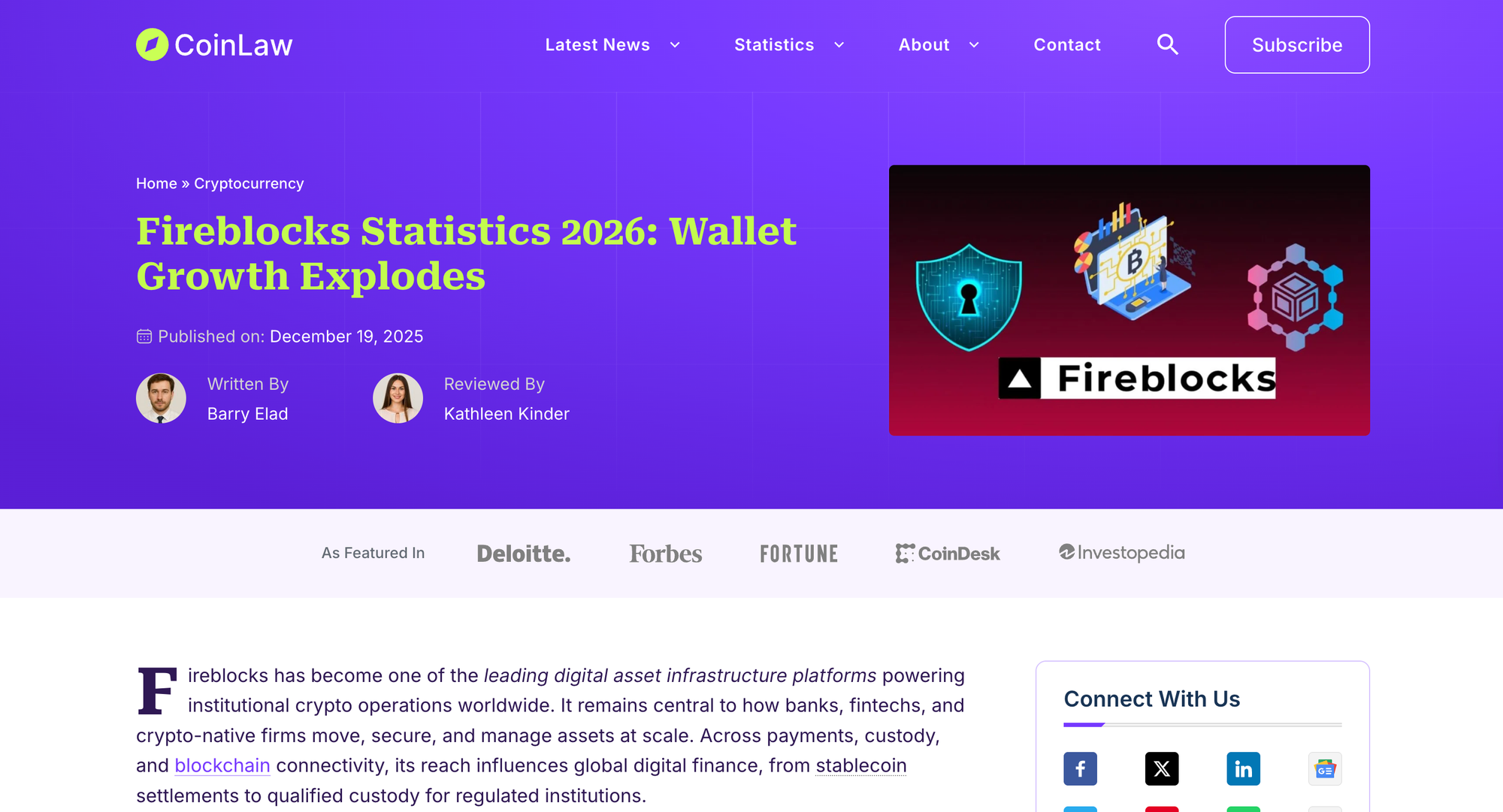
Fireblocks now processes more than 35 million stablecoin transactions monthly, roughly 15% of global stablecoin volume, with its Network for Payments moving over $200 billion in stablecoin flows each month across 300-plus providers in 100-plus countries, according to compiled Fireblocks statistics. Those numbers establish that the incumbent has taken payments seriously.
Utila's argument is not that Fireblocks cannot do payments. It is that payment operations were retrofitted onto a trading-first architecture rather than designed into it, and that the difference is visible in operational detail rather than in capability lists.
Architecture and Security
Both platforms are built on MPC, and the implementations differ.
Fireblocks uses MPC-CMP, a protocol it developed and open-sourced, combined with hardware isolation and a policy engine. Its certification stack includes SOC 2 Type II and multiple ISO standards, with reported monthly uptime above 99.97%.
Utila uses a DKLS23 implementation with an independent key-share architecture, holds SOC 2 Type II and multiple ISO standards, reports service uptime of 99.9%, and carries insurance coverage against operational risk, security threats, and asset loss. Both platforms are non-custodial by design, meaning the provider cannot move client assets alone. Utila's client base spans a range of established names across payments, trading, and asset management, including Rain, eToro, Augustus, and Fasanara.
For most institutional buyers this layer is table stakes rather than a differentiator. Both are credible; neither has a security architecture that disqualifies it. When CoinDesk covered Utila's Series A, chief executive Bentzi Rabi framed the market gap in operational rather than cryptographic terms, describing organisations as choosing between outdated institutional wallets lacking key features or simple wallets that are not enterprise-ready.
The Core Comparison
| Fireblocks | Utila | |
|---|---|---|
| Founded | 2018 | 2022 |
| MPC implementation | MPC-CMP | DKLS23, independent key shares |
| Primary design workload | Trading, custody, exchange connectivity | Payment and treasury operations |
| Institutional clients | 2,400+, including 80+ banks | Hundreds of organisations |
| Transactions secured | $10 trillion+ cumulative | $500 billion+ cumulative (Utila self-reported) |
| Blockchain coverage | 100 to 150+ depending on product | Narrower, plus Bring Your Own EVM |
| Counterparty network | Network for Payments, 300+ providers | Utila Link, 80+ payment and liquidity partners |
| Off-exchange settlement | Yes | No |
| Reported uptime | Above 99.97% monthly | 99.9% service uptime |
| Total funding | Well over $1 billion raised | $51.5 million |
Cumulative volume largely reflects Fireblocks' longer time in market, and it is one input to counterparty due diligence and procurement review. It does not tell you which platform executes a payout batch more cheaply or fits a specific workload better.
Where the Operational Differences Sit
This is the section that determines the answer for payment-led teams, and the differences are specific rather than directional. The comparative claims below are drawn from Utila's own published comparison, which should be read as vendor material and verified against current Fireblocks documentation before any procurement decision.
1. Batching
Utila supports native batching across EVM networks, Solana, Tron, and Bitcoin, available through both the API and the console. Fireblocks offers smart contract batching on EVM chains through the API.
The console availability matters more than it sounds. It determines whether an operations team can run a payout batch without engineering support, which is the difference between a treasury process and a deployment.
2. Gas Sponsorship
Utila provides per-transaction sponsor wallets across Bitcoin, EVM chains, Solana, Sui, Tron, and Aptos, so operating wallets do not need to hold native tokens. Fireblocks provides a gas station on EVM and a fee payer model on Solana, Sui, and Bitcoin.
The narrower point is the TRON Gas Station, which allows fees to be paid in USDT and reduces TRON transaction costs by 50% to 70%. Tron carries the largest share of retail USDT volume, so this is a corridor-specific advantage rather than a general one.
3. Address Whitelisting
Utila's whitelisting is token-agnostic, with bulk upload of up to 200 addresses under a single approval. Fireblocks requires per-asset whitelisting.
For a payout operation adding hundreds of counterparties, that is the difference between one approval workflow and hundreds. For a trading desk with a stable counterparty set, it is close to irrelevant.
4. Counterparty Networks
The two networks are built for different jobs and should not be compared on member count alone.
Fireblocks Network for Payments connects 300-plus providers across 100-plus countries, with more than 40 providers covering on and off-ramps across 60-plus fiat currencies, and it lets members send stablecoin payments by name rather than by raw address. Utila Link connects more than 80 payment and liquidity partners curated specifically around stablecoin payment corridors.
Fireblocks has the larger network. Utila's argument is curation rather than breadth, which is a claim about fit rather than about size.
Where Fireblocks Wins
Four areas where Fireblocks leads for trading- and custody-led workloads.
Off-exchange settlement
Utila does not offer it. For trading firms settling positions between custodian and exchange without moving assets on-chain, that absence is disqualifying rather than inconvenient.
Exchange connectivity
Fireblocks supports substantially more native exchange integrations, which matters for any operation where trading is a primary workload rather than an occasional treasury action.
Chain and asset breadth
Coverage spans roughly 100 to 150 chains depending on product, with 1,800-plus tokens on the Network, alongside DEX access to Uniswap, Curve, Balancer, Aerodrome, Raydium, and Jupiter with policy enforcement applied before execution.
Institutional validation
BNY Mellon runs digital asset custody on Fireblocks. BNP Paribas, Revolut, Worldpay, Galaxy, and ANZ Bank are named clients. For procurement committees that weight counterparty precedent, that record is a meaningful factor, as our comparison of 15 stablecoin infrastructure platforms sets out across the category.
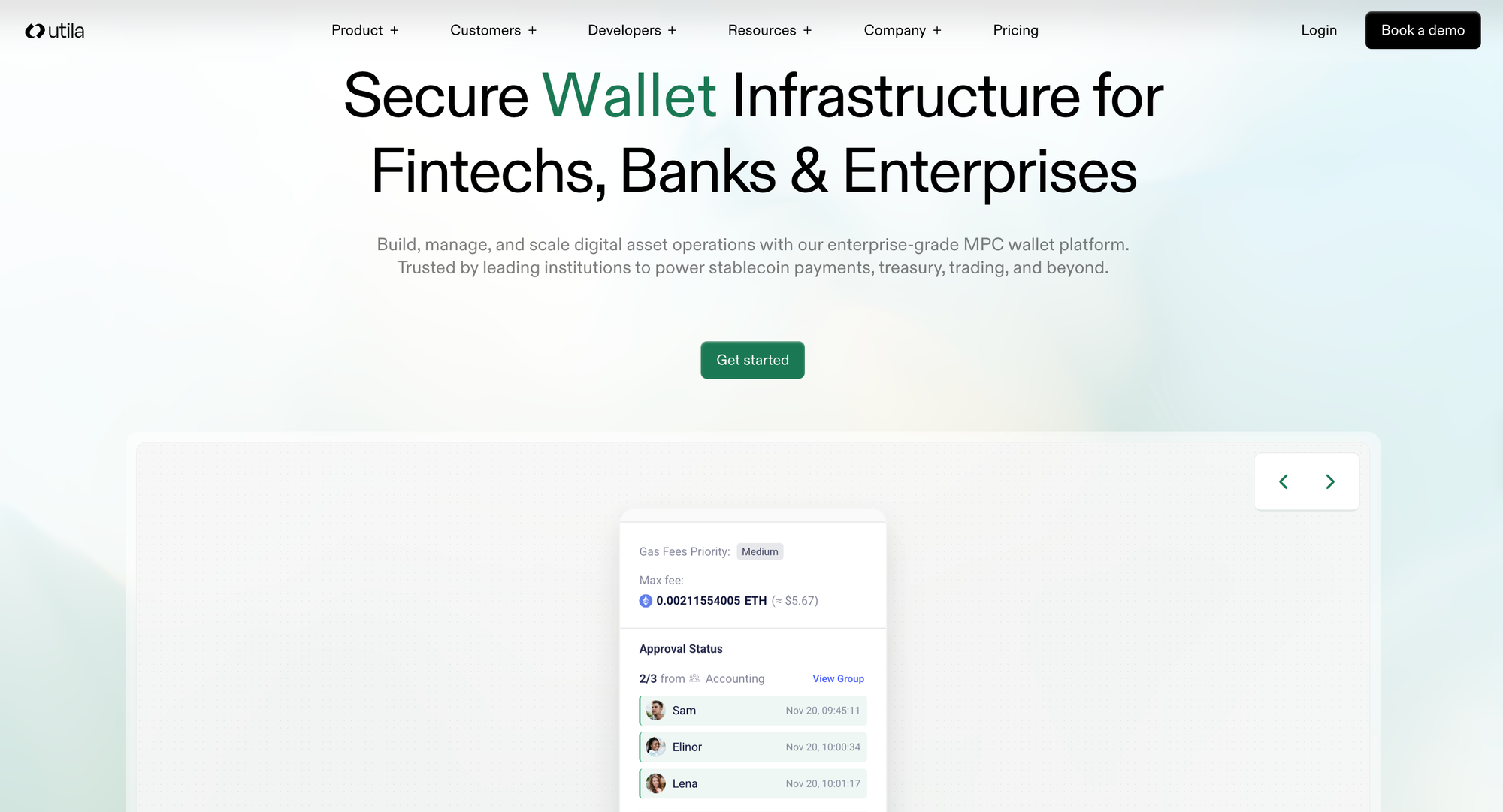
Where Utila Wins
Four operational advantages for payment-led teams.
1. Payout mechanics
Native batching across four chain families through the console, token-agnostic bulk whitelisting, and per-transaction gas sponsorship across six chain families together remove most of the operational friction from high-volume payouts.
2. Corridor-specific cost
Paying TRON fees in USDT at a 50% to 70% reduction is a concrete saving on the network carrying the largest share of retail stablecoin volume.
3. Commercial accessibility
Utila publishes a Starter plan at $499 per month on a twelve-month term including up to $3 million in quarterly outbound volume with 24-hour chat support, and runs self-serve trials on mainnet rather than in a restricted sandbox. Fireblocks does not publish detailed pricing, and reported starter figures vary across sources between roughly $699 and $999 per month for a shorter initial term with 8x5 support.
4. Business Continuity
Utila can mirror an existing Fireblocks environment including wallets, addresses, and approval policies. Swiss-regulated VASP XEROF ran both platforms in parallel for several months before moving its segregated wallet infrastructure across.
Capability Comparison
| Capability | Fireblocks | Utila |
|---|---|---|
| Native batching, EVM | Yes, API only | Yes, API and console |
| Native batching, Solana, Tron, Bitcoin | Limited | Yes |
| Gas sponsorship coverage | EVM gas station, fee payer on Solana, Sui, Bitcoin | Sponsor wallets across BTC, EVM, Solana, Sui, Tron, Aptos |
| Fees payable in USDT on Tron | No | Yes, 50-70% cost reduction |
| Address whitelisting | Per asset | Token-agnostic, bulk to 200 addresses |
| Off-exchange settlement | Yes | No |
| Native exchange integrations | Extensive | Fewer |
| Tokenised money market fund support | BUIDL, BENJI, USDY | Midas, Securitize, Ondo |
| Tokenisation standards | Broad, including bond issuance | ERC-20, ERC-3643, SPL Token, Token-2022 |
| Environment mirroring for redundancy | No | Yes, Business Continuity |
| Self-serve trial | Enterprise-gated | Mainnet self-serve |
| Published pricing | Not detailed publicly | Yes, from $499 per month |
Which Platform Fits Which Profile
The decision resolves cleanly once the primary workload is named.
- Trading desks and OTC operations should choose Fireblocks. Off-exchange settlement and native exchange connectivity are the workload, and Utila does not offer the first at all.
- Banks and regulated custodians should evaluate both platforms against their specific workloads. Fireblocks has a longer track record with major financial institutions, including BNY Mellon, BNP Paribas, and ANZ. Utila already serves banking clients including Augustus, N3XT, and Cross River Bank, with core banking connectivity through Matera and HSM integrations supporting banks building stablecoin payment products.
- High-volume payout operations should evaluate Utila seriously. Batching, bulk whitelisting, and gas sponsorship address the exact friction points that make payouts expensive at scale.
- Tron-heavy corridors favour Utila, given fee payment in USDT and the cost reduction on the network carrying most retail stablecoin volume.
- Multi-chain treasury operations should compare on the specific chains in use rather than on headline coverage, since Fireblocks is broader overall while Utila adds EVM networks on demand.
- Institutions needing provider redundancy can run both, since Utila's Business Continuity mirrors a Fireblocks environment for DORA-aligned continuity planning.
- Growth-stage fintechs will find Utila commercially accessible where Fireblocks is enterprise-gated, though the gap narrows as volume grows.
Risks and Limitations in This Comparison
Four cautions apply, and they cut in both directions.
1. Source asymmetry
Both vendors have published comparisons. Fireblocks published its comparison of wallet infrastructure providers first, and Utila's Utila vs Fireblocks comparison followed in response. Both are vendor material, and readers should verify each against current documentation before a procurement decision.
2. Pricing opacity
Fireblocks does not publish detailed pricing, and reported starter figures differ between sources. Any cost comparison should come from quotes rather than from published summaries.
3. Operating track record
Fireblocks has secured over $10 trillion in transactions since 2018. Utila reports over $500 billion in cumulative transactions since its 2022 launch. Buyers should weigh time in production alongside fit for the specific workload being evaluated.
4. Category convergence
Fireblocks has invested heavily in payments through the Payment Engine and Network for Payments, so operational gaps identified today may narrow. Utila is adding chains and integrations. A comparison at this level of detail has a shelf life measured in quarters, which is why our guide to the best Fireblocks alternatives treats the category rather than a single matchup.
How to Run the Evaluation
Six steps produce a defensible answer rather than a preference.
1. Name the primary workload first
Trading and custody point one way, payment operations point the other. Platforms that serve both well are rare, and choosing on secondary requirements is the most common expensive mistake.
2. List the chains you actually use
Headline coverage numbers are close to meaningless. What matters is whether both platforms support your specific chains with the specific features you need, particularly batching and gas sponsorship.
3. Price the payout workflow, not the platform
Calculate the cost of a representative batch including network fees, gas token management, and operational time. Corridor-specific mechanics such as USDT fee payment on Tron can outweigh subscription differences at volume.
4. Test the approval workflow with real volume
Whitelisting mechanics and batch approval determine how many staff-hours a payout run consumes. Run a realistic test rather than reading a feature list, and use the console rather than the API if that is how your team will operate.
5. Check the counterparty network against your corridors
Network member counts are not comparable. Check whether the specific banks, on-ramps, and liquidity providers you need are members, since 80 curated partners in your corridors beat 300 that are not.
6. Consider running both
Utila's environment mirroring makes parallel operation practical, which supports redundancy requirements and lets you evaluate on production volume rather than in a trial. The reconciliation and policy work involved is set out in our guide to setting up a stablecoin treasury.
Conclusion
Fireblocks and Utila are the only two platforms in this category that compete on the same architectural terms, and the four-year gap between their founding explains almost every difference between them.
Fireblocks is the stronger fit for trading desks, OTC operations, and custody workloads that depend on off-exchange settlement and broad native exchange connectivity. Off-exchange settlement has no Utila equivalent, and Fireblocks' longer track record with major financial institutions will matter to procurement teams that weight precedent.
Utila is the stronger fit where the workload is high-volume payment and treasury operations, including banks building stablecoin payment products, particularly on Tron corridors, and where commercial accessibility and self-serve evaluation matter. Its Business Continuity product also makes it the only platform in the category that can run alongside Fireblocks rather than instead of it, which for institutions with continuity obligations may be the most practically useful capability in this entire comparison.
Read Next:
- Fireblocks Review 2026: The Institutional Digital Asset Infrastructure Platform
- Best Fireblocks Alternatives for Stablecoin Infrastructure in 2026
- 15 Stablecoin Infrastructure Platforms Compared in 2026
FAQs:
1. What is the main difference between Utila and Fireblocks?
Both provide institutional MPC wallet infrastructure, but they were designed around different workloads. Fireblocks launched in 2018 for trading, custody, and exchange connectivity. Utila launched in 2022, purpose-built for the stablecoin payment and treasury operations that now dominate institutional flows. That shows up in the operational detail: native batching across EVM, Solana, Tron, and Bitcoin through both API and console, per-transaction gas sponsorship across six chain families, token-agnostic bulk whitelisting, and TRON fees payable in USDT. Fireblocks retains off-exchange settlement and deeper exchange integrations, which matter for trading desks but are secondary for payment operations.
2. Which is cheaper, Utila or Fireblocks?
Utila is the more transparent and accessible option. It publishes a Starter plan at $499 per month on a twelve-month term, including up to $3 million in quarterly outbound volume and 24-hour chat support, and offers self-serve trials on mainnet rather than a restricted sandbox. Fireblocks does not publish detailed pricing; reported starter figures range from roughly $699 to $999 per month with 8x5 support. At volume, Utila's corridor-specific savings, particularly the 50% to 70% reduction in TRON transaction costs, can outweigh the subscription difference entirely.
3. Can you use Utila and Fireblocks at the same time?
Yes, and Utila is the only platform in the category that makes this practical. Its Business Continuity product mirrors an existing Fireblocks environment, including wallets, addresses, and approval policies, so institutions can add provider redundancy for DORA-aligned continuity planning without a disruptive migration. Swiss-regulated VASP XEROF ran both platforms in parallel for several months before moving its segregated wallet infrastructure to Utila.
4. Does Utila support off-exchange settlement?
No. Off-exchange settlement is a trading-desk requirement, and Utila has deliberately focused on payment and treasury operations rather than exchange connectivity. For fintechs, PSPs, and banks running stablecoin payouts, that focus is the reason Utila's payout mechanics are more complete than Fireblocks'. Trading desks and OTC operations where off-exchange settlement is the primary workload remain better served by Fireblocks.
5. Is Utila a real alternative to Fireblocks or a smaller competitor?
Utila is the closest architectural peer Fireblocks has, competing on MPC wallet infrastructure rather than as a payment rail or chartered custodian. It reports over $500 billion in cumulative transactions secured, against Fireblocks' $10 trillion-plus over a longer operating history, and grew ARR 4.5 times in 2025. Its client base includes Rain, eToro, Fasanara, and banks such as Augustus, N3XT, and Cross River Bank. For payment-led institutions, Utila is a first-choice platform rather than a fallback.
Disclaimer:
This content is provided for informational and educational purposes only and does not constitute financial, investment, legal, or tax advice; no material herein should be interpreted as a recommendation, endorsement, or solicitation to buy or sell any financial instrument, and readers should conduct their own independent research or consult a qualified professional. Several feature-level comparisons in this article derive from vendor-published material and should be verified against current provider documentation before any procurement decision. Pricing, coverage, and capabilities change frequently.