
Table of Contents
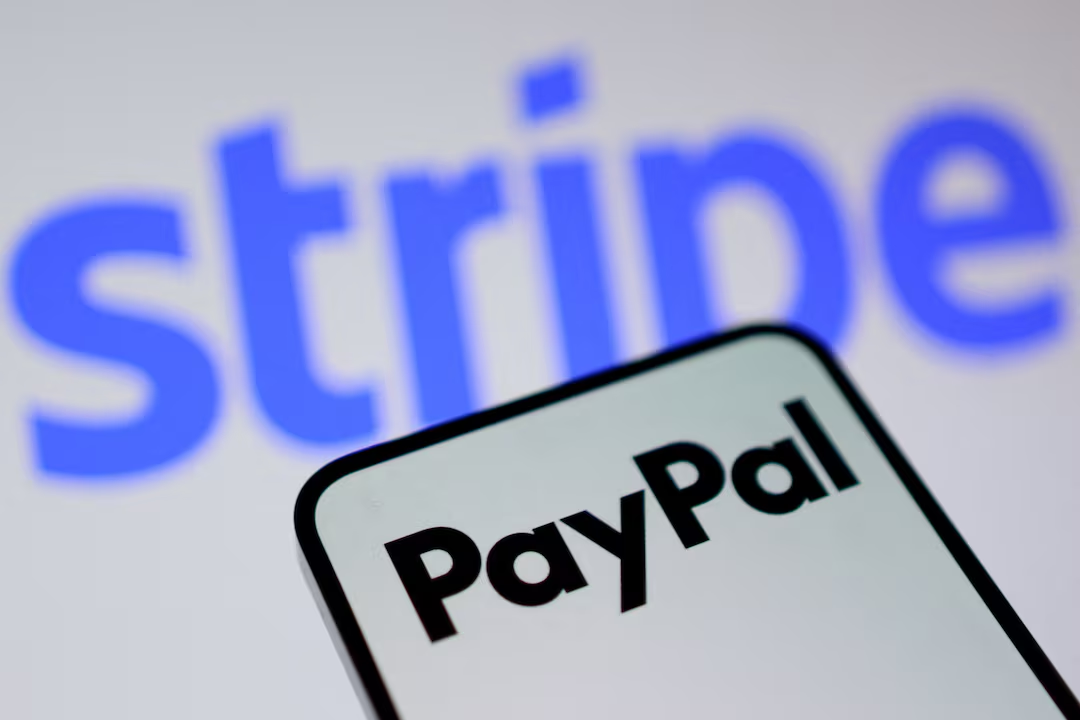
Stripe and private equity firm Advent International have made a joint $53 billion unsolicited offer to acquire PayPal, offering $60.50 per share, a 28% premium over PayPal's Tuesday closing price of $47.37, in what would be the largest fintech acquisition in history.
The bid, first reported by Reuters on July 15, 2026, is backed by approximately $50 billion in committed bank financing and would combine Stripe's developer-first payment infrastructure and Bridge stablecoin platform with PayPal's 400 million-plus consumer user base and its PYUSD stablecoin.
As covered in our PYUSD Q1 2026 report, Stripe and PayPal M&A speculation had been noted since February 2026 when Bloomberg first reported early exploratory talks, making today's formal offer the culmination of months of reported interest.
Key Takeaways
- Stripe and Advent International offered $60.50 per share for PayPal on July 15, 2026, a 28% premium over the prior closing price of $47.37, valuing the company at over $53 billion, with the two parties intending to hold equal 50/50 stakes and no plan to break up PayPal, backed by approximately $50 billion in committed bank financing.
- PayPal, Stripe, and Advent all declined to comment officially, while PayPal shares surged between 18% and 21% in early trading on the news, prediction markets on Polymarket put deal probability at approximately 80%, and prominent shareholder Michael Burry publicly called the price insulting, estimating PayPal's intrinsic value between $75 and $115 per share.
- The stablecoin angle is the most commercially significant dimension of the deal: Stripe owns Bridge, the stablecoin infrastructure platform it acquired for $1.1 billion in 2025, which provides white-label stablecoin issuance, reserve yield sharing, and fiat on and off ramps, while PayPal operates PYUSD with approximately $2.9 billion in supply across 400 million-plus users, creating a combined stablecoin stack covering both the B2B infrastructure and consumer distribution ends of the market.

What the Bid Covers
Stripe submitted the initial approach in April 2026. The formal $60.50 per share offer followed on July 15. Under the proposed structure, Stripe and Advent would each own 50% of PayPal with no plan to split the company into separate entities.
PayPal's board has not accepted or formally responded to the proposal. Stripe and Advent reportedly hope to move talks forward within weeks, with a target of reaching an agreement by end of July 2026.
Why PayPal and Why Now
PayPal has struggled with slowing growth and increased competition from Apple Pay and Google Pay, both of which benefit from deep smartphone integration. The company issued disappointing full-year profit guidance at the start of 2026. Alex Chriss was replaced as CEO, with HP's Enrique Lores named as new president and CEO to execute a turnaround strategy.
Citi analysts noted in a July 7 note that PayPal is investing heavily to revive growth but that investors remain skeptical after previous turnaround efforts. The bid arrives at a moment of maximum valuation compression, with PayPal trading far below its pandemic peak of above $300 per share.
The Stablecoin Stack Argument
The clearest commercial logic for combining Stripe and PayPal is stablecoin infrastructure.
As covered in our Bridge review 2026, Bridge lets businesses issue their own dollar-backed stablecoins rather than running a consumer coin, distributing reserve yield to issuers through BlackRock and Fidelity integration. PayPal brings the other half of the stablecoin stack.
PYUSD already reaches everyday users with approximately $2.9 billion in market cap. Pairing Bridge's issuance and developer infrastructure with PYUSD's consumer base would give the combined firm both B2B stablecoin infrastructure and consumer stablecoin distribution simultaneously, a combination no other single entity currently holds.
As covered in our best stablecoin checkout solutions guide, Stripe and PayPal PYUSD are already the two largest stablecoin checkout options for merchants in 2026, together covering Stripe's 5 million-plus developer merchants and PayPal's 35 million-plus accepting merchants.
What Would Change in Payments
A combined Stripe and PayPal entity would control payment infrastructure for an estimated 35 million to 40 million merchants and approximately 400 million consumer accounts. Stripe's Braintree business directly competes with PayPal's Braintree unit, which could create regulatory scrutiny around market concentration.
PayPal's Venmo, which has no direct Stripe equivalent, would give the combined firm a native consumer wallet with significant peer-to-peer payment volume.
As covered in our top companies building with stablecoins guide, PayPal is the consumer stablecoin leader and Stripe is the developer infrastructure leader, and a merger would collapse that distinction into a single entity.
The Shareholder Pushback
Michael Burry, the investor known for the Big Short, estimated PayPal's intrinsic value at $75 to $115 per share, with a best guess of approximately $100. His position implies the Stripe-Advent consortium is attempting to acquire the company at roughly 60 cents on the dollar.
The $60.50 offer would rank among the largest fintech acquisitions ever completed. For context, Stripe itself is currently valued at $159 billion, making this a rare case of a venture-backed private company bidding to acquire an S&P 500 company.
Conclusion
The Stripe-Advent bid for PayPal at $53 billion is the single largest stablecoin-adjacent M&A event in history, combining the world's most widely deployed stablecoin developer infrastructure through Bridge with the largest consumer stablecoin distribution network through PYUSD and PayPal's 400 million-plus user base.
The deal has not been accepted, the price is contested by major shareholders, and regulatory scrutiny on merchant market concentration is a material closing risk. But Polymarket's 80% deal probability and PayPal's 18 to 21% share price surge on the news suggest the market views a transaction as more likely than not.
The July 28 Q2 PayPal earnings report will serve as the next critical valuation benchmark for the board's response.
FAQ:
1. What is the Stripe and Advent International bid for PayPal?
The Stripe and Advent International bid for PayPal is a $53 billion unsolicited offer at $60.50 per share, a 28% premium over PayPal's closing price of $47.37, backed by approximately $50 billion in committed bank financing, with Stripe and Advent intending to hold equal 50/50 stakes in PayPal if the deal closes.
2. Has PayPal accepted the Stripe and Advent offer?
No. PayPal has not accepted the Stripe and Advent offer as of July 15, 2026. PayPal, Stripe, and Advent all declined to comment officially, and the board has not yet formally responded to the proposal.
3. Why would Stripe want to acquire PayPal?
Stripe would want to acquire PayPal to combine its Bridge stablecoin infrastructure and 5 million-plus developer merchant network with PayPal's PYUSD consumer stablecoin, 400 million-plus consumer user base, Venmo peer-to-peer payment platform, and 35 million-plus accepting merchants into a single entity.
4. What does the Stripe and PayPal deal mean for PYUSD stablecoin?
The Stripe and PayPal deal means PYUSD stablecoin's future roadmap would depend on how Stripe prioritized it relative to its own Bridge stablecoin infrastructure, potentially combining PYUSD's consumer distribution with Bridge's B2B issuance tools into a single stablecoin stack.
5. What is Michael Burry's position on the PayPal takeover bid?
Michael Burry's position on the PayPal takeover bid is that $60.50 per share is insulting, estimating PayPal's intrinsic value at $75 to $115 per share with a best guess of approximately $100, implying the Stripe-Advent offer values PayPal at roughly 60 cents on the dollar.
6. What is the probability of the Stripe and Advent PayPal deal closing?
The probability of the Stripe and Advent PayPal deal closing is approximately 80% according to prediction market Polymarket as of July 15, 2026, following PayPal shares surging between 18% and 21% on the announcement.
Disclaimer:
This content is provided for informational and educational purposes only and does not constitute financial, investment, legal, or tax advice; no material herein should be interpreted as a recommendation, endorsement, or solicitation to buy or sell any financial instrument, and readers should conduct their own independent research or consult a qualified professional.