Table of Contents
A SaaS company that turns on stablecoin acceptance discovers a margin question within the first week. The payment costs roughly 1.5% where a domestic card costs 2.9% plus $0.30, and someone asks whether the customer should get that difference.
The instinct is to pass it on. A discount looks like a clean way to move customers onto the cheaper rail and to signal that the company is serious about the payment method.
The instinct is usually wrong, or at least wrong in the form it first takes. A recurring discount is a permanent price cut bought in exchange for a switch that happens once, and the saving it gives away is smaller than the operational cost it creates.
The fee gap is real and it is about 1.4 percentage points. The question is not whether to share it, but whether to share it once or every month for the life of the account.
Key Takeaways
- The gap is roughly 1.4 points. Stripe prices stablecoins at 1.5% against 2.9% plus $0.30.
- Switching happens once, discounts renew forever. That asymmetry decides the pricing model.
- Operational hours consume the saving. Manual matching and renewal chasing cost real time.
- Large B2B invoices justify sharing it. Per-payment savings become material above a few thousand dollars.
- A one-time credit beats a standing cut. It prices the behaviour, not the customer.
Where the Saving Actually Comes From
Three separate costs disappear when a payment arrives on-chain, and only one of them is the headline fee.
The processing fee is the visible part. Stripe charges 1.5% of the USD amount for stablecoin payments, with conversion, screening, and network fees included, against 2.9% plus $0.30 for domestic cards on standard pricing. Dedicated stablecoin processors quote lower, closer to 1%, at the cost of lighter tooling around the payment.
The second saving is cross-border. Cards presented from another country carry additional acquirer and conversion charges that a dollar token does not, which is why the gap widens for companies selling internationally rather than narrowing.
The third is disputes. Stablecoin payments have no chargeback path, so the fraud losses and dispute handling costs attached to card revenue disappear with them. That is a genuine saving and it removes the customer's formal recourse at the same time, which belongs in the same conversation as the discount.
What is not saved is the billing architecture, because the payment is pushed by the customer rather than pulled by the company. Our guide to stablecoin subscription models sets out the four ways teams work around that, and each one changes the economics of a discount.
What to note: calculate the gap on your own mix of domestic, international, and disputed volume before pricing anything, because the 1.4 point figure is the floor rather than the average.
What a Discount Is Actually Buying
A payment method discount is an incentive, and incentives are priced by the behaviour they change rather than by the cost they offset.
The behaviour here is a one-time setup. A customer funds a wallet, whitelists an address, approves an internal process, and pays the next invoice on-chain. After that, paying in stablecoins is not harder than paying by card, and the customer has no reason to switch back.
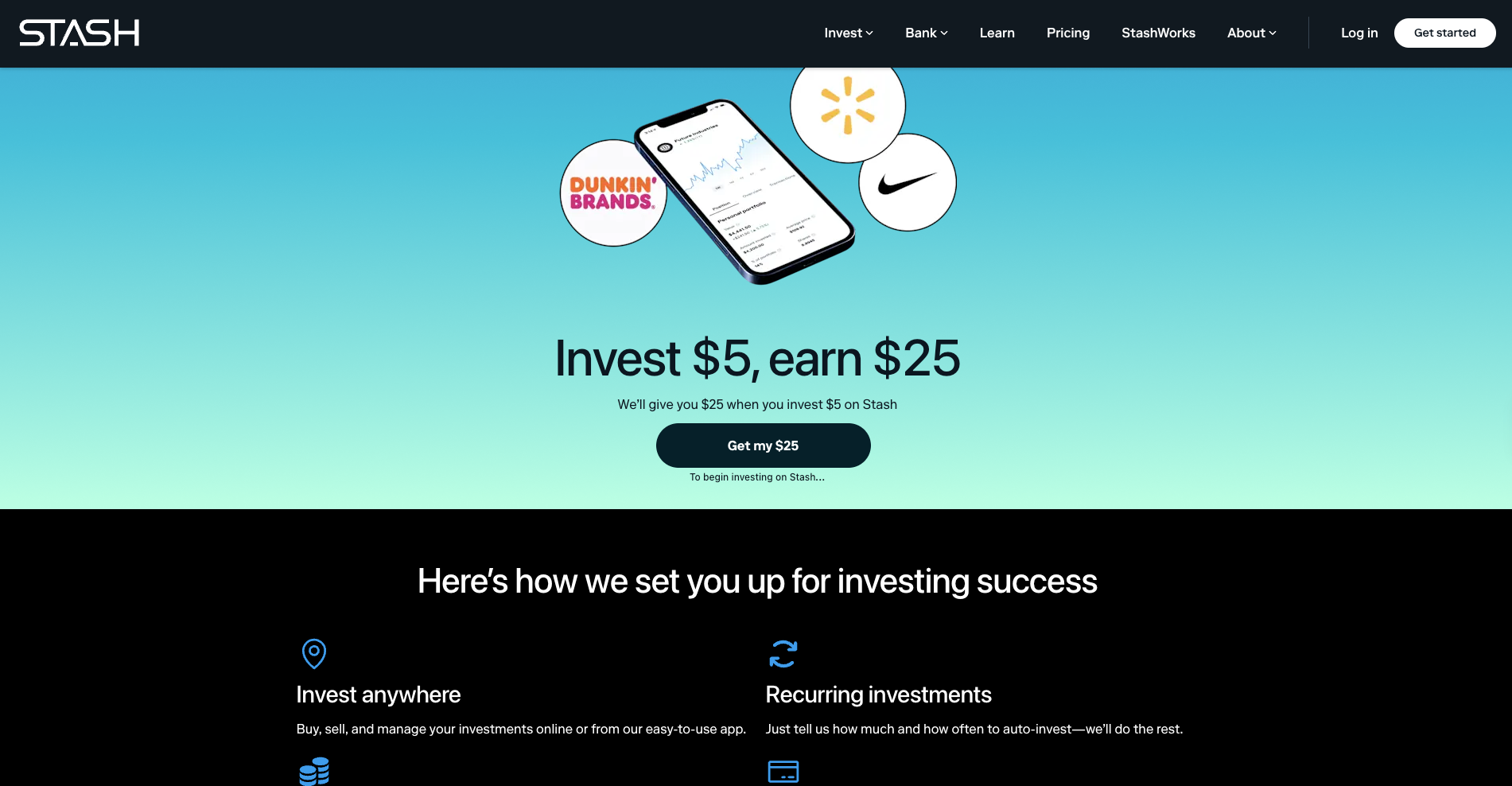
Consumer fintech has priced this honestly for years. An offer to invest $5, earn $25 is a one-time payment for a first action, and the economics work precisely because the bonus is never repeated. A monthly discount inverts that trade, paying forever for a decision the customer made once.
There is a second problem with a standing discount, which is who ends up taking it. The customers most likely to adopt stablecoin billing are the ones who already wanted to, so a permanent price cut mostly subsidises behaviour that would have happened anyway.
What to note: if the discount is meant to trigger a migration, it should expire when the migration does.
The Costs Sitting on the Other Side
The saving is gross, and very few teams net it against what stablecoin billing adds back.
Reconciliation is the largest line. A card payment arrives attached to a customer record, while an on-chain payment arrives attached to an address, and somebody matches the two unless the processor does it for you. Underpayments, wrong-network sends, and payments without a reference each need a manual response rather than an automated retry.
Renewals add the second line. Because the customer pushes the payment, a missed renewal is not a declined card that dunning tools recover on their own, and somebody has to notice and follow up.
Those hours belong in the calculation, and on a small team they are usually hourly rather than salaried. Free employee scheduling and time tracking for your team puts the billing shift in the same record as every other shift, and you add payroll & HR when you need it. No card or code required, so one cycle can be measured before anything is committed.
The third line is treasury. Dollars that arrive as tokens need a policy about what happens next, and the decision to hold or convert carries its own accounting and conversion cost that the discount silently assumes away.
What to note: a 1.4 point saving on a $60 monthly plan is about $0.54, which is less than the cost of one support reply about a payment sent on the wrong chain.
Four Ways to Price It
Most SaaS companies land on one of four models, and ticket size decides which one is defensible.
| Model | What the customer sees | What it costs | Best for |
|---|---|---|---|
| No discount | Same price, one more payment option | Nothing, the saving stays with you | Self-serve monthly plans |
| Fee pass-through | Roughly 1.5% off for paying on-chain | The entire gross saving, permanently | Large B2B invoices |
| Annual prepay discount | A yearly price for one upfront payment | The discount plus a deferred revenue liability | Annual contracts |
| One-time switching credit | A credit on the first stablecoin payment | A single, capped cost per account | Migration campaigns |
The pass-through model is the one that gets defended most often and survives scrutiny least often. It gives away the full saving on every future payment in exchange for a setup that the customer completes once.
Annual prepay is the version that pays for itself, because the discount buys something the company actually wants. Twelve push events become one, involuntary churn from forgotten renewals largely disappears, and the cash arrives a year early.
What to note: the one-time credit and the annual discount can be combined, and together they cover both the switch and the retention problem without a standing price cut.
How to Decide
1. Calculate the gap on your real mix
Take last quarter's card fees, including cross-border charges, conversion, disputes, and dispute handling, and express them as a percentage of processed volume. Compare that to 1.5% rather than comparing a list price to a list price.
2. Divide by average ticket size
The saving on a $40 monthly self-serve plan is a rounding error, and the saving on a $40,000 annual invoice is a real number. Only the second one is worth designing a price around.
3. Net the operational hours against it
Count the reconciliation, support, and follow-up time the first cycle actually consumed, then price it at whatever those hours cost. Subtract that from the gross saving before deciding what is left to share.
4. Decide what behaviour you are paying for
If the goal is adoption, pay once. If the goal is annual prepayment or lower churn, the discount can recur, because what it buys also recurs.
5. Test it on one segment first
Run the offer on a single cohort with a fixed end date and measure adoption against a control group. The same logic applies to how stablecoin free trials convert, where the assumption that a cheaper rail sells itself is the one that usually fails.
What to note: write the end date into the offer at launch, because removing a discount that customers have priced into their budget is a renewal conversation nobody wants.
Risks and Limitations
- Price expectations are sticky: a discount presented as a payment method saving quickly becomes the reference price for the plan, and withdrawing it reads as an increase.
- Transaction caps apply: Stripe caps stablecoin payments at $10,000 per customer transaction, which limits the model precisely where the saving is largest.
- No dispute path cuts both ways: the absence of chargebacks is part of the saving and part of the reason some enterprise buyers will decline the method entirely.
- Discounts move the accounting: a prepaid or credited balance is a liability rather than revenue, and it lands on the books differently from a monthly charge.
- Fees change: processor pricing on this rail is young, and a discount sized against today's 1.5% has no guarantee of staying funded by it.
Conclusion
Should a SaaS company discount for stablecoin payments? Usually not as a standing price cut, because the fee gap is smaller than it looks, the operational cost is larger, and the behaviour being rewarded happens only once.
Where a discount earns its place is in the annual prepayment, which removes eleven push events and pulls a year of cash forward, and in a capped one-time credit that pays for the switch and then stops. Both price something the company actually receives.
For everything else, the better use of the saving is the operational work stablecoin billing creates. Reconciliation, renewal follow-up, and a written refund path cost more than 1.4 points of margin in the first year, and they are what makes the cheaper rail worth being on.
Read Next:
FAQs:
1. How much does a SaaS company save by accepting stablecoins?
Roughly 1.4 percentage points on domestic volume, since Stripe prices stablecoin payments at 1.5% of the USD amount against 2.9% plus $0.30 for domestic cards. The gap is wider on international payments, which carry cross-border and conversion charges on cards, and wider again for businesses with meaningful dispute costs.
2. Should the stablecoin discount be permanent?
Rarely, because the customer effort it rewards is a one-time setup rather than a recurring action. A capped one-time credit at the switch, or a discount attached to annual prepayment, buys the same adoption without cutting the plan price for the life of the account.
3. Does a stablecoin discount reduce churn?
Not by itself, and it can increase involuntary churn. Stablecoin payments are pushed by the customer rather than pulled by the company, so a cheaper price does not stop a renewal from being forgotten, which is why annual prepayment tends to do more for retention than a monthly discount.
4. What is the cap on stablecoin payments through Stripe?
Stripe caps each customer transaction at $10,000, and crypto on an invoice works only with the send_invoice collection method. Larger contracts either split across payments or settle outside Checkout, through a virtual account or a direct on-chain receive.
5. Do stablecoin payments have chargebacks?
No. Refunds return as stablecoins to the customer's original wallet, and there is no dispute mechanism comparable to a card chargeback, which removes fraud and dispute costs for the company and removes formal recourse for the customer.
Disclaimer:
This content is provided for informational and educational purposes only and does not constitute financial, investment, legal, or tax advice; no material herein should be interpreted as a recommendation, endorsement, or solicitation to buy or sell any financial instrument, and readers should conduct their own independent research or consult a qualified professional. Processor fees, transaction caps, and regional eligibility change frequently; verify all pricing directly with each provider before setting a discount against it.