
Table of Contents
The role of stablecoins in payments, settlement, and cross-border value transfer grew large enough that regulators began locking in enforceable rules instead of relying on informal guidance or fragmented oversight.
The focus is consistent across jurisdictions: permissioned issuance, credible reserve coverage, predictable redemption at par, and transparency that can be supervised and enforced.
What follows is a clean breakdown of the stablecoin regulations that were enacted, commenced, or moved into operational effect in the 2025–2026 window, plus the near-term implementation items that matter in practice.
Key Takeaways
- If you issue or distribute stablecoins, assume permissioned issuance: licensing or regulated pathways are now the default in major 2025 regimes.
- Your minimum control set is reserves, redemption, disclosures, and supervision readiness. Build these as ongoing operations, not one-time documents.
- Brazil treats many stablecoin payment flows as foreign exchange operations. If you route payments involving Brazil, design for FX compliance and supervised intermediaries.
- South Korea’s Phase 2 stablecoin package is a Q1 2026 enactment target as of January 10, 2026. Treat it as an implementation horizon item, not an in-force rulebook.
Scope and Method Used (What Counts as Implemented)
To keep this list verifiable, implemented in 2025–2026 here means either:
- Signed into law or enacted as binding legislation during 2025–2026, even if some provisions require follow-on rulemaking, or
- Commenced or entered into force during 2025–2026, meaning the regime became operational and enforceable.
Where a jurisdiction publicly committed to enactment in a defined 2026 window but the regime was not yet in force as of January 10, 2026, it is included with that status stated explicitly.
Why 2025–2026 Became the Stablecoin Law and Enforcement Window
Regulators tightened stablecoin rules as the data increasingly resembled payments infrastructure scale rather than niche crypto usage:
- On-chain transfer volume reported: widely reported datasets put 2025 stablecoin transaction volumes in the tens of trillions of dollars.
- Supply growth: late-2025 reporting placed total stablecoin supply in the hundreds of billions of dollars.
- Treasury market linkage: stablecoin reserve management has been repeatedly linked to short-term government debt markets, raising financial stability and supervisory scrutiny.
This is the backdrop for why laws in this period converged on the same requirements: eligible issuers, high-quality reserves, redemption at par, and direct supervisory powers.
Timeline (2025–2026): What Went Live, What Was Enacted, and What Is Scheduled
| Date | Jurisdiction | Instrument | What Changed (Practical Meaning) |
|---|---|---|---|
| July 18, 2025 | United States | GENIUS Act of 2025 | Creates a federal framework for payment stablecoins, including issuer permissioning, reserve requirements, disclosures, supervision, and enforcement. |
| August 1, 2025 | Hong Kong | Stablecoins Ordinance regime commencement | Makes issuance of fiat-referenced stablecoins a regulated activity requiring licensing and sets reserve and redemption expectations under HKMA supervision. |
| November 2025 | Brazil | Central Bank Resolutions 519–521 | Establishes authorization and operating rules for virtual asset service providers and brings stablecoin transactions into the foreign exchange regulatory perimeter. |
| February 2, 2026 | Brazil | Effectiveness date for key provisions | Rules take effect starting February 2, 2026, including FX classification treatment for stablecoin transactions. |
| January 9, 2026 | South Korea | Phase 2 stablecoin legislation roadmap | Announced plan to finalize Phase 2 stablecoin framework in Q1 2026, including licensing and 100% reserve requirements. Not yet enacted as of January 10, 2026. |
| 2026 (implementation focus) | United States | GENIUS implementation phase | 2026 is largely an implementing year, with rulemaking and compliance buildout required before full steady-state supervision. |
Every Stablecoin Law Implemented in 2025–2026
1. United States: GENIUS Act of 2025 (Signed July 18, 2025)
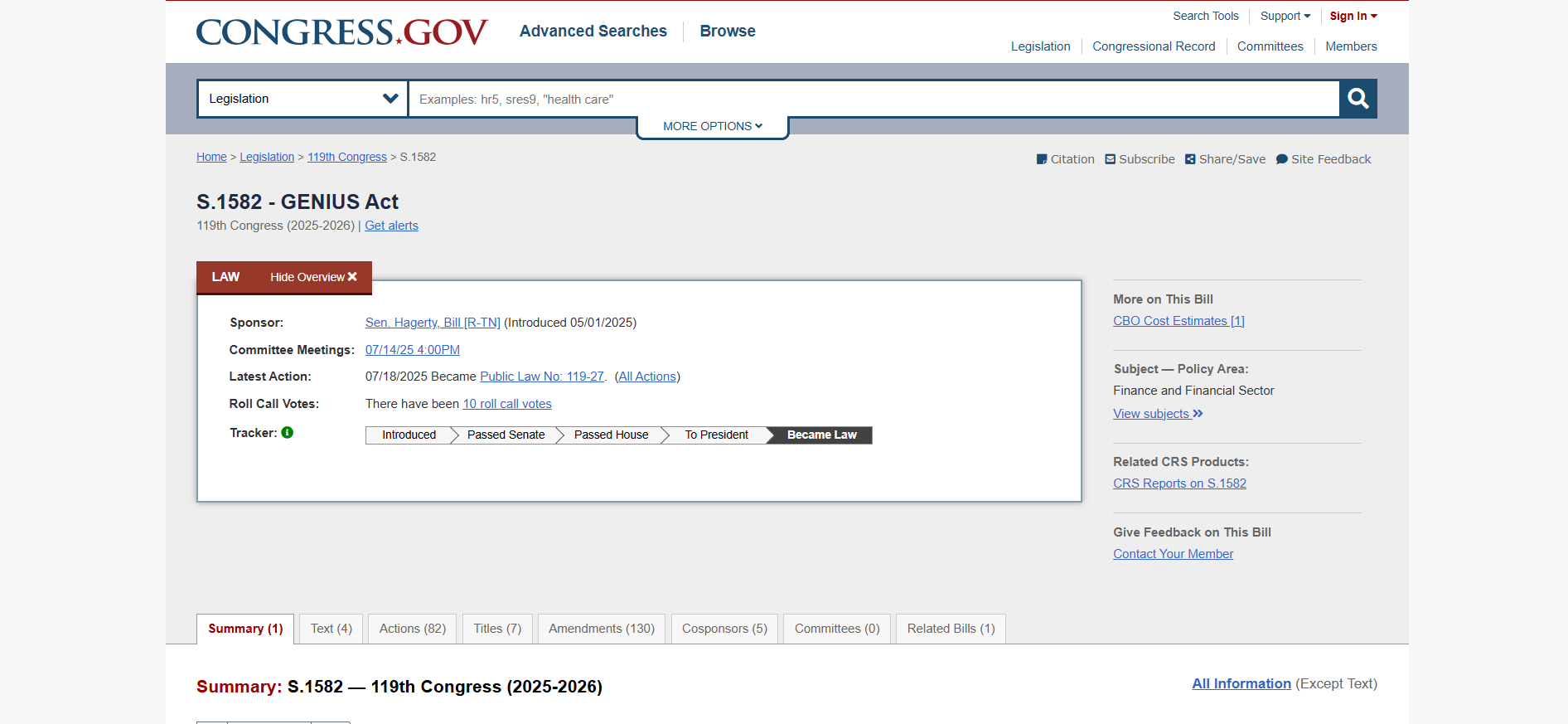
Status in the 2025–2026 window: Signed into law July 18, 2025.
What it regulates (Scope)
The GENIUS Act is built around payment stablecoins and establishes a national structure for who may issue, how reserves must be managed, and how oversight and enforcement apply across issuers and relevant market intermediaries.
Issuer permissioning (Who can issue)
The framework is permissioned. Issuance is intended to occur through regulated pathways with supervisory accountability, rather than open issuance by any entity.
Reserve standards (What backing must look like)
A central design goal is 1:1 backing with restricted, high-quality reserve assets and explicit expectations for reserve management and liquidity to support redemptions.
The compliance posture is designed to make reserve claims verifiable through recurring transparency and supervisory access.
Redemption rules (Operational reality, not marketing)
The Act is structured around the concept that payment stablecoins must be redeemable for a fixed amount of monetary value under publicly disclosed redemption policies, including clear disclosure of associated fees and procedures.
Disclosure, attestation, and supervisory touchpoints
A core compliance pillar is recurring transparency on reserves and redemption mechanics and the ability of supervisors to examine issuers and enforce compliance. Treat disclosures and attestations as recurring production, with governance sign-offs and audit trails.
AML and illicit finance expectations
The regime ties stablecoin issuance and distribution into financial crime compliance expectations. For operators, this means you must design for KYC, sanctions controls, monitoring, and recordkeeping as operating requirements.
Enforcement mechanics (What regulators can do)
The framework includes enforcement tools and market-access consequences in cases of noncompliance, including mechanisms that can affect certain distribution and trading facilitation activities in the U.S.
2026 implementation reality (Why 2026 still matters)
Although signed in 2025, 2026 is an implementation year. Expect practical requirements to mature through implementing rules and supervisory practice, and build compliance operations ahead of full enforcement maturity.
Practical checklist if you issue or distribute a USD stablecoin into the U.S. market, GENIUS-aligned:
- Document payment stablecoin classification and your regulatory pathway.
- Encode reserve eligibility, liquidity, and concentration limits into treasury controls; map them to disclosure outputs.
- Publish redemption policy with fee logic and operational steps; run redemption stress tests.
- Build attestation and audit production as an operating process.
- Implement AML, sanctions screening, and monitoring as first-class product requirements.
2. Hong Kong: Stablecoins Ordinance Regime (Commenced August 1, 2025)
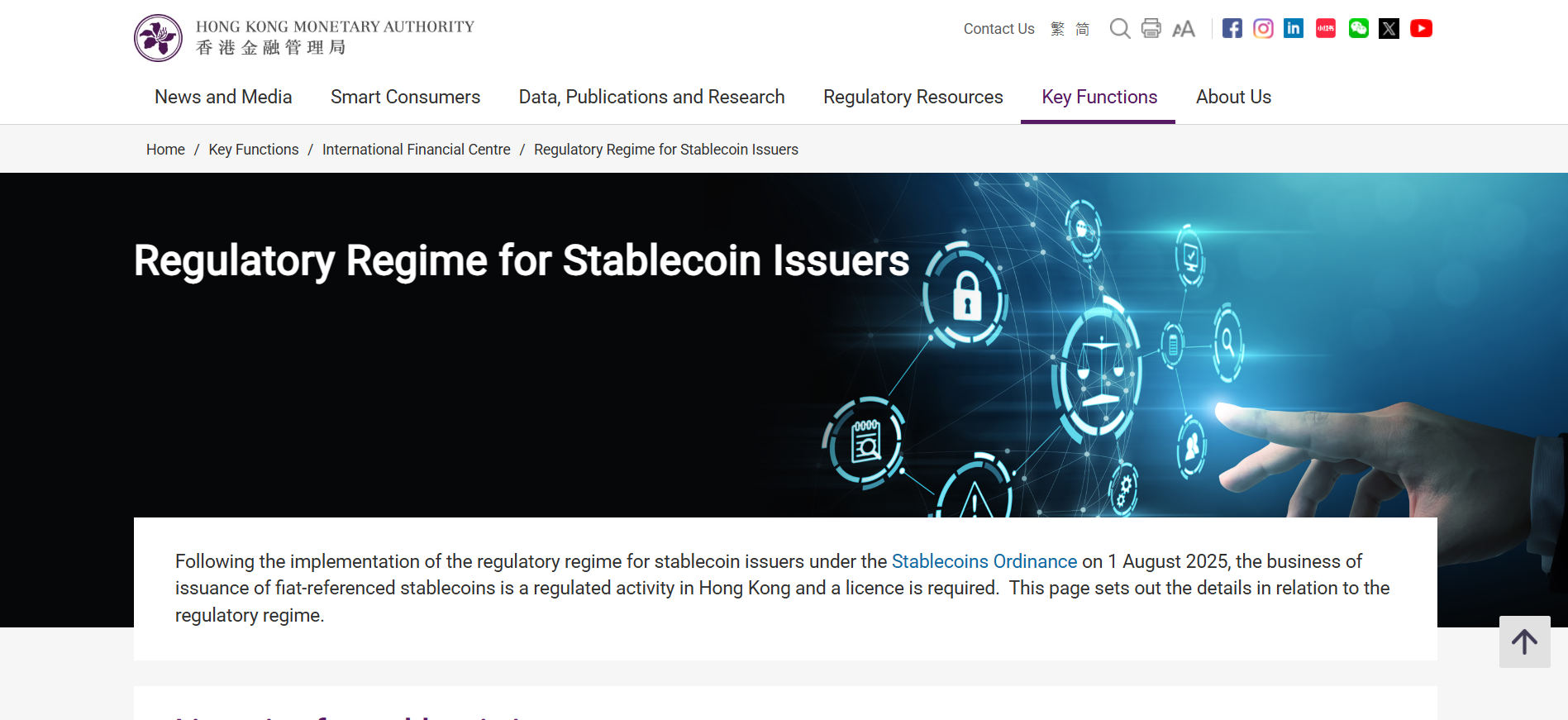
Status in the 2025–2026 window: Commenced August 1, 2025.
What it regulates (Scope)
Hong Kong’s framework regulates fiat-referenced stablecoins as a dedicated regulated activity. After commencement, issuance within scope is inside the regulatory perimeter and requires a license.
Issuer licensing and perimeter (Who needs a license)
The regime is licensing-led. Stablecoin issuance within scope requires authorization, and perimeter rules influence marketing and offering behavior.
Reserve standards and safeguarding expectations
The regime places reserve management, safeguarding, and issuer controls at the center. The operating expectation is that backing and liquidity must be consistent with redemption claims and withstand stress.
Redemption at par (User protection center of gravity)
Hong Kong’s stablecoin regime foregrounds redemption processes, treating reliable redemption as a primary stability and consumer protection requirement.
Operational and governance obligations (Issuer quality)
Licensing is paired with governance and operational expectations designed for ongoing supervision. You should expect continuous compliance, periodic reporting, and a posture of audit readiness.
Enforcement (HKMA’s role)
HKMA is the licensing and supervisory authority, with the regime structured for continuing oversight and enforcement actions where requirements are breached.
Practical checklist if you want to issue a fiat-referenced stablecoin in Hong Kong:
- Confirm scope and perimeter triggers for issuance and distribution.
- Prepare a licensing dossier aligned to reserves, redemption operations, governance, and risk controls.
- Implement a redemption operating model that can handle stress and exceptions.
- Treat supervision as continuous: reporting, controls testing, incident response, and audit readiness.
3. Brazil: Cryptoassets Regulatory Framework (Central Bank Resolutions 519–521; Published November 2025; Effective Starting February 2, 2026)
Status in the 2025–2026 window: Published in November 2025, with effectiveness beginning February 2, 2026.
What it regulates (Scope)
Brazil’s Central Bank issued Resolutions 519–521 to operationalize the country’s virtual asset framework for service providers and to integrate certain cryptoasset activity into the regulated financial perimeter.
The rules apply to authorization, operating standards, reporting, and the treatment of certain stablecoin-related flows under foreign exchange concepts.
Issuer and intermediary permissioning (Who is regulated)
Brazil’s approach is intermediary-led. It regulates virtual asset service providers through authorization and supervision, including governance, compliance, and control requirements for regulated firms operating in Brazil.
Reserve standards (What backing must look like)
These resolutions are primarily reported as perimeter, licensing, operating standards, and FX classification rules rather than a stablecoin issuer reserve-asset rulebook equivalent to the U.S. or Hong Kong regimes.
If you need stablecoin issuer reserve specifics under Brazil, treat that as a separate research item tied to the text of implementing rules and supervisory guidance.
Redemption rules (Operational reality)
Similarly, the reported stablecoin impact is not centered on issuer redemption mechanics in statute-like form. The practical effect for many operators is classification and supervision of stablecoin payment flows when intermediated by in-scope entities.
Foreign exchange classification (The core stablecoin impact)
Brazil classifies purchases, sales, or exchanges of fiat-referenced virtual assets, including stablecoins, as foreign exchange operations. This perimeter also captures certain international payment or transfer uses of these assets, including settlement of obligations through common payment methods.
Enforcement mechanics (What regulators can do)
The framework extends traditional financial-system expectations to covered entities, including transparency, governance, internal controls, and AML and CFT controls. Authorization and compliance obligations are enforced through Central Bank supervision and related reporting requirements.
Practical checklist if you route stablecoins for cross-border payments involving Brazil:
- Treat stablecoin payment flows as FX-classified when intermediated through in-scope entities.
- Validate counterparties’ authorization status and controls for cross-border stablecoin rails.
- Align KYC, wallet ownership verification expectations, and transaction monitoring to the Brazilian perimeter where applicable.
4. South Korea: Digital Asset Phase 2 Stablecoin Legislation (Announced January 9, 2026; Target Q1 2026 Finalization)
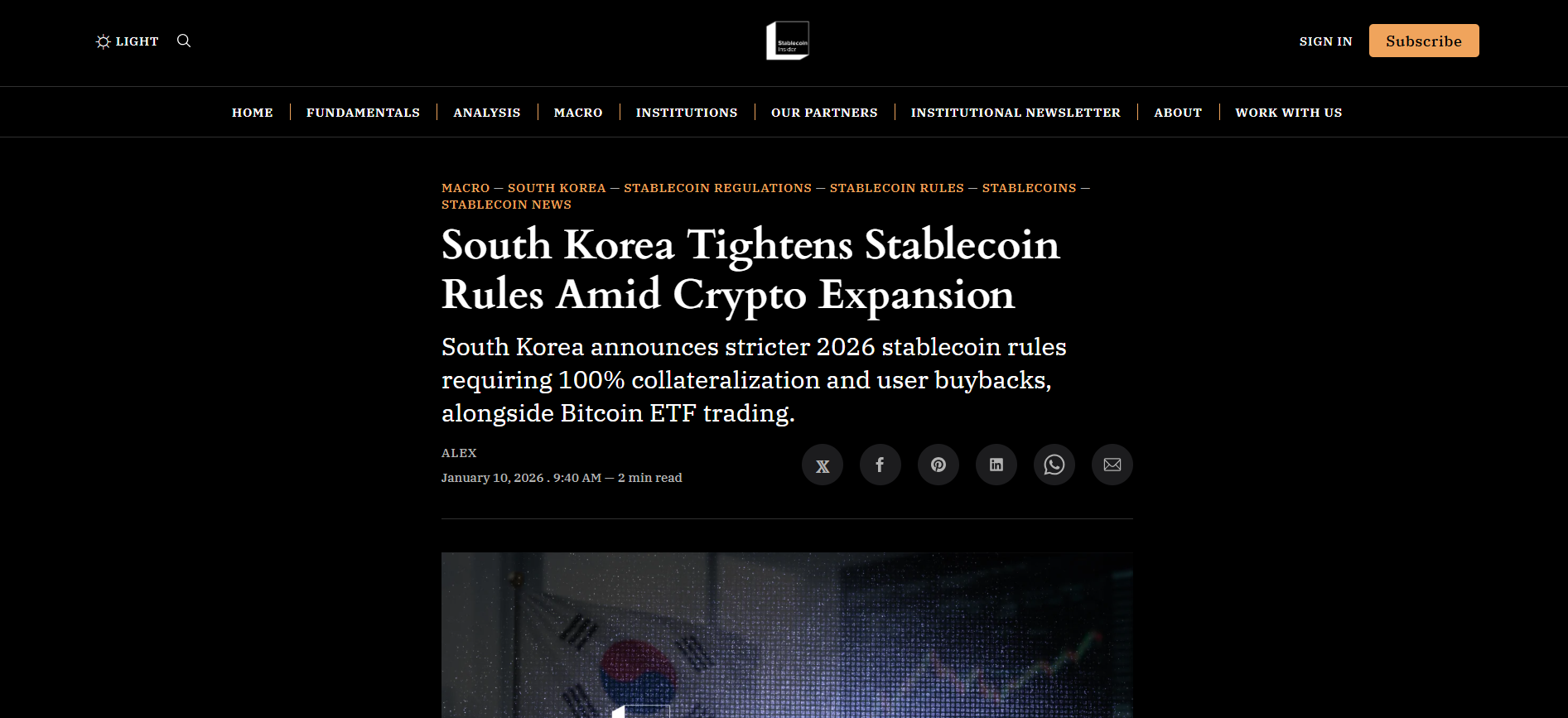
Status in the 2025–2026 window: Announced January 9, 2026 as a plan to finalize in Q1 2026. This is not yet enacted or in force as of January 10, 2026.
What it regulates (Scope)
South Korea’s Phase 2 legislative package is presented as a stablecoin regulatory framework, including a cross-border transaction and remittance-related component tied to stablecoin usage.
Issuer permissioning and licensing (Who can issue)
The plan requires issuer authorization, including capital requirements as a prerequisite to issuing stablecoins under the forthcoming framework.
Reserve standards (What backing must look like)
The announced framework requires reserve assets at least equal to 100% of issued tokens, positioning full collateralization as a baseline prudential requirement.
Redemption rights (Buyback-style user protection)
The policy description emphasizes guaranteed user redemption rights. Operationally, this means you must be prepared to honor redemptions at par with clear terms, documented procedures, and verifiable reserve coverage.
Cross-border stablecoin transaction rules
The plan explicitly calls out development of rules for cross-border transactions involving stablecoins, which is directly relevant to payments, trade settlement, and remittance use cases.
Enforcement posture (What to expect)
Because the Phase 2 framework is planned for Q1 2026 finalization, enforcement specifics should be treated as pending until legislative text and implementing rules are published.
What is confirmed at this stage is the direction: permissioned issuance, full reserves, and enforceable redemption rights.
Practical checklist if you intend to distribute or rely on KRW stablecoins in 2026:
- Track publication of legislative text and licensing pathways as Q1 2026 progresses.
- Prepare treasury controls to evidence 100% reserve coverage and segregation where required.
- Design redemption operations and disclosures to satisfy redemption rights requirements.
- Build cross-border transaction compliance workflows aligned to the forthcoming framework.
Side-by-Side: Issuer Rules, Reserves, Redemption, Enforcement (U.S., Hong Kong, Brazil, South Korea)
| Dimension | United States (GENIUS Act) | Hong Kong (Stablecoins Ordinance) | Brazil (Res. 519–521) | South Korea (Phase 2 plan, Jan 9 2026) |
|---|---|---|---|---|
| Primary control | Federal payment stablecoin framework | Licensing regime for fiat-referenced stablecoin issuance | VASP authorization plus FX perimeter integration | Planned Q1 2026 stablecoin framework |
| Permissioning | Permissioned issuer model, supervision | License required for in-scope issuance | Authorization and supervision for in-scope intermediaries | Planned issuer authorization and capital requirements |
| Reserves | 1:1 reserve expectation, eligible assets | Reserve management and safeguarding expectations | Stablecoin issuer reserve rulebook not specified at the same level; focus is FX and VASP oversight | Planned 100% reserves requirement |
| Redemption | Publicly disclosed redemption policies; par redemption concept | Redemption processes central to the regime | Primary effect is transaction classification and intermediary compliance | Planned guaranteed redemption rights |
| Enforcement | Statutory enforcement tools; market-access consequences | HKMA licensing and supervision | Central Bank supervision, authorization, reporting, AML and CFT and governance requirements | Pending legislative text; direction confirmed, mechanics pending |
Enforcement in Practice: What Regulators Optimize For
Across these regimes, enforcement is designed to prevent three failure modes:
- Run risk from weak reserves: where reserve rules exist, they push full coverage and require verifiable controls.
- Redemption friction: regimes prioritize enforceable redemption processes because stablecoins fail fastest when redemption becomes delayed, gated, or discretionary.
- Regulatory arbitrage via distribution: rules increasingly account for stablecoins reaching users via platforms and payment intermediaries, and Brazil explicitly pulls stablecoin payment activity into FX supervision.
Implementation Playbook for 2026
If you are an issuer, wallet, exchange, card program, payroll platform, or merchant integrator, this is the tactical way to operationalize 2025–2026 rules.
A) Product classification and perimeter mapping
- Define whether your token is a payment stablecoin under U.S. framing, a fiat-referenced stablecoin under Hong Kong framing, or a stablecoin payment flow subject to FX classification under Brazil’s framework.
- For Korea, treat Phase 2 as an implementation horizon item and plan for licensing and 100% reserves controls ahead of time.
B) Reserve policy that survives audits and stress
- Specify eligible instruments, custody arrangements, concentration limits, and liquidity ladders where reserve rules apply.
- Build daily reconciliations tying tokens outstanding to reserves held to settlement accounts used for redemptions.
C) Redemption operations (SLA, controls, edge cases)
- Publish a redemption policy with timelines, cutoffs, fees, identity checks, and dispute handling.
- Test redemption under concentrated redemptions, banking downtime, and blockchain congestion.
D) Disclosures, attestations, and audit readiness
- Treat disclosures as continuous production: data pipelines, approvals, and change-control logs.
- Align disclosures to what users need to evaluate stability: reserve composition, redemption mechanics, and governance responsibility.
E) Compliance, monitoring, and incident response
- Implement AML and sanctions controls as a system, not a policy document.
- Prepare incident playbooks: depegs, banking disruptions, custody incidents, and required freezes.
Buyer or Integrator Due Diligence
If you are choosing a stablecoin rail for payroll, remittances, B2B settlement, or card-linked spend:
- Legal status: licensed or authorized where required; clear statements of perimeter and applicability.
- Reserves: written reserve policy and recurring disclosures or attestations where applicable.
- Redemption: documented redemption process, expected timelines, and fee schedule; evidence it works at scale.
- Market-access and enforcement risk: whether constraints can attach to distribution, trading facilitation, or cross-border flows.
- Operational maturity: audit readiness, incident response, and partner resilience.
Conclusion
In the 2025–2026 window, stablecoin regulation moved from policy debate into enforceable regimes in the United States, Hong Kong, and Brazil, while South Korea published a defined Phase 2 plan on January 9, 2026 targeting Q1 2026 finalization.
Across jurisdictions, the direction is consistent: permissioned issuance or supervised intermediaries, enforceable reserve integrity, credible redemption rights, recurring transparency, and supervisory authority with real consequences.
For 2026, the practical work is to build reserve and redemption operations that withstand stress, produce disclosures continuously, and ensure distribution partners do not become the weak link in compliance.
Read Next:
- Best Chain for Stablecoin Micropayments in 2026
- Best Stablecoin On/Off-Ramps for 2026 Compared
- How to Pay Influencers in Stablecoins in 2026
FAQs:
1. Which stablecoin laws were implemented in 2025–2026?
Major regimes enacted or commenced in this window include the U.S. GENIUS Act signed July 18, 2025, Hong Kong’s stablecoin regime commenced August 1, 2025, and Brazil’s Central Bank framework published in November 2025 with effectiveness beginning February 2, 2026. South Korea’s Phase 2 package is a Q1 2026 enactment target as of January 10, 2026.
2. Is South Korea’s Phase 2 stablecoin law already in force?
No. As of January 10, 2026, it is a published plan announced January 9, 2026 targeting Q1 2026 finalization. It is not yet enacted and operational.
3. What does Brazil mean by classifying stablecoin payments as foreign exchange operations?
It means many stablecoin purchases, sales, exchanges, and certain international payment or transfer uses are treated within the FX regulatory perimeter, which brings supervision, authorization expectations for intermediaries, and compliance implications for cross-border payment flows.
4. What do regulators mean by 100% reserves for stablecoins?
It means reserve assets must be at least equal to the value of issued tokens, enabling full coverage and supporting redemption claims. South Korea’s Phase 2 plan explicitly adopts this baseline.
5. Why is redemption treated as a legal requirement rather than a feature?
Because stability fails when redemptions are delayed or discretionary. These regimes treat enforceable redemption rights and processes as core user protection and stability controls.
6. If I integrate stablecoins for payroll or payments, what should I verify first?
Verify the issuer or intermediary’s legal status in your operating markets, the reserve policy and disclosures where applicable, the redemption SLA and fee policy, and whether market-access or FX classification rules can affect your flows.
Disclaimer:
This content is provided for informational and educational purposes only and does not constitute financial, investment, legal, or tax advice; no material herein should be interpreted as a recommendation, endorsement, or solicitation to buy or sell any financial instrument, and readers should conduct their own independent research or consult a qualified professional.