
Table of Contents
Stablecoin-as-a-Service (SCaaS) is moving from “crypto plumbing” into a standard build-vs-buy decision for payments, fintech, and treasury teams.
The reason is straightforward:
Stablecoins are already moving trillions of dollars a year, and the market is now being shaped by clearer regulatory frameworks and enterprise-grade distribution.
For example, Visa’s research notes global stablecoin transaction volume increasing from over $3.5 trillion (2023) to over $5.5 trillion (2024).
Another set of estimates (using different methodology) puts total stablecoin transfer volume at $27.6 trillion in 2024, underscoring how measurement approaches can dramatically change the headline number.
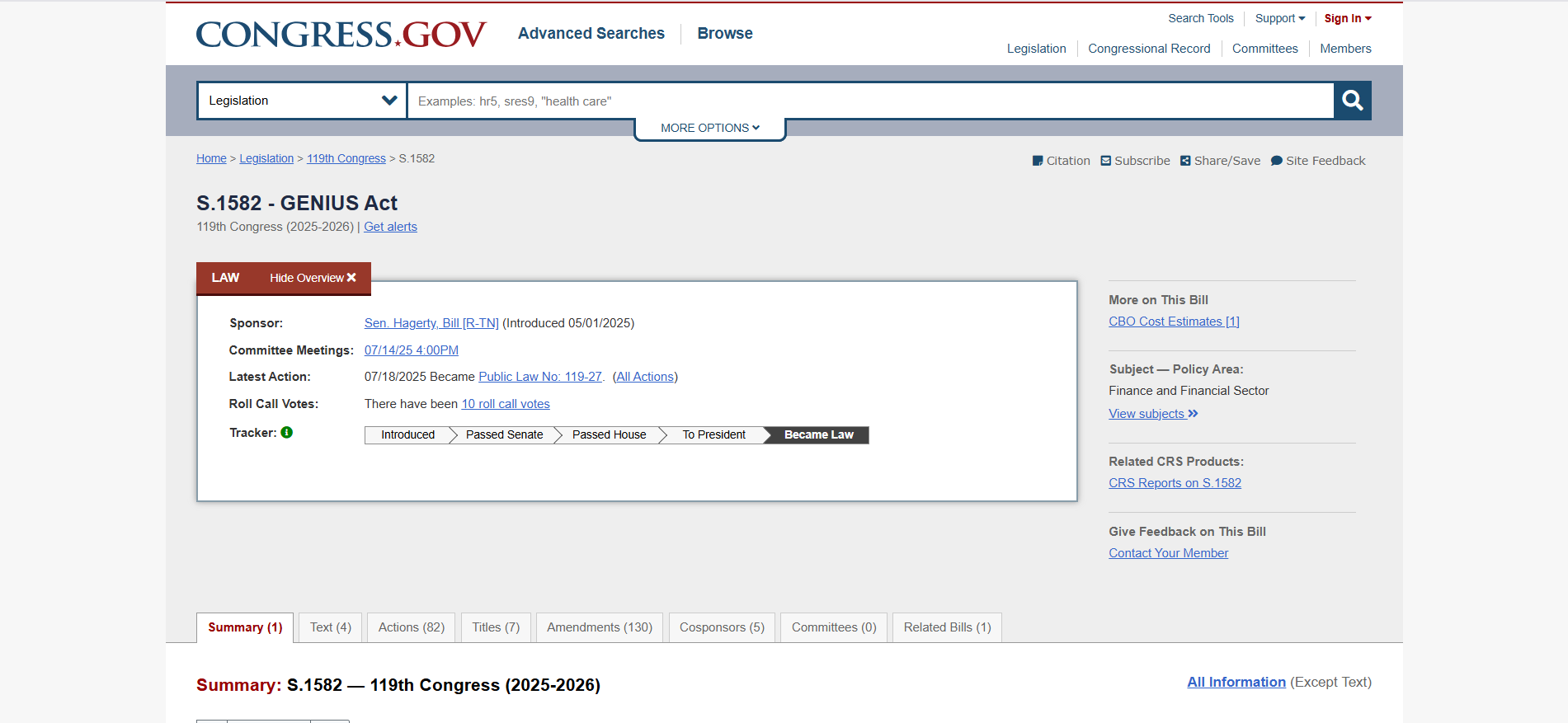
At the same time, the U.S. passed the GENIUS Act (signed July 18, 2025), which sets federal requirements for payment stablecoins, including reserve backing and disclosures, important context for platform selection in 2026.
Notably, an FDIC proposed rule summarizing the Act indicates the law becomes effective January 18, 2027 (or earlier if implementing regulations finalize sooner).
That timing matters: 2026 is a year of platform choices and pilots ahead of full effectiveness.
Against that backdrop, three names are increasingly central to SCaaS conversations:
- Agora (white-label stablecoins built around AUSD and an issuance stack)
- Bastion (stablecoin infrastructure plus regulated trust-company posture via Dibbs Trust, with enterprise-focused issuance and compliance claims)
- Stripe / Bridge (Open Issuance and stablecoin payments that settle into Stripe balances)
Key Takeaways
- The most common enterprise failure mode is not “chain fees”; it is redemption design, liquidity fragmentation, and operational support load when users cannot cash out cleanly.
- Stripe/Bridge emphasizes “launch and manage your own stablecoin” via Open Issuance and “accept stablecoin payments that settle to USD in Stripe.”
- Agora positions around white-label stablecoins backed by a reserve fund composed of cash, repos, and short-term U.S. Treasuries, with additional operational partners disclosed by the company.
- Bastion positions as stablecoin-agnostic infrastructure with on/off-ramp APIs and compliance services, and it discloses that Dibbs Trust is NYDFS-chartered while stablecoin issuance approval is pending.

What Stablecoin-as-a-Service Means (and What It Does Not)
A Practical Definition
Stablecoin-as-a-Service is a platform offering that helps a business launch, operate, and integrate stablecoin rails without the business building the entire issuance, compliance, custody, and liquidity stack from scratch.
In practice, SCaaS may support either:
- Issuing a branded stablecoin (your token, your product experience), or
- Using stablecoins for payments/payouts/settlement without issuing a new token.
Stripe’s stablecoin payments documentation, for instance, describes a model where customers pay using crypto wallets and networks while payments settle into the merchant’s Stripe balance in USD, which is operationally very different from issuing a new token.
The SCaaS Stack (Components you must evaluate)
A mature SCaaS offering typically touches most of the following:
- Smart contract deployment (or managed issuance)
- Mint and burn controls
- Admin permissions and auditability
- Reserve operations and reporting
- What assets back the stablecoin (cash, Treasuries, repos, etc.)
- How disclosures/attestations are produced and surfaced
- Compliance and controls
- KYC/KYB onboarding for mint/redemption (and sometimes users)
- AML/sanctions screening, monitoring, reporting obligations
- Policy controls (limits, approvals, risk flags)
- Custody / wallets
- Where assets and keys live (custodial wallets, HSM, role-based controls)
- Recovery and incident response processes
- Liquidity, distribution, and redemption
- How users cash out (redemption rails)
- Banking partners, cutoffs, and operational hours
- Exchange/aggregator connectivity and market structure
If a platform is strong in “API docs” but weak in redemption or compliance operations, scaling tends to produce the same outcome: support tickets, failed payouts, and treasury reconciliation issues.

Why SCaaS Is Accelerating into 2026
1) Stablecoins are already used at meaningful scale
Multiple reputable institutions have published large stablecoin volume figures, but they do not all measure the same thing:
- Visa reports global stablecoin transaction volume increased from over $3.5T (2023) to over $5.5T (2024).
- TRM Labs reports stablecoins reaching record highs, with over $4T in transaction volume between January 2025 and July 2025, and an 83% increase between July 2024 and July 2025 (per its analysis).
- A Boston Consulting Group (BCG) analysis presents $26.1T in stablecoin transactions and 5.6B transaction count in 2024, and then separates out what it estimates is “beyond trading and DeFi,” illustrating how much raw volume can be dominated by market-structure flows.
How to use these numbers correctly in 2026 planning:
Treat them as evidence of scale and adoption, but do not treat any single figure as “the truth” without knowing whether it is total, adjusted, or category-specific (payments vs exchange routing vs bots).
2) The market cap has crossed a threshold
Reuters reported the stablecoin market valued at more than $260B (citing CoinGecko) around the GENIUS Act signing.
The Financial Times reported issuance rising to $280B by September 2025.
Even if daily values fluctuate, these sources support the conclusion that stablecoins have reached a size where enterprise platforms can justify dedicated product lines.
3) Regulation is turning “compliance posture” into a product requirement
The GENIUS Act (Public Law signed July 18, 2025) establishes a U.S. federal framework for payment stablecoins.
The White House fact sheet describes requirements including 100% reserve backing with liquid assets and monthly public disclosures. Meanwhile, an FDIC proposed rule notes the law becomes effective January 18, 2027 (or earlier if regulations finalize).
In parallel, NYDFS guidance on U.S. dollar-backed stablecoins emphasizes expectations around redeemability, reserves, and attestations for DFS-supervised stablecoins.
For SCaaS buyers, this means vendor selection in 2026 should assume stronger auditability and operational discipline will be required, not merely “a token contract and a dashboard.”
The 2026 Scorecard: How to Evaluate SCaaS Platforms
Below is a decision framework designed for payments, fintech, and treasury teams who want to avoid the typical failure modes.
1) Issuance Model: Are You Issuing a Stablecoin or Just Using Stablecoins?
- Issuance creates a branded unit of account and product control, but increases operational scope (reserves, disclosures, governance).
- Accept-and-settle models reduce operational complexity; for example, Stripe describes stablecoin payments that settle into a USD Stripe balance.
2) Reserve Operations: What Backs the Stablecoin and Who Runs the Playbook?
If you issue (or white-label) a stablecoin, reserve composition and governance are central.
Agora states AUSD is backed by reserves composed of cash, overnight repurchase and reverse repurchase agreements, and short-term U.S. Treasury securities, and it discloses operational partners such as State Street (administration/custody) and VanEck (asset management).
3) Redemption Design: The Hidden Determinant of User Trust
In consumer and B2B use cases, the practical question is: how reliably can a user exit back to fiat (or to a liquid on-chain asset) when it matters?
This depends on:
- Banking rails and operating hours
- Liquidity network participation
- Clear policies for holds, disputes, and risk events
Stripe’s Open Issuance announcement explicitly highlights plugging into a shared liquidity network as part of its pitch.
4) Compliance Posture: What is the Vendor’s Operating Model?
Many SCaaS offerings differentiate here:
- Some aim to “handle the compliance stack,” especially for issuance/mint/redemption.
- Others provide tooling but require the client to carry most compliance obligations.
Bastion’s website positions “Compliance-as-a-Service” with KYC and AML handled, while also providing a disclosure that its trust entity (Dibbs Trust) is NYDFS-chartered and that its application to issue stablecoins is pending.
5) Security and Controls: Who Can Mint/Burn and How is That Governed?
Minimum enterprise requirements in 2026 typically include:
- Role-based access control (RBAC)
- Audit trails
- Key management standards
- Emergency controls and incident processes
6) Integration Surface and Observability: Can Finance Reconcile, Not Just Engineers Integrate?
The difference between a pilot and a production rail is usually reconciliation:
- Webhooks and event logs
- Exportable ledger views
- Dispute and exception handling workflows
7) Commercial Model: How Do Fees Map to Value?
Be cautious about comparing only headline fees.
A cheaper token transfer can still be more expensive if it creates support load, FX complexity, or redemption friction.
- Stripe’s positioning emphasizes reducing integration burden
- Agora emphasizes turnkey white-label
- Bastion emphasizes regulated infrastructure and compliance.
Platform Deep Dives: Agora vs Bastion vs Stripe (Bridge)
1) Stripe / Bridge: Open Issuance + Stablecoin Payments Rails
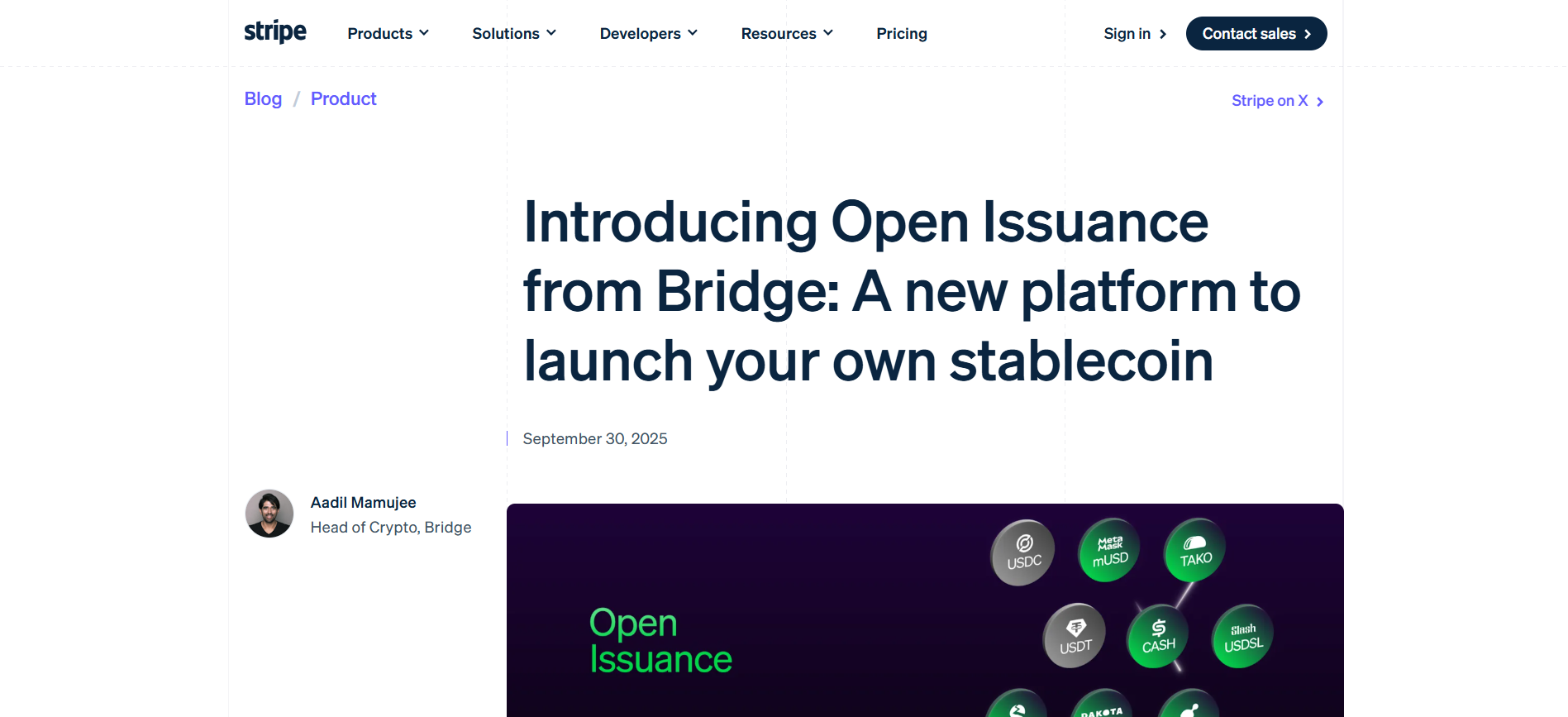
Stripe’s “Open Issuance from Bridge” announcement frames the product as enabling any business to launch and manage its own stablecoin, including the ability to mint and burn and to “plug into a shared liquidity network.”
Separately, Stripe’s documentation describes stablecoin payments where customers pay with crypto wallets/tokens/networks and the business receives settlement in USD in its Stripe balance.
This combination is strategically important: it connects issuance (for teams that want their own token) with distribution (for teams that simply want to accept stablecoins without changing core accounting).
What this means for 2026 buyers
- If a business already uses Stripe for payments, fraud tooling, checkout, and billing, Stripe/Bridge can reduce the “two dashboards, two risk models, two finance systems” problem.
- Open Issuance is positioned to remove dependency on “incumbent issuers,” which is a direct response to concerns about concentration and product constraints in stablecoin issuance.
Risk questions to ask Stripe/Bridge in 2026
- What redemption paths are supported for the issued token and for stablecoin payments flows?
- What compliance obligations remain with the client vs the platform?
- What reserve reporting and disclosure model applies to issued coins under Open Issuance?
2) Agora: White-Label Stablecoins Built Around AUSD and Reserve Disclosures

Agora positions its offering around white-labeled stablecoins, explicitly describing the ability to create a branded “digital dollar” product.
On its AUSD product page, Agora states:
- AUSD is backed by reserves (cash, repos, short-term Treasuries).
- The reserve fund is administered/custodied by State Street and assets managed by VanEck (as disclosed by Agora).
Agora’s “white-label” message is operationally significant: it implies the client is not starting from zero on reserve operations and compliance processes; instead, it is integrating into an existing issuance and reserve stack.
What this means for 2026 buyers
- Agora may fit teams that want a branded stablecoin as a product primitive (balances, rewards, instant settlement between platform participants).
- The clearer and more specific the reserve disclosures, the easier it is to build institutional trust and internal risk approval (treasury committees, compliance sign-off).
Risk questions to ask Agora in 2026
- How does redemption work at scale (cutoffs, banking rails, liquidity partners)?
- What control plane exists for mint/burn approvals and audit trails?
- What disclosures/attestations are provided and at what cadence (and what is client vs platform responsibility)?
3) Bastion: Enterprise Stablecoin Infrastructure With a Trust-Company Posture
Bastion positions as “stablecoin agnostic” and describes on-ramp/off-ramp APIs and built-in compliance.
Bastion also discloses an important regulated-entity detail: its site includes a statement that Dibbs Trust Company LLC is chartered as a limited purpose trust company by NYDFS to engage in virtual currency business and that its application to issue stablecoins is pending.
In separate Bastion blog content, it describes obtaining a New York limited purpose trust company charter in connection with Dibbs Trust.
Bastion has also publicly announced funding totals and rounds, including reporting that it exceeded $40 million in total funding and raised a $14.6 million strategic round led by Coinbase Ventures (per Bastion and third-party coverage).
What this means for 2026 buyers
- Bastion is oriented to enterprise buyers who want a regulated framing and a bundled compliance story.
- The “stablecoin agnostic” pitch can matter for teams who want flexibility: issue your own, or support existing coins, or do both.
Risk questions to ask Bastion in 2026
- If issuance approvals are pending, what issuance capabilities are live today versus planned?
- How do KYC/AML workflows integrate with client systems and policies?
- What are the operational boundaries: who owns suspicious activity monitoring, reporting, and escalations?
A Practical Comparison Framework (2026)
Use this as a buyer’s checklist rather than a vendor “score,” because the right answer depends on whether you are issuing, accepting, paying out, or all three.
| Dimension | Agora | Bastion | Stripe / Bridge |
|---|---|---|---|
| Primary emphasis | White-label stablecoin issuance | Enterprise infra + compliance framing | Issuance + payments distribution via Stripe |
| Issuance narrative | Branded stablecoin built on Agora stack | “Issue your own or use someone else’s” | Open Issuance to launch/manage stablecoin |
| Compliance framing | Platform-assisted (per positioning) | “Compliance-as-a-Service” + NYDFS trust disclosure | Stripe rails and productized payments settlement; Open Issuance positioning |
| Payments distribution | Depends on client integrations/partners | Focus on on/off ramp + wallet APIs | Stablecoin payments settle to USD Stripe balance |
| Reserve disclosure signals | Specific reserve composition listed | Depends on issuance product specifics; trust posture emphasized | Open Issuance mentions reserve rewards and liquidity network |

The Decision That Actually Matters: Choose by Use Case
Use Case A: Accept Stablecoins But Keep Accounting in USD
If your primary objective is to accept global stablecoin payments while avoiding token issuance, the operationally cleanest pattern is usually accept-and-settle into an existing fiat ledger.
Stripe’s documentation explicitly describes this: stablecoin payments settle in USD in the Stripe balance.
Why this tends to work in production
- Accounting remains in a familiar fiat unit
- You avoid branded token governance and reserve reporting
- Support load is often lower because cash-out is handled as part of the settlement model
Use Case B: Create a Branded Stablecoin for a Marketplace or Closed-loop Economy
If you want to build:
- platform balances that move instantly between users,
- embedded FX and payouts,
- loyalty/rewards and programmable settlement,
then issuance or white-label issuance becomes more relevant.
Agora’s messaging is directly aligned to that: launch branded stablecoins using its platform, backed by a reserve fund with specified asset types.
Use Case C: Enterprise Issuance With a RegulatedTtrust-Company Narrative
If your buyer is an enterprise that requires regulated posture and a compliance-led story, Bastion’s trust-company framing and NYDFS charter disclosures may be a better fit, subject to what is live versus pending for issuance.
The Most Common SCaaS Failure Modes (and How to Avoid Them)
1) Confusing On-Chain Confirmed With Received in the User’s Bank
Stablecoin transfers can be final on-chain while the user’s off-ramp flow is delayed by compliance reviews, banking cutoffs, fraud checks, or liquidity gaps.
The fix is not “faster chains”; it is clear redemption design and operational SLAs.
2) Underestimating How Much Volume is Not Real Payments
BCG’s analysis shows that when it removes trading pair activity and on/off-ramping, it estimates only a smaller portion of volume relates to payments categories, highlighting why product teams should not equate raw volume with commercial payments readiness.
Citi likewise stresses that provider estimates differ materially and distinguishes “adjusted” volumes.
3) Compliance Ambiguity Between Platform and Client
In 2026, buyers should assume regulators and counterparties will ask:
- Who performs KYC/KYB for mint/redemption?
- Who monitors transactions and escalates suspicious activity?
- Who owns disclosures and attestations?
NYDFS guidance for stablecoins under DFS oversight emphasizes redeemability, reserves, and attestations, areas that map directly to platform responsibilities and client risk governance.
4) Finance Reconciliation Gaps
Most pilots fail at month-end close, not at the API call.
Require:
- event-level reporting,
- clear fee/take-rate reporting,
- reconciliation exports,
- and a support process for disputes and holds.
A 90-Day Implementation Plan (that does not rely on wishful thinking)
Days 0–15: Scope and Governance
- Choose: accept-and-settle vs issue vs hybrid.
- Define cash-out paths and SLAs.
- Confirm compliance boundaries (platform vs client).
Days 15–45: Integrate and Instrument
- Integrate APIs and webhooks.
- Implement monitoring dashboards for failed transfers, holds, chargebacks/disputes (where applicable), and reconciliation breaks.
- Build customer support playbooks for the top 10 failure reasons.
Days 45–75: Liquidity and Redemption Testing
- Test cash-out at different times/days (including weekends and holidays).
- Run limit tests and stress tests.
- Validate reporting workflows for compliance and finance.
Days 75–90: Pilot Launch and Operational Hardening
- Launch with a narrow corridor (one region, one product line, one payout route).
- Expand only after you can quantify support load and failure rates.

Conclusion
There is no universal “best” SCaaS platform, there is only best fit by operating model and constraints.
- Choose Stripe/Bridge if you want a combined story of issuance capability plus immediate distribution and settlement mechanics inside Stripe workflows, including stablecoin payments that settle to USD balances.
- Choose Agora if your product strategy requires a branded stablecoin and you value explicit reserve composition disclosures and a white-label posture.
- Choose Bastion if your enterprise buyer requires a regulated trust-company narrative and bundled compliance positioning, while carefully validating what is live versus pending regarding issuance approvals.
In 2026, the winners are unlikely to be the teams that “ship a token.” They will be the teams that ship reliable redemption, clear compliance ownership, and finance-grade reconciliation, because those are the elements that turn stablecoin rails into production payment infrastructure.
Read Next:
- 2025 Stablecoin Year-End Report
- Best Chain for Stablecoin Micropayments in 2026
- Best Stablecoin On/Off-Ramps for 2026 Compared
FAQs:
1. What is Stablecoin-as-a-Service (SCaaS)?
Stablecoin-as-a-Service is a platform offering that helps a business launch or integrate stablecoin rails by providing issuance tooling, compliance controls, and operational infrastructure.
2. What is the difference between issuing a stablecoin and accepting stablecoin payments?
Issuing means you create a branded token and take on reserve, disclosure, and governance responsibilities. Accepting means users pay in stablecoins, but you typically settle into a fiat ledger.
3. Why do stablecoin volume numbers vary so much across sources?
Some reports include all transfers, which can be inflated by trading and routing activity. Other reports use adjusted methodologies to isolate payments-like usage.
4. What are the biggest risks when launching stablecoin rails in 2026?
The biggest risks are redemption bottlenecks, liquidity fragmentation, unclear compliance ownership, and finance reconciliation gaps, not just blockchain fees.
5. What does “mint and burn” mean in stablecoin operations?
Minting creates new stablecoins when reserves or collateral are deposited. Burning destroys stablecoins when users redeem back to fiat or other assets.
6. How should a company evaluate reserve quality for a white-label stablecoin?
A company should review reserve composition (cash, Treasuries, repos), reporting cadence, governance controls, and who administers custody and asset management.
7. What is redemption design and why is it so important?
Redemption design is the process and rail a user uses to cash out. It determines reliability, user trust, and the operational support load when cash-outs fail or delay.
8. Which teams should choose Stripe/Bridge in 2026?
Teams that want a fast path to production and already operate within Stripe’s payments and settlement workflows often benefit from Stripe/Bridge’s distribution and integration model.
9. Which teams should consider Agora in 2026?
Teams that want a branded stablecoin strategy and prefer a white-label issuance posture with explicit reserve composition disclosures typically consider Agora.
10. Which teams should consider Bastion in 2026?
Teams that want an enterprise-oriented stack with a regulated trust-company narrative and bundled compliance positioning often consider Bastion, subject to what is live versus pending for issuance.
11. What compliance responsibilities remain with the client when using SCaaS?
Even with compliance tooling, clients typically remain responsible for governance, risk policies, escalation processes, and meeting obligations required by their regulators and counterparties.
12. What should be included in a 90-day SCaaS implementation plan?
A practical plan includes governance scoping, integrations and monitoring, liquidity and redemption testing, finance reconciliation readiness, and a controlled pilot before scaling.
Disclaimer:
This content is provided for informational and educational purposes only and does not constitute financial, investment, legal, or tax advice; no material herein should be interpreted as a recommendation, endorsement, or solicitation to buy or sell any financial instrument, and readers should conduct their own independent research or consult a qualified professional.