
Table of Contents
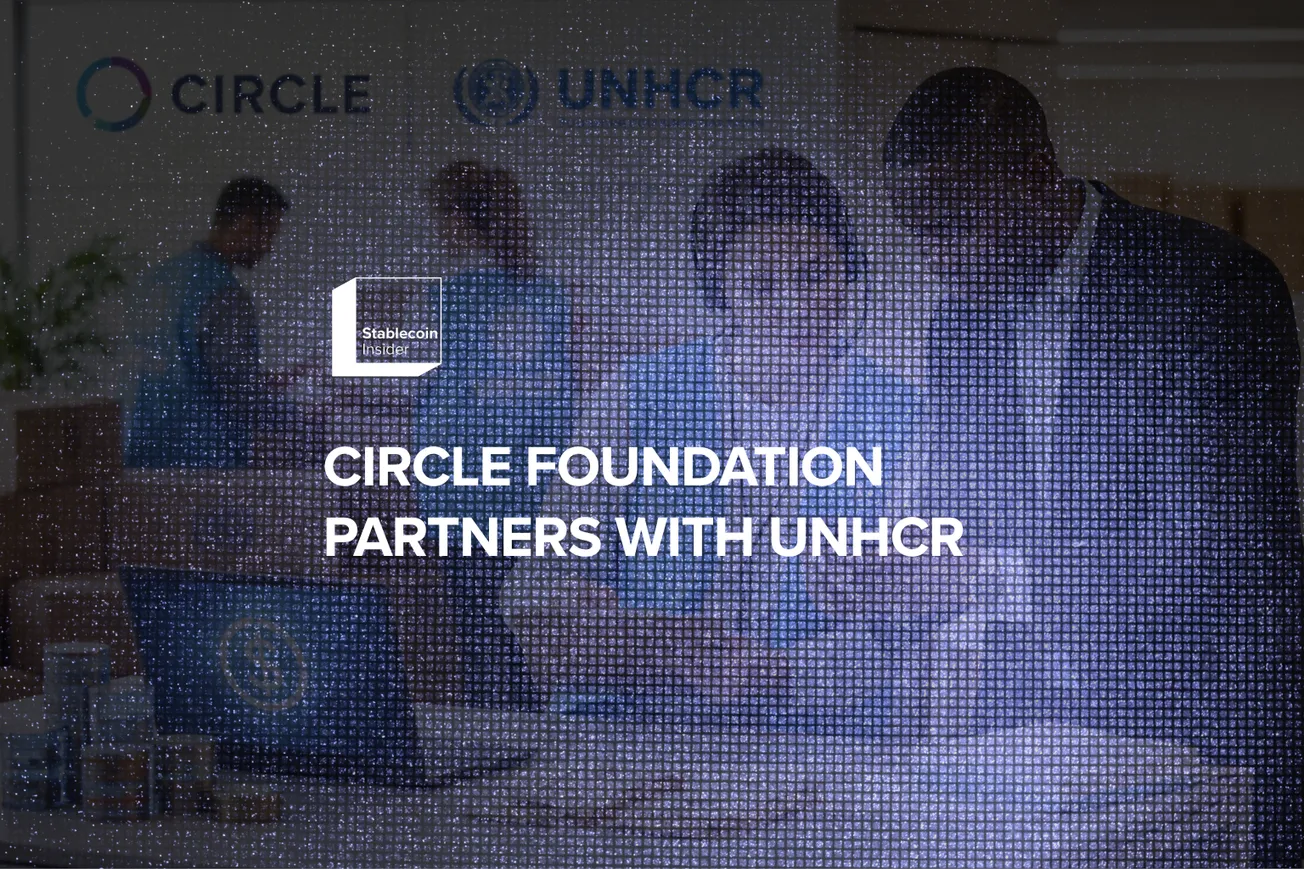
On January 21, 2026, Circle Foundation announced a grant to the United Nations High Commissioner for Refugees (UNHCR) Digital Hub for Technical Solutions (DHoTS).
This partnership integrates regulated stablecoins into humanitarian aid delivery. It addresses inefficiencies in distributing over $38 billion in annual global aid, often delayed by legacy banking systems.
Using stablecoins like USDC, the initiative aims to reduce costs by up to 20% and increase transparency.
It expands on UNHCR's 2022 pilots in Ukraine, where digital dollars supported displaced populations.
Key Takeaways
- Circle grants UNHCR to integrate stablecoins, targeting 20% aid cost reductions.
- Expands Ukraine pilots that delivered $5M+ USDC to 2,500+ households efficiently.
- Boosts transparency with blockchain ledgers for end-to-end fund tracking.
- Incorporates AI tools for UN-wide compliance and risk management.
- Advances inclusion via low-fee, borderless transfers for displaced groups.
Background on Partners and Stablecoins
Circle Foundation, launched in 2025 by Circle Internet Financial, focuses on global financial inclusion. Circle issues USDC, a stablecoin pegged to the U.S. dollar, backed by cash and U.S. government securities for 1:1 redeemability.
With $30 billion+ in circulation by early 2026, USDC enables low-cost, borderless transfers on blockchains like Stellar.
UNHCR aids over 100 million displaced people worldwide. Traditional aid faces high fees (up to 7% on cross-border transfers), currency risks, and opacity. DHoTS innovates with blockchain to streamline processes, prioritizing privacy and sovereignty.
Stablecoins offer instant settlements (5.8 seconds average on Stellar) with minimal fees ($0.01 per 10,000 transactions). They provide stable value and auditable ledgers, minimizing fraud.
Details of the Grant
The grant funds DHoTS to incorporate regulated stablecoins into UN financial systems. It includes protocols for payments, cross-border transfers, AI compliance tools, and new pilots.
The amount is undisclosed but fits Circle's $50 million 2026 commitment to inclusion.
Core elements:
- Infrastructure: Upgrading blockchain systems for digital wallets.
- Compliance: Embedding controls compliant with EU's MiCA regulation; Circle's French unit is licensed.
- Collaboration: Involving Stellar Development Foundation and UN agencies like UNDP.
UNDP Administrator Alexander De Croo noted: "Integrating digital infrastructure with stablecoins enhances UN aid speed, transparency, and accountability via AI controls."
Benefits for Aid Delivery
Data from pilots indicate 20% cost reductions by avoiding banks and FX issues. In inflationary areas like Argentina, savings reached 30%.
Blockchain tracking boosts donor trust, potentially raising funds. In Ukraine, $5 million in USDC aided 2,500 households, convertible at outlets like MoneyGram.
It promotes inclusion for unbanked recipients, enabling secure storage and access to remittances or loans for resilience.
Building on 2022 Ukraine Pilots
UNHCR's 2022 pilot with Circle and Stellar disbursed USDC via Vibrant wallets during Russia's invasion. It scaled to thousands by 2025, saving $12 million in fees and winning the 2023 Paris Blockchain Week award.
Key lessons: user-friendly designs and compliance, now guiding UN-wide expansion.
Future Implications
With rising crises, this sets a model:
- Circle eyes partnerships with WFP and Mercy Corps.
- By 2027, stablecoins may handle 10-15% of aid, per estimates, yielding billions in efficiencies.
- Challenges include regulations and literacy, but frameworks like MiCA support growth.
Conclusion
Circle's grant to UNHCR drives stablecoin use in aid, enabling faster, cost-effective, transparent delivery to those in need.
Read Next:
- A Tactical Guide of Global Stablecoin Accounts (GSAs)
- Savings GHO (sGHO) from Aave: Full 2026 Review
- Tether (USDT) January 2026 Reserves Report
FAQs:
1. What does the Circle-UNHCR grant cover?
Funds stablecoin integration for UN aid, including payments, transfers, and AI compliance.
2. How do stablecoins reduce costs?
Near-instant transfers with fees under $0.01, skipping banks and FX volatility for 20% savings.
3. What results came from Ukraine pilots?
Aided thousands, saved $12M in fees, preferred by 100% of users for speed.
4. Are stablecoins compliant for aid?
Yes, with reserves, immutability, and MiCA alignment ensuring security.
5. What's next for this initiative?
Scale to other UN agencies, targeting 10-15% of aid flows by 2027.
Disclaimer:
This content is provided for informational and educational purposes only and does not constitute financial, investment, legal, or tax advice; no material herein should be interpreted as a recommendation, endorsement, or solicitation to buy or sell any financial instrument, and readers should conduct their own independent research or consult a qualified professional.