
Table of Contents
Singapore, March 25, 2026.
Ripple has launched a groundbreaking pilot of its RLUSD stablecoin inside the Monetary Authority of Singapore’s (MAS) BLOOM initiative, partnering with supply-chain fintech Unloq to modernise cross-border trade settlement.
Key Takeaways
- Automated Settlements: Smart contracts on the XRP Ledger trigger RLUSD payments instantly when shipment conditions are verified, removing manual delays.
- MAS BLOOM Sandbox: The pilot operates under Singapore’s flagship programme for tokenised settlement assets, ensuring full regulatory oversight.
- Unloq SC+ Integration: Combines trade obligations, financing, and settlement in one execution layer for seamless end-to-end processing.
- SME Focus: Enhances risk transparency and financing access for smaller businesses in cross-border trade.
- Ripple’s Growing APAC Footprint: Builds on Ripple’s recent MAS Major Payment Institution licence expansion for RLUSD and XRP services.
The project marks the first real-world test of programmable payments using Ripple’s USD-backed stablecoin and the XRP Ledger within Singapore’s regulatory sandbox. It aims to replace slow, paper-heavy trade finance processes with automated, condition-triggered settlements that could cut weeks off traditional timelines.
Under the pilot, Unloq’s SC+ trade finance platform integrates with Ripple’s infrastructure. Smart contracts on the XRP Ledger hold RLUSD payments until pre-agreed commercial conditions, such as verified shipment documents or delivery milestones, are met.
Once verified, the contract automatically releases funds, eliminating manual reconciliation and reducing counterparty risk.
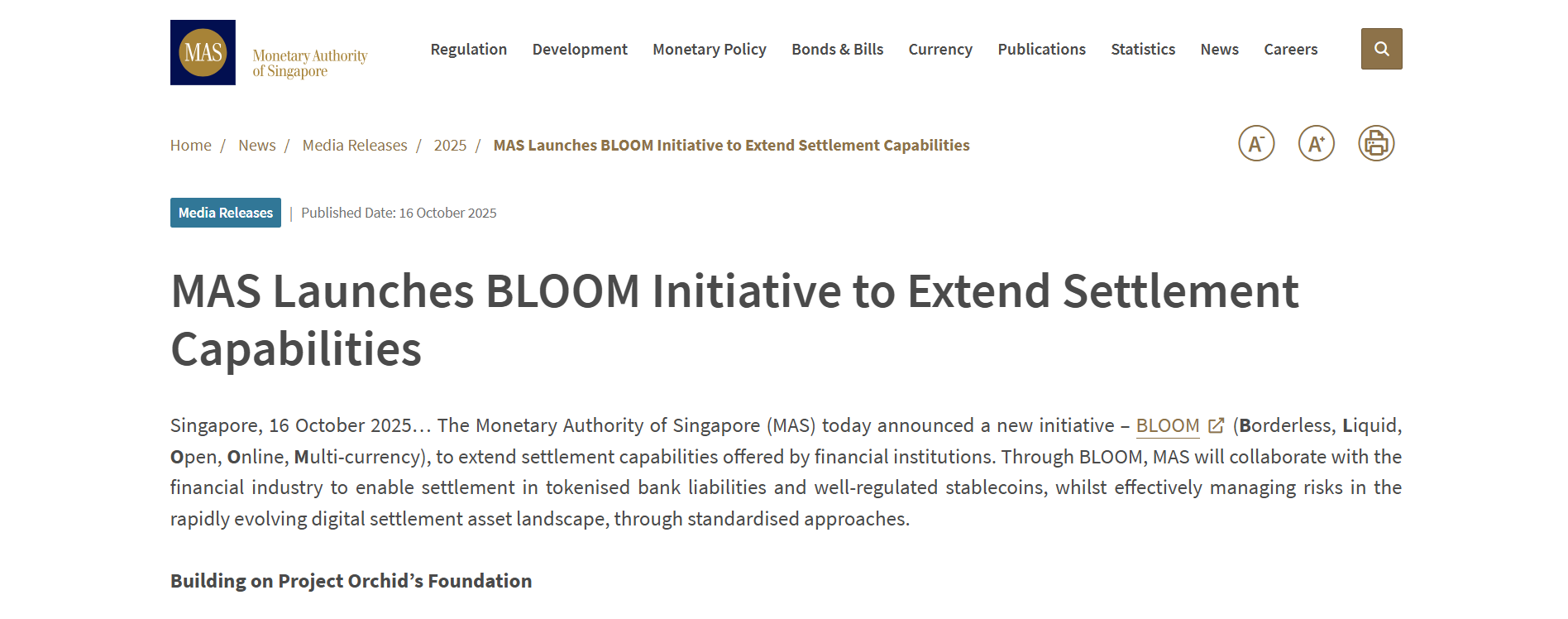
The Monetary Authority of Singapore launched the BLOOM (Borderless, Liquid, Open, Online, Multi-currency) initiative in October 2025 to enable settlement using tokenised bank liabilities and well-regulated stablecoins. Ripple’s participation signals growing institutional confidence in compliant stablecoins for real-economy use cases.
Fiona Murray, Managing Director, Asia Pacific at Ripple, said: “Singapore continues to take a leading role globally in providing the regulatory clarity necessary for the digital asset space to thrive. Ripple is incredibly excited to be part of BLOOM, an initiative that perfectly aligns with our commitment to compliant, real-world utility for blockchain technology.”
Letitia Chau, President and Chief Risk Officer of Unloq, added: “BLOOM represents an important step toward modernizing trade finance infrastructure in a controlled and regulated environment. Through SC+, we are demonstrating how digital settlement rails can be integrated into existing trade and financing workflows without disrupting commercial relationships.”
The pilot specifically targets small and medium-sized enterprises (SMEs), which often face liquidity constraints and high financing costs in cross-border trade. By improving risk transparency and speeding up settlements, the solution could unlock better access to working capital for Asian supply chains.
Conclusion
This pilot demonstrates how regulated stablecoins like RLUSD can deliver tangible efficiency gains in one of finance’s most stubborn sectors.
As Singapore positions itself as Asia’s digital-asset hub, successful outcomes from the BLOOM initiative could accelerate adoption of programmable money across global trade corridors.
For Ripple, the project validates RLUSD’s utility beyond speculation, anchoring the stablecoin firmly in real-world payments.
Read Next:
- Tether's First Full Independent Audit of USDT Reserves
- Deloitte Canada and Stablecorp Announce Strategic Partnership
- Who Is Adding Stablecoins to Payroll and Why It's No Longer Optional in 2026
FAQs:
1. What is Ripple’s RLUSD stablecoin?
RLUSD is Ripple’s fully regulated, USD-backed stablecoin issued on the XRP Ledger and Ethereum. It is designed for institutional payments and settlements with full reserves and transparency reporting.
2. How does the MAS BLOOM pilot work?
Unloq’s SC+ platform and Ripple’s smart contracts on the XRP Ledger automatically release RLUSD payments once shipment or delivery conditions are digitally verified. No manual intervention is required.
3. Why is Singapore’s MAS involved?
BLOOM extends settlement capabilities using tokenised assets and stablecoins in a sandboxed environment. The regulator aims to build interoperable infrastructure while maintaining financial stability.
4. Who benefits most from this pilot?
SMEs in supply chains gain faster access to funds, reduced financing costs, and greater transparency. Banks and corporates benefit from lower operational friction in cross-border trade finance.
5. What’s next for the pilot?
Results will inform broader BLOOM deliverables and potential commercial rollout of programmable trade settlement rails across Asia-Pacific. Success could pave the way for similar solutions in other jurisdictions.
Disclaimer:
This content is provided for informational and educational purposes only and does not constitute financial, investment, legal, or tax advice; no material herein should be interpreted as a recommendation, endorsement, or solicitation to buy or sell any financial instrument, and readers should conduct their own independent research or consult a qualified professional.