Table of Contents
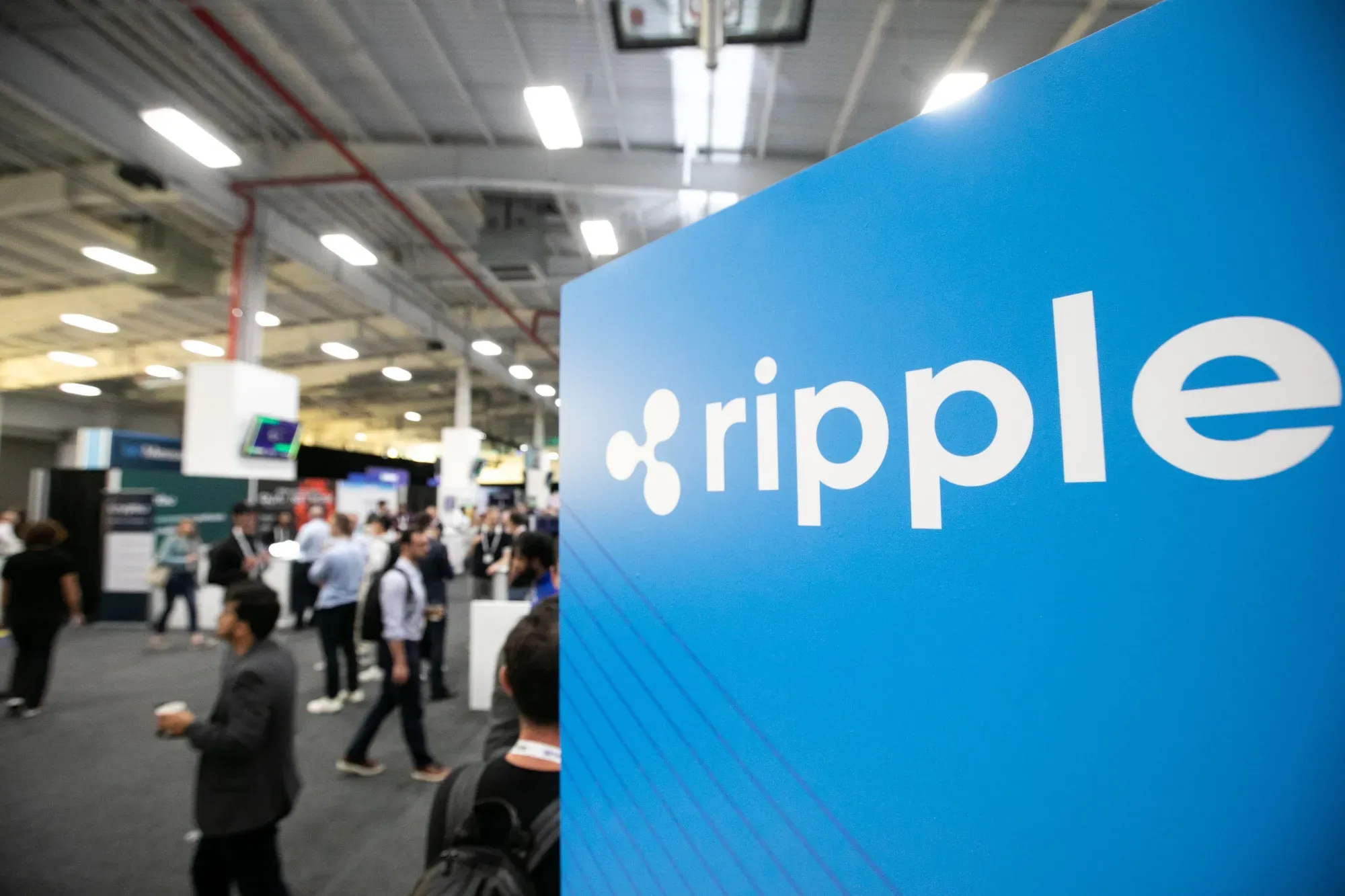
žRipple has made its most significant emerging market investment to date, taking a strategic stake in Flutterwave's Series E funding round at a $3.2 billion valuation, and the deal is not primarily a financial investment but a full infrastructure integration that embeds RLUSD, Ripple Payments, and the XRP Ledger into the payment rails and remittance corridors of Africa's largest payments company.
Flutterwave processes over one billion transactions worth more than $50 billion annually and operates across Africa with Nigeria as its primary hub, giving Ripple's stablecoin and XRP Ledger technology the broadest institutional distribution platform available on the continent in a single agreement.
As covered in our Crossmint and Paga Africa stablecoin partnership analysis, the African stablecoin infrastructure market is attracting its most significant institutional commitments of 2026 in rapid succession, and Ripple's Flutterwave investment is the largest by capital and distribution scale of any announced this year.
Key Takeaways
- Ripple has invested in Flutterwave's Series E round at a $3.2 billion valuation, embedding RLUSD, Ripple Payments, and the XRP Ledger into Flutterwave's payment rails and Send App remittance corridors.
- The partnership is built on three pillars: RLUSD as a primary settlement asset for high-volume payment channels, XRP Ledger for faster transaction clearing, and a unified API bridging Flutterwave's domestic network with Ripple Payments' global infrastructure.
- The deal follows Ripple's June 2026 partnership with Bitso to bring the peso-backed stablecoin MXNB to the XRP Ledger, confirming Ripple's accelerating strategy of embedding RLUSD and XRPL into the largest regional payment networks in emerging markets simultaneously.
What the Partnership Does
The Ripple and Flutterwave partnership is built on three specific integration pillars that collectively transform Flutterwave from a fiat-native payment network into a stablecoin-native financial infrastructure platform.
The first pillar is RLUSD as a primary settlement asset. Ripple's USD-denominated stablecoin, which received New York DFS approval in late 2024, will be embedded directly into Flutterwave's payment rails and its Send App remittance corridors for high-volume cross-border payment channels.
Rather than routing through correspondent banking networks with multi-day settlement and inflated FX margins, high-volume Flutterwave payment flows will settle in RLUSD, providing guaranteed liquidity, predictable pricing, and real-time settlement for businesses across Africa.
The second pillar is XRP Ledger transaction clearing. The XRPL will handle faster transaction clearing for payment flows running through the integrated infrastructure, leveraging Ripple's On-Demand Liquidity model that eliminates the need for pre-funded nostro accounts in cross-border corridors.
As covered in our 15 stablecoin infrastructure platforms comparison, Ripple's ODL capability is the most distinctive feature of its payment infrastructure relative to API-first stablecoin platforms, and its application to Flutterwave's African corridors is the largest ODL deployment the partnership structure has enabled since Ripple's 2019 MoneyGram deal.
The third pillar is a unified API connecting Flutterwave's domestic network to Ripple Payments' global payments infrastructure, bridging Flutterwave's local cards, mobile wallets, and bank transfer rails with Ripple's global enterprise payment network in a single integration point.
Why Flutterwave Is the Right Partner for This
Flutterwave's scale makes it the single most commercially significant distribution vehicle Ripple could have chosen for an African stablecoin infrastructure push. The company processes over one billion transactions worth more than $50 billion annually, operates the Send App remittance product for consumer cross-border flows, and serves both B2B enterprise payment clients and individual consumers across Africa.
Flutterwave CEO Olugbenga "GB" Agboola described the deal as a step toward building a payment superhighway linking African businesses more directly to global markets. Reece Merrick, Ripple's Managing Director for the Middle East and Africa, confirmed the strategic framing: the partnership will establish RLUSD within Flutterwave's infrastructure while expanding the XRP Ledger's role as a settlement layer for real-world payments across the continent.
This is not Flutterwave's first blockchain partnership. The company partnered with Polygon in October 2025 to expand stablecoin payment infrastructure. But the Ripple partnership is categorically different in commercial significance because it embeds a regulated NYDFS-approved stablecoin into Flutterwave's core settlement infrastructure rather than offering an optional blockchain payment method alongside existing rails.
As covered in our Yellow Card review, the transition from optional blockchain payment acceptance to stablecoin-native settlement infrastructure is the defining commercial shift in African fintech in 2026, and the Ripple-Flutterwave partnership is the largest single example of that transition announced to date.

The Broader Ripple Emerging Markets Strategy
The Flutterwave deal is the most commercially significant announcement in Ripple's accelerating emerging markets stablecoin strategy but not an isolated event. Last week, Ripple and Bitso announced plans to bring the peso-backed stablecoin MXNB to the XRP Ledger, adding regulated Mexican peso liquidity alongside RLUSD for enterprise cross-border settlements between the US and Mexico.
The combination of the Bitso MXNB integration and the Flutterwave RLUSD embedding reflects a deliberate strategy of using strategic investments and partnerships to build XRPL liquidity corridors through the largest regional payment platforms in emerging markets simultaneously.
The African cross-border payment problem that Flutterwave and Ripple are targeting is well-documented and commercially significant. Multi-day settlement delays, inflated FX margins, fragmented payment systems, and correspondent banking costs have historically made African cross-border payments among the most expensive in the world.
As covered in our stablecoin jobs and compensation report, Africa is the fastest-growing regional hiring market for stablecoin operations roles in 2026 precisely because the infrastructure investment required to address that problem is accelerating across multiple platforms simultaneously.
Conclusion
The Ripple and Flutterwave partnership is the most commercially consequential African stablecoin infrastructure announcement of June 2026, combining Flutterwave's one billion plus transaction annual volume and $50 billion plus in annual payment flows with Ripple's RLUSD, XRP Ledger, and Ripple Payments global network to create the continent's most scaled stablecoin-native cross-border payment infrastructure in a single agreement.
The $3.2 billion valuation confirms institutional conviction in Flutterwave's commercial fundamentals, and the three-pillar integration architecture covering RLUSD settlement, XRPL clearing, and unified API connectivity represents a structural upgrade to Flutterwave's payment infrastructure rather than an incremental product addition.
As covered in our top stablecoins on Solana guide, RLUSD's NYDFS approval and XRP Ledger's ODL capability position it as one of the most institutionally credible non-USDC stablecoin settlement assets available for enterprise payment infrastructure in 2026, and Flutterwave's network gives it the largest single distribution deployment in the stablecoin category outside the US.
FAQ:
1. What did Ripple and Flutterwave announce on June 16, 2026?
Ripple announced a strategic investment in Flutterwave's Series E round at a $3.2 billion valuation to integrate RLUSD, Ripple Payments, and the XRP Ledger into Flutterwave's payment rails and Send App remittance corridors for cross-border payments and remittances across Africa.
2. What is the difference between Ripple's RLUSD and other stablecoins being deployed in Africa?
The difference between RLUSD and other stablecoins being deployed in Africa is that RLUSD received New York DFS approval as a regulated USD-backed stablecoin and is embedded into Flutterwave's core settlement infrastructure as a primary settlement asset for high-volume payment channels, while other stablecoins like USDC are deployed primarily as optional payment methods or wallet assets rather than as the primary settlement layer of a major African payment network's core infrastructure.
3. What is the XRP Ledger's role in the Flutterwave partnership?
The XRP Ledger's role in the Flutterwave partnership is to handle faster transaction clearing for payment flows running through the integrated infrastructure, leveraging Ripple's On-Demand Liquidity model that eliminates pre-funded nostro accounts in cross-border corridors and reduces the settlement delays and FX margin costs that have historically made African cross-border payments among the most expensive in the world.
4. What is the difference between Ripple's Flutterwave investment and its Bitso partnership?
The difference between Ripple's Flutterwave investment and its Bitso partnership is that the Flutterwave investment is a direct Series E equity stake in Africa's largest payment network at a $3.2 billion valuation with RLUSD embedded as a primary settlement asset across Flutterwave's entire payment rail infrastructure, while the Bitso partnership integrates the peso-backed stablecoin MXNB into the XRP Ledger for US-Mexico cross-border settlements without a direct equity investment component.
5. What does the Ripple and Flutterwave partnership mean for African cross-border payments?
The Ripple and Flutterwave partnership means that African businesses using Flutterwave's payment infrastructure will be able to access real-time cross-border settlement with guaranteed liquidity and predictable pricing through RLUSD as a settlement asset and XRP Ledger clearing, replacing the multi-day delays and inflated FX margins of correspondent banking networks that have historically dominated African cross-border payment infrastructure.
Disclaimer:
This content is provided for informational and educational purposes only and does not constitute financial, investment, legal, or tax advice; no material herein should be interpreted as a recommendation, endorsement, or solicitation to buy or sell any financial instrument, and readers should conduct their own independent research or consult a qualified professional.