

Table of Contents
Orbiter Finance is one of the most broadly distributed route layers for users and teams that need fast cross-chain execution across EVM and non-EVM ecosystems.
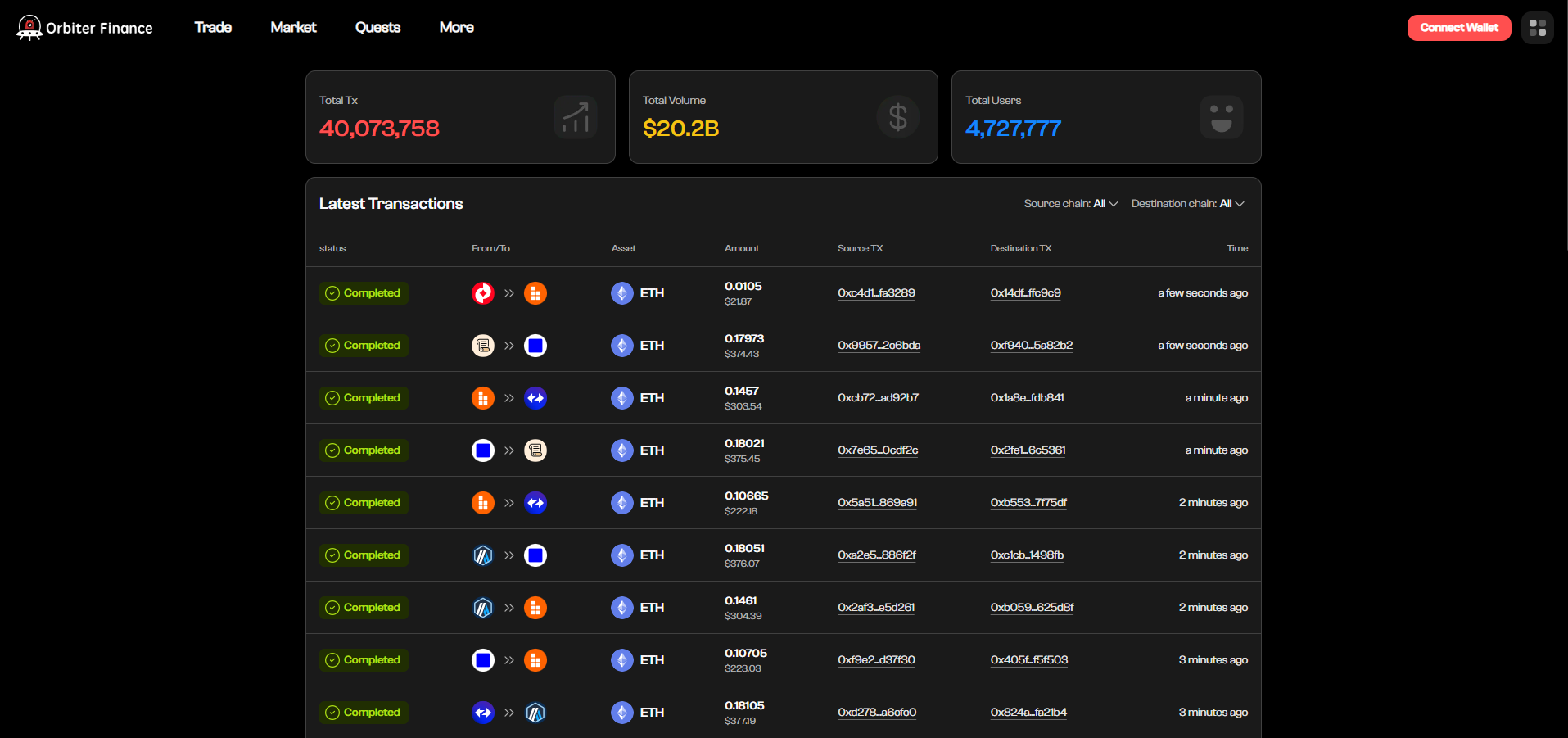
Its live explorer shows more than 4.7 million users and about $19.4 billion in total volume, which supports the core thesis of this review: Orbiter is strongest when chain coverage, route access, and integration flexibility matter more than a single-chain UX.
Key Takeaways
- Orbiter Finance is best for users and builders who need one routing layer across a very large set of EVM and non-EVM networks.
- Orbiter’s 2026 stack is stronger on route access, API-first integration, and bridge aggregation than on polished consumer simplicity.
- The product is easiest to justify when you value chain breadth, live quoting, and developer tooling over a narrow one-bridge workflow.
What Orbiter Finance actually does in 2026
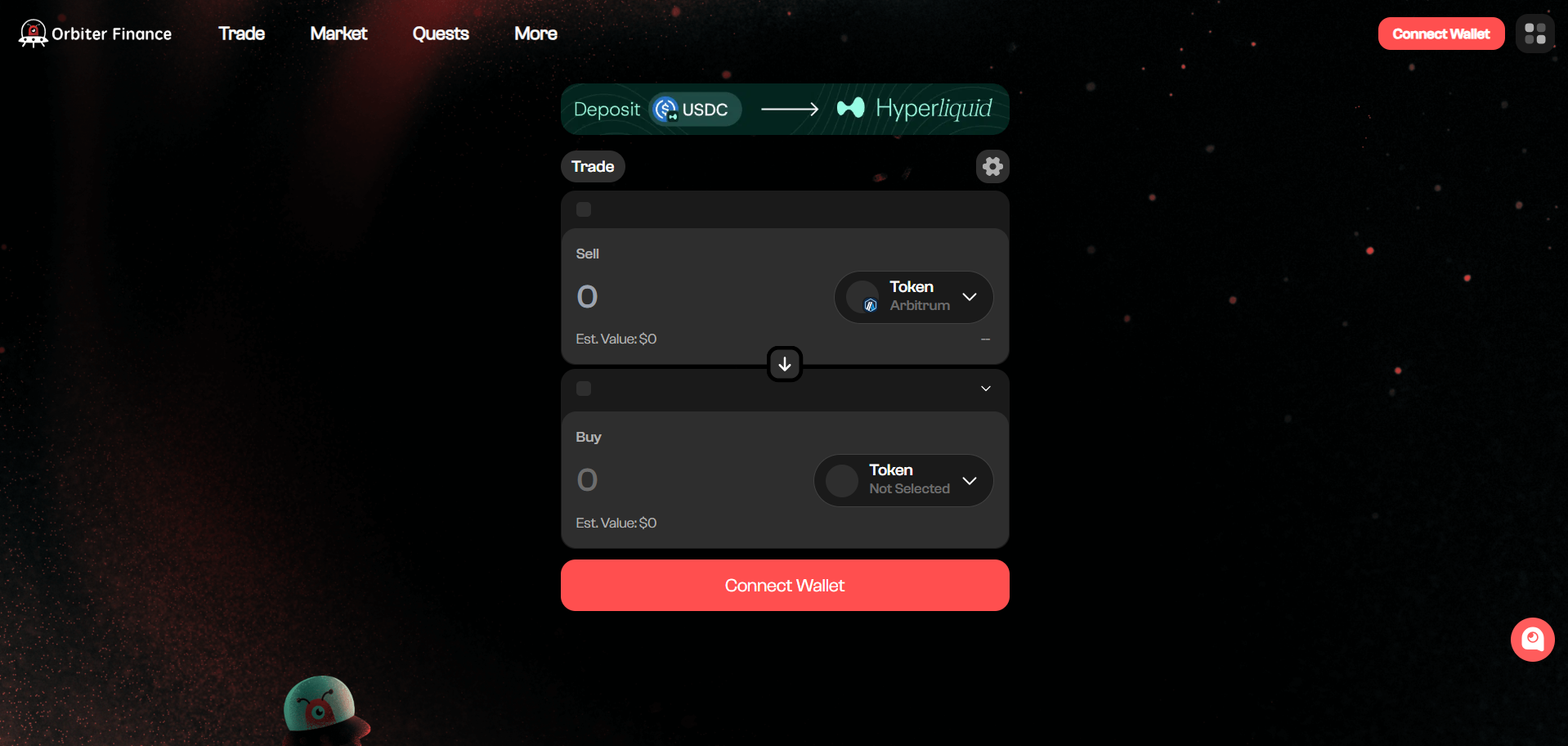
Orbiter Finance now operates as more than a classic bridge front end because its product stack combines bridge aggregation, on-chain and cross-chain quote discovery, and infrastructure for custom Ultra Bridge deployments.
The official docs position the REST API as the routing layer for cross-chain and on-chain stablecoin swapping and bridging, while the live explorer shows usage at scale across the protocol’s route network.
That matters because a cross-chain aggregator is judged by route quality and execution breadth, not by a landing page slogan.
Orbiter’s current documentation also shows a clear shift toward API-first routing, with its JS SDK explicitly marked outdated and users directed to the API for quotes instead.
Orbiter’s explorer currently shows about $19.4B in total volume and 4,727,777 total users.
- Orbiter is a routing and execution layer, not only a bridge button.
- The current product direction favors live quotes and route orchestration over static bridge logic.
Orbiter is strongest when you evaluate it as cross-chain infrastructure first and retail bridge UX second.
Supported chains and route coverage
Orbiter’s biggest advantage in 2026 is coverage across a very broad network graph that includes Ethereum, Arbitrum, Optimism, Base, Polygon, Avalanche, Scroll, Linea, Solana, Sui, TON, Starknet, Tron, Hyperliquid, Fuel, and Eclipse inside the supported-chains documentation.
That breadth matters because cross-chain aggregation gets more valuable as teams move across both EVM and non-EVM liquidity environments.
This is also where Orbiter separates itself from older bridge tools that still feel Ethereum-rollup centric. Its docs explicitly show VM coverage beyond EVM, including SolanaVM, SuiVM, TVM, CairoVM, HyperCore, FuelVM, and AptosVM-linked environments, which gives builders a wider route surface than many bridge-first competitors.
- Orbiter’s route graph spans both mainstream rollups and newer non-EVM ecosystems.
- This coverage gives it a real advantage for users who bridge where liquidity and attention actually move.
Orbiter’s chain coverage is the clearest reason to shortlist it in 2026.
How the routing and execution model works
Orbiter’s REST API exposes quote-based routing through endpoints for /quote, /chains, and transaction-status queries, and the latest API overview was updated on March 27, 2026.
The quote request structure includes source and destination chain IDs, token addresses, amount, recipient, slippage, and fee configuration, which makes the execution logic legible for integrators.
The older bridge design still matters because Orbiter’s protocol documentation explains its maker-based transfer model and distinguishes its flow from bridges that route everything through a standard contract pattern.
At the smart-contract level, the aggregator contract documentation also states that the contract handles token swaps, cross-chain bridging, and batch transfers, with pausable controls, reentrancy protection, and ownership-based access control.
- Orbiter now behaves like a quote-driven route engine, not just a fixed bridge rail.
- The API structure gives wallets and dApps a practical way to externalize cross-chain execution.
Orbiter’s execution model is best understood as aggregated route orchestration backed by protocol-specific bridge mechanics.
Security, audits, and operational trust
Security is one of the areas where Orbiter gives builders enough public material to perform real diligence instead of relying on marketing copy.
The docs list public SlowMist audit reports for the official cross-chain bridge, the decentralized maker system, and Swap, Bridge, and OPOOL, while the aggregator contract documentation lists emergency pause and reentrancy protections in the current contract design.
That does not remove bridge risk because all cross-chain systems still depend on execution logic, liquidity availability, permissions, and route correctness.
It does mean Orbiter offers visible audit artifacts and explicit contract-level safeguards, which is a better diligence starting point than opaque route providers.
- Orbiter provides more public security material than many thinly documented bridge tools.
- Users still need to evaluate route liquidity, token support, and chain-specific risk before sending size.
Orbiter clears the basic transparency threshold for a serious 2026 cross-chain infrastructure review.
Developer tooling, integrations, and who should use it
Orbiter is especially relevant for wallets, dApps, and chain teams because the product now leans into API-driven integration rather than a heavy SDK thesis. The current docs provide REST API coverage, testing guidance, smart-contract documentation, and an Ultra Bridge product for customizable native-bridge deployments across 100-plus networks.
That last point is important because Ultra Bridge is not a retail feature dressed up as infrastructure. Orbiter describes it as a customizable bridge product with rapid integration, non-EVM support, and pricing for dedicated deployments, which puts it in a different commercial category from a standard swap widget.
Orbiter’s REST API overview was updated 7 days ago, while the JS SDK page updated 3 months ago states that the SDK is outdated and directs users to the API for quotes.
- Orbiter is a better fit for products that want embedded routing than for users who only need a simple bridge once a month.
- The API-first direction makes the platform more useful for teams building repeatable cross-chain flows.
Orbiter is best for builders, active multichain users, and ecosystems that need route access as infrastructure.
Conclusion
Orbiter Finance is a strong 2026 option because it combines broad chain coverage, live quote-based routing, visible audit materials, and an API-first product direction into one multichain stack.
If your priority is practical route access across many ecosystems instead of a narrow single-bridge workflow, Orbiter deserves a place on your shortlist and a hands-on route test with your actual chains and tokens.
Read Next:
- Aave March 2026 Report
- Bank of Canada Releases Report on Aave V3
- LI.FI Cross-Chain Aggregator: Full Review and Guide for 2026
FAQs:
1. What does Orbiter Finance do?
Orbiter Finance provides cross-chain routing, bridge aggregation, and on-chain or cross-chain quote infrastructure. Its current stack includes a live explorer, REST API, smart-contract components, and customizable Ultra Bridge deployments.
2. Is Orbiter Finance a bridge or an aggregator?
It is both, but the 2026 product direction is clearly aggregator-led. The API, contract docs, and DefiLlama listing all point to Orbiter as a bridge aggregator with route execution infrastructure.
3. Which chains does Orbiter Finance support?
Orbiter supports a large mix of EVM and non-EVM networks including Ethereum, Arbitrum, Optimism, Base, Solana, Sui, TON, Starknet, Tron, Hyperliquid, Fuel, and Eclipse. The supported-chains docs also show many newer networks beyond the usual L2 set.
4. How much volume has Orbiter Finance processed?
Orbiter’s live explorer shows roughly $19.4 billion in total volume and more than 4.7 million users. DefiLlama separately tracks $73.95 million in cumulative bridge-aggregator volume and $27.46 million in cumulative DEX-aggregator volume for the aggregator product layer.
5. How do developers integrate Orbiter Finance?
Developers can use the REST API to request quotes, fetch available chains, and query transaction status. Orbiter’s docs also include smart-contract references and an Ultra Bridge product for more customized deployments.
Disclaimer:
This content is provided for informational and educational purposes only and does not constitute financial, investment, legal, or tax advice; no material herein should be interpreted as a recommendation, endorsement, or solicitation to buy or sell any financial instrument, and readers should conduct their own independent research or consult a qualified professional.