Table of Contents
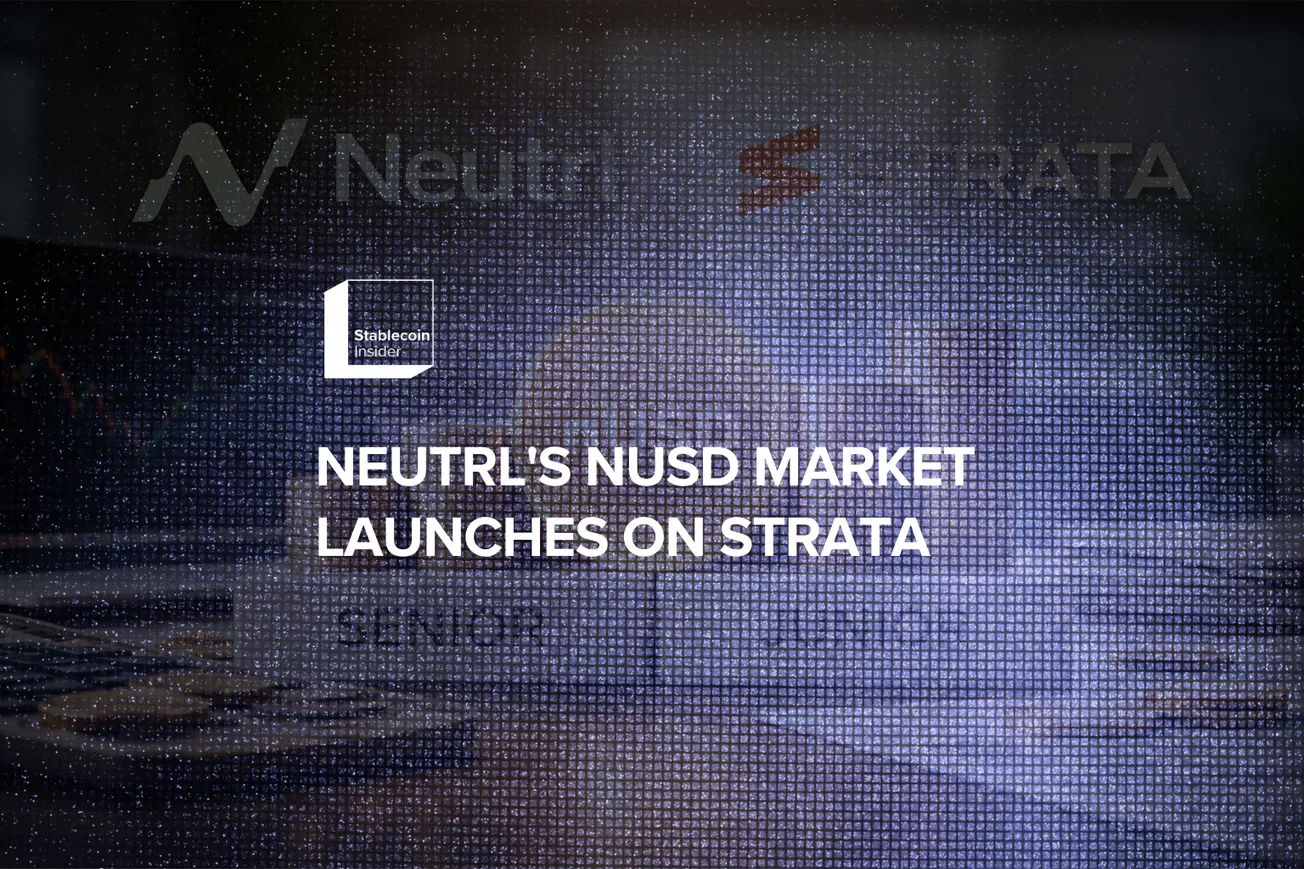
Strata Markets has unveiled structured yield products integrated with Neutrl's synthetic dollar, NUSD, marking a significant advancement in decentralized finance (DeFi) yield optimization.
The February 12 announcement introduces Senior NUSD (srNUSD) and Junior NUSD (jrNUSD) tranches, enabling investors to align risk-return profiles with Neutrl's market-neutral yield strategies.
Built on sNUSD, the staked, yield-accruing iteration of NUSD, these instruments offer protected returns for conservative participants and enhanced upside for those seeking leverage, while facilitating points accrual from both protocols.
This collaboration between Neutrl and Strata highlights the maturation of composable financial tools tailored for the DeFi ecosystem.
Key Takeaways
- Customized Yield Profiles: srNUSD delivers approximately 8% protected APR; jrNUSD targets up to 24% through leverage, anchored to Neutrl's market-neutral sNUSD foundation.
- Incentive Accrual: Achieve 40x Neutrl and 60x Strata Points via Pendle LPs/YTs on srNUSD; 10x and 20x on jrNUSD for airdrop qualification.
- Ecosystem Integration: Tranches support liquidity provision, Aave collateralization, and multi-chain deployment (e.g., BNB Chain).
- Protocol Momentum: Strata's $230M+ TVL, paired with Neutrl's reliable yields, evidences the evolution of structured DeFi products.
- Benchmark Reliability: Yields are floored at Ethena sUSDe rates, fostering predictability in volatile conditions.
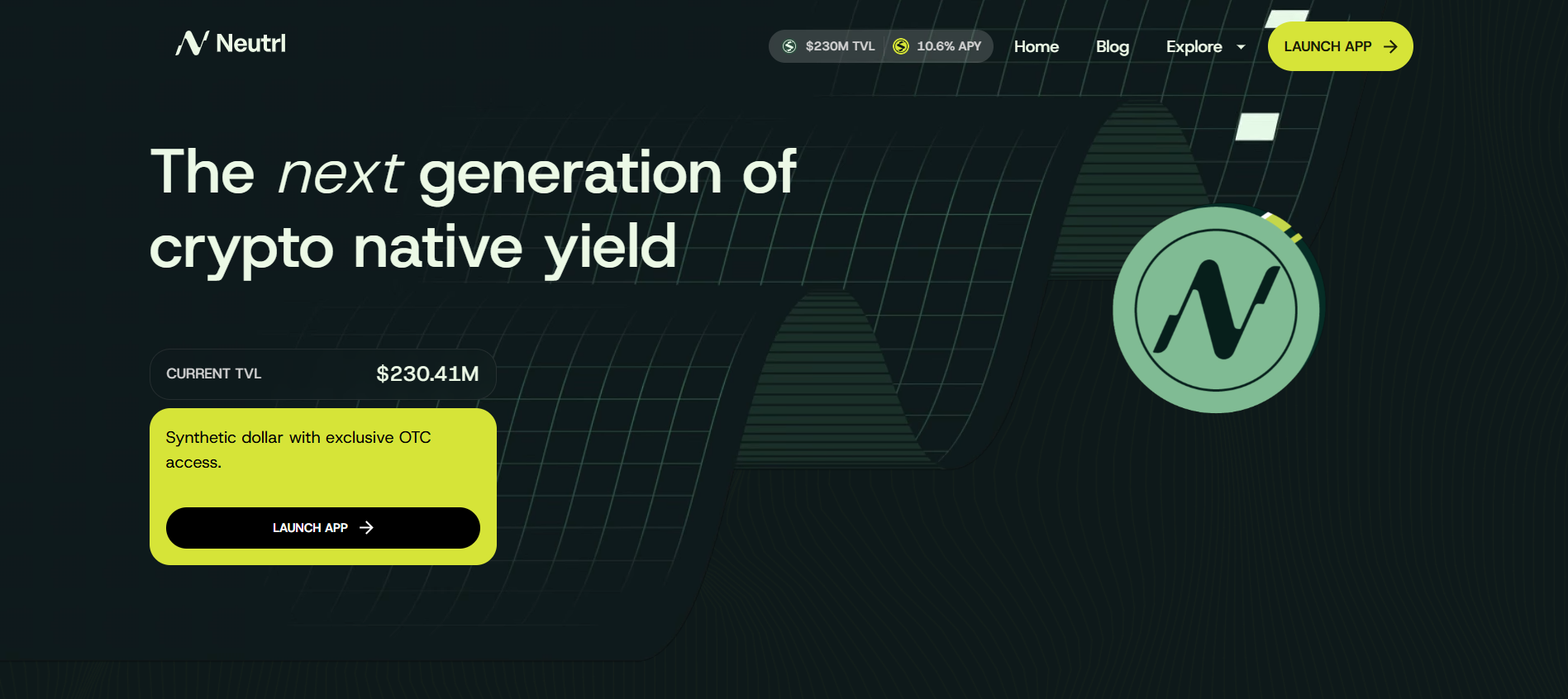
Neutrl's protocol employs market-neutral approaches, including over-the-counter (OTC) arbitrage and funding rate strategies, to underpin NUSD as a stable, yield-bearing asset secured by hedged cryptocurrency collateral.
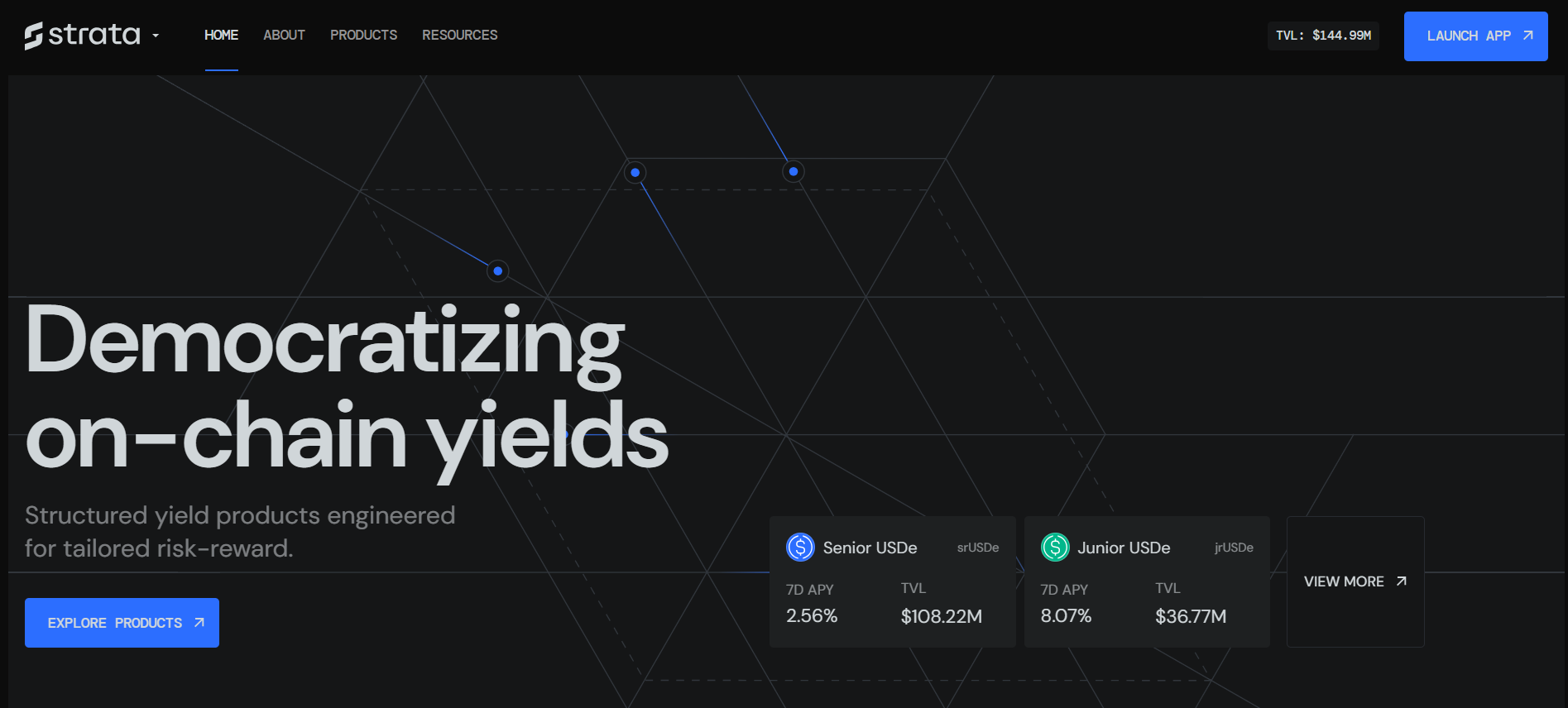
Strata's tranching framework segments sNUSD exposure into senior and junior positions, with yields benchmarked against Ethena's sUSDe APY to ensure transparency and resilience.
The Tranching Innovation: How srNUSD and jrNUSD Work
As a premier risk-tranching protocol managing over $230 million in total value locked (TVL), Strata addresses the constraints of uniform stablecoin yield mechanisms by introducing differentiated tranches.
Investors may select positions aligned with their risk tolerance: capital protection or amplified performance.
1. srNUSD (Senior Tranche):
Tailored for conservative allocators, srNUSD establishes a yield floor equivalent to sUSDe's APY, approximately 8.05% APR, while retaining exposure to sNUSD's uncapped potential.
The junior tranche serves as first-loss protection, insulating seniors against strategy shortfalls or benchmark deviations.
Preliminary metrics indicate srNUSD yields of 8-9% APY, supported by coverage ratios exceeding 200% in select pools, rendering it suitable for stable value storage with DeFi interoperability.
2. jrNUSD (Junior Tranche):
Geared toward yield optimization, jrNUSD assumes initial risk for a yield premium, providing leveraged access to sNUSD's variable returns, reaching up to 24.51% APR in nascent markets.
Functioning as first-loss capital, it absorbs potential deficits but captures surplus yields when sNUSD surpasses the benchmark.
These tranches maintain liquidity and tradability, with no redemption cooldowns for seniors and graduated fees for juniors (0-0.20%, contingent on coverage).
A standardized 7.5% performance fee applies across the protocol. Synergy with Pendle Finance extends utility: Participants may provide liquidity or acquire Yield Tokens (YT) to achieve multipliers, such as 40x Neutrl Points on srNUSD YT/LP and 10x on jrNUSD, alongside 60x and 20x Strata Points, respectively.
This points mechanism, linked to Season 1 airdrop incentives, has attracted substantial Pendle engagement, enhancing market depth.
Access is facilitated through direct sNUSD deposits on Strata for tranche minting, followed by bridging to Pendle for yield enhancement or Aave for collateralized borrowing.
Principal risks encompass smart contract exploits and market fluctuations, though Neutrl's diversified portfolio, spanning OTC trades, funding rates, and DeFi vaults, curbs directional vulnerabilities.
Conclusion
The Strata-Neutrl integration represents a cornerstone in accessible yield engineering, equipping DeFi participants with institutional-grade tranching capabilities.
As structured vaults proliferate, Neutrl anticipates further product expansions atop its core infrastructure.
For yield-oriented investors, this development transcends a mere market launch, establishing a framework for resilient, asymmetric returns irrespective of market cycles.
With safeguarded or amplified double-digit stable yields, the proliferation of tranching innovations signals a transformative phase in DeFi.
Read Next:
- Compliance-as-Infrastructure for Stablecoins
- Virtual Assets Service Providers Explained
- Omnichain Stablecoins Explained
FAQs:
1. What is Neutrl NUSD?
Neutrl NUSD constitutes a synthetic dollar protocol that generates market-neutral yields through arbitrage mechanisms, with sNUSD serving as the staked, yield-accruing variant.
2. How do srNUSD and jrNUSD differ?
srNUSD emphasizes capital protection with a yield floor (8% APR) and uncapped upside; jrNUSD employs leverage for elevated returns (24% APR) while assuming first-loss exposure.
3. What yields can I expect on Strata's NUSD markets?
Projections indicate 8.05% APR for srNUSD and up to 24.51% for jrNUSD, benchmarked to sUSDe; actual performance fluctuates with market dynamics.
4. How do I earn points with these tranches?
Through Pendle YT holdings or LPs: 40x Neutrl + 60x Strata on srNUSD; 10x + 20x on jrNUSD, qualifying for airdrop rewards.
5. What are the risks of investing in jrNUSD?
As the junior tranche, it incurs initial losses from sNUSD shortfalls or operational risks; redemption fees may apply under suboptimal coverage.
6. Is this available on multiple chains?
Initially deployed on Ethereum; expansions via Pendle bridges enable access on BNB Chain and additional networks.
Disclaimer:
This content is provided for informational and educational purposes only and does not constitute financial, investment, legal, or tax advice; no material herein should be interpreted as a recommendation, endorsement, or solicitation to buy or sell any financial instrument, and readers should conduct their own independent research or consult a qualified professional.