
Table of Contents
Kuala Lumpur, February 22, 2026.
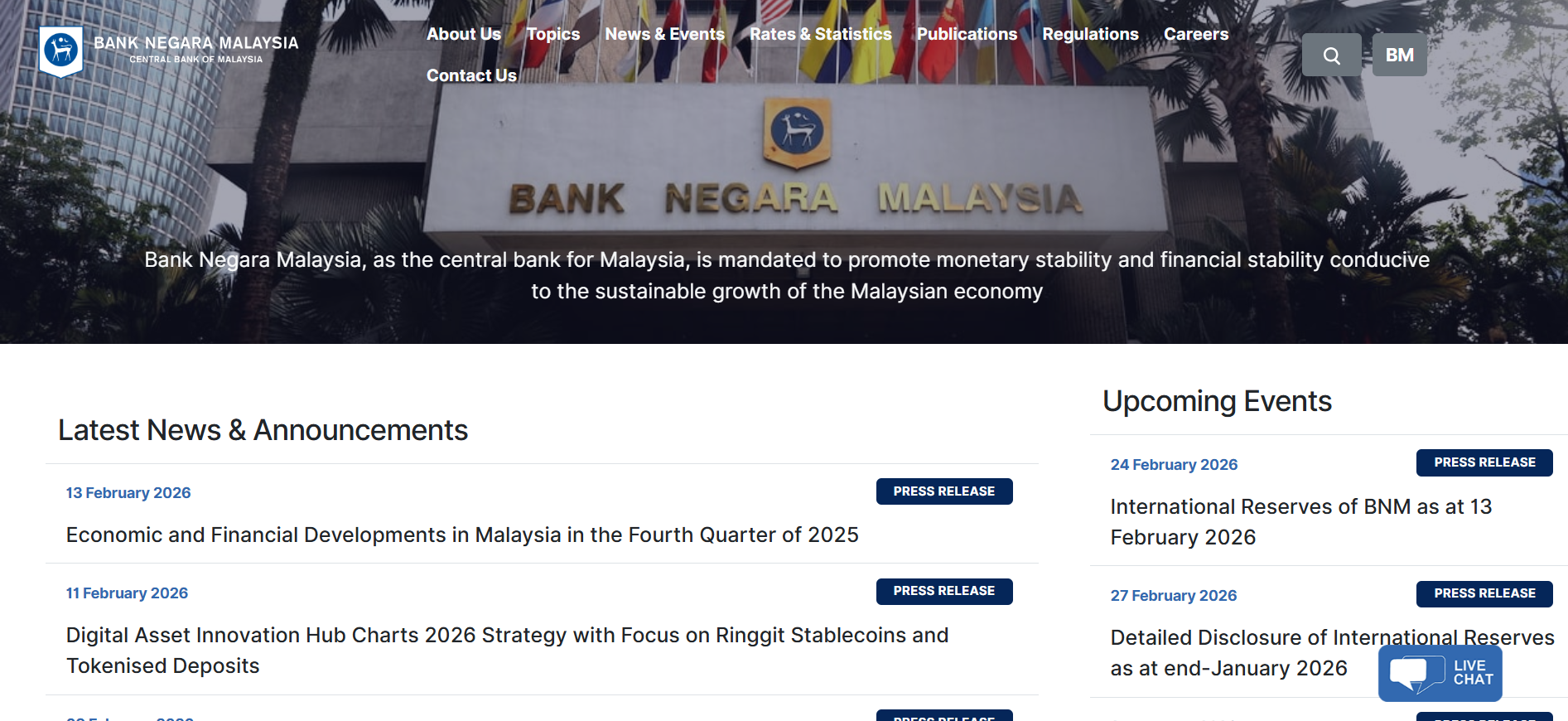
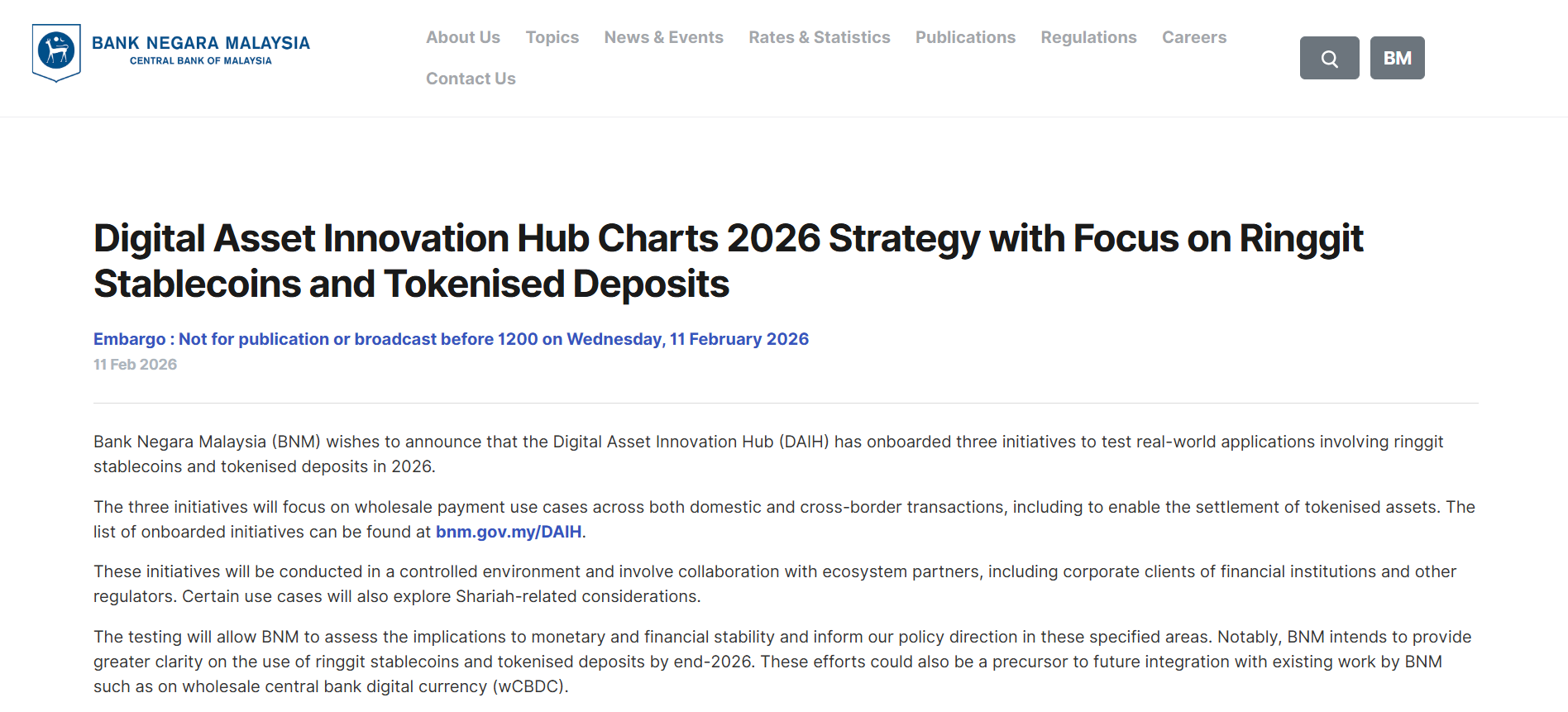
In a significant move toward digital financial innovation, Bank Negara Malaysia (BNM) has officially launched three pilot programs under its Digital Asset Innovation Hub (DAIH) for Ringgit-backed stablecoins and tokenized deposits.
Announced on February 11, 2026, these initiatives aim to test real-world applications in wholesale payments, cross-border transactions, and tokenized asset settlements.
With a focus on Shariah-related considerations, the pilots could unlock opportunities in the global Islamic finance market, potentially influencing the 1.5 billion Muslim population and bolstering Asia's real-world asset (RWA) and trade sectors.
Key Takeaways
- Innovation in Payments: The pilots target efficient cross-border and domestic wholesale payments, reducing costs and settlement times through blockchain technology.
- Shariah Compliance Focus: Certain use cases incorporate Islamic finance principles, positioning Malaysia as a hub for halal digital assets.
- Market Impact: Success could influence Asia's RWA and trade sectors, tapping into the 1.5 billion global Muslim market for tokenized settlements.
- Regulatory Clarity: BNM aims for policy guidance by end-2026, ensuring stability amid digital transformation.
- Precursor to CBDC: These initiatives may inform future wCBDC developments, bridging traditional and digital finance.
This development comes amid growing interest in blockchain-based financial tools in Southeast Asia, where stablecoins pegged to national currencies offer stability and efficiency over volatile cryptocurrencies.
BNM's controlled sandbox environment ensures these tests prioritize monetary stability, financial integrity, and regulatory compliance, setting the stage for broader adoption by the end of 2026.
Pilot Details and Participants
The three pilots, selected from over 30 applicants since the DAIH's inception in June 2025, involve key financial institutions and corporations. Each focuses on distinct use cases to evaluate the practical benefits of digital assets in Malaysia's economy.
- Standard Chartered Bank Malaysia and Capital A Berhad: This collaboration tests a Ringgit-backed stablecoin for cross-border B2B settlements. Capital A, formerly AirAsia Group, brings expertise in travel and logistics, aiming to streamline wholesale payments and reduce cross-border friction. The stablecoin, fully backed by the Malaysian Ringgit, promises faster, cheaper transactions compared to traditional methods.
- Maybank: Malaysia's largest bank will pilot tokenized deposits for domestic and international payment scenarios. Tokenization converts bank deposits into digital tokens on a blockchain, enabling programmable payments and instant settlements.
- CIMB Group: Similarly, CIMB will explore tokenized deposits, focusing on efficiency in tokenized asset settlements. This could revolutionize how assets like bonds or commodities are traded and cleared in Asia's burgeoning RWA markets.
These pilots operate in a regulated sandbox, involving ecosystem partners such as corporate clients and other regulators. BNM emphasizes exploring Shariah compliance, aligning with Malaysia's leadership in Islamic finance.
By addressing halal aspects, the initiatives could appeal to Muslim-majority markets, enhancing financial inclusion and cross-border trade in regions like the Middle East and Southeast Asia.
The tests will assess impacts on monetary policy, financial stability, and user protection, potentially paving the way for integration with BNM's wholesale central bank digital currency (wCBDC) efforts.
BNM plans to issue clearer guidance on permissible uses of these digital assets by year-end, fostering responsible innovation.
Conclusion
BNM's launch of these Ringgit-backed stablecoin and tokenized deposit pilots marks a forward-thinking step in Malaysia's digital economy journey.
By blending innovation with regulatory caution and Shariah principles, the central bank is not only enhancing payment efficiencies but also positioning Malaysia as a leader in Islamic fintech.
As the pilots unfold throughout 2026, their outcomes could reshape cross-border trade, boost economic digitalization, and inspire similar initiatives across Asia.
Stakeholders in finance, trade, and blockchain should watch closely, as these developments hold promise for a more inclusive and efficient global financial system.
Read Next:
- U.S. Stablecoin Rules on Interest Yields
- BVNK's Stablecoin Utility Report 2026
- The U.S. Stablecoin Regulatory Reset
FAQs:
1. What is a Ringgit-backed stablecoin?
A stablecoin pegged to the Malaysian Ringgit, maintaining a 1:1 value through reserves, used for stable digital transactions.
2. Why are these pilots Shariah-compliant?
They explore Shariah-related considerations to align with Islamic finance principles, avoiding interest and ensuring ethical compliance.
3. How do tokenized deposits work?
Bank deposits are converted into blockchain tokens, enabling programmable, instant payments and asset settlements.
4. What is the potential impact on Asia's trade sectors?
Efficient cross-border payments could streamline RWA settlements, reducing costs and enhancing trade in Asia's growing markets.
5. When will BNM provide more guidance?
BNM intends to issue clarity on ringgit stablecoins and tokenized deposits by the end of 2026.
Disclaimer:
This content is provided for informational and educational purposes only and does not constitute financial, investment, legal, or tax advice; no material herein should be interpreted as a recommendation, endorsement, or solicitation to buy or sell any financial instrument, and readers should conduct their own independent research or consult a qualified professional.