
Table of Contents
Cross-chain UX is still one of crypto’s biggest bottlenecks. Users want to move from one chain to another, swap into the right asset, land with gas, and complete the next action without stitching together bridges, DEXs, wallets, and explorers on their own.
LI.FI is built to solve exactly that problem. It acts as a routing and execution layer that aggregates bridges, DEXs, solvers, and other liquidity sources behind one integration.
In 2026, LI.FI is no longer just a bridge widget story. Its stack now covers same-chain swaps, cross-chain swaps, contract calls, multi-step flows, status tracking, intent-based execution, and newer workflow tools like Composer and Deposit.
That makes it relevant for wallets, DeFi apps, fintechs, on-ramp products, and even AI-agent-driven on-chain flows.
This guide explains what LI.FI is, how it works, where it is strong, where it is weaker, and who should actually use it in 2026.
Key Takeaways
- LI.FI is best understood as a cross-chain routing and execution layer, not just a bridge aggregator. It unifies bridges, DEXs, solvers, and yield routes through one API, SDK, or widget.
- Its main value is abstraction: token mapping, route discovery, execution monitoring, fallback logic, and status tracking are handled centrally instead of by each app team.
- In 2026, LI.FI is leaning further into intents, AI-agent tooling, and one-click multi-step DeFi workflows through Composer.
- It is powerful, but it is still part of a risky category. Integrators and users should treat bridge risk, smart-contract risk, and approval hygiene as real operational concerns.
What is LI.FI
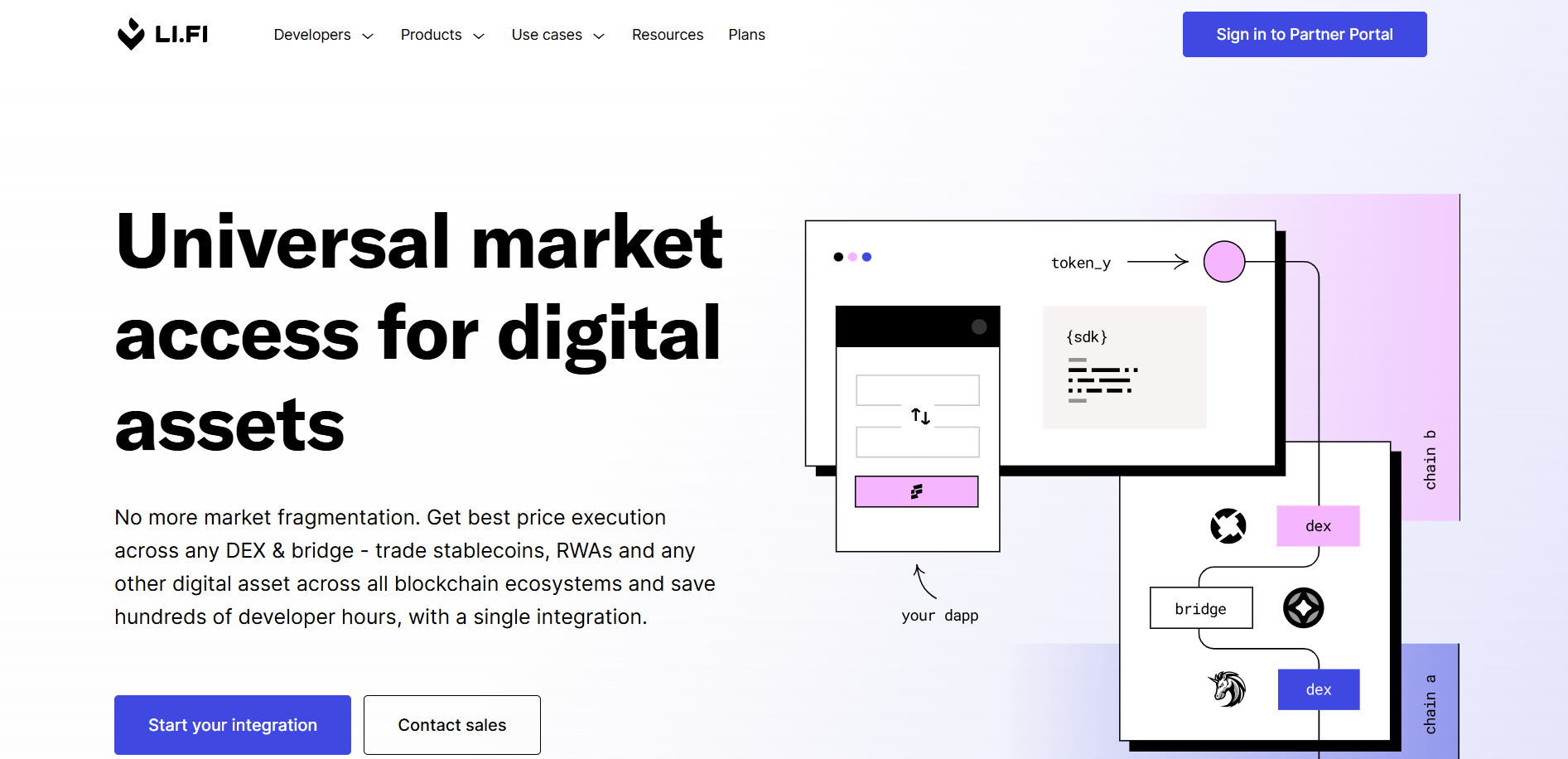
LI.FI describes itself as the routing and execution layer that connects applications to on-chain liquidity across chains, bridges, DEXs, solvers, and yield protocols through a single integration.
In practical terms, that means an app can plug into LI.FI instead of separately integrating a large set of bridge providers, DEX aggregators, token mappings, and monitoring systems.
That distinction matters. A basic bridge aggregator mainly helps users move assets between chains. LI.FI goes further by supporting same-chain swaps, cross-chain swaps, cross-chain contract calls, and multi-step flows such as bridge to swap to deposit.
How LI.FI Works
The architecture is straightforward at a high level:
A dApp sends a quote request to LI.FI’s API. LI.FI then queries bridges, DEX aggregators, and solvers, evaluates route options, and returns the optimal route. After the user selects a route, execution is submitted on-chain through LI.FI’s contract system, which then forwards execution to the relevant provider contracts.
The important part is not just quote discovery. LI.FI also normalizes token standards and chain differences, optimizes for price, gas cost, speed, and execution reliability, and includes monitoring and fallback logic to improve transaction success.
That is the real product: orchestration.
What LI.FI Offers in 2026
LI.FI’s current product surface is broader than many people expect. The platform supports same-chain and cross-chain swaps, bridging, multi-step DeFi flows, status tracking, intents, and developer-facing tools across 60+ chains on the public product pages, while its agent documentation specifically says the agent stack supports 58 blockchains and aggregates 27 bridges and 31 exchanges.
The slight mismatch looks like documentation surface differences rather than a contradiction, but it is a reminder to verify support at the route level before promising exact coverage to users.
For developers, there are three main entry points:
1. Widget
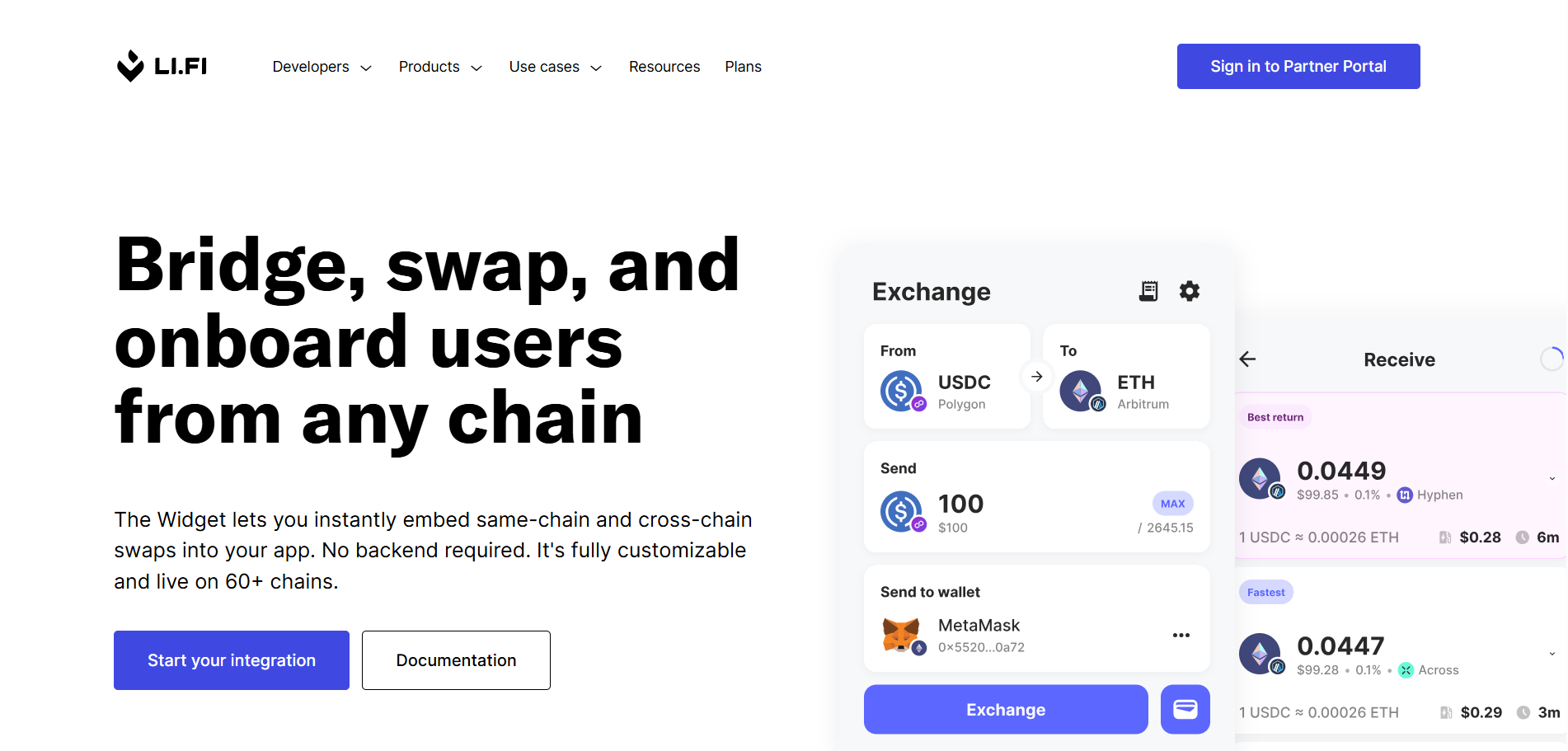
LI.FI's widget is the fastest path. LI.FI says it can be embedded without a backend, is customizable, supports same-chain and cross-chain swaps, includes native gas delivery, and lets users resume transactions after interruption. For teams that care about time to market more than full stack control, this is a strong option.
2. API and SDK
The API and SDK are better for teams that want more control over routing, fee logic, UX, and transaction handling.
- The API is REST-based, uses
https://li.quest/v1, and does not require an API key by default, though keys are needed for higher rate limits. - The SDK handles route requests, quotes, and execution.
3. Composer and intent tooling
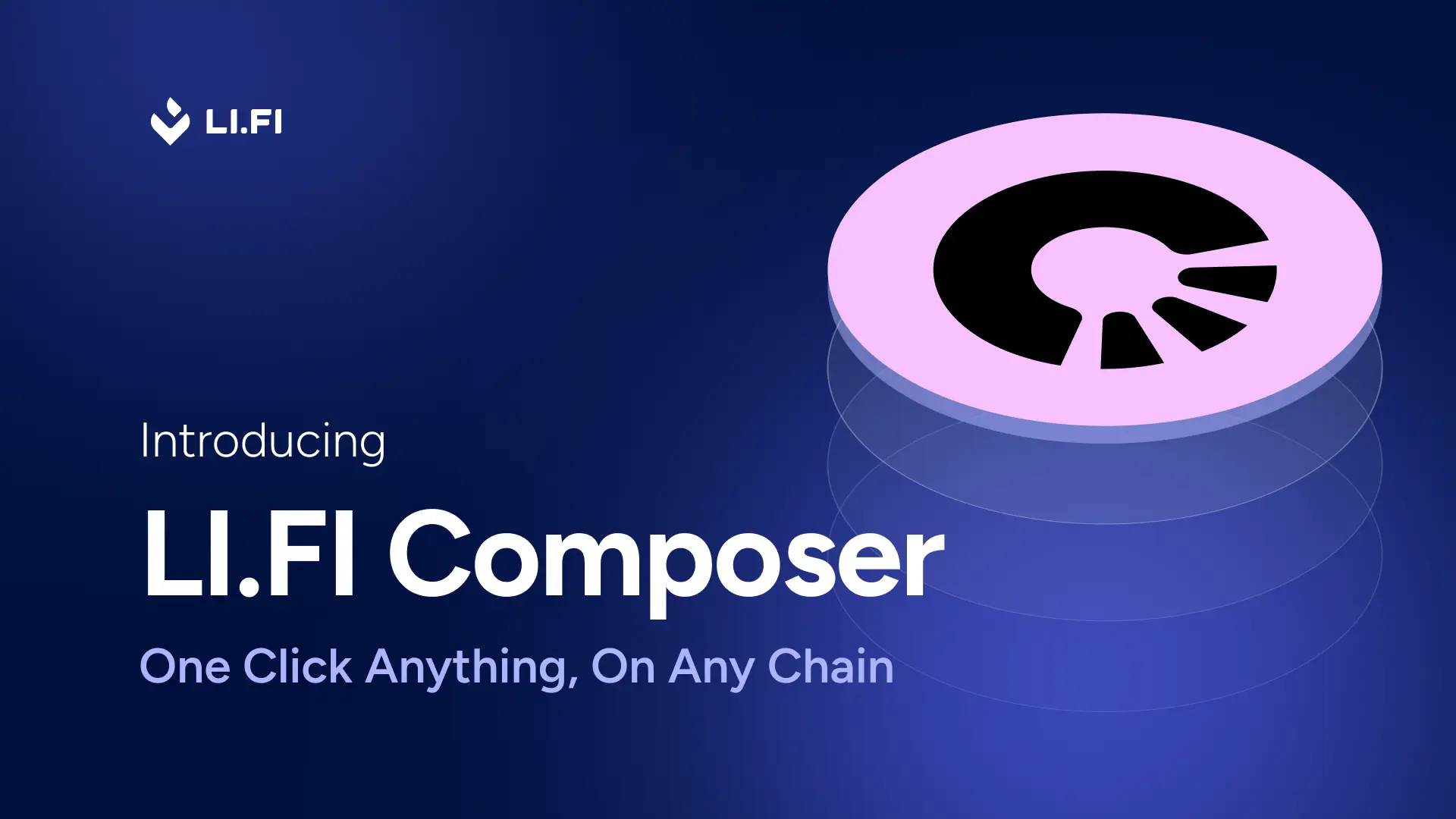
Composer lets apps bundle multiple actions such as swaps, bridges, deposits, and staking into a single transaction. LI.FI also launched Composer and Deposit more visibly in early 2026 and positions its intent marketplace as a solver-based system for better prices and faster settlement.
This is one of the more meaningful reasons LI.FI feels more “2026-native” than older bridge-first products.
Why LI.FI Stands Out in 2026
The biggest strength is abstraction. LI.FI removes a large amount of infrastructure work that multichain teams would otherwise maintain themselves:
- Bridge integrations
- DEX aggregation
- Token mappings
- Route logic
- Fallback handling
- Transaction status tooling
Its own documentation contrasts this directly with the alternative of integrating one bridge per chain pair and one DEX aggregator per ecosystem.
The second strength is flexibility. LI.FI can work for wallets, DeFi apps, exchanges, fintechs, on/off-ramp providers, and AI agents. The fact that it now has dedicated agent documentation, machine-readable docs, an OpenAPI spec, llms.txt, and an MCP endpoint shows the team is actively designing for agentic interfaces rather than treating them as an afterthought.
The third strength is route visibility and recovery. LI.FI documents status tracking through its /status endpoint and has explicit guidance around timeout handling, manual checking, and explorer-based recovery. That matters because cross-chain UX fails when users are left in an ambiguous “pending” state.
Where LI.FI is Weaker
The biggest limitation is that aggregation does not remove category risk. LI.FI can improve route quality and UX, but users are still exposed to the underlying risks of bridges, solvers, smart contracts, approvals, and chain-specific execution environments.
Aggregators reduce fragmentation.
They do not eliminate protocol risk.
The second weakness is operational complexity at the edge cases. Cross-chain routes can fail because a downstream swap cannot complete, a token cannot be delivered as planned, or a route changes after quoting. LI.FI documents fallback concepts such as intermediate tokens and route/status handling, which is good, but the need for those pages also shows the product category is still complex under the hood.
The third issue is that enterprise-grade routing products are only as good as their support, observability, and commercial alignment. LI.FI has a free standard tier and monetization tools, but higher-volume teams may still need custom pricing, higher limits, dedicated support, and SLA coverage to make it operationally dependable.
Is LI.FI Safe
LI.FI states that all smart contracts deployed to production undergo independent security audits and that audit reports are publicly available. It also says it uses automated testing infrastructure for continuous security analysis. That is a positive sign and should be table stakes for a protocol in this category.
But the review would be incomplete without the 2024 exploit. LI.FI’s incident report says that on July 16, 2024, a newly added facet introduced a vulnerability that enabled unauthorized access to wallets with infinite approvals, leading to about $11.6 million stolen across 153 wallets on Ethereum and Arbitrum.
LI.FI says finite approvals, which are the default in its API, SDK, and widget, were not affected.
So the honest answer is this: LI.FI is not a protocol you should call “risk-free,” but it is a more mature product than a surface-level bridge front end.
- For users, the practical takeaway is to avoid unnecessary infinite approvals and to treat bridge activity with the same caution you would apply anywhere else in DeFi.
- For integrators, the takeaway is to pair LI.FI with good approval management, transaction-state UX, and clear recovery flows.
Who Should Use LI.FI in 2026?
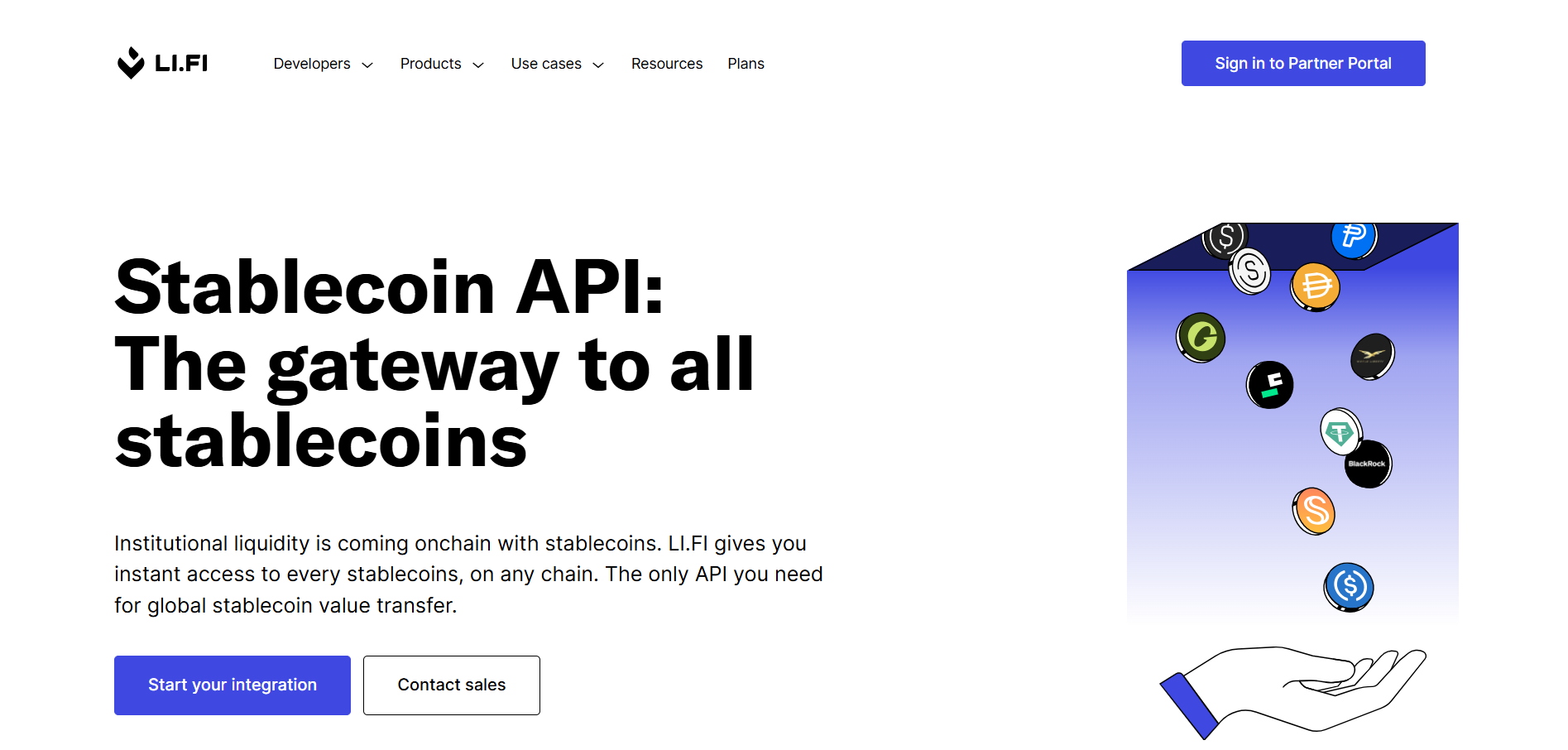
LI.FI is a strong fit for teams that need multichain execution without building a dedicated routing stack from scratch. That includes wallets, swap interfaces, DeFi apps, on-ramp/off-ramp products, fintech apps moving users into on-chain assets, and agent-driven products that need programmable asset movement.
It is especially compelling when your user journey involves more than a single bridge hop. If the target experience is “arrive on the destination chain in the correct asset, with gas, and optionally deposit into a protocol,” LI.FI is materially more useful than a simple bridge directory.
It is less compelling for teams that only need a single native bridge, have very specific trust assumptions, or want total control over every liquidity source and route policy. In those cases, direct integrations can still make sense. That is an inference from LI.FI’s abstraction model, not a claim made by LI.FI itself.
Conclusion
LI.FI is one of the more complete cross-chain infrastructure layers available in 2026. Its real advantage is not just aggregation. It is orchestration: route discovery, token abstraction, execution logic, monitoring, status tracking, monetization hooks, and increasingly, intent-based and agent-friendly workflows.
The platform also looks more forward-facing than many competitors because it is actively building around Composer, intents, OpenAPI, llms.txt, and MCP-based agent access. That matters in a market moving from manual multichain UX toward programmable multichain execution.
The caution is straightforward: LI.FI still lives inside a high-risk infrastructure category, and its 2024 exploit should remain part of any serious due-diligence conversation.
If you want a polished, developer-friendly cross-chain execution layer, LI.FI deserves to be on the shortlist. If you want zero trust assumptions or zero bridge risk, no aggregator can honestly offer that.
Read Next:
- Aave March 2026 Report
- Solana Overtakes Ethereum in Stablecoin Volume for the First Time
- Circle Advances cirBTC
FAQs:
1. What does LI.FI do?
LI.FI aggregates bridges, DEXs, solvers, and other liquidity sources so apps can offer same-chain swaps, cross-chain swaps, and multi-step DeFi flows through one integration.
2. Is LI.FI only a bridge aggregator?
No. LI.FI also supports same-chain swaps, cross-chain contract calls, multi-step workflows, status tracking, intent-based execution, and Composer-based one-click DeFi flows.
3. Does LI.FI support AI agents?
Yes. LI.FI has dedicated agent docs, machine-readable documentation, an OpenAPI spec, llms.txt, and an MCP server for agent integrations.
4. Is LI.FI free to integrate?
Yes, the standard plan is listed as free to integrate, with up to 200 requests per minute. LI.FI also says its default transaction fee is 25 bps, with enterprise pricing available for larger integrations.
5. Was LI.FI hacked?
Yes. LI.FI disclosed a July 16, 2024 exploit affecting wallets with infinite approvals on a newly deployed facet, with estimated losses of about $11.6 million.
Disclaimer:
This content is provided for informational and educational purposes only and does not constitute financial, investment, legal, or tax advice; no material herein should be interpreted as a recommendation, endorsement, or solicitation to buy or sell any financial instrument, and readers should conduct their own independent research or consult a qualified professional.