Table of Contents
The institutional stablecoin market has reached a commercial inflection point in June 2026 where the question is no longer whether regulated financial institutions will use stablecoins but which specific stablecoin products, issuers, and reserve structures meet the compliance, custody, yield, and settlement requirements of banks, asset managers, corporates, and payment networks operating at institutional scale.
As the combined stablecoin market cap crosses $322 billion, the GENIUS Act establishes a federal framework for permitted payment stablecoin issuers, and BlackRock, Franklin Templeton, PayPal, Visa, and the three largest Japanese banks simultaneously build or adopt stablecoin products, the institutional stablecoin category has fragmented into distinct segments covering payment stablecoins, tokenized Treasury funds, bank-issued digital dollars, and yield-bearing on-chain instruments that serve different institutional requirements with different regulatory postures and economic models.
This guide covers the top institutional stablecoins in June 2026, evaluating each on the criteria that matter most for institutional adoption: regulatory status and issuer credentials, reserve composition and transparency, yield availability, supported blockchains and settlement infrastructure, and the specific institutional use cases each product is built to serve.
Key Takeaways
- USDC is the dominant institutional payment stablecoin with the broadest regulated infrastructure globally.
- BlackRock BUIDL leads the tokenized Treasury fund segment with $2.5 billion plus in AUM and daily yield distribution.
- Bank-issued stablecoins from PayPal, Western Union, and Japan's megabank consortium represent the newest institutional category in 2026.

The Evolving Stablecoin Landscape for Institutions
The 13 institutional stablecoins in this guide fall into four distinct commercial categories, each serving different institutional buyers with different primary requirements.
Category 1: Regulated Payment Stablecoins covers dollar-pegged tokens issued by licensed entities under state or federal frameworks, held primarily for payment, settlement, and treasury management. Yield to holders is prohibited for GENIUS Act-permitted issuers. Key products are USDC, USDP, PYUSD, and USDG.
Category 2: Tokenized Treasury Funds covers on-chain funds that hold US Treasury bills and money market instruments, passing yield directly to institutional holders. Not payment stablecoins under the GENIUS Act framework. Key products are BlackRock BUIDL, Franklin Templeton BENJI, Ondo USDY, and Superstate USTB.
Category 3: Bank-Issued Digital Dollars covers stablecoins issued directly by regulated banks or bank consortia, backed by insured deposits or trust structures, treated as bank liabilities rather than money transmission products. Key products are USDPT, EUR.BANK, and the MUFG-SMBC-Mizuho yen stablecoin.
Category 4: Institutional Yield-Bearing Stablecoins covers on-chain instruments that combine dollar peg stability with yield generation through DeFi or structured finance mechanisms. Key products are Ethena USDe and Mountain Protocol USDM.
The category distinction matters commercially because payment stablecoins cannot pay yield under the GENIUS Act, tokenized Treasury funds pass yield but are not payment instruments, bank-issued stablecoins carry deposit insurance but have narrower blockchain support, and institutional yield-bearing stablecoins offer the highest yields but carry protocol risk that regulated institutions cannot always accept.
As covered in our BPI Treasury GENIUS Act analysis, the GENIUS Act's no-yield prohibition is creating a permanent structural bifurcation between payment products and yield products that is reshaping how institutions construct their stablecoin strategies.
Leading Institutional Stablecoins in Detail
Category 1: Regulated Payment Stablecoins
USDC (Circle)
USDC is the dominant institutional payment stablecoin globally, issued by Circle Internet Financial with $45 billion plus in supply, monthly Deloitte reserve attestations, and native support across 10 plus blockchains via Cross-Chain Transfer Protocol.
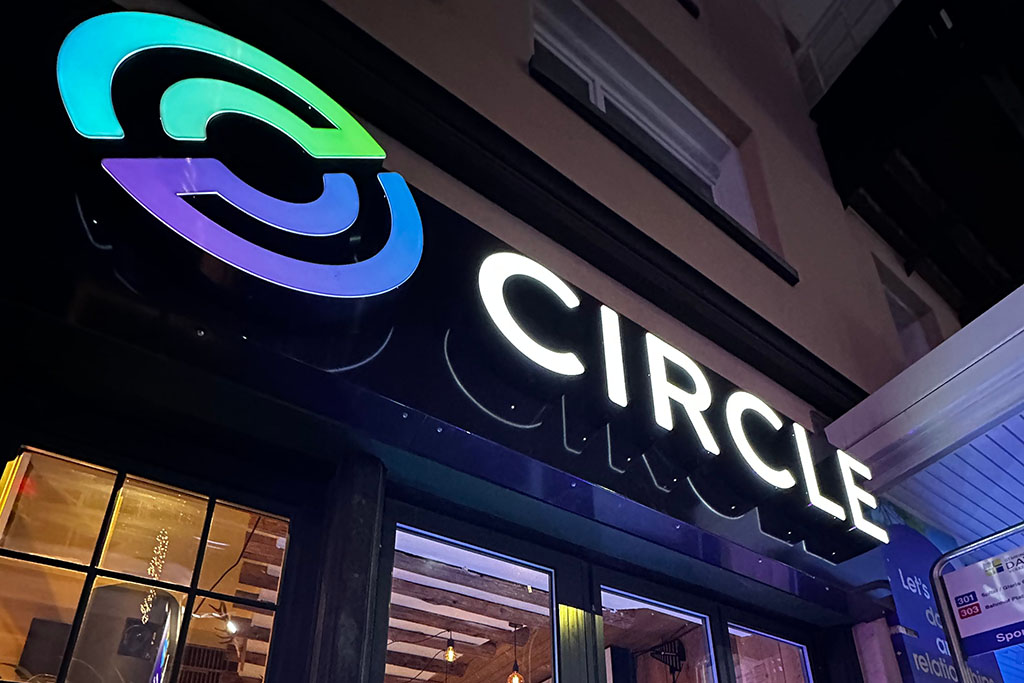
Circle publishes monthly reserve attestations covering US Treasuries and cash held in regulated US financial institutions, providing the highest reserve transparency in the payment stablecoin category.
Yield to holders: none under the GENIUS Act framework. Regulatory status: money transmitter licensed across major US jurisdictions, EU MiCA compliant, Singapore MAS licensed.
Institutional access: Circle Mint for direct issuance and redemption at institutional scale, Circle Payments Network for cross-border FX settlement. Key institutional users: BlackRock BUIDL reserves, MassPay enterprise payouts, institutional DeFi protocols.
Best for: any institution requiring the broadest regulated stablecoin with the deepest global distribution and the highest reserve transparency.
USDP (Paxos)
USDP is issued by Paxos Trust Company under NYDFS regulation, OCC charter, and Singapore MAS license, with approximately $1 billion in supply and monthly Withum reserve attestations.
USDP's primary commercial role is as the infrastructure behind white-label institutional stablecoin mandates including PYUSD for PayPal rather than as a directly held institutional payment instrument.
Yield to holders: none. Supported blockchains: Ethereum, Solana. Institutional access: enterprise-gated, Paxos Trust Company direct relationship required.
Best for: regulated financial institutions requiring an OCC and MAS dual-licensed issuer as infrastructure partner.
PYUSD (PayPal via Paxos)
PYUSD is issued by Paxos Trust Company for PayPal, with approximately $800 million in supply and monthly third-party attestations covering US Treasuries, Treasury repurchase agreements, and cash equivalents.
PYUSD's primary institutional use case is consumer-to-merchant payments and cross-border remittances within the PayPal and Venmo ecosystem, which gives it the broadest consumer-facing distribution of any bank or fintech-issued stablecoin in the US.
Yield to holders: none. Supported blockchains: Ethereum, Solana. Regulatory status: issued under Paxos's NYDFS trust company charter.
Best for: institutions operating within or targeting the PayPal ecosystem for stablecoin payment acceptance.
USDG (Global Dollar Network)
USDG is issued by the Global Dollar Network, a consortium whose members include Robinhood, Kraken, Anchorage Digital, and Galaxy, built on Paxos infrastructure with reserves in US Treasuries and cash equivalents.
The network's yield-sharing model distributes reserve yield among network members rather than passing it to holders, creating a commercial incentive for network members to promote USDG usage across their platforms.
Yield to holders: none. Reserve yield shared among network members. Supported blockchains: Ethereum. Regulatory status: Paxos NYDFS trust company infrastructure.
Best for: institutions that are members of or transact primarily with Global Dollar Network members.
Category 2: Tokenized Treasury Funds
BlackRock BUIDL (BlackRock USD Institutional Digital Liquidity Fund)
BlackRock BUIDL is the leading tokenized Treasury fund with $2.5 billion plus in AUM, daily yield accrual at approximately 4.5% to 5% APY, BNY Mellon as fund administrator, and Fireblocks as digital asset custodian.

As covered in our institutional tokenized yields guide, BUIDL is the highest-AUM and most widely integrated tokenized Treasury fund in the category, used as high-quality collateral in institutional DeFi protocols and as the reserve asset behind Ondo Finance's OUSG product.
Supported blockchains: Ethereum (primary), Polygon, Avalanche, Aptos, Arbitrum, Optimism. Institutional access: accredited investors only, $5 million minimum, Securitize onboarding. Regulatory status: SEC-registered fund under the Investment Company Act.
Best for: institutions that need on-chain exposure to Treasury yields with BlackRock credit and BNY Mellon custody backing.
Franklin Templeton BENJI (Franklin OnChain US Government Money Fund)
Franklin Templeton BENJI is an SEC-registered money market fund with approximately $700 million in AUM, daily yield accrual at approximately 4.5% to 5% APY, and primary deployment on Stellar with additional Polygon support.
BENJI is the longest-running institutional tokenized fund, having launched in 2021, and carries the full institutional credibility of Franklin Templeton's asset management franchise.
Supported blockchains: Stellar (primary), Polygon. Institutional access: accredited investors, Franklin Templeton direct relationship. Regulatory status: SEC-registered money market fund.
Best for: institutions familiar with Franklin Templeton money market products seeking an on-chain equivalent.
Ondo USDY (US Dollar Yield)
Ondo USDY is a yield-bearing tokenized instrument with approximately $500 million in AUM, daily yield accrual at approximately 4.5% to 5% APY, and the broadest multi-chain support of any tokenized Treasury product including Ethereum, Solana, Mantle, Sui, and Arbitrum.
As covered in our best tokenized RWA projects guide, USDY's composability in DeFi protocols makes it the most flexible institutional yield instrument in the on-chain category.
Institutional access: non-US accredited investors and US institutional investors, Ondo Finance direct. Regulatory status: structured as a bank-bankruptcy-remote special purpose vehicle, not an SEC-registered fund.
Best for: institutions seeking a composable yield-bearing instrument that can be used directly in DeFi protocols without conversion.
Superstate USTB
Superstate USTB is an SEC-registered fund with approximately $200 million in AUM offering daily Treasury bill yield accrual on Ethereum. USTB is the most straightforward on-chain Treasury bill equivalent in the category, with an SEC-registered fund structure and a pure T-bill reserve composition that meets the most conservative institutional collateral standards.
Supported blockchains: Ethereum. Institutional access: accredited investors, Superstate direct. Regulatory status: SEC-registered fund.
Best for: institutions seeking a pure Treasury bill on-chain product with SEC fund registration and conservative reserve composition.
Category 3: Bank-Issued Digital Dollars
USDPT (Western Union via Anchorage Digital)
USDPT is issued by Anchorage Digital under its OCC national trust bank charter for Western Union, making it the only stablecoin in the category issued by the only OCC-chartered federally regulated crypto bank in the US.

As covered in our Bybit Western Union USDPT analysis, USDPT's primary commercial role is enabling stablecoin settlement across Western Union's global payment corridor network.
Reserve composition: insured bank deposits via Anchorage Digital trust structure. Yield to holders: none. Supported blockchains: Solana, Stellar. Regulatory status: issued under Anchorage Digital's OCC national trust bank charter.
Best for: enterprises integrated with Western Union's global payment network seeking regulated stablecoin settlement.
EUR.BANK (BANCOMAT with nine Italian banks)
EUR.BANK is a euro-pegged stablecoin developed by BANCOMAT in partnership with nine Italian licensed banks, targeting a July 2026 pilot and early 2027 commercial launch under MiCA's regulatory framework.
As covered in our BANCOMAT EUR.BANK launch analysis, EUR.BANK is the most significant European bank-issued stablecoin consortium announced in 2026 and the primary institutional euro stablecoin competitor to Circle's EURC.
Reserve composition: euro deposits at Italian licensed banks. Yield to holders: none. Regulatory status: MiCA-aligned, Italian banking regulatory framework. Commercial status: July 2026 pilot target.
Best for: European institutions requiring a MiCA-compliant euro stablecoin from a licensed Italian banking consortium.
MUFG-SMBC-Mizuho Yen Stablecoin (in development)
Japan's three largest banks signed an MOU on June 10, 2026 to jointly issue a yen-pegged stablecoin via MUFG's Progmat platform, targeting live corporate transactions by March 2027.
As covered in our Japan megabank yen stablecoin analysis, the joint trust structure designates all three banks as co-settlors with reserves in a legally segregated account insulated from any individual bank's balance sheet risk.
Reserve composition: yen deposits in legally segregated trust structure. Yield to holders: none. Supported blockchains: Ethereum, Polygon, Avalanche, Cosmos via Progmat. Commercial status: March 2027 target.
Best for: corporates transacting in yen seeking regulated bank-issued digital yen infrastructure from Japan's most systemically important banks.
Category 4: Institutional Yield-Bearing Stablecoins
Ethena USDe
Ethena USDe is the largest yield-bearing stablecoin with approximately $3 billion in market cap, generating yield through a delta-neutral synthetic position combining long spot ETH and BTC with short perpetual futures. The historical yield range of 5% to 30% APY via sUSDe staking makes USDe the highest-yield institutional stablecoin instrument available in 2026, with yield rates dependent on perpetual funding market conditions.
As covered in our best stablecoin yields guide, USDe's yield profile is significantly higher than tokenized Treasury funds but carries perpetual futures market risk that regulated institutions with conservative mandates cannot accept.
Supported blockchains: Ethereum, Arbitrum, Solana. Institutional access: accredited investors in supported jurisdictions. Regulatory status: protocol-level, not a regulated payment stablecoin.
Best for: crypto-native institutions and hedge funds comfortable with perpetual futures market risk in exchange for higher yield.
Mountain Protocol USDM
Mountain Protocol USDM is a Bermuda Monetary Authority-licensed yield-bearing stablecoin with approximately $150 million in market cap, offering approximately 4.5% to 5% APY via daily rebasing on US Treasury reserve assets across Ethereum, Polygon, Arbitrum, and Base.
USDM specifically targets non-US institutional clients who want Treasury yield in a stablecoin format without the US regulatory restrictions that prevent yield pass-through for GENIUS Act-compliant payment stablecoins.
Institutional access: non-US institutions and accredited investors. Regulatory status: Bermuda Monetary Authority licensed.
Best for: non-US institutions seeking a yield-bearing stablecoin with regulatory backing outside the US framework.

Key Comparison Criteria
Regulatory Status and Issuer Credentials
The regulatory hierarchy for institutional stablecoin issuers runs from OCC-chartered national trust bank (Anchorage for USDPT) to NYDFS trust company (Paxos for USDC, USDP, PYUSD) to SEC-registered fund (BUIDL, BENJI, USTB) to non-US regulated (Mountain Protocol USDM) to protocol-level (Ethena USDe).
As covered in our NYDFS GENIUS Act regulation analysis, the GENIUS Act's substantially similar certification framework is creating a new top tier for state-certified payment stablecoins that will reshape this hierarchy when Treasury certifications are issued.
Reserve Composition and Transparency
The reserve quality and transparency hierarchy runs from monthly third-party attested US Treasuries and cash (USDC, USDP) to SEC-registered fund with daily NAV disclosure (BUIDL, BENJI, USTB) to bank deposit trust structure (USDPT, EUR.BANK, yen stablecoin) to synthetic delta-neutral (USDe).
For institutions with fiduciary obligations, monthly third-party attestations at minimum and SEC-registered fund structures at best.
Yield Availability and Distribution
Payment stablecoins under the GENIUS Act pay zero yield to holders. Tokenized Treasury funds pay 4.5% to 5% APY with daily accrual. Institutional yield-bearing stablecoins pay variable 4.5% to 30% APY depending on market conditions and risk tolerance.
The yield decision maps directly to the regulatory category decision and the institution's risk mandate.
Blockchain Coverage and Settlement Infrastructure
USDC leads with 10 plus chains via CCTP. BUIDL covers Ethereum, Polygon, Avalanche, Aptos, Arbitrum, and Optimism. BENJI covers Stellar and Polygon. Bank-issued stablecoins are typically narrower.
For institutions requiring multi-chain settlement, USDC and BUIDL provide the broadest production-grade coverage.
Minimum Investment and Access Requirements
USDC has no minimum and is self-service via Circle Mint. BUIDL requires $5 million minimum and accredited investor status via Securitize. BENJI requires an institutional minimum via Franklin Templeton. USDPT requires a Western Union enterprise relationship.
Ondo USDY requires institutional minimum investment for non-US or accredited US investors.
Current Trends and Institutional Use Cases
The Payment and Yield Bifurcation Is Hardening
The GENIUS Act's no-yield prohibition is creating a permanent structural division between payment stablecoins and yield-bearing on-chain instruments.
Institutions are increasingly maintaining two separate stablecoin positions: USDC for settlement and liquidity, and BUIDL or BENJI for yield on idle reserves. This two-product institutional stablecoin strategy is the most commercially significant structural change in how institutions use stablecoins in 2026.
Bank-Issued Stablecoins Are Entering the Category
USDPT, EUR.BANK, and the MUFG-SMBC-Mizuho yen stablecoin represent the first wave of bank-issued stablecoins from traditional financial institutions.
These products carry deposit insurance and bank regulatory frameworks that regulated institutional clients can adopt without stepping outside their existing compliance frameworks, creating a third path between crypto-native payment stablecoins and tokenized funds.
Multi-Chain Settlement Is Becoming the Institutional Default
USDC's CCTP, BUIDL's multi-chain deployment, and the MUFG yen stablecoin's Progmat infrastructure covering Ethereum, Polygon, Avalanche, and Cosmos all reflect consistent institutional demand for stablecoin infrastructure that is not locked to a single blockchain. Institutions evaluating stablecoin infrastructure in 2026 treat multi-chain support as a baseline requirement rather than a differentiating feature.
Institutional DeFi Is Maturing Around Tokenized Collateral
BUIDL and USDY are being used as collateral in institutional DeFi protocols, replacing lower-quality crypto collateral with Treasury-backed on-chain instruments.
As covered in our stablecoin infrastructure platforms comparison, this is the most concrete expression of the productive capital argument: stablecoin capital deployed as DeFi collateral is economically active rather than idle.
Key Institutional Use Cases by Segment
Corporate treasury management: USDC for liquidity, BUIDL or BENJI for yield on idle reserves, yen stablecoin for Japanese corporate settlement from 2027.
Cross-border enterprise payments: USDC via Circle Payments Network or MassPay, USDPT via Western Union network, EUR.BANK for European corridors.
Institutional DeFi and collateral: BUIDL as high-quality collateral in DeFi protocols, USDY as yield-bearing DeFi collateral, USDe for crypto-native yield maximization.
Settlement and clearing: USDC for real-time settlement, PYUSD within PayPal ecosystem, EUR.BANK for Italian banking consortium settlement.
Comparison Table
| Stablecoin | Category | Yield | Chains | Best for |
|---|---|---|---|---|
| USDC | Payment | None | 10+ | Broadest institutional payment use |
| USDP | Payment | None | ETH, SOL | OCC and MAS-licensed issuer |
| PYUSD | Payment | None | ETH, SOL | PayPal ecosystem settlement |
| USDG | Payment | None | ETH | Network member settlement |
| BUIDL | Tokenized fund | 4.5% to 5% | ETH, MATIC, AVAX+ | Institutional Treasury yield |
| BENJI | Tokenized fund | 4.5% to 5% | XLM, MATIC | On-chain money market |
| USDY | Tokenized fund | 4.5% to 5% | ETH, SOL, others | Composable DeFi yield collateral |
| USTB | Tokenized fund | 4.5% to 5% | ETH | Pure T-bill on-chain |
| USDPT | Bank-issued | None | SOL, XLM | Western Union corridor settlement |
| EUR.BANK | Bank-issued | None | TBC | European euro settlement |
| Yen stablecoin | Bank-issued | None | ETH, MATIC, AVAX | Japanese yen corporate settlement |
| USDe | Yield-bearing | 5% to 30% | ETH, SOL | Crypto-native yield maximization |
| USDM | Yield-bearing | 4.5% to 5% | ETH, MATIC, others | Non-US institutional yield |
Conclusion
The institutional stablecoin market in June 2026 is not a single market but four distinct product categories serving four distinct institutional requirements, and the most commercially significant development of the past six months is not the growth of any individual stablecoin but the hardening of the structural division between payment stablecoins that cannot pay yield, tokenized Treasury funds that can, bank-issued digital dollars that carry deposit insurance, and yield-bearing on-chain instruments that serve crypto-native institutional demand.
USDC leads the payment stablecoin category with the broadest regulated infrastructure and deepest global distribution. BlackRock BUIDL leads the tokenized Treasury fund category with $2.5 billion plus in AUM and the most credible institutional backing. USDPT, EUR.BANK, and the MUFG-SMBC-Mizuho yen stablecoin represent the first wave of bank-issued digital dollars from traditional financial institutions. And Ethena USDe serves the crypto-native yield maximization segment that regulated payment stablecoins and conservative tokenized funds are not built to serve.
The institution evaluating stablecoin products in June 2026 is not choosing between these categories but deciding which combination of them to hold simultaneously to serve payment, yield, settlement, and DeFi requirements from a single coherent institutional stablecoin strategy.
Read Next
- How Much Are Institutions Earning? 10 Real Yield Examples from Tokenized Funds
- 15 Stablecoin Infrastructure Platforms Compared in 2026
- Stablecoin Insider's 9 Favorite Tokenized RWA Projects Raising Capital Right Now
FAQ:
1. What are the top institutional stablecoins in June 2026?
The top institutional stablecoins in June 2026 are USDC for regulated payment and settlement, BlackRock BUIDL for on-chain Treasury yield at $2.5 billion plus AUM, Franklin Templeton BENJI and Ondo USDY for tokenized money market exposure, USDPT for Western Union corridor settlement, and Ethena USDe for crypto-native yield maximization.
2. What is the difference between a payment stablecoin and a tokenized Treasury fund for institutional use?
The difference between a payment stablecoin and a tokenized Treasury fund is that a payment stablecoin like USDC passes no yield to holders under the GENIUS Act and functions as a settlement instrument, while a tokenized Treasury fund like BlackRock BUIDL or Franklin Templeton BENJI passes 4.5% to 5% APY Treasury yield directly to institutional holders but cannot be used directly for payment settlement.
3. What is the difference between BlackRock BUIDL and Franklin Templeton BENJI?
The difference between BlackRock BUIDL and Franklin Templeton BENJI is that BUIDL has $2.5 billion plus in AUM on Ethereum with a $5 million minimum and Fireblocks custody making it the most widely integrated DeFi collateral option, while BENJI is primarily on Stellar with Franklin Templeton's direct relationship model making it the stronger choice for institutions already in the Franklin Templeton ecosystem.
4. What is the difference between USDC and USDP as regulated institutional payment stablecoins?
The difference between USDC and USDP is that USDC has $45 billion plus in supply across 10 plus blockchains with the broadest global distribution across DeFi and payment platforms, while USDP serves primarily as the white-label infrastructure behind institutional mandates like PYUSD for PayPal rather than as a directly held institutional payment instrument.
5. What is the difference between Ethena USDe and tokenized Treasury funds for institutional yield?
The difference between Ethena USDe and tokenized Treasury funds is that USDe generates 5% to 30% APY through a delta-neutral synthetic position with perpetual futures market risk, while tokenized Treasury funds like BUIDL and BENJI generate 4.5% to 5% APY from US Treasury bills with SEC-registered fund structures and significantly lower risk.
6. What is the difference between bank-issued stablecoins and payment stablecoins from crypto-native issuers?
The difference between bank-issued stablecoins and payment stablecoins from crypto-native issuers is that bank-issued tokens like USDPT and EUR.BANK are treated as regulated bank deposits eligible for deposit insurance, while payment stablecoins from Circle and Paxos are money transmission products that offer broader blockchain distribution and deeper ecosystem integration but do not carry deposit insurance.
7. What is the GENIUS Act no-yield prohibition and how does it affect institutional stablecoin strategy?
The GENIUS Act no-yield prohibition prevents permitted payment stablecoin issuers from paying yield to holders, forcing institutions that want both payment functionality and yield into a two-product approach: USDC for settlement and BUIDL or BENJI for yield on idle reserves, rather than a single instrument that serves both purposes simultaneously.
Disclaimer:
This content is provided for informational and educational purposes only and does not constitute financial, investment, legal, or tax advice; no material herein should be interpreted as a recommendation, endorsement, or solicitation to buy or sell any financial instrument, and readers should conduct their own independent research or consult a qualified professional.