Table of Contents
For years, cross-border payments in Latin America have been defined by delays, expensive banking rails, and fragmented financial infrastructure.
International wires routinely take five to ten business days to settle. Access to U.S. dollars can be expensive or restricted in several markets. And businesses operating across borders often face liquidity bottlenecks that slow down trade itself.
According to Leandro Meneses, Founder and CEO of Mandioca, stablecoins are finally changing that reality.
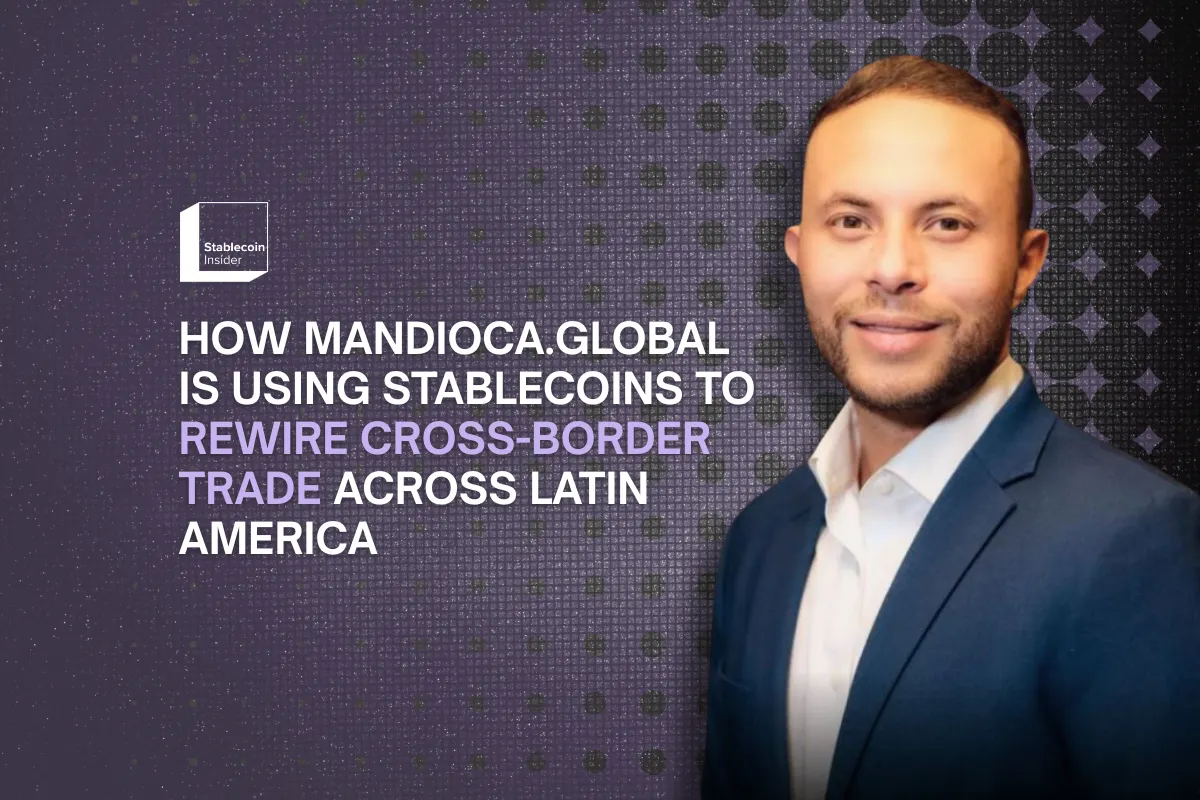
In a conversation with Chiara Munaretto, Co-Founder and Managing Partner of Stablecoin Insider, Meneses explained how Mandioca.global is building stablecoin-powered infrastructure for importers, exporters, and businesses across Latin America, and why trust, compliance, and operational execution matter far more than crypto narratives.
Today, the company has processed more than $1 billion in transaction volume and handles over 15,000 transactions annually, positioning itself as one of the more operationally mature stablecoin payment providers focused specifically on LATAM trade corridors.
Why Mandioca Was Created
Before founding Mandioca.global, Meneses worked in traditional corporate finance at S&P Global before entering the crypto industry through Prime Trust.
That transition exposed what he saw as one of the biggest gaps in global finance: cross-border payments infrastructure was still operating under assumptions built for a pre-digital world.
At the time, Meneses was told that stablecoins were not really meant for international payments between businesses.
He disagreed immediately.
“If stablecoins can’t be used for global payments, then what are we even building?” he recalled thinking.
That realization became the foundation for Mandioca.global.
The company was built around a simple thesis: stablecoins dramatically improve how money moves internationally, especially in regions where banking systems remain slow, fragmented, or expensive.
Even the company’s name reflects that vision.
“Mandioca” refers to cassava or yucca, a crop historically traded between indigenous communities across South America long before modern currencies existed.
For Meneses, stablecoins represent a modern evolution of that same exchange system, a new infrastructure layer for global trade.
Stablecoins Are Solving Real Problems in Latin America
One of the strongest themes throughout the conversation was that stablecoin adoption in Latin America is not driven by speculation.
It is driven by necessity.
In countries including Colombia, Bolivia, and Venezuela, local currencies can experience significant devaluation against the U.S. dollar. As a result, businesses and individuals increasingly use stablecoins like Tether and USD Coin as a form of financial protection.
Meneses argued that this reality is also why he remains skeptical about local currency stablecoins across much of Latin America.
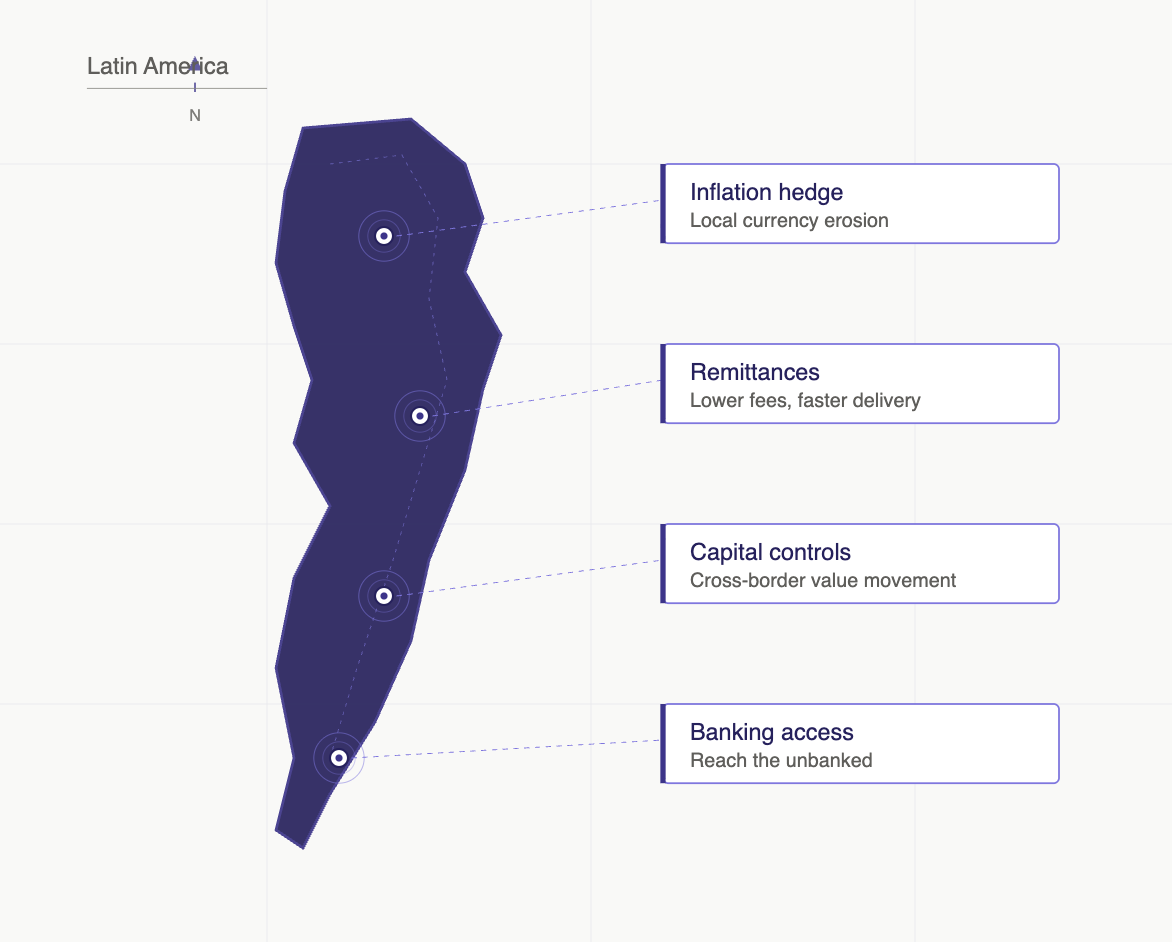
While projects tied to currencies like the Colombian peso continue emerging, he believes most users ultimately convert those assets back into dollar-denominated stablecoins anyway.
“The currency of global trade is still the U.S. dollar,” he said.
Mandioca itself learned this firsthand.
The company initially invested heavily into supporting additional currency rails including Chinese yuan, Hong Kong dollars, and Singapore dollars.
But despite the effort, nearly all payment volume still settled in USD-based stablecoins.
According to Meneses, the market made the decision clearly.
Businesses want dollars.
Importers and Exporters Are Emerging as a Major Stablecoin Use Case
Mandioca’s primary customer base today consists of importers and exporters.
For these businesses, settlement speed alone creates a major advantage.
Instead of waiting multiple business days for international wires to clear, companies can settle transactions within minutes using stablecoins.
Mandioca processes all payments T+0, with average settlement times of roughly 35 minutes for U.S. wire settlements, approximately 5 minutes for RTP payments, and around one hour for settlements into China.
That compression of settlement times becomes especially important in regions where access to U.S. dollars can be difficult or expensive.
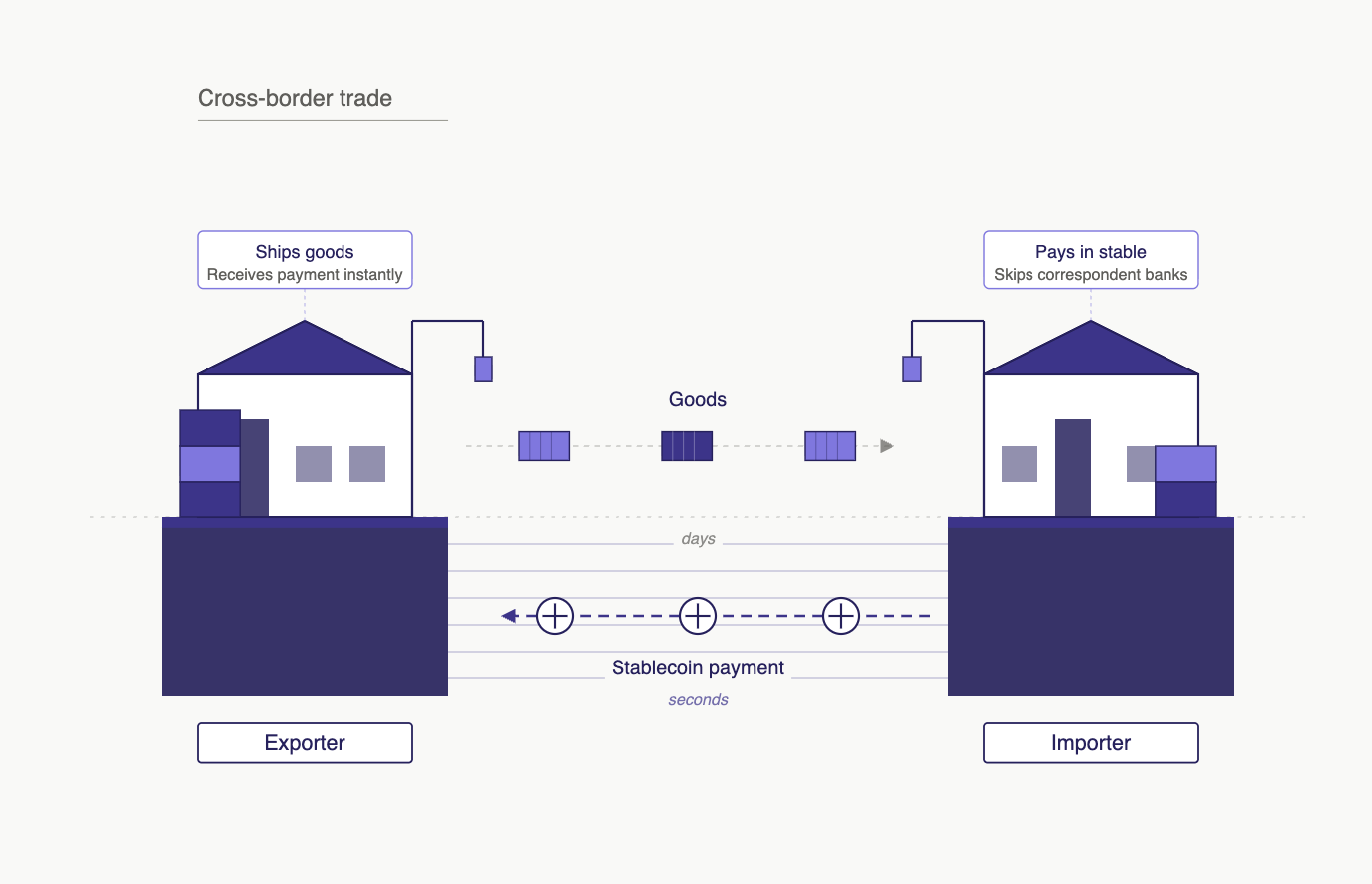
Importers benefit because they can often acquire USDT more efficiently than sourcing traditional USD liquidity through local banking systems.
Exporters benefit because they receive funds significantly faster while reducing operational friction tied to international banking rails.
Meneses emphasized that these use cases extend beyond Latin America itself.
Exporters in Asia, Europe, and the United States selling into Latin American markets can also benefit from stablecoin settlement infrastructure.
Unlike many stablecoin payment providers focused broadly on generic crypto transfers, Mandioca intentionally specializes in trade-related payment flows, particularly import/export settlement where transaction verification, documentation, and compliance infrastructure are critical.
Trust Matters More Than Crypto
Despite the efficiency improvements stablecoins provide, Meneses repeatedly returned to one issue that still dominates the market: trust.
According to him, many businesses across Latin America already understand the benefits of stablecoins.
The challenge is not education.
The challenge is credibility.
Years of scams, frozen funds, failed exchanges, and unreliable operators have created deep skepticism in several markets.
As a result, Meneses believes Mandioca’s real product is not simply payments infrastructure.
It is trust infrastructure.
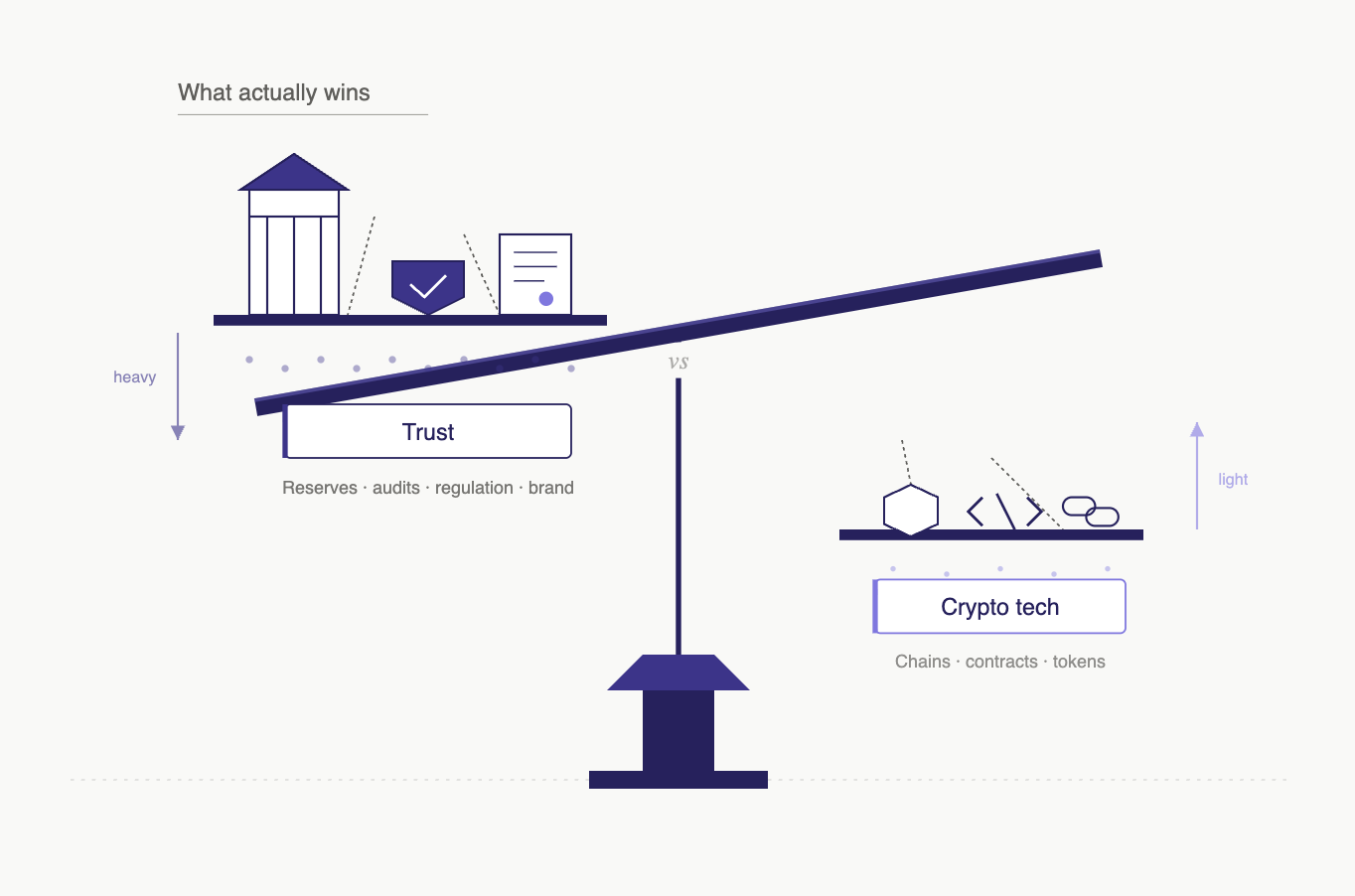
“What we really sell is trust,” he explained.
That trust-first approach has heavily shaped the company’s growth strategy.
Rather than aggressively expanding into every possible vertical, Mandioca deliberately narrowed its focus toward product-based businesses where compliance and verification are easier to manage.
The company decided to avoid service-based businesses entirely despite strong demand because verifying underlying commercial activity was significantly more difficult.
For product-focused companies, Mandioca can validate invoices, bills of lading, trade flows, and shipping records, creating a far more defensible compliance framework.
Compliance Is Becoming a Competitive Advantage
One of the more detailed parts of the discussion centered around compliance.
Meneses explained that balancing growth and risk management has been one of the hardest operational challenges for the company.
Sales teams naturally want to onboard as many customers as possible.
Compliance teams need to protect the business long term.
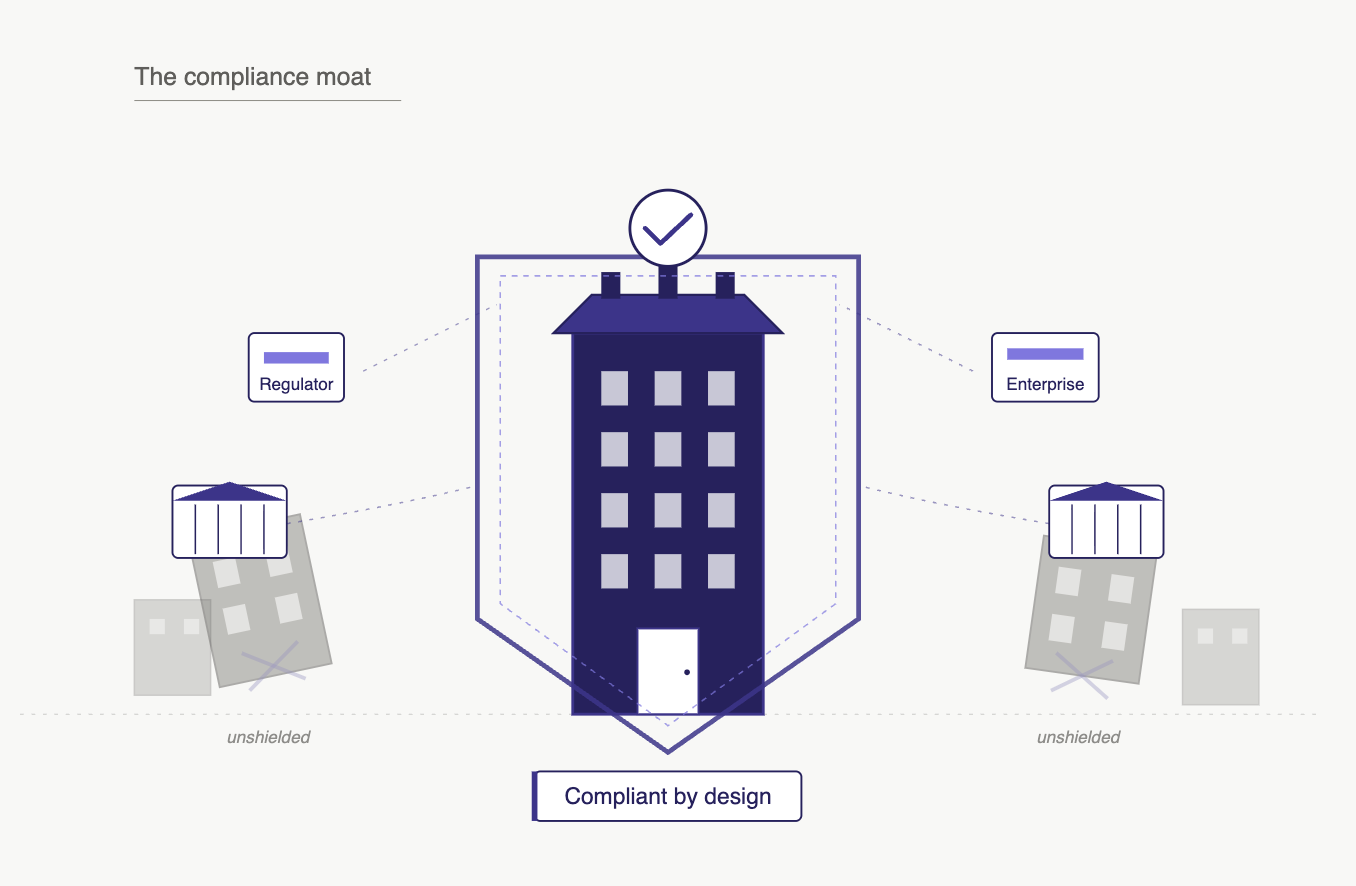
Mandioca ultimately chose to prioritize sustainability over aggressive volume growth.
The company built internal systems capable of analyzing trade patterns, invoices, wallet behavior, shipping documentation, and transaction flows in order to identify suspicious activity before onboarding clients.
Meneses gave several examples:
- A company claiming to import footwear while trade databases showed machinery exports instead
- Multi-million-dollar “consulting” payments to Asia without clear operational justification
- Businesses claiming large transaction volumes while lacking even a basic online presence
Over time, the company learned to recognize patterns associated with potentially fraudulent activity.
At the same time, Meneses stressed that crypto-native compliance requires a different mindset than traditional banking compliance.
“Mandioca can’t operate like a bank that simply shuts everything down at the first sign of risk,” he said.
Instead, the company built a compliance framework specifically designed for stablecoin infrastructure and blockchain analytics rather than applying rigid banking-era assumptions directly onto crypto transactions.
That compliance-first strategy is also reflected in the company’s regulatory expansion.
Mandioca currently operates with a DASP presence in El Salvador and is progressing through its MSO process in Hong Kong while maintaining operational offices across Madrid, New York, Hong Kong, Colombia, and El Salvador.
Banks Are Not the Enemy
Interestingly, Meneses does not view banks as competitors.
He views them as critical infrastructure partners.
According to him, stablecoins are not removing banks from the financial system entirely. Instead, they are modernizing how settlement happens between existing financial participants.
At some point, stablecoin liquidity still needs to convert back into fiat rails.
That means banks remain essential.
He pointed to institutions including Lead Bank, Circle-linked banking partners, and DBS Bank as examples of banks already embracing stablecoin-related payment infrastructure.
In some countries, local banks are already integrating USDT directly into payment workflows.
Bolivia, in particular, emerged during the conversation as an example of how dollar scarcity and currency instability are pushing both businesses and banks toward stablecoin adoption.
Mandioca Is Expanding Beyond B2B Payments
Although Mandioca is currently focused primarily on B2B cross-border settlement, the company’s roadmap is expanding rapidly.
The next major step is B2C infrastructure.
Meneses revealed that Mandioca plans to move into remittances, prepaid cards, payroll flows, and consumer-facing stablecoin payments.
The company is particularly focused on Latin American immigrants living in the United States and Europe who regularly send money back home.
Instead of relying on traditional remittance rails, Mandioca wants to enable instant stablecoin-based transfers directly onto prepaid card infrastructure.
Payroll is another area of expansion.
The company plans to support low-friction payroll payouts using stablecoins while maintaining strong compliance controls and transaction limits.
Over time, Meneses believes the distinction between stablecoin infrastructure providers and neobanks will increasingly disappear.
“If you already have payments, wallets, cards, and yield infrastructure, what’s really the difference between that and a neobank?” he asked.
Trade Finance and Yield Are Also on the Roadmap
Mandioca is also exploring trade finance and yield-generation infrastructure.
Because the company already manages large transaction flows for importers and exporters, Meneses sees a major opportunity to eventually integrate factoring and financing directly into the platform.
The company is already in conversations with one of Colombia’s largest factoring firms.
Yield-generation products are also being explored carefully.
Many Mandioca customers hold significant stablecoin balances temporarily before settling invoices and could potentially benefit from low-risk yield products.
However, Meneses acknowledged that the regulatory environment around yield-bearing stablecoins, particularly in the United States, remains uncertain.
For now, the company is proceeding cautiously.
Stablecoins Are Becoming Infrastructure, Not Just Crypto Products
Throughout the conversation, one idea consistently surfaced: stablecoins are gradually becoming invisible infrastructure.
Most Mandioca customers are not crypto-native businesses.
Many do not fully understand wallets, blockchain mechanics, or even stablecoins themselves.
What they care about is simple:
- Faster settlement
- Lower FX friction
- Reliable cross-border payments
- Access to dollar liquidity
- Better operational efficiency
The blockchain itself is largely irrelevant to them.
And according to Meneses, that is exactly how adoption scales.
As global trade becomes increasingly digital, Meneses believes stablecoins will evolve from an alternative financial tool into a foundational settlement layer for international commerce itself.
“The companies that win won’t just be the ones with the best blockchain technology,” he said. “They’ll be the ones that build the most trusted infrastructure for moving money globally.”
About Mandioca.global
Mandioca.global is a stablecoin-powered cross-border payments company focused on enabling faster global trade settlement for businesses across Latin America and international markets. The company provides infrastructure for importers, exporters, remittances, payroll, and global payment flows using stablecoins and fiat payment rails.
About Stablecoin Insider
Stablecoin Insider is the leading media and research platform covering stablecoins, digital payments, treasury infrastructure, fintech innovation, and the evolving role of on-chain finance in the global economy.